 Cáo Experiences
Home › Blog › Flower arranging workshops
Best Bouquet Making Class in Vietnam — Hands-On Floristry in Hanoi, Hoi An & Da Lat
By the Cáo Experiences team · 2026-11-01
The best bouquet-making classes in Vietnam run as hands-on three-to-four-hour sessions in small groups (or private pairs) led by experienced florists. We work with seasonal blooms sourced from family flower markets—hydrangeas, chrysanthemums, roses, amaranthus, and tropical varieties—in a light, open workspace. You'll learn flower conditioning, stem prep, spiral binding, and how to read balance and depth. Classes suit absolute beginners, couples, teams, and travelers with no prior experience; we adapt for left-handed guests, sore hands, or allergies. Held in Hanoi, Hoi An, and Da Lat, our flower arranging sessions include all materials, instruction, and a finished bouquet to take with you. Cost varies by location and group size—ask us for dates and a quote on WhatsApp. Most classes run rain-or-shine indoors; we always have a covered workspace ready. Ask about dates on WhatsApp
What happens in a real bouquet-making session?
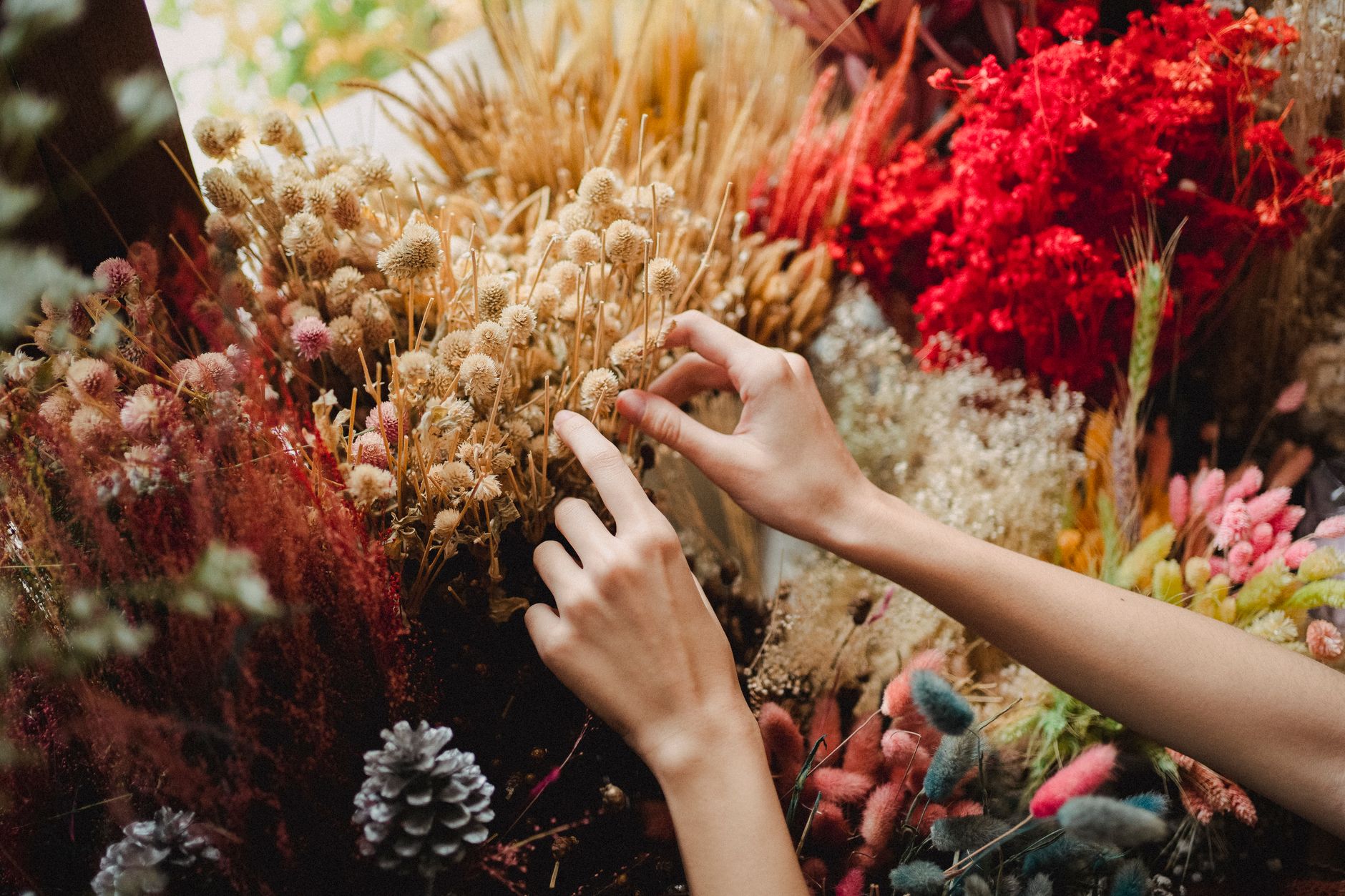
We begin with tea and a short tour of the workspace—usually a light studio or florist's prep room in the old quarter or a quiet lane. You'll see the day's flower stock laid out: we've curated them that morning for color, texture, and freshness. First, we gather around a demo table. Our florist shows you how to strip leaves below the waterline (this prevents bacterial buildup), how to cut stems at a forty-five-degree angle, and how to feel for thickness—a sign of hydration. You'll learn the difference between accent flowers (small, detail work) and focal flowers (the show-stoppers). Then you move to your own station. You'll be given a base flower—often a rose or garden mum—and asked to build around it, turning the bouquet slowly in your hand to maintain a spiral shape. We walk between stations, adjusting your grip, suggesting where a eucalyptus leaf might fall, or how tighter binding gives better structure. Halfway through, most guests ask about asymmetry; we show you the rule: one side can be taller, but weight must feel even as you turn it. By hour three, you're wrapping in kraft paper or cellophane, tying ribbon, and adding a care card. The whole arc takes three to four hours. Beginners worry they'll "break" flowers—they don't; we tell you firmly that snapping a stem is how learning happens.
Which flowers work best for learning?
Hydrangeas, roses, and chrysanthemums are ideal because their heads are forgiving and their stems hold well under beginner pressure. Seasonal tropicals like anthurium and bird of paradise teach you structure because they have strong lines. Softer stems—like certain dahlias or garden roses—demand gentleness and faster work; we reserve these for groups who've done a class before or who ask for a challenge. Filler greenery matters: we use eucalyptus, ruscus, Italian ruscus, and native foliage depending on season and what's fresh that day. Tropical greenery—monstera, aspidistra—adds drama and teaches you how one bold leaf can anchor an entire composition. We never use imported flowers from cold storage; we work with what arrived at the market on the morning of your class. This means the arrangement you make will last longer at home because every stem is vital and hydrated. The trade-off: you can't book a class and request "only garden roses, please" three weeks ahead. We design your class around what's beautiful right now—that's the real way florists work.
How do we adapt the class for kids, seniors, and mixed groups?
For children (ages 8–12), we simplify: they build a small posy rather than a full spiral bouquet, using pre-cut stems that are softer and shorter. One adult works one-on-one with a child; we keep the session to two hours. Seniors often worry their hands lack strength; we give them pre-stripped stems, lighter foliage, and a floral foam base (which is gentler than hand-tying). We also provide a low stool and a lower table so you're not standing hunched over. For mixed-age groups—couples, families, teams—we have multiple workstations at different heights and give gentler feedback to nervous members. We've hosted groups where one person is a florist and four are complete novices; the florist does a full spiral bouquet while others do a loose arrangement, and everyone's honest work is celebrated. Rain is never a problem: our workspace is covered. Hot, humid days are fine too—flowers are tropical; they like warmth. Cold winters in northern mountains (late November–January) slow the flowers slightly, so we budget extra time for conditioning.
Bouquet class vs. a quick workshop—what's the real difference?
| Experience | Duration | Group size | Outcome | Best for |
|---|---|---|---|---|
| Full class | 3–4 hours | 2–8 people | Finished bouquet to take home | Travelers wanting depth, couples, skill-building |
| Quick workshop | 1–2 hours | 4–12 people | Simple posy or demo-based learning | Team building, lunch-hour breaks, schools |
| Private session | 3–4 hours | 1–2 people | Personalized bouquet + feedback | Proposals, anniversaries, serious learners |
| Farm-to-arrangement day | 5–6 hours | 2–6 people | Bouquet + lunch + flower sourcing | Groups interested in supply, countryside farm experiences |
A full bouquet-making class focuses on your technique and your arrangement—we teach you how to make what matters to you. A quick workshop is often a team-building or event add-on where everyone follows a demo. We run both; ask which fits your schedule and goal.

Where in Vietnam can you take a bouquet class?
We hold classes in three main locations: Hanoi (in a studio or florist space in the old quarter, near Hoan Kiem Lake area), Hoi An (in a calm, traditional-style workspace near the ancient town), and Da Lat (in a pine-forest setting with cool air and year-round flowers). Each location sources local, seasonal blooms—Hanoi gets market-fresh stock daily; Hoi An draws from family growers in the surrounding valleys; Da Lat has its own flower farms on the surrounding plateaus, so classes here often feature flowers you'd never see elsewhere in Vietnam. If you're combining activities, Hanoi is ideal if you're also interested in Vietnamese cooking classes, coffee workshops, or art and culture sessions. Hoi An suits couples and slower travelers. Da Lat works best if you're already doing horse riding or countryside farm days in the hills. We can also arrange private sessions in other locations—ask us for dates and a quote on WhatsApp.
What to check before you book a bouquet class
Timing. Classes run year-round, but March–May and September–October are peak seasons when flower variety is widest and weather is mild. November–February still runs (flowers are fine), but fewer variety and slightly slower water uptake in cool air. Confirm dates with us; we don't have a fixed schedule.
Group size and skill mix. If you're booking a private session, that's simple. If you're joining a group class, ask whether other guests are beginners or mixed. Mixed is lively; all-beginner groups tend to be slower and more supportive. We never mix a group of absolute beginners with experienced florists (who work faster and differently).
Allergies and sensitivities. Some people react to pollen—especially from lilies and chrysanthemums. We can work around this; just mention it when you inquire. Thorns on roses and certain stems: we trim the worst ones, but some remain. If you have hand issues or arthritis, tell us so we can prep stems and offer foam-based building instead of hand-tying.
What to wear. Clothes you don't mind getting wet—flower stems drip, and we use water to condition. Apron is provided. Closed shoes (water on floor). No long, trailing sleeves (they catch on foliage).
Take-home care. We give you a care card (trim stems daily, change water every two days, keep out of direct sun). Bouquets from a class last 7–10 days if you follow this. We wrap in kraft paper so it's easy to transport on buses or in a taxi.
Location flexibility. We have preferred workspaces in each city, but for private groups (6+ people), we can discuss alternatives. Ask us.
Why a bouquet class beats buying a pre-made bouquet
You'll understand flower mechanics—why a stem breaks, how to refresh a wilting bloom, how to balance weight and visual flow. You'll move slower and see choices a commercial florist makes in seconds. You'll notice color relationships you've never thought about before. And the bouquet is yours—made by your hands, with flowers you selected. That matters more than any "perfect" shop arrangement. If you're also exploring Hanoi's food, tea, or wellness experiences, a flower class rounds out your understanding of Vietnamese seasonal rhythms and craft.

FAQ
Do I need any prior flower experience to take a bouquet class?
No. We teach absolute beginners every week. You'll learn stem prep, binding, and balance step by step. Worry comes and goes—by hour two, most guests relax and enjoy the process.
What if I have weak hands or arthritis?
Tell us when you book. We offer a floral foam base instead of hand-tying, pre-strip and pre-cut stems, and provide a lower table and stool. Foam-based arrangement is different but just as rewarding.
How long does a bouquet last after the class?
Seven to ten days if you follow our care guide: trim stems, change water every two days, keep away from direct sun and ripening fruit. Most guests say theirs lasted nine days.
Can we book a private class for just two people?
Yes. Private sessions work best for couples, anniversaries, or close friends. Ask us for availability and a quote on WhatsApp.
What if it rains on the day of my class?
We work indoors in a covered studio space in all three cities. Rain never cancels a session. Hot, humid, or cool weather is fine; flowers handle it well.
Can we bring a child to a bouquet class?
Yes, ages 8 and up. We shorten the session to two hours and use pre-cut, softer stems. One adult pairs with one child. Under 8, it's trickier—ask us about it when you contact us.
What flowers will be in my bouquet?
Seasonal blooms sourced that morning—hydrangeas, roses, chrysanthemums, tropicals, and greenery. We can't guarantee specific flowers weeks ahead because we work with what's freshest. The surprise is part of the experience.
Do you offer classes in English?
Yes. We host in English with WhatsApp coordination. If your group speaks another language, ask us—we may have options depending on who's available.
Ask about dates
Tell us the city, your dates and what you would like to try. We reply on WhatsApp in English with options and availability.
FAQ
Do I need any prior flower experience to take a bouquet class?
No. We teach absolute beginners every week. You'll learn stem prep, binding, and balance step by step. Worry comes and goes—by hour two, most guests relax and enjoy the process.
What if I have weak hands or arthritis?
Tell us when you book. We offer a floral foam base instead of hand-tying, pre-strip and pre-cut stems, and provide a lower table and stool. Foam-based arrangement is different but just as rewarding.
How long does a bouquet last after the class?
Seven to ten days if you follow our care guide: trim stems, change water every two days, keep away from direct sun and ripening fruit. Most guests say theirs lasted nine days.
Can we book a private class for just two people?
Yes. Private sessions work best for couples, anniversaries, or close friends. Ask us for availability and a quote on WhatsApp.
What if it rains on the day of my class?
We work indoors in a covered studio space in all three cities. Rain never cancels a session. Hot, humid, or cool weather is fine; flowers handle it well.
Can we bring a child to a bouquet class?
Yes, ages 8 and up. We shorten the session to two hours and use pre-cut, softer stems. One adult pairs with one child. Under 8, it's trickier—ask us about it when you contact us.
What flowers will be in my bouquet?
Seasonal blooms sourced that morning—hydrangeas, roses, chrysanthemums, tropicals, and greenery. We can't guarantee specific flowers weeks ahead because we work with what's freshest. The surprise is part of the experience.
Do you offer classes in English?
Yes. We host in English with WhatsApp coordination. If your group speaks another language, ask us—we may have options depending on who's available.
More like this
Flower arranging workshops
Flower Arranging Workshop Ho Chi Minh City: How to Book
A flower arranging workshop in Ho Chi Minh City teaches you to design seasonal arrangements in a calm studio setting. We run small-group and private sessions with English-speaking hosts who walk you through technique, flower choice, and how to make arrangements last.
Flower arranging workshops
Flower arranging workshop in Ninh Binh for couples
A flower arranging workshop in Ninh Binh lets couples create an arrangement together in a calm setting, learning Vietnamese design principles while working with seasonal blooms.
Flower arranging workshops
Flower Arranging Workshop in Mekong Delta for Foreigners
We run intimate flower arranging workshops in family-owned gardens and workshops across the Mekong Delta, where you'll learn seasonal design by practicing alongside our hosts. Pick your own blooms, arrange three pieces, and take them home.