
Home › Blog › Street food and market tours
Best food tour in Saigon: what we run, who it suits, what to expect
By the Cáo Experiences team · 2026-11-06
The best food tour in Saigon depends on what you want: rushed market sampling, unhurried neighborhood eating, or hands-on cooking. At Cáo Experiences, we run small-group and private street food tours lasting 3–5 hours in Saigon's District 1 and 3—mixing wet-market walks, tasting stops at family stalls and local kitchens, and explanation of dishes' histories and ingredients. Groups are typically 4–8 people; we adapt for dietary needs, allergies, and vegetarians. You'll taste 6–10 dishes, learn how to order in Vietnamese, and visit places tourists usually skip. Tours run weekday mornings and afternoons; ask us for dates and a quote on WhatsApp—no fixed pricing, depends on group size and route. Avoid rushing through; this works best if you've had light breakfast and come hungry. Ask about dates on WhatsApp
What makes a Saigon food tour different from cooking class?
A food tour is tasting and discovery; a cooking class teaches you to make dishes yourself. On a tour, we walk, taste, chat with vendors, and eat quickly. In a class, you prep ingredients in a kitchen, cook over 2–3 hours, then eat what you made. Choose a tour if you want breadth and local stories; choose a class if you want to take recipes home. Many guests do both in the same trip.
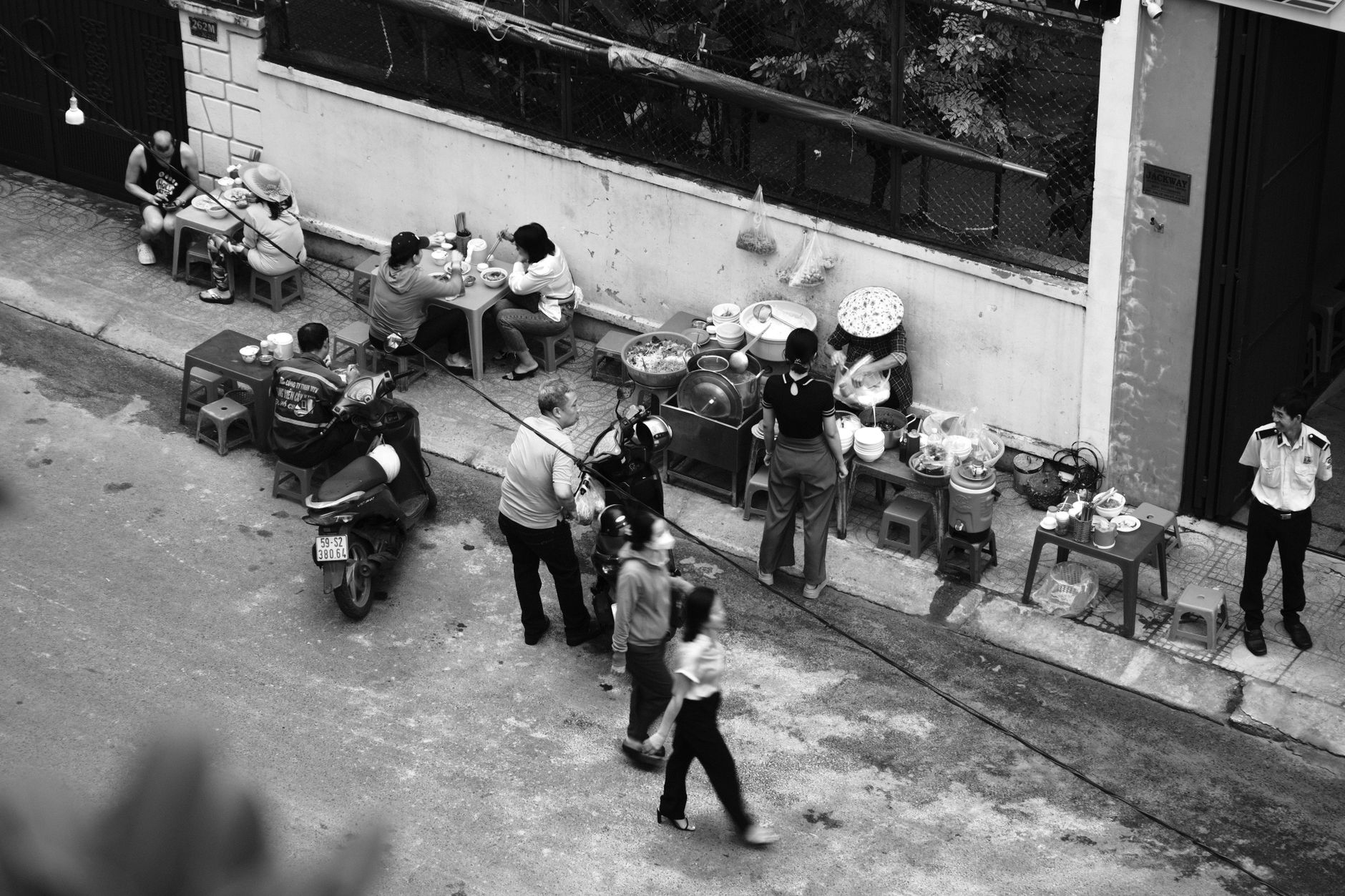
Why do wet markets matter on a food tour?
Wet markets (called chợ) are where Saigon eats—not tourist traps. We visit early morning or mid-afternoon when it's alive but not chaotic. You'll see vendors sorting herbs, selling live seafood, stacking produce by region. We explain what's seasonal, what's foraged, what's sold for specific dishes. It's sensory: loud, wet, fragrant, real. Most first-time visitors find it overwhelming alone; our guide translates vendor chat, points out what you can't find elsewhere, and connects ingredients to dishes you'll taste later. You're not buying; you're reading the city's pantry.
What's the difference between morning and afternoon tours?
Morning tours (6:30–9:30 a.m.) catch markets at peak, fewer tourists, cooler air, best for breakfast foods: bánh mì, phở, mì quảng, chè (sweet drinks). You'll taste things vendors make at dawn. Afternoon tours (2–5 p.m.) visit neighborhood lunch spots, specialty stalls (grilled snails, egg coffee makers), and quieter lanes. Both include 6–10 tastings and walking 1.5–2 km total. Morning suits early risers and those avoiding heat; afternoon suits late sleepers and those wanting lunch instead of breakfast. Rainy days work better in afternoon (fewer people, streets easier to navigate); we always have a backup route indoors.
How do we adapt for groups, families, kids, and dietary needs?
Group size & mix:
- 1–2 people: we can pair you with another couple or run private (price adjusts up)
- 3–8 people: standard small-group size; we pace for the slowest eater
- 9+ people: split into two guided groups or suggest group and corporate experiences with team debriefs
Kids (age 6+): We simplify explanations, pick milder dishes (no raw seafood if they object), let them taste instead of finish portions, and include one fun stop—a hidden tea stall, a flower vendor, a motorbike-taxi ride—to break up eating. Teenagers eat everything and love the street-vendor stories.
Seniors & mobility: We choose flat routes in compact areas, limit walking to 1.5 km, build in rest stops at small restaurants, and seat you to eat. Let us know about knees or stamina; we adjust pace without fuss.
Allergies & diets: Nut allergies, shellfish, gluten, vegetarian, vegan—we ask in advance on WhatsApp. We source alternatives from the same vendors and explain every ingredient before you eat. Vietnam's seafood-heavy cuisine is tricky for some; we find substitutes (tofu, greens, egg dishes) from the same stops so you're not eating separately.
Rainy-day plan: We move to covered market sections, add indoor stalls (noodle makers in back kitchens, coffee roasters), and include a cafe or family kitchen session instead of open-air tasting. The experience doesn't shrink; it just moves indoors.
| Tour type | Best for | Length | Pace | Cost basis |
|---|---|---|---|---|
| Morning market walk | Breakfast lovers, early risers, heat avoiders | 3 hours | Slow; 8–10 stops | 1–2 people: ask; 3–8: group rate; 9+: split groups |
| Afternoon neighborhood | Lunch eaters, families, those wanting quieter streets | 3–4 hours | Medium; 6–8 stops | Same scaling |
| Full-day private | Couples, foodies, deep dives into one neighborhood | 5 hours | Your pace; 10–12 stops, vendor chats | Private pricing; ask on WhatsApp |
| Combined tour + class | Learners wanting taste and skills | 6 hours (split days) | Teaching + tasting | Package rate; ask on WhatsApp |
What should you check before booking a Saigon food tour?
Before you commit:
- Time commitment: Can you walk 1.5–2 km and eat continuously for 3–4 hours? If you're on a tight schedule or have late flights, ask about 2-hour micro-tours instead.
- Dietary scope: Do you need vegan options? Shellfish avoidance? Gluten-free? Tell us on WhatsApp before we confirm dates. We source alternatives from the same vendors, not off-menu replacements.
- Language & group: Do you want a guide who translates vendor talk and stories? Our guides speak English and Vietnamese. Confirm group size (private vs. small-group); private is slower and more flexible, small-group is livelier and cheaper.
- Weather & season: Saigon is hot and humid year-round; morning tours are cooler. We run in rain (moved indoors), but ask about recent flooding if you're concerned about street conditions.
- Shoes & bags: Wear slip-on shoes (you'll remove them at some kitchens and temples near food stalls). Bring a small backpack, phone for photos, cash (many vendors don't take cards—we tell you the rough total to carry).
- Photography: Some vendors prefer not to be photographed. We ask permission; you're welcome to take photos of food and stalls, but respect requests to skip portraits.
- Solo safety: Saigon is very safe for solo travelers. If you're booking alone, we pair you with others or run private; neither adds complexity.
How does a Saigon food tour fit into a bigger trip?
If you're in Saigon for 2–3 days, a food tour (3–4 hours) leaves time to explore Hoi An's food scene or Da Lat's farms and hill cafes on other days. Food tours work well before a Vietnamese cooking class—you taste first, then learn to cook. Or after, if you want to see where ingredients come from. Many guests add coffee workshops (how Vietnamese coffee is roasted and brewed), which pair naturally with morning breakfast tours. If traveling with kids, combine a food tour with a family experience like flower arranging or a farm day. Ask about dates on WhatsApp and we'll suggest a sequence.
See how a session runs

Why pick a guided tour instead of eating alone?
You can eat on your own; a guide gives you context, introductions, and safety. Street-food vendors speak Vietnamese; a translator (our guide) opens doors. You learn why a dish exists (it's for breakfast because it's light; it's in this lane because the vendor's family has been here 20 years). Alone, you risk bad luck—choosing a stall on an off day, misunderstanding orders, missing neighborhood favorites because you're looking at a map instead of people. A group tour is cheaper than private and livelier. Private tours let you linger, ask longer questions, and eat at your own pace. Both beat rushing through a bus-tour food stop in 30 minutes.
What do guests regret or worry about on food tours?
Common worries (and our honest take):
- "Will I get sick?" Saigon's busy stalls have high turnover—food is cooked fresh and eaten fast. We pick vendors we know. Stomach trouble is usually from tap water (we bring bottled water) or overeating, not the food. Take it slow; don't eat 10 dishes in an hour.
- "Is it too spicy?" Vietnamese food varies. We warn you ahead; many dishes are mild, some are fiery. We taste first, tell you the heat level, and find mild alternatives if you need them.
- "I'm too picky." Saigon has mild options: egg, tofu, noodles with broth, tea eggs, sweet drinks. If you eat meat, fish, or vegetables, you'll find plenty. We adapt; just tell us.
- "I'm not hungry enough." Eat a light breakfast (fruit, toast). Tastings are small. Walking and air build appetite.
- "Can't I just Google a route?" You can. You'll eat. You won't know why vendors chose their spot, what's in season, or why a noodle texture matters. Guides add depth. If budget is tight, ask us about shorter, cheaper micro-tours.
What to bring, wear, and know on the day
Logistics:
- Wear: Comfortable walking shoes (slip-ons are best; you may remove them at kitchens). Light, breathable clothing. Hat or sunscreen for sun exposure between stops. No heavy jewelry.
- Bring: Small backpack, water bottle (we refill it), phone, cash (Saigon vendors mostly accept cash; cards less common in street stalls). Optional: wet wipes, hand sanitizer, small notebook.
- Know: We meet at a central spot in District 1 (we'll text the exact address on WhatsApp). Arrive 5 minutes early. Tours run rain or shine (moved indoors if heavy rain). Breakfast or lunch is on us (included in the tour). Drinks between stops are often vendor-provided; sometimes you pay a small amount directly to them (under our current quote per drink, roughly).
- After: You'll be full and tired. Plan a siesta or light evening. Some guests visit a quiet tea experience or cafe after to process.
Real moments: what happens on a typical tour
You meet us at 6:45 a.m. outside a café in the old quarter. It's warm, humid, the sun is just up. We walk into a narrow lane; vendors are setting up wooden stools and pulling metal chairs onto the pavement. We stop at a bánh mì stall—the owner grills bread over charcoal. We explain: crispy outside, soft inside, filled with pâté, pickled vegetables, and your choice of grilled pork or tofu. You taste. You're not hungry yet, but the bread is buttery and the pork is salty-sweet. Next, phở. A woman in a blue apron has been simmering broth since 4 a.m. The bowl is aromatic, the noodles are slippery, the broth is deep and warm. You slurp (she's pleased if you do—it means you like it). We walk past the wet market, stopping to explain herbs, fish types, and seasonal produce to a vendor who knows our guide. You taste a chè (sweet, thick, made with beans and coconut milk). By 8:30 a.m., you've eaten 5–6 dishes. You're full, happy, and sweating. We sit at a small café and debrief over coffee—you ask questions, we answer, and you plan what to cook at home.
How this tour connects to other Cáo experiences
A street-food tour in Saigon is often the entry point. Many guests then take a cooking class to learn techniques, or a coffee workshop to understand Vietnam's coffee obsession. Some add farm experiences in the Mekong Delta (south of Saigon) to see where ingredients grow. Couples sometimes combine food with flower arranging or art classes. Ask us about booking combinations—we'll suggest a sequence and adjust pricing.
#
FAQ
How many people are on a typical food tour?
Small groups range from 3 to 8 people. We can pair solo travelers with others or run private tours for couples and small families. Ask on WhatsApp about group makeup when you book.
Can I do a food tour if I'm vegetarian or vegan?
Yes. Saigon has many egg, tofu, noodle, and vegetable dishes. We ask your diet in advance on WhatsApp, find vendors with alternatives, and ensure you eat from the same stops—not separately. It works well.
What if I'm only in Saigon for one day?
A 3-hour morning food tour leaves your afternoon free. We fit it into tight schedules. If you have just 2 hours, ask about a shorter route; we can do a focused market or neighborhood walk.
Do I need to speak Vietnamese to enjoy this?
No. Our guide translates vendor conversations, explains dishes, and handles ordering. You'll pick up a few words (gỏi = salad, cơm = rice) for fun, but it's not required.
What's the weather like, and should I reschedule if it rains?
Saigon is hot, humid, and sticky year-round. Morning tours are cooler. Rain moves the tour indoors (markets, family kitchens, cafes). We adapt seamlessly; you don't miss out. Reschedule only if you're unwell or a typhoon warning is active.
Can I book a private tour just for my family?
Yes. Private tours cost more than small-group but let you set the pace, focus on specific dishes, and skip stops. Ask for a private quote on WhatsApp.
Ask about dates
Tell us the city, your dates and what you would like to try. We reply on WhatsApp in English with options and availability.
FAQ
How many people are on a typical food tour?
Small groups range from 3 to 8 people. We can pair solo travelers with others or run private tours for couples and small families. Ask on WhatsApp about group makeup when you book.
Can I do a food tour if I'm vegetarian or vegan?
Yes. Saigon has many egg, tofu, noodle, and vegetable dishes. We ask your diet in advance on WhatsApp, find vendors with alternatives, and ensure you eat from the same stops—not separately. It works well.
What if I'm only in Saigon for one day?
A 3-hour morning food tour leaves your afternoon free. We fit it into tight schedules. If you have just 2 hours, ask about a shorter route; we can do a focused market or neighborhood walk.
Do I need to speak Vietnamese to enjoy this?
No. Our guide translates vendor conversations, explains dishes, and handles ordering. You'll pick up a few words (gỏi = salad, cơm = rice) for fun, but it's not required.
What's the weather like, and should I reschedule if it rains?
Saigon is hot, humid, and sticky year-round. Morning tours are cooler. Rain moves the tour indoors (markets, family kitchens, cafes). We adapt seamlessly; you don't miss out. Reschedule only if you're unwell or a typhoon warning is active.
Can I book a private tour just for my family?
Yes. Private tours cost more than small-group but let you set the pace, focus on specific dishes, and skip stops. Ask for a private quote on WhatsApp.
More like this
Street food and market tours
Best Street Food Tour in Sapa: What to Expect, How to Choose
Street food tours in Sapa connect you with hill-town cooks and night markets. We'll walk you through what these sessions offer, who they're for, and how to avoid common missteps.
Street food and market tours
Best Street Food Tour in Hue: What to Choose, Who It's For
A street food tour in Hue isn't one thing—it's a choice between styles, neighborhoods, and paces. We break down what actually happens on each type, and how to know which fits your group.
Street food and market tours
Best Food Walking Tour in Vietnam: Hanoi Street Food Guide
A food walking tour in Vietnam immerses you in bustling markets and street lanes where vendors have cooked the same dishes for decades. We show you what to taste, how to order, and the stories behind each bite.