
Home › Blog › Experiences for families and kids
Best Kids Cooking Class in Hanoi: How to Choose
By the Cáo Experiences team · 2026-11-06
At Cáo Experiences, a Vietnamese cooking class for kids runs 2.5 to 3 hours in a family kitchen in central Hanoi (old quarter, walking distance from Hoan Kiem Lake) or a quieter residential space depending on group size. Children aged 5–16 cook alongside one host; we adapt recipes, knife work, and heat exposure by age. Younger kids (5–8) roll spring rolls by hand, tear herbs, and taste at every step. Older kids (9+) use proper knives under guidance, manage the wok, and make decisions about seasoning. We source fresh ingredients from Quang Ba flower market or local suppliers the morning of your session. Groups are 2–8 kids; parents often join or wait nearby. No prior cooking skill needed. Ask us for dates and a quote on WhatsApp. Ask about dates on WhatsApp | See how a session runs
What actually happens: hour by hour?
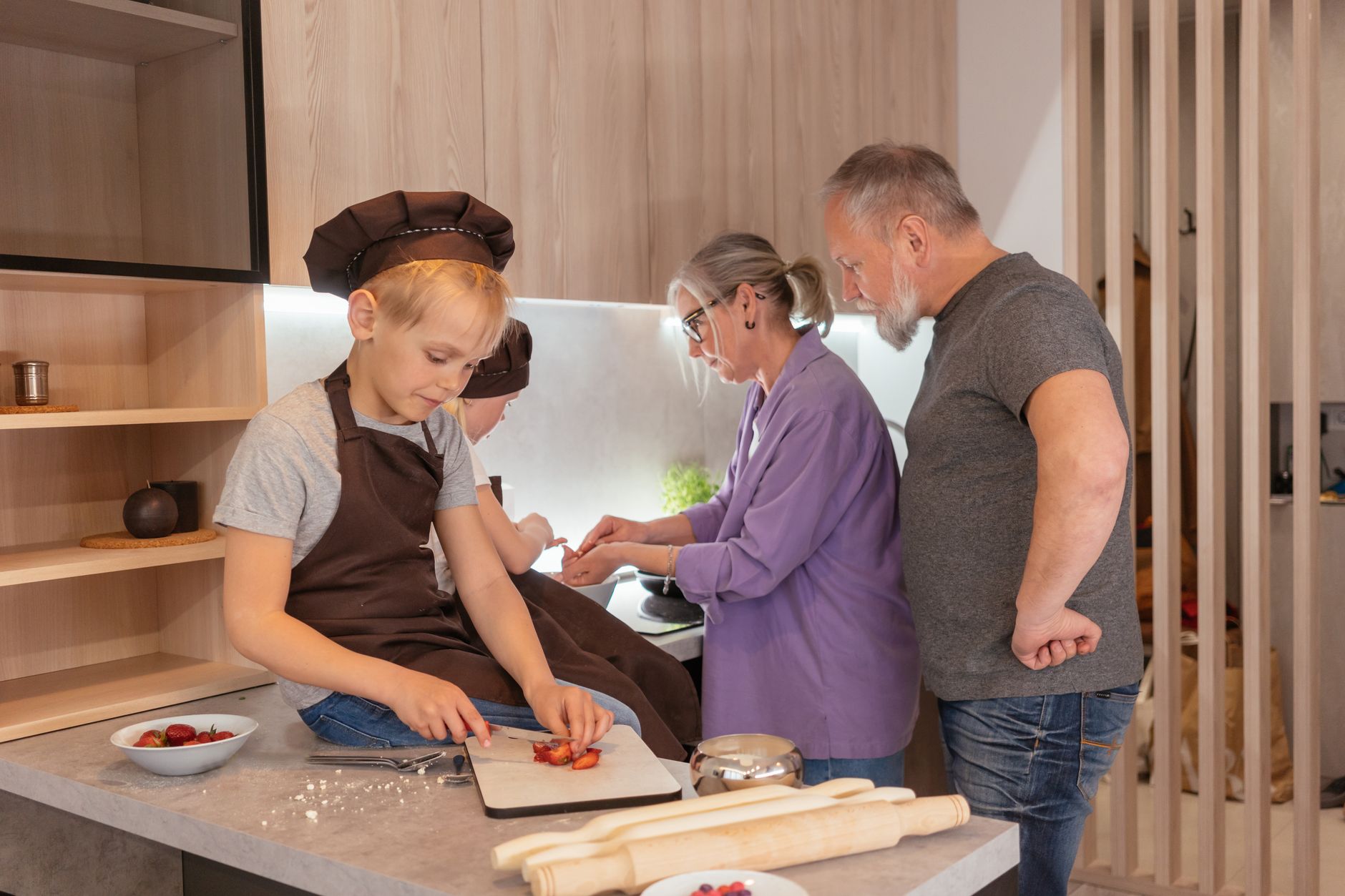
We start by walking through the kitchen together—you meet the stove, see the wok, touch the ingredients still in their market state. For the first 20 minutes, we talk about what Vietnamese home cooking really means: layers of flavor, respect for heat, tasting as you cook. Kids ask questions here. Then hands wash and we begin. Each child gets a cutting board, a knife matched to their hand size, and a specific task: rolling spring rolls, mincing garlic, tearing basil. We cook three or four dishes together—typically a vegetable stir-fry, fresh spring rolls (uncooked), and a simple broth or dipping sauce. The wok comes alive around the 90-minute mark; older kids handle the heat, younger ones add ingredients on cue. No one stands and watches. By the final hour, we sit down to eat what you've made, drink tea or water, and talk about why things taste the way they do. Parents often join the meal.
How do we adapt for different ages?
Five- to eight-year-olds work with softer ingredients: rice paper, cooked herbs, soft vegetables. They roll, tear, and arrange by hand. A kitchen knife stays with the host, and we let them tear mint and basil instead. They taste constantly—this is how they learn. Nine- to twelve-year-olds use a small chef's knife on a cutting board; we teach basic grip and knife safety first, then they prep vegetables under watchful presence. Fourteen- to sixteen-year-olds work much like adults: proper technique, heat management, and we ask them to taste and adjust seasoning. All ages work at their own speed. We never rush a child to finish a task; learning the motion matters more than speed.
What if my child has allergies or dislikes?
Tell us when you book—allergies must be named specifically (peanut, shellfish, soy, sesame). We adapt every recipe: substitute fish sauce with soy, eggs with tofu, use gluten-free rice paper. Dislikes (a child who won't eat mushrooms) we respect too; they cook something else in that slot or we swap vegetables. Vegetarian and vegan kids cook entirely plant-based versions alongside fish and meat options—no one feels left out. We source allergen-free ingredients the day before and keep them separate. If your child has a severe allergy requiring an EpiPen, you must stay in the kitchen with us.
How does rain change the plan?
Rain doesn't cancel a cooking class. We move to an indoor family kitchen (same neighborhood, same supplier network). The only logistical shift is timing—if flooding closes a main street, we coordinate a new pickup point via WhatsApp the morning of your session. We've never postponed; we've rerouted. If your group prefers a countryside experience and the weather forecast looks wet, we discuss moving to a town-based kitchen or rescheduling. Ask us for dates and a quote on WhatsApp; we'll explain rain backup options for your specific dates.

Should we choose a group class or private session?
| Setup | Group (2–8 kids) | Private (1–4 kids) |
|---|---|---|
| What you get | Mix with other families, shared energy | Full host attention, custom pace |
| Best for | Kids who enjoy social learning, ages 7+ | Shy kids, mixed ages, dietary complexity |
| Pace | We move together; some wait between turns | Each child cooks continuously |
| Booking | We run set dates; ask us for schedules | Any date you prefer (ask us) |
| Conclusion | Livelier, cheaper option | Quieter, flexible, tailored |
Both work. Group sessions build confidence through peer energy. Private sessions let us slow down for a four-year-old and challenge a fourteen-year-old in the same kitchen. Many families choose private after doing a group and wanting deeper customization.
What should you check before booking?
- Child's age and any allergies or dislikes: Tell us at inquiry. We design the menu around this.
- Who's attending: Just kids, or do parents cook too? We adapt the kitchen setup.
- Heat sensitivity: Some kids fear the wok flame. We show it first, let them stand back, then bring them closer on their terms.
- Language: All family experiences run in English. Your child doesn't need Vietnamese.
- What to wear: Closed shoes, a t-shirt you don't mind getting splashed (oil, water, turmeric). We provide aprons.
- Cancellation: Check our policy when you inquire on WhatsApp.
How does Cáo Experiences differ from other cooking classes in Hanoi?
Other options in central Hanoi range from large-group tourist classes (15+ people, demo-heavy, kids sit and watch) to one-off private chefs (high cost, less teaching focus). We sit in the middle: small groups, hands-on teaching, English-speaking hosts with experience adapting for children. We use real home-cook equipment and locally sourced ingredients, not pre-prepped tourist ingredients. You eat what you cook, not a separate "teacher's dish." We don't overbook; you won't wait 45 minutes for a turn at the wok. And we actually answer WhatsApp messages the same day.
If your family is also interested in other cultural activities, consider pairing a cooking class with a street food and market tour (kids aged 7+ walk Quang Ba or Ben Thanh market, taste street snacks, meet vendors) or a flower arranging workshop (kids 5+ arrange seasonal flowers, messier and quicker than cooking). Some families do both on consecutive days. Ask us to customize a multi-day itinerary.
What to check before you book
- Ages and dietary needs (allergies, vegetarian, dislikes): State these clearly at inquiry so we price and plan correctly.
- Group size: Confirm whether it's 2 kids or 8. Larger groups may span two time slots.
- Preferred dates: We work around your schedule; let us know your flexibility.
- Who participates: Parents cooking alongside, or supervising from a chair? This changes the kitchen layout.
- Budget: Ask us for dates and a quote on WhatsApp. Pricing varies by group size, season, and whether parents join.

FAQ
Can a 4-year-old join a cooking class?
Yes, if a parent or carer stays in the kitchen with them. They'll tear herbs, dip spring roll rice paper, taste, and feel included—not operate a knife or wok. We've hosted kids from age 3 in private sessions. Group classes work better from age 6 up.
Do you teach Vietnamese language during the cooking class?
No. We speak English and name ingredients and techniques in both languages informally ("this is mộc nhân—mint—very fresh today"). If you want formal language learning, that's a separate art and culture class option. Cooking is about flavor and motion, not grammar.
What if we're vegetarian or vegan?
We cook entirely plant-based versions—spring rolls with tofu, stir-fried greens with garlic and chili oil, vegetable broth instead of chicken. The dishes taste authentic and full. Tell us at booking so we source the right tofu and soy products from the market.
How many dishes do we actually cook?
Usually three to four: one raw (spring rolls), one stir-fried vegetable, one broth or dipping sauce, and sometimes a fourth (fried tofu, grilled fish, noodle dish). This depends on group age and speed. Older kids might cook more.
What if my child gets bored or upset mid-session?
We pause. Kids sometimes get tired or frustrated (a wok flip didn't work, someone tasted raw garlic). We sit down, have water, talk about what happened, adjust the task. If a child genuinely wants to stop, we stop. No one is forced to cook or eat. We refund fairly.
Do you offer certificates or a keepsake?
We don't issue paper certificates, but we take photos during the session (you can use these for memory). Some families keep the apron or ask for a simple note about what they cooked. We focus on the memory and skill, not a document.
Can we do a cooking class in the countryside instead of Hanoi town?
Yes. We also offer farm and countryside experiences in areas outside Hanoi—some include cooking with produce you've picked. These run longer (half-day or full-day), suit families wanting a slower pace, and work well for kids 6+. Ask us about countryside kitchen options.
How far is the kitchen from the city center?
Most kids' cooking classes are in the old quarter or a quiet lane near Hoan Kiem Lake (10–15 minutes by taxi from most hotels). Parking is available, and we give you exact coordinates when you book. Some private sessions use a quieter residential kitchen 20 minutes away if your group prefers space and calm.
Ask about dates
Tell us the city, your dates and what you would like to try. We reply on WhatsApp in English with options and availability.
FAQ
Can a 4-year-old join a cooking class?
Yes, if a parent or carer stays in the kitchen with them. They'll tear herbs, dip spring roll rice paper, taste, and feel included—not operate a knife or wok. We've hosted kids from age 3 in private sessions. Group classes work better from age 6 up.
Do you teach Vietnamese language during the cooking class?
No. We speak English and name ingredients and techniques in both languages informally ("this is mộc nhân—mint—very fresh today"). If you want formal language learning, that's a separate [art and culture class](/art-classes) option. Cooking is about flavor and motion, not grammar.
What if we're vegetarian or vegan?
We cook entirely plant-based versions—spring rolls with tofu, stir-fried greens with garlic and chili oil, vegetable broth instead of chicken. The dishes taste authentic and full. Tell us at booking so we source the right tofu and soy products from the market.
How many dishes do we actually cook?
Usually three to four: one raw (spring rolls), one stir-fried vegetable, one broth or dipping sauce, and sometimes a fourth (fried tofu, grilled fish, noodle dish). This depends on group age and speed. Older kids might cook more.
What if my child gets bored or upset mid-session?
We pause. Kids sometimes get tired or frustrated (a wok flip didn't work, someone tasted raw garlic). We sit down, have water, talk about what happened, adjust the task. If a child genuinely wants to stop, we stop. No one is forced to cook or eat. We refund fairly.
Do you offer certificates or a keepsake?
We don't issue paper certificates, but we take photos during the session (you can use these for memory). Some families keep the apron or ask for a simple note about what they cooked. We focus on the memory and skill, not a document.
Can we do a cooking class in the countryside instead of Hanoi town?
Yes. We also offer [farm and countryside experiences](/farm-experience) in areas outside Hanoi—some include cooking with produce you've picked. These run longer (half-day or full-day), suit families wanting a slower pace, and work well for kids 6+. Ask us about countryside kitchen options.
How far is the kitchen from the city center?
Most kids' cooking classes are in the old quarter or a quiet lane near Hoan Kiem Lake (10–15 minutes by taxi from most hotels). Parking is available, and we give you exact coordinates when you book. Some private sessions use a quieter residential kitchen 20 minutes away if your group prefers space and calm.
More like this
Experiences for families and kids
Family workshop Vietnam vs Thailand: where to take kids in 2026
Vietnam and Thailand both offer immersive family workshops, but the pace, cost structure, and focus differ significantly. We run both types of sessions at Cáo Experiences and can help you choose.
Experiences for families and kids
Family Workshop Vietnam Gift Voucher: What Works Best
A family workshop gift voucher in Vietnam lets relatives experience cooking, craft, horse riding or tea together—no tickets, no queues, real hands-on time. We help you pick the right session type and duration for the ages and interests in your group.
Experiences for families and kids
Family workshops in Vietnam for Indian travelers: what to expect
Indian families visiting Vietnam often wonder how to keep children engaged and learn something authentic together. Cáo Experiences runs small-group and private workshops—cooking, coffee, flower arranging, craft, and farm days—designed for kids, parents, and grandparents, hosted in English with real