
Home › Blog › Experiences for families and kids
Best Kids Cooking Class in Ho Chi Minh City
By the Cáo Experiences team · 2026-11-06
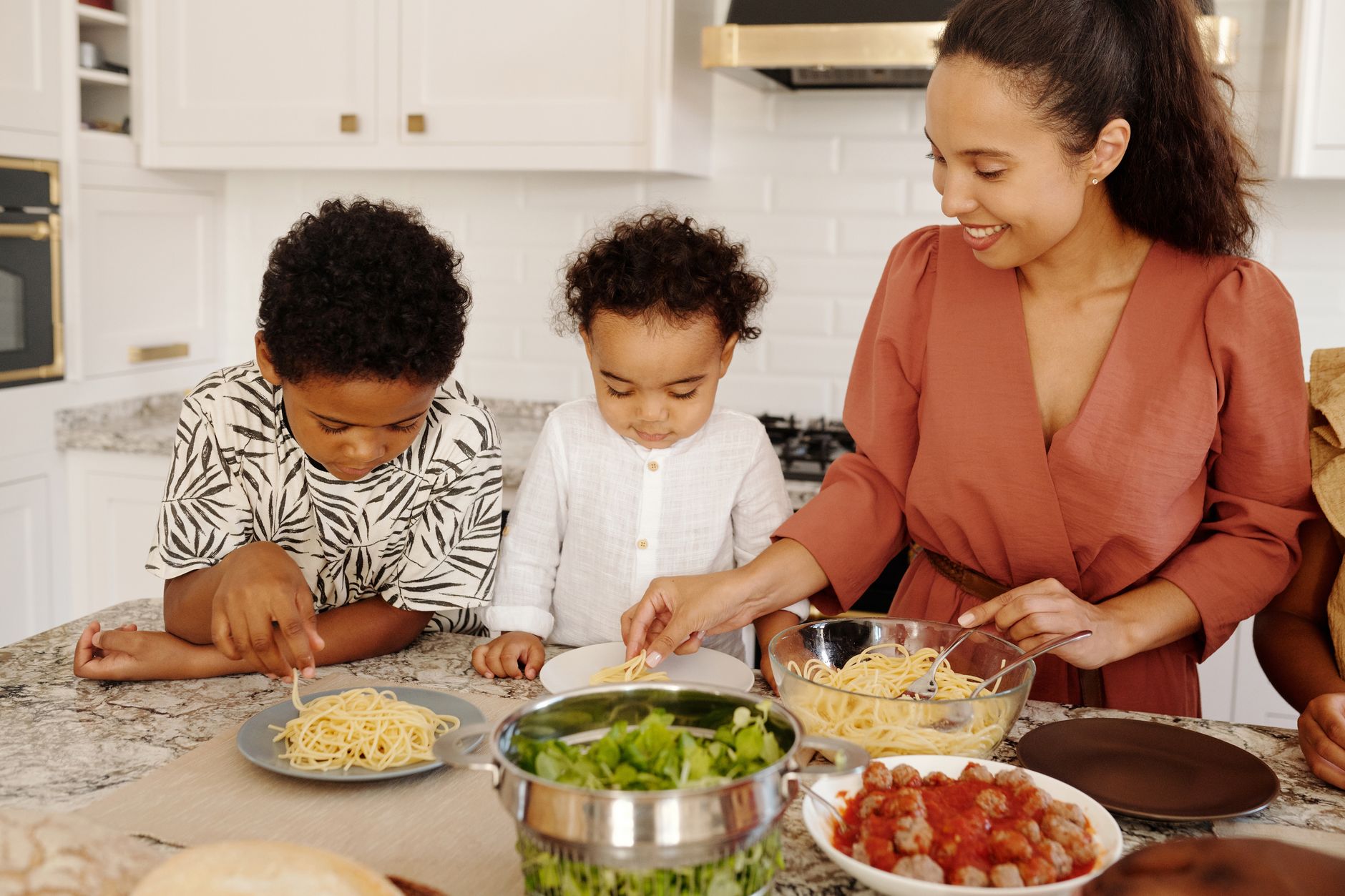
A kids cooking class in Ho Chi Minh City is not a cooking demonstration where children sit and watch. We hand them a wooden spoon, a cutting board, and real ingredients. They chop, stir, taste, and take responsibility for one dish from start to finish. By the end of the morning or afternoon, they've cooked a meal, set the table, eaten together, and learned that cooking is a skill they can use at home.
Cáo Experiences runs family cooking sessions in a residential kitchen in a lane off the old quarter—the kind of space where local families teach their children to cook. We keep numbers small: 6 kids maximum per session, so every child has elbows-on at the counter and our host isn't pulled in ten directions. Parents are welcome to cook alongside, sit and watch, or step out for coffee; we're flexible.
What does a typical kids cooking class look like hour by hour?
You arrive around 9 a.m. or 2 p.m. The kitchen is already set up with ingredients on the counter: vegetables, herbs, fish sauce, rice paper, a basket of fresh herbs you've never seen before. Your child washes hands. We gather around and talk about what we're cooking today—maybe spring rolls, a broth, and a stir-fry—and how Vietnamese families make these dishes every week. Then we start. Your child rolls the first spring roll (badly); we show them how to tighten the roll, keep the rice paper from tearing, fold in the edges. By roll number three, they've got the muscle memory. We move to the next dish. A host chops the harder vegetables, but your child handles onions, garlic, and herbs with a kid-safe knife. By 11:30 a.m., all dishes sit on the stove or counter. We set the table together, sit down, and eat. Your child eats their own cooking, drinks water or fresh juice, and talks about which dish was hardest or tasted best. Cleanup happens together—rinsing bowls, wiping counters, sweeping—because cooking includes tidying up. By noon, you leave.

Which kids actually enjoy a cooking class, and who might not?
Kids who love hands-on activity, tasting new flavors, and having a chef's job for a morning do best. We've hosted shy kids, energetic kids, kids with vegetable anxiety, and kids who asked "Is this real work?" and loved it. Picky eaters sometimes surprise themselves: when a child chops the garlic and drops it in the pan and hears it sizzle, they're more curious about tasting it. We've seen kids refuse vegetables at home eat them warm from our stove.
Kids who prefer sitting quietly, watching videos, or doing one task repeatedly might find the pace a little quick or the sensory input (heat, smells, other children) overstimulating. That's honest. We can adapt—smaller group, quieter recipes, slower pace—but we can't turn a cooking class into a lesson on technique alone; it's about action and play.
The sweetest fit: siblings cooking together; a child and a visiting grandparent; a group of school friends before a birthday. We've hosted kids aged 6 to 16 in the same session, and the older ones often help the younger ones, which changes the whole energy.
What's the difference between a kids class and an adult cooking class?
| Factor | Kids Class | Adult Class |
|---|---|---|
| Group size | Max 6 kids | Max 8 adults |
| Recipes | Simpler preps, fewer steps per dish | Complex techniques, more courses |
| Pace | Slower; includes taste checks & play | Faster; focuses on technique & flavor |
| Knife work | Kid-safe knives; host preps hard items | Full knives; guests do all cuts |
| Timing | 3 hours | 3–4 hours |
| Language | Simple; lots of demo | More detail on why & how |
| Eating | Communal, casual, juice included | Seated meal with fresh juice or tea |
The adult Vietnamese cooking class digs into technique and regional variation; a kids session focuses on confidence and taste. Both are hands-on, but a child leaves thinking "I made this"; an adult leaves thinking "I understand how to make this anywhere."
What allergies and dietary needs can you handle?
Tell us before you book. Most allergies—peanut, shellfish, egg, dairy—we manage by swapping or omitting ingredients without breaking the dish. If your child dislikes a key ingredient (some kids hate cilantro or fish sauce), we'll use less or choose a different recipe for them. Vegetarian and vegan kids are easy: we cook vegetables-first anyway.
The one thing we can't do: cook a completely separate meal for one child in a small group. If a child has multiple severe allergies or restrictive needs, we'll tell you honestly before you book whether that session suits them or whether a private class (just your family) is safer.
Heat and food safety are non-negotiable: kids don't use the stove unsupervised, and we're clear about why. A burned hand isn't a learning moment—it's a mistake we prevent.
What happens if it rains or the heat is extreme?
The kitchen is indoors with a fan and water. Rain doesn't affect us at all. Extreme heat (40°C+) makes standing over a stove harder, but we cook lighter dishes—spring rolls, salads, cold soups—and take water breaks. We've never canceled a class for weather in Ho Chi Minh City; the session just shifts slightly in pace or menu.

Should your child have any cooking experience first?
No. We've hosted kids who've never chopped an onion and kids whose parents cook every night. A child who cooks at home already has knife skills and knows how to taste; they'll move faster through the motions. A child cooking for the first time will spend more time on the first roll or first stir-fry, but by the end, they're doing the same work. Beginners aren't held back; experienced kids aren't bored.
How do we adapt for younger kids (6–8) versus older kids (12–16)?
Younger kids chop softer vegetables, do more tasting and playing, and focus on one or two simple dishes. An older child might make a four-component meal with a sauce, a garnish, and a technique focus. We read the room and the individual child. If a 7-year-old is very steady with a knife, they'll chop more; if a 12-year-old gets distracted, we adjust the recipe to keep momentum.
Most groups are mixed ages, and that works: younger kids watch older ones and aim higher; older kids help younger ones and feel responsible. It's a social skill, not just cooking.
What should you bring and wear?
Wear something you don't mind getting splashed. An apron helps but isn't required. Bring a water bottle (we have water, but personal bottles are better). If your child has long hair, a small hair clip is useful. We provide everything else: tools, ingredients, juice, napkins. Kids eat what they cook, so bring appetite and curiosity.
How much does a kids cooking class cost, and what's included?
Ask us for dates and a quote on WhatsApp. Cost depends on group size, number of dishes, seasonal ingredients, and whether it's a private family session or a small group. What's always included: three hours in the kitchen, all ingredients, all tools, lunch (what you've cooked), water and fresh juice, and a host who speaks English and genuinely likes teaching children. We don't upsell extras or add hidden charges.
What to check before you book a kids cooking class
Group size: Will your child cook alongside 1 other child or 6? Smaller groups are more personal; larger groups are more social.
Age range: Will everyone be the same age or mixed? Mixed ages work if you're flexible about pace.
Recipes: Do you want Vietnamese classics (spring rolls, pho broth, stir-fry) or something more unusual (fermented vegetables, sweet soups)? Tell us your child's taste preferences.
Dietary needs: Any allergies, vegetarian, or strong dislikes? Mention these when you ask for a quote.
Timing: Morning (9 a.m.) or afternoon (2 p.m.)? Morning tends to be calmer; afternoon classes sometimes have sleepy kids.
What happens after: Expect your child to want to cook at home for weeks after. Be ready to buy ingredients and let them help you in your own kitchen.
For families who want a broader experience, Cáo Experiences also runs farm and countryside experiences where kids learn about where food comes from, and group and team experiences for school groups or extended families. If a parent wants to learn alongside their child, we offer family-focused sessions that blend instruction for both ages.
The best kids cooking class in Ho Chi Minh City is one where your child leaves hungry for the next one. We've seen kids ask to come back and bring a friend. That's how we know it worked.
FAQ
Can my very picky eater actually do a cooking class, or will they refuse to eat anything?
Picky eaters often eat more when they've made the dish themselves—it feels like ownership. We work around strong dislikes and always offer simpler alternatives (rice, broth, fruit) so no child leaves hungry. Tell us what they dislike, and we'll plan accordingly.
How young is too young, and how old is too old?
We've hosted kids aged 6 to 16 in the same class. Six-year-olds need more help and can chop softer items; teenagers move faster and handle knives more confidently. There's no upper age limit—teenagers enjoy the social time and the skill.
What if my child is scared of the stove or heat?
We don't force anyone near the stove. A nervous child can chop, taste, and stir cold ingredients while a host handles the hot cooking. Fear often fades when they see it's controlled and safe; some kids need a session to warm up.
Do parents have to stay, or can we drop off?
Either is fine. Some parents cook alongside; some watch from a stool; some leave for coffee nearby. We're not childcare, but we can manage for a few hours while you run an errand. Tell us when you book.
Will my child learn "real" cooking skills or just have fun?
Both. Kids learn basic knife work, how to taste and adjust seasoning, and how to follow a recipe. They also learn that cooking is fun and that they're capable. Real skill grows over time, but the foundation is there after one session.
What if my child has a severe peanut or shellfish allergy?
Tell us before booking. We can avoid peanuts entirely and use minimal shellfish in broths if needed. We take allergies seriously and won't expose a child to a known allergen. If multiple severe allergies are present, a private family session (just your family) is safer.
Can we do a private class instead of joining a group?
Yes. Private family sessions are available and include the same format: hands-on, 3 hours, a host who speaks English, and a cooked meal. Cost and dates vary; ask us on WhatsApp.
What if my child has never cooked before and is nervous?
That's completely normal. Nervous kids often become the most focused, because they're concentrating hard. A good host will start them on an easy task (rolling, tasting, stirring) and build from there. By the end, most nervous kids feel proud.
Ask about dates
Tell us the city, your dates and what you would like to try. We reply on WhatsApp in English with options and availability.
FAQ
Can my very picky eater actually do a cooking class, or will they refuse to eat anything?
Picky eaters often eat more when they've made the dish themselves—it feels like ownership. We work around strong dislikes and always offer simpler alternatives (rice, broth, fruit) so no child leaves hungry. Tell us what they dislike, and we'll plan accordingly.
How young is too young, and how old is too old?
We've hosted kids aged 6 to 16 in the same class. Six-year-olds need more help and can chop softer items; teenagers move faster and handle knives more confidently. There's no upper age limit—teenagers enjoy the social time and the skill.
What if my child is scared of the stove or heat?
We don't force anyone near the stove. A nervous child can chop, taste, and stir cold ingredients while a host handles the hot cooking. Fear often fades when they see it's controlled and safe; some kids need a session to warm up.
Do parents have to stay, or can we drop off?
Either is fine. Some parents cook alongside; some watch from a stool; some leave for coffee nearby. We're not childcare, but we can manage for a few hours while you run an errand. Tell us when you book.
Will my child learn "real" cooking skills or just have fun?
Both. Kids learn basic knife work, how to taste and adjust seasoning, and how to follow a recipe. They also learn that cooking is fun and that they're capable. Real skill grows over time, but the foundation is there after one session.
What if my child has a severe peanut or shellfish allergy?
Tell us before booking. We can avoid peanuts entirely and use minimal shellfish in broths if needed. We take allergies seriously and won't expose a child to a known allergen. If multiple severe allergies are present, a private family session (just your family) is safer.
Can we do a private class instead of joining a group?
Yes. Private family sessions are available and include the same format: hands-on, 3 hours, a host who speaks English, and a cooked meal. Cost and dates vary; ask us on WhatsApp.
What if my child has never cooked before and is nervous?
That's completely normal. Nervous kids often become the most focused, because they're concentrating hard. A good host will start them on an easy task (rolling, tasting, stirring) and build from there. By the end, most nervous kids feel proud.
More like this
Experiences for families and kids
Family workshop Vietnam vs Thailand: where to take kids in 2026
Vietnam and Thailand both offer immersive family workshops, but the pace, cost structure, and focus differ significantly. We run both types of sessions at Cáo Experiences and can help you choose.
Experiences for families and kids
Family Workshop Vietnam Gift Voucher: What Works Best
A family workshop gift voucher in Vietnam lets relatives experience cooking, craft, horse riding or tea together—no tickets, no queues, real hands-on time. We help you pick the right session type and duration for the ages and interests in your group.
Experiences for families and kids
Family workshops in Vietnam for Indian travelers: what to expect
Indian families visiting Vietnam often wonder how to keep children engaged and learn something authentic together. Cáo Experiences runs small-group and private workshops—cooking, coffee, flower arranging, craft, and farm days—designed for kids, parents, and grandparents, hosted in English with real