
Home › Blog › Street food and market tours
Best Street Food Tour in Vietnam: Hanoi, Saigon & Beyond
By the Cáo Experiences team · 2026-11-06
A street food tour in Vietnam is a guided walk (usually 2–4 hours) through busy markets, narrow lanes and hawker zones where you taste dishes from independent carts and family kitchens: pho, banh mi, spring rolls, grilled meats, bitter herbs, fresh juice. Tours run in Hanoi's Old Quarter, Saigon's District 5, and Hoi An's riverside lanes. The best ones avoid famous cafes and restaurants; instead, they stop at unmarked stalls where locals eat breakfast or dinner. A real tour teaches you how to order, what's in the food, why vendors stand in the same spot for decades, and how to read ingredients you can't name. Cáo Experiences runs small-group and private street food walks in English, with a host who eats alongside you, handles ordering, checks for allergies, and shares the economics and history of each dish. Tours include water and a hands-on element—often cooking or market shopping before or after the walk. Cost depends on group size, duration and whether you book a private or shared session; ask us for dates and a quote on WhatsApp. Ask about dates on WhatsApp
What Makes a Real Street Food Tour Honest vs. Staged?
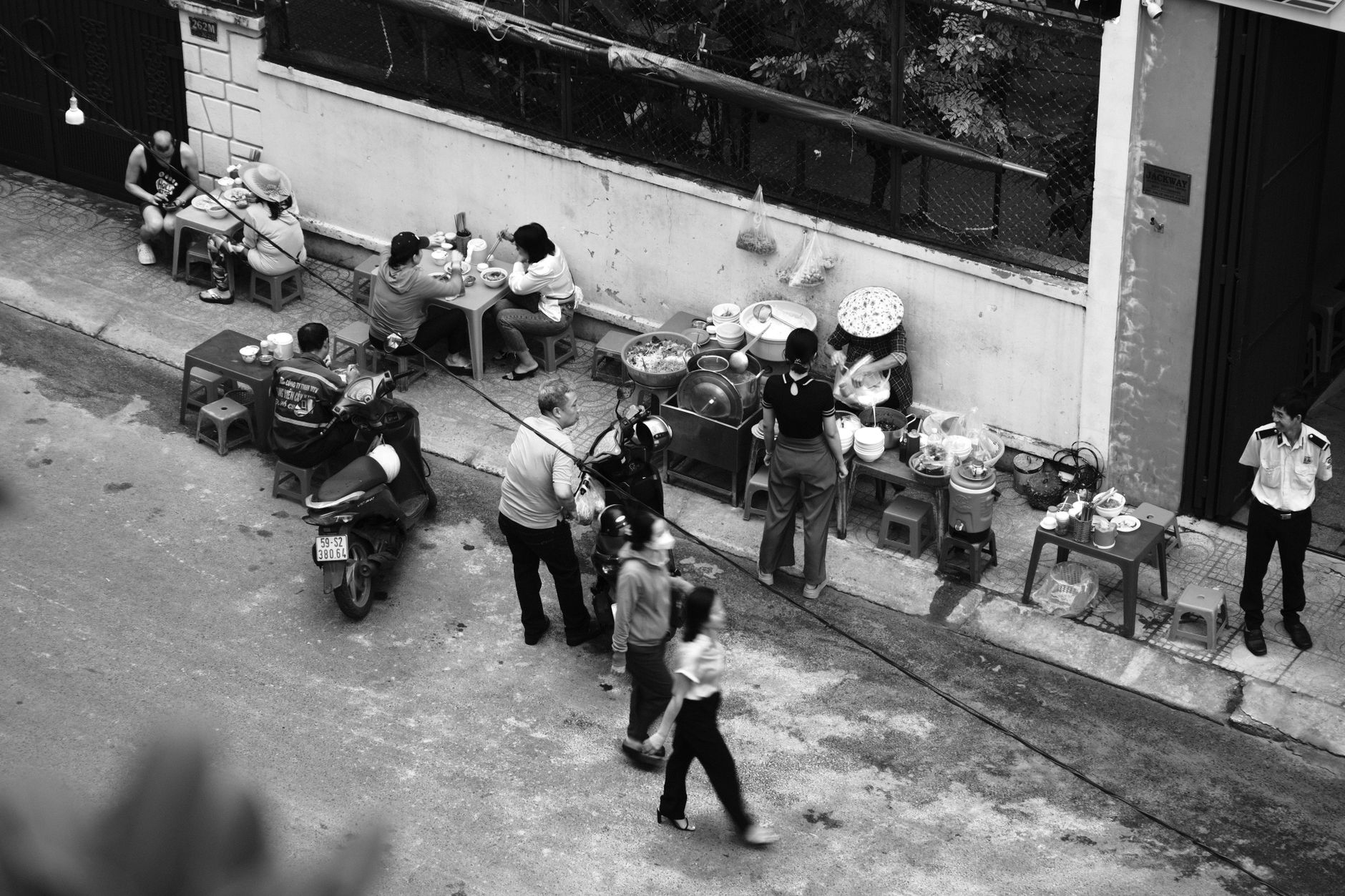
Real street food tours stop at stalls where the vendor's family has worked the same corner for 10–30 years, where the menu is written in pencil on a board or not written at all, and where at 7 a.m. the place is packed with construction workers and schoolkids, not tour groups. Staged tours often pre-arrange with restaurants, book "authentic" cafes that opened in the last two years, or stop at markets during off-hours when you see no actual customers.
The honest test: does your host know the vendor by name? Has she eaten there 50 times? Does she order in rapid Vietnamese and seem to belong? If the vendor looks bored or gives a practiced speech about "our family recipe for 100 years," trust your instinct. Real street food is chaotic, cheap, and smells strong. It's not Instagram-clean. Our street food and market tour prioritizes lanes and times when locals are actually eating, not when photos look best.

Which Cities Have the Most Honest Street Food Scenes?
Hanoi's Old Quarter (the narrow lanes north of Hoan Kiem Lake) has the deepest vendor culture: mothers cooking pho in 6-by-8-foot shophouses, men grilling quail eggs on charcoal, families selling nothing but one dish for 40 years. Hanoi food is salty, rich, and tied to regional traditions from northern provinces.
Saigon (Ho Chi Minh City) street food leans toward speed and abundance: banh mi shops on every corner, pho stalls in pre-dawn darkness, markets where you can eat five dishes in two hours. Southern food uses more sugar, coconut, and fresh herbs; vendors are chattier and more entrepreneurial.
Hoi An is smaller and slower; the riverside has spring-roll stalls, fish-cake vendors, and fewer motorbikes. Tours here are quieter and suit families better.
Da Nang beaches mean seafood-first stalls: grilled squid, razor clams, pork-and-shrimp spring rolls. Less crowded than Hanoi, more regional than generic.
The most honest scenes are Hanoi and Saigon in early morning (6–8 a.m.) or early evening (5–7 p.m.), when locals queue and vendors are focused on speed, not tourists. Avoid midday unless you want a slower, cooler walk. Our Hanoi experiences and Saigon experiences include street food walks timed to real eating hours.
What Food Safety and Allergy Checks Actually Matter on a Street Food Tour?
Street carts in Vietnam are not refrigerated. Meat, tofu, and prepared ingredients sit in room temperature for hours. This is not a problem for locals with adapted gut bacteria, but it's a real risk for travelers with weak digestion or immune issues. You will see cooked pork left on a cart for the day, flies landing on herb piles, and water from a bucket shared with ten stalls.
Here's what to do: tell your host about your allergies before the tour starts, not at each stall. MSG, shellfish, peanuts, and sesame are common; most vendors use all of them and won't remember mid-walk. If you have a severe allergy or IBS, a private tour works better than a group—we can call ahead to stalls and confirm ingredients.
For stomach safety: eat only hot food (cooked minutes before), avoid raw herbs if your gut is sensitive, and drink only bottled water or coconut juice from the vendor's own fridge. Avoid dishes that have been sitting: the longer food sits, the higher the bacterial load. Most travelers who get sick ate something the day before, not during the tour.
Our hosts carry hand sanitizer, know which stalls handle cross-contamination risks, and skip dishes if they look off. We also provide bottled water and can arrange a private walk with pre-vetted stalls if you have medical needs.
How Do You Avoid Tourist-Trap Stalls and Overpriced Carts?
Tourist-trap stalls have menus in English with "traditional recipe" claims, prices in dollars, or a big laminated photos of dishes. A real stall has a handwritten board (or no board), prices listed in Vietnamese dong for locals, and often no tourists at all.
A pricing checklist for street food in Vietnam (2026):
| Dish | Real price (dong) | Tourist-trap price | How to spot the trap |
|---|---|---|---|
| Pho bowl | 30,000–50,000 | 80,000–150,000 | English menu, photo board, seating for tour groups |
| Banh mi | 15,000–25,000 | 40,000–80,000 | "Fresh baguette daily" sign, glossy shop, waiter hovers |
| Spring rolls (5 pcs) | 20,000–40,000 | 60,000–120,000 | Packaged in plastic wrap, sold from a counter, not fresh |
| Grilled meat skewers (5) | 20,000–35,000 | 50,000–100,000 | Pre-cooked, reheated, no charcoal visible |
| Sugar cane juice | 10,000–15,000 | 30,000–60,000 | Juice machine instead of press, ice-filled cups |
The rule: if a stall is on a tourist walking route, on Google Maps with English reviews, or has a shop number instead of a pushcart, assume the price is 2–3× higher than it should be. Real street food vendors are found by word-of-mouth, by being in a residential lane, or by following locals. Our hosts know the actual prices and never take you somewhere they wouldn't eat themselves.
Should You Take a Group Tour or Hire a Private Guide?
Group tours (4–8 people) work if you want to meet travelers, split a host's time, save money, and eat at a faster pace. You'll visit 6–8 stalls in 2.5–3 hours. The downside: the host moves at the group's speed, you eat what everyone else eats, and allergies or picky eaters slow things down.
Private tours (2–4 people, just you, family, or close friends) let you linger at stalls you love, skip dishes you dislike, ask longer questions, and adapt to dietary needs or language preferences. You'll eat 4–5 dishes in 2.5–3 hours. The pace is yours. The cost per person is higher, but small groups often prefer the depth.
A hybrid option: join a shared tour, but book a private experience if you're traveling with a partner or have allergies. Many travelers underestimate how tiring a group tour feels if you're not a morning person or you're walking in heat for the first time in Vietnam.
What Pairs Well With a Street Food Tour?
A street food walk answers "What do locals eat?" but not "How is it made?" or "Why these ingredients?" Pairing your walk with a Vietnamese cooking class (a half-day workshop in a family kitchen) teaches you to cook 2–3 dishes you tasted on the tour. You shop in the same market, meet the vendor, buy from the same stall, then cook it yourself. Many travelers do the food walk first, then the cooking class a day later.
A Vietnamese coffee workshop pairs perfectly if you're interested in the economics of street food: Vietnam grows 40% of the world's coffee, and a coffee walk shows you the same vendor culture in a single product. Or combine a tour with a market and farm experience to see where the ingredients grow.
For families with kids, our family experiences include gentler street food walks (shorter, with snacks instead of full meals) and an art or craft session afterward, so kids stay engaged.

How Do Weather and Crowds Affect Your Street Food Walk?
Rain: Street food stalls in Vietnam don't close for light rain; the vendor puts up a blue tarp, and locals huddle under it eating pho. Heavy rain (June–September monsoon) can cancel walks if flooding happens, but we'll reschedule you. Bring a light rain jacket or umbrella; the walk becomes quieter and you'll see fewer tourists, which is better for authenticity.
Heat (March–May, 35°C+): Morning tours (6–8 a.m.) are best. We provide water and pick shaded lanes. If you're not acclimated, a 3-hour walk in 40°C heat is brutal; many travelers overheat and feel sick. Start early, wear light clothes, and drink more water than you think you need.
Crowds: Peak season (November–February) means more tourists in the Old Quarter. We adapt by starting earlier or visiting quieter neighborhoods with just as good food but fewer group photos. Low season (May–August) is hot but honest—fewer tourists means vendors focus on locals.
Lunar New Year (late January/early February): Many vendors close for 2–3 days. We confirm dates and suggest alternative experiences.
What Should You Wear and Bring?
Wear comfortable walking shoes (not sandals—you'll step in water and spilled food). Bring a light long-sleeve shirt to protect from sun and mosquitoes, lightweight pants or long skirt, and a rain jacket. Avoid white or light colors if you're worried about stains; food vendors use charcoal, grease, and splashes.
Bring:
- Small backpack (not a big roller suitcase)
- Portable phone charger (you'll take photos)
- Sunscreen and hat
- Wet wipes or hand sanitizer
- Small notebook if you want to ask vendors for recipes
- Comfortable shorts or pants (knees covered is respectful in some neighborhoods)
Do NOT bring:
- Expensive jewelry or watches
- Large cameras (phones work better in tight spaces)
- Lots of cash; vendors often have no change for large notes
Common Worries—and Honest Answers
"Will I get food poisoning?" Most travelers don't. Locals eat from these carts every day. If your stomach is sensitive, eat only hot, freshly cooked food (watch it being made), skip raw herbs, and avoid dishes that have been sitting. Tell your host about your digestive health; we'll guide you to safer stalls.
"Can I be vegetarian on a street food tour?" Yes, but Vietnamese street food is meat-heavy and MSG-forward. We can book a tour focused on vegetable spring rolls, tofu soup, sticky rice with fresh herbs, and fruit shakes. It requires a private booking so we can pre-arrange with vendors.
"Will vendors be annoyed by tourists asking questions?" No. Vendors love talking about their food and their family history. Locals ask too. Your host translates and asks vendors about their sourcing, pricing, and how long they've worked the spot. This is normal conversation.
"What if I don't like the food?" You taste small portions. If something doesn't appeal, you can skip it. Our host moves to the next stall. No pressure; street food is about exploration, not finishing every bite.
"Is it disrespectful to take photos?" No. Take photos of the food, the vendor, the stall. Locals do too. Avoid photographing people's homes in narrow lanes without asking, but the stalls themselves are public spaces.
What to Check Before You Book a Street Food Experience
- Timing: Is the tour at a time when locals actually eat (6–8 a.m. breakfast, 5–7 p.m. dinner)? Or is it midday when stalls are closed?
- Group size: Do you want a shared tour (cheaper, faster) or private (deeper, adapted)?
- Dietary needs: Tell the host about allergies, vegetarian preferences, or stomach sensitivity before booking.
- What's included: Does the tour include water? Hand wipes? A cooking session or market stop afterward?
- Length: Is it 2 hours (quick sampler) or 3.5 hours (slower, more stalls)?
- Host language: Is the guide fluent in English? Can they translate fast enough to understand vendor stories?
Next Steps: Book Your Street Food Experience
Our street food and market tour runs in Hanoi, Saigon, Hoi An, Da Nang, and Da Lat. Each city has different food culture, vendor density, and season considerations. We also offer combined experiences: street food walk + cooking class, street food + coffee workshop, street food + family activities.
To start, message us on WhatsApp with:
- Your city (Hanoi, Saigon, Hoi An, Da Nang, Da Lat)
- Your preferred dates and time of day
- Group size (solo, couple, family, friends)
- Any allergies or dietary needs
- Whether you want a shared or private tour
We'll confirm availability, suggest a time that matches the food scene, and give you a quote. Most tours happen within 2–3 days of your request.
For a deeper dive, read more stories from our hosts about what happens on the ground, or contact us directly to chat about which cities suit your travel style.
See how a session runs
FAQ
Are street food tours safe for solo travelers?
Yes. You'll be with a guide and other travelers (group tours) or just the guide (private). The lanes are busy and public during meal times. Hanoi and Saigon are safe; avoid walking alone at night, but tours happen in daylight and early evening.
Can I do a street food tour if I don't speak Vietnamese?
Yes. Your host speaks English and handles all communication with vendors. You don't need any Vietnamese; the host translates vendor stories, ingredient names, and pricing.
What if I have a severe peanut or shellfish allergy?
Tell us before booking. Vietnamese food uses fish sauce, shrimp paste, peanuts, and sesame oil widely. Shellfish is in most soups and broths. We can arrange a private tour to stalls we've vetted for cross-contamination, or suggest alternative experiences like a cooking class where we control all ingredients.
Can kids do a street food tour?
Yes, but tours work best for ages 8+. Younger kids get tired, overwhelmed by smells and crowds, and don't enjoy unfamiliar foods. We offer family experiences with kid-friendly versions: shorter walks, familiar stalls (spring rolls, meat skewers), snacks instead of full meals, and a craft or art session afterward.
What's the difference between a street food tour and a market tour?
A street food tour is eating from carts and stalls (you taste 6–8 dishes). A market tour is walking through a market, buying fresh ingredients, and learning what vendors sell and why. We offer both; many travelers do the food tour first, then a market shopping walk before a cooking class.
Do vendors expect tips on a street food tour?
No. Tips are not part of Vietnamese street culture. You pay the price quoted. Vendors are not expecting extra money. Your host handles payment.
Can I do a street food tour during monsoon season (June–September)?
Yes, if there's no flooding. Light rain doesn't stop vendors; the walk becomes quieter and more authentic. Heavy rain or flash flooding may cause cancellation; we'll reschedule you.
Ask about dates
Tell us the city, your dates and what you would like to try. We reply on WhatsApp in English with options and availability.
FAQ
Are street food tours safe for solo travelers?
Yes. You'll be with a guide and other travelers (group tours) or just the guide (private). The lanes are busy and public during meal times. Hanoi and Saigon are safe; avoid walking alone at night, but tours happen in daylight and early evening.
Can I do a street food tour if I don't speak Vietnamese?
Yes. Your host speaks English and handles all communication with vendors. You don't need any Vietnamese; the host translates vendor stories, ingredient names, and pricing.
What if I have a severe peanut or shellfish allergy?
Tell us before booking. Vietnamese food uses fish sauce, shrimp paste, peanuts, and sesame oil widely. Shellfish is in most soups and broths. We can arrange a private tour to stalls we've vetted for cross-contamination, or suggest alternative experiences like a cooking class where we control all ingredients.
Can kids do a street food tour?
Yes, but tours work best for ages 8+. Younger kids get tired, overwhelmed by smells and crowds, and don't enjoy unfamiliar foods. We offer [family experiences](/family-experiences) with kid-friendly versions: shorter walks, familiar stalls (spring rolls, meat skewers), snacks instead of full meals, and a craft or art session afterward.
What's the difference between a street food tour and a market tour?
A street food tour is eating from carts and stalls (you taste 6–8 dishes). A market tour is walking through a market, buying fresh ingredients, and learning what vendors sell and why. We offer both; many travelers do the food tour first, then a market shopping walk before a cooking class.
Do vendors expect tips on a street food tour?
No. Tips are not part of Vietnamese street culture. You pay the price quoted. Vendors are not expecting extra money. Your host handles payment.
Can I do a street food tour during monsoon season (June–September)?
Yes, if there's no flooding. Light rain doesn't stop vendors; the walk becomes quieter and more authentic. Heavy rain or flash flooding may cause cancellation; we'll reschedule you.
More like this
Street food and market tours
Best Street Food Tour in Sapa: What to Expect, How to Choose
Street food tours in Sapa connect you with hill-town cooks and night markets. We'll walk you through what these sessions offer, who they're for, and how to avoid common missteps.
Street food and market tours
Best Street Food Tour in Hue: What to Choose, Who It's For
A street food tour in Hue isn't one thing—it's a choice between styles, neighborhoods, and paces. We break down what actually happens on each type, and how to know which fits your group.
Street food and market tours
Best Food Walking Tour in Vietnam: Hanoi Street Food Guide
A food walking tour in Vietnam immerses you in bustling markets and street lanes where vendors have cooked the same dishes for decades. We show you what to taste, how to order, and the stories behind each bite.