
Home › Blog › Flower arranging workshops
Bouquet Making Class for Couples: Learn Floristry Together
By the Cáo Experiences team · 2026-11-01
A bouquet making class for couples is a 2–3 hour shared hands-on session where two people learn to select, cut, and arrange fresh flowers into a finished bouquet under the guidance of a Cáo Experiences host. We run these in intimate spaces in Hanoi, Ho Chi Minh City, Hoi An, and Da Nang—usually a family kitchen, a quiet workshop, or a flower-filled room in the old quarter. The session includes basic floristry theory (balance, color, stem length, water absorption), access to fresh seasonal blooms, floral tape and scissors, and real-time feedback as you work side by side. You leave with your own bouquet and the confidence to repeat it. Cost and scheduling vary by location and season; ask us for dates and a quote on WhatsApp. Couples often worry they'll "mess up" or that one person will dominate—we design the class so both of you contribute equally and learn from mistakes in real time.
What happens hour-by-hour in a couples' bouquet class?
We start with a 15-minute walk-through: how to hold shears, where to cut stems at 45 degrees, why water matters. Then we lay out 5–7 types of fresh seasonal flowers—roses, chrysanthemums, eucalyptus, or whatever arrived at the market that morning—and you both choose. One person usually picks the lead flower; the other selects secondary blooms. We let this happen naturally; there's no script. Next, you prep flowers together at a shared workspace: remove lower leaves, trim stems to length, group them by type. By 45 minutes in, you're both holding scissors and flowers. Then the real work: we show you how to spiral the stems, how to angle each piece so the bouquet reads from all sides, where to add filler without overcrowding. You do this together—one person might hold the base while the other feeds in stems, then you swap. We pause every 10 minutes to look at balance, suggest a tighter spiral or a missing color note, let you adjust. Most couples finish their bouquet by minute 90–110, wrap it, and practice wrapping at least once. The last 20 minutes is photos, questions, and care instructions: change the water every two days, trim another 1cm off the stem when you get home. Nobody leaves feeling rushed.

Why do couples choose to learn floristry together?
Couples pick this class for three reasons: it's creative without being competitive, it teaches a skill both can use at home, and it creates a shared memory of making something beautiful. Unlike cooking classes where one person may focus on knife skills, floristry is symmetrical—both of you are deciding, cutting, and placing at the same pace. We see a lot of honeymooners, anniversary couples, and partners who've never done a craft class together. Some come because one person loves flowers and wants to share that interest. Others come because they want a quiet activity away from restaurants and tourist routes. The class works equally well for same-sex couples, long-term partners, and people on a first date who want something more intentional than a café. The bouquet itself becomes a keepsake: some people photograph it immediately and say they'll try the same design next season; others keep it until the last petal drops and ask us for a follow-up class.
How do we adapt the class if one person has no experience?
Everyone arrives with zero floristry experience—that's the default. We never assume anyone knows how to hold shears correctly or why you cut at an angle instead of straight across. On the first session with a couple, we usually discover one person is more "craft-minded" and confident with hands-on work, and the other might be worried about making a mistake. Here's how we handle it: the nervous person gets the first demo and the first real flowers to prep, so they're in control immediately and see their choice matter. The more confident person goes second, so they've watched and can build on what worked. Once you're into arrangement, we position ourselves so we're standing with the quieter person more often—not hovering, just asking them to make the next choice: "What color should go next—the white or the pink?" This flips a worry into a decision. If one person's left-handed, we adjust where the scissors and tape sit. If someone has arthritis or grip strength concerns, we pre-cut some stems or use easier shear angles. By minute 60, both people are usually equal contributors—we've just leveled the entry point.
What's the difference between a couples' class and a solo or group flower workshop?
| Aspect | Couples Class | Solo Arrangement | Group Workshop |
|---|---|---|---|
| Group size | 2 people | 1 person | 4–8 people |
| Pacing | Shared; you move together | Self-directed; you set speed | Host-led; one timeline for all |
| Communication | You and your partner; host steps back often | You and host; frequent feedback | Host addresses group; less one-on-one |
| Bouquet design | You negotiate colors, shape, theme together | Your vision, no compromise | Themed by host; less personal choice |
| Pressure | Low—each of you is half the "failure risk" | High—it's all on you | Medium—you're learning alongside others |
| Cost per person | Moderate (split between two) | Higher per person | Lower per person (split many ways) |
| End result | One bouquet you both made | One bouquet you made alone | One bouquet (sometimes two if space allows) |
| Best for | Couples, anniversaries, partners exploring together | Gift-giver wanting personal skill, introverts | Friends, team bonding, trying before committing |
The couples' class sits between the solo focus and the group energy. You get personalized attention without the pressure of solo performance, and you have a built-in second opinion without the noise of a crowd.
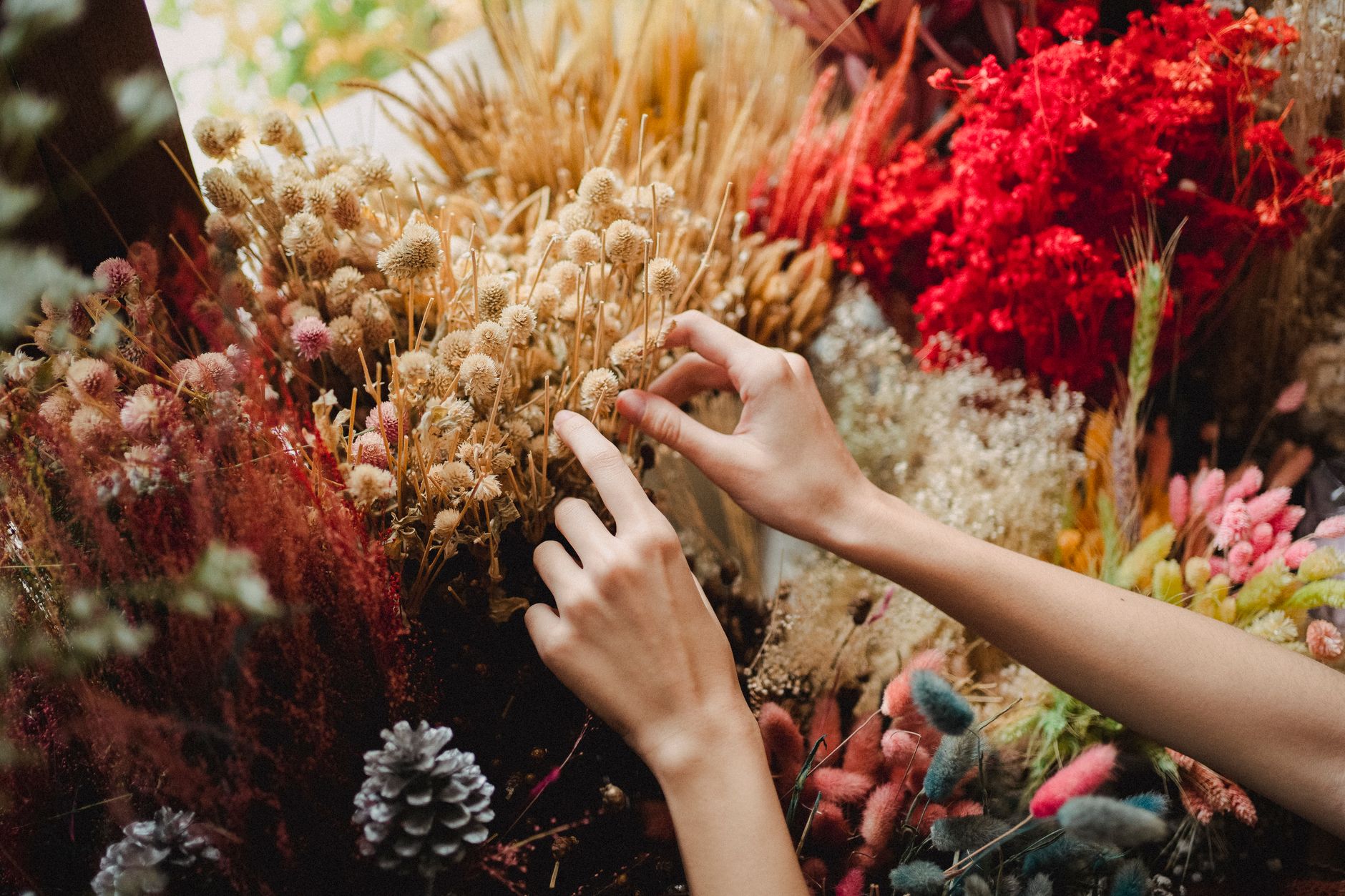
How should couples prepare and what might go wrong?
What to wear: comfortable clothes that can get wet (flower water splashes) and don't restrict arm movement. Avoid loose sleeves—they snag stems and tape. Wear shoes you don't mind water on; we work over a sink or bucket and the floor gets damp. What to bring: a phone or camera if you want to photograph your bouquet before taking it home; notes if there's a specific color palette you love (we'll work toward it, but we can't guarantee every shade is in stock that day). What to check beforehand: tell us about allergies—pollen, latex (we'll tape without it), fragrance sensitivities. Bring any special requests (anniversary date, favorite flower type, color theme) when you book. What goes wrong and how to avoid it: stems bruise if you crush them in a vice grip—we show you the grip and let you feel the difference. Bouquets look one-sided if you crowd flowers on one hemisphere—we stop you before that and ask you to step back and look. One person might check out emotionally if they're bored or embarrassed—we prevent this by giving them a real choice (you pick the color, you decide the height). Flowers wilt fast if you don't hydrate them immediately—we send you home with water-filled wrapping and care instructions you'll actually follow because you made it. A few couples show up without confirming the exact time and miss 20 minutes; use WhatsApp to confirm the meeting location and arrival window the day before.
Where can couples take a bouquet class, and what else can you do together?
We run bouquet classes in Hanoi, Ho Chi Minh City, Hoi An, and Da Nang. Each location has a different feel: Hanoi's old-quarter workshops are tucked into narrow lanes with worn shutters and locals living overhead; Hoi An's spaces often overlook the river or sit in refurbished shophouses. The class works best as a standalone 2-hour experience, but we often pair it with other Cáo Experiences—some couples do a Vietnamese coffee workshop in the morning and a bouquet class in the afternoon, or a street food and market tour where you source flowers from the market yourself, then arrange them nearby. If you want to dig deeper into floristry, we offer a 3-session flower arranging workshop where you learn seasonal design, color theory, and care science. If you're visiting with kids or extended family, we have experiences for families that work for all ages. For a slower-paced exploration, try a tea experience or a farm day in the countryside—those suit couples who want silence and space more than instruction.
What to check before you book
- Flower type: seasonal blooms change monthly. Ask what's available the week you're visiting; we'll confirm when you book.
- Space: intimate indoor workshops aren't accessible to large groups. Couples get the full attention of one host.
- Timing: morning classes (8–11 am) often have fresher flowers. Afternoon slots fill faster near holidays.
- Allergies: pollen and latex are the main ones. Tell us in advance so we can adjust.
- Transportation: bring your bouquet flat in a box or hand-carry it gently upright. A taxi or car works better than a motorbike.
- Photos: bring a plain background (sheet, wall) if you want to photograph it at home.

FAQ
Can we keep the bouquet fresh for more than a few days?
Yes, if you follow care instructions: change water every two days, re-cut the stems 1 cm, remove lower leaves, and keep it away from direct heat and fruit. Most bouquets last 7–10 days; roses last longer than softer flowers like dahlias.
What if we don't want the same style bouquet—can we each make our own?
We design the class for one shared bouquet so you negotiate and compromise—that's part of the experience. If you both want different styles, we can run two parallel arrangements with one host managing both, or you can book two solo slots back-to-back.
Is this class romantic, or is it too instructional?
It's collaborative, not candlelit. We focus on learning and making together, so you're both thinking and choosing. Some couples find that deeply connected; others want something softer. If romance is the priority, pair it with a tea experience or a quiet countryside farm day before or after.
Do we need to bring scissors or tools?
No, we provide professional floral shears, tape, wire, and a workspace. You just bring yourselves and maybe a phone for photos.
What's included, and what costs extra?
The class includes flowers, tools, instruction, and the bouquet to take home. Ask us for dates and a quote on WhatsApp—pricing varies by location, season, and flower availability. We don't charge extra for wrapping, photos, or minor adjustments on the day.
Ask about dates
Tell us the city, your dates and what you would like to try. We reply on WhatsApp in English with options and availability.
FAQ
Can we keep the bouquet fresh for more than a few days?
Yes, if you follow care instructions: change water every two days, re-cut the stems 1 cm, remove lower leaves, and keep it away from direct heat and fruit. Most bouquets last 7–10 days; roses last longer than softer flowers like dahlias.
What if we don't want the same style bouquet—can we each make our own?
We design the class for one shared bouquet so you negotiate and compromise—that's part of the experience. If you both want different styles, we can run two parallel arrangements with one host managing both, or you can book two solo slots back-to-back.
Is this class romantic, or is it too instructional?
It's collaborative, not candlelit. We focus on learning and making together, so you're both thinking and choosing. Some couples find that deeply connected; others want something softer. If romance is the priority, pair it with a [tea experience](/tea-experience) or a quiet countryside [farm day](/farm-experience) before or after.
Do we need to bring scissors or tools?
No, we provide professional floral shears, tape, wire, and a workspace. You just bring yourselves and maybe a phone for photos.
What's included, and what costs extra?
The class includes flowers, tools, instruction, and the bouquet to take home. Ask us for dates and a quote on WhatsApp—pricing varies by location, season, and flower availability. We don't charge extra for wrapping, photos, or minor adjustments on the day.
More like this
Flower arranging workshops
Flower Arranging Workshop in Phu Quoc: How to Book
A flower arranging workshop in Phu Quoc teaches you to design with fresh tropical and temperate stems in a hands-on morning or afternoon session. We run small-group classes in English, hosted in a garden studio setting—no experience needed.
Flower arranging workshops
Floristry class in Sapa: what to expect
A floristry class in Sapa means learning seasonal arrangement techniques in a quiet studio space, using fresh local flowers. We guide you through cutting, composition and color pairing—no experience needed.
Flower arranging workshops
Floristry class in Hanoi for solo travelers: what to expect
Solo travelers in Hanoi often wonder whether a flower-arranging class suits a single person. We run weekly small-group and private sessions where solo guests learn hand-tied bouquets, seasonal wreaths, and Vietnamese floral design—no skills needed, English-led, afternoons and mornings available.