 Cáo Experiences
Home › Blog › Flower arranging workshops
Bouquet Making Class in Vietnam for Seniors
By the Cáo Experiences team · 2026-11-01
A bouquet-making class for seniors in Vietnam is a small-group workshop where you learn to arrange fresh flowers into cohesive designs at your own pace, typically 2–3 hours, in a comfortable studio near Hanoi's old quarter. Cáo Experiences runs classes in English with just 2–4 people per session, flexible seating (chairs, low stools, or standing at a table—your choice), and we pause often for water or tea. You don't need prior experience; we show you stem-cutting, layering, color theory, and how to hold stems steady. Fresh flowers arrive weekly from growers outside the city. We skip the rushed boutique feel and focus on what feels sustainable for your body and attention span. Cost and dates: ask us for a quote on WhatsApp—pricing varies by group size and season.
How do bouquet classes actually run step-by-step?
We greet you with tea or water as soon as you arrive, no rushing. First 15 minutes: you sit and watch us demo a simple single-color spiral using soft stems—no complex geometry yet. We talk about why certain flowers suit seniors (roses and chrysanthemums are forgiving; delicate orchids aren't). Then you choose two or three colors from our buckets—we lay out maybe 20 types on a low table. Stems are pre-cut to safe lengths. You work at your table with your flowers, scissors, floral foam, and a vase we provide. We circle back every 10 minutes, never hovering, just checking posture and looseness of grip. Most people finish a loose, garden-style bouquet in 45 minutes. Last hour: we talk about care (how often to change water, where light matters), and you can tweak yours or start a second smaller one if you're enjoying it. We photograph your work. You take the bouquet home in a sturdy box, with written care notes.
Why do seniors worry about their hands, and what actually helps?
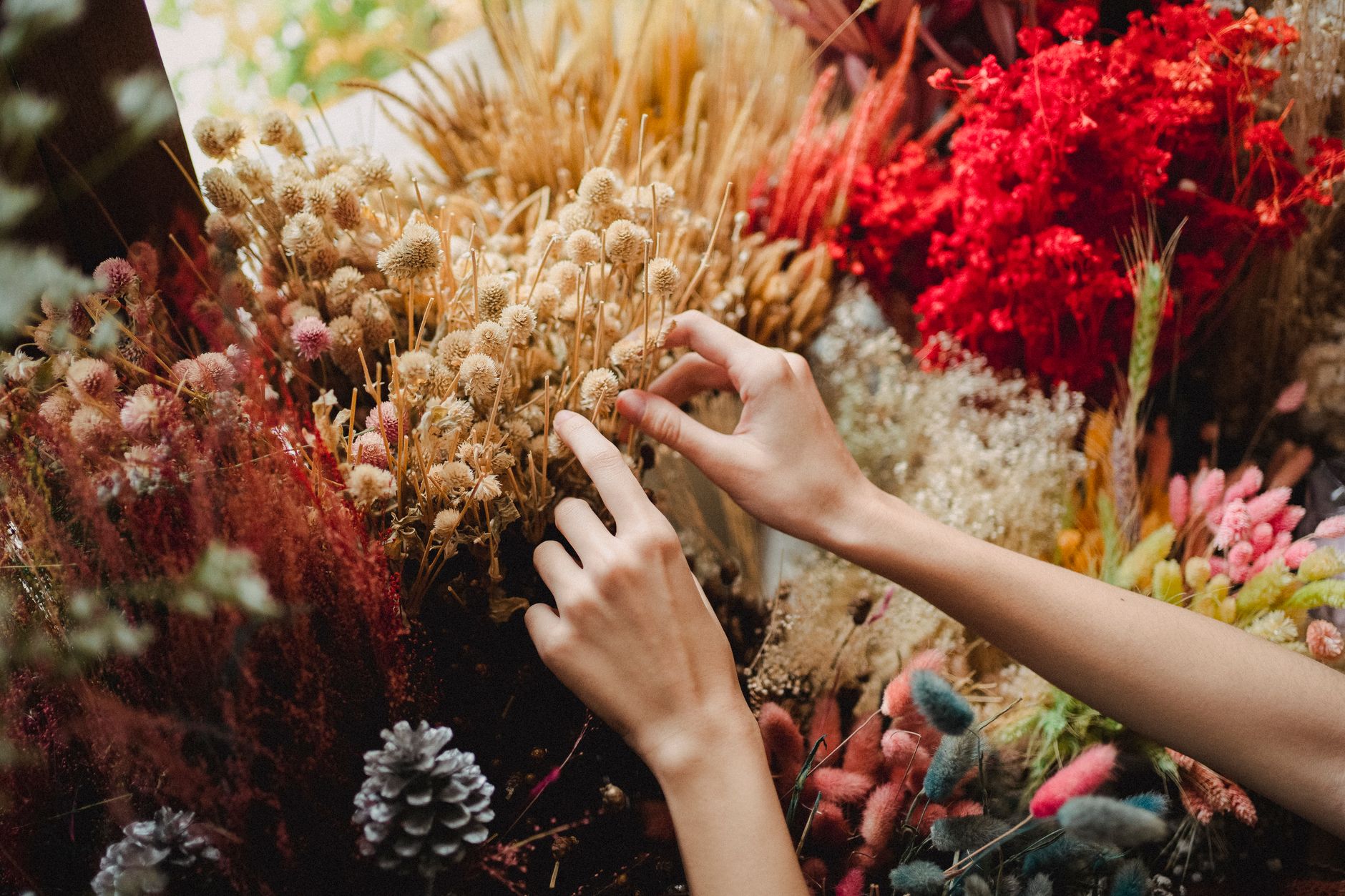
Arthritis, tremor, grip strength—these come up every time. Here's the truth: flower arranging doesn't demand fine motor control like surgery. You're holding fistfuls of stems, not threading needles. The real challenge is comfort—if your hand tires fast, you need to sit upright with a table at the right height, rest often, and use pre-cut stems. We do all of this. We also use softer flowers (peonies, dahlias, spray roses) that bend without snapping and foam that's pre-soaked so you're not fighting water absorption. If you have arthritis, avoid twisting motions: we teach a "gather and drop" method instead—pile stems gently, rotate the vase, not your wrist. Secateurs (flower scissors) are sharp and well-balanced; blunt ones demand force and cause pain. Bring a cushion for your chair if you like. We've had guests with significant hand pain leave saying their hands felt less sore afterward because the work was rhythmic and low-pressure, not stilted or anxious.
What's the difference between a group class and a private session for slower pacing?
Group sessions (2–4 guests) cost less and you meet other people interested in flowers—sometimes friendships start. We move at a gentle pace anyway, so the group rhythm works for most. Private sessions give you Cáo's full attention: we can pause longer for rest, slow the demo to your exact speed, bring flowers you love (we ask beforehand), and adapt materials if you have hand limitations or sensory preferences (some guests don't like wet foam; we show you alternatives). Private also suits couples who want to work side-by-side at their own pace, or adult children attending with a parent. Cost per person in a group session is lower; a private session is a flat quote based on your preferences and our time. Neither is rushed. Ask about both on WhatsApp and tell us which setup you're imagining.
Explore our flower arranging classes
Which seasons and flowers work best in Hanoi?
Spring (February–April) brings roses, lisianthus, and ranunculus—colors are soft and supply is steady. Summer (May–August) is humid; flowers wilt faster. Autumn (September–November) is ideal—cool mornings, abundant chrysanthemums, dahlias, and imported roses. Winter (December–January) is cold but stable; good for hardy stems like hypericum and solidago. We source from family growers in the Red River delta; they work with us to bring bouquet-grade flowers to the studio. You can't always choose blooms—availability shifts weekly—but we show you color palettes that work year-round: cream with blush, deep burgundy with gold, or monochrome white for calm. If you're visiting a specific month, tell us and we'll suggest what's likely and plan timing to avoid peak heat. We also run classes on cooler afternoons in summer, or mornings in spring, depending on when your visit falls.
How do allergies, mobility, and weather changes affect the session?
Pollen is present but light—we remove stamen from lilies and use pollen-free varieties on request. If you have respiratory sensitivities, tell us in advance; we adjust flower types and work near an open door or window. Mobility: the studio has a ground-floor room, no stairs, chairs of varying heights, and a table you can adjust. We can bring flowers and foam to you if standing is uncomfortable. Rain is common in Hanoi; it doesn't stop us—we work indoors with ventilation, and wet weather is actually nicer for flowers (they stay hydrated longer). Cold mornings may make arthritic joints stiff; warn us, and we'll start with a warm tea break and gentle hand movements before you touch stems. Heat and humidity fatigue older guests faster; we schedule you in early morning or late afternoon, offer frequent water, and keep sessions to 2 hours max in summer. No heat or mobility issue has ever stopped a session.

What to check before you book a bouquet class
- Confirm venue access. Ask whether there are stairs, doorways with height restrictions, or uneven floors. Ground-floor studios are easiest.
- Clarify flower allergies or sensitivities. Tell us if you react to pollen, strong scent, or specific blooms (dahlias, lily stamen, eucalyptus).
- Discuss hand or joint concerns. Arthritis, tremor, recent injury—we adapt materials and posture without making it awkward.
- Check session length. Confirm it's 2–3 hours with breaks, not a rushed 90 minutes.
- Ask about takeaway size. Some venues give you a tiny posy; we make full, generous bouquets that fit in standard vases at home.
- Verify group size. Confirm you know how many people will be there and whether you can request a smaller group.
See all our experiences in Hanoi
Bouquet Class vs. Other Flower Experiences: Which Suits You?
| Experience | Duration | Who it's for | What you make | Why choose it |
|---|---|---|---|---|
| Bouquet-making class | 2–3 hours | Seniors, couples, flower-curious adults | One full bouquet, optional second small one | Hands-on learning, calm pace, take home a finished gift |
| Flower arranging workshop | 2–4 hours | All ages, including younger guests | Multiple styles (vase, low bowl, tall stem) | Deeper technique, more variety, slower narrative |
| Farmstay flower walk | 3–4 hours | Active seniors, groups | Photos and loose picking | See where flowers grow, light activity, no arrangement |
| Farm and countryside experiences | Half or full day | Families, groups | Gardening, harvesting, meals | Total immersion, includes food and rural life |
Bouquet classes focus purely on making something beautiful with your hands and taking it home. If you want to understand soil, growing seasons, or farm life, pair it with a countryside day. If you're visiting briefly and want one focused, meditative session, a bouquet class is ideal.
Real Stories: What Guests Discover
A 68-year-old from Sydney said her tremor had kept her from gardening for five years. Midway through a bouquet session, she realized her hands felt steadier—the rhythm of turning stems, the low-stakes repetition, the lack of judgment. She booked a private class for her daughter visiting next month.
A couple in their 70s who'd never arranged flowers came to celebrate their anniversary. They made separate bouquets—he chose warm earth tones, she went for cool pink and white—then swapped halves and rearranged together. They photographed it and sent it to their grandchildren.
Another guest mentioned that in her own country, flower classes felt performative and quick; here, the teacher brought tea unprompted, asked about her life, and slowed the whole thing down. No one was watching the clock.
These aren't testimonials we collect—they're the texture of how these mornings actually go.
Pages from our team you may need

FAQ
Do I need to know anything about flowers before I arrive?
No. We teach you what matters: how to cut stems at an angle, why some flowers are flexible and others stiff, how to layer color so it feels balanced. Most guests have never arranged anything. We start from the very beginning.
Can my partner or family member sit with me even if they're not arranging?
Yes. They can watch, sip tea, and chat. Some people bring a friend for moral support or company. There's no pressure to participate—sitting quietly is fine too.
What if I get tired halfway through?
We pause. Rest as long as you need. You can finish your bouquet later or leave it with us and take a photo. No one finishes if they're uncomfortable—the point is enjoyment, not performance.
Will the flowers last long after I take them home?
Yes, if you follow the care notes we give you. Trim stems every two days, change water every three days, keep them away from direct heat and fruit. A bouquet from a class typically lasts 7–10 days, sometimes longer.
Is there a minimum age or maximum age?
No minimum, no maximum. We've taught ages 6 to 88. Seniors sometimes thrive because they have patience and an eye for color that younger guests haven't developed yet.
Can I request specific colors or flower types in advance?
Yes. In private sessions, absolutely—we ask you beforehand. In group sessions, we work with what's fresh that week, but you tell us your color preference and we prioritize it from what's available.
What if it rains on the day of my class?
We run indoors, so rain doesn't affect us. Flowers actually stay fresher in cool, humid weather. No cancellation or rescheduling needed.
How much does a bouquet class cost?
Pricing depends on group size, private vs. group, and flower availability that season. Ask us for a detailed quote on WhatsApp with your preferred dates and group size. --- Explore our flower arranging classes | Ask about dates on WhatsApp
Ask about dates
Tell us the city, your dates and what you would like to try. We reply on WhatsApp in English with options and availability.
FAQ
Do I need to know anything about flowers before I arrive?
No. We teach you what matters: how to cut stems at an angle, why some flowers are flexible and others stiff, how to layer color so it feels balanced. Most guests have never arranged anything. We start from the very beginning.
Can my partner or family member sit with me even if they're not arranging?
Yes. They can watch, sip tea, and chat. Some people bring a friend for moral support or company. There's no pressure to participate—sitting quietly is fine too.
What if I get tired halfway through?
We pause. Rest as long as you need. You can finish your bouquet later or leave it with us and take a photo. No one finishes if they're uncomfortable—the point is enjoyment, not performance.
Will the flowers last long after I take them home?
Yes, if you follow the care notes we give you. Trim stems every two days, change water every three days, keep them away from direct heat and fruit. A bouquet from a class typically lasts 7–10 days, sometimes longer.
Is there a minimum age or maximum age?
No minimum, no maximum. We've taught ages 6 to 88. Seniors sometimes thrive because they have patience and an eye for color that younger guests haven't developed yet.
Can I request specific colors or flower types in advance?
Yes. In private sessions, absolutely—we ask you beforehand. In group sessions, we work with what's fresh that week, but you tell us your color preference and we prioritize it from what's available.
What if it rains on the day of my class?
We run indoors, so rain doesn't affect us. Flowers actually stay fresher in cool, humid weather. No cancellation or rescheduling needed.
How much does a bouquet class cost?
Pricing depends on group size, private vs. group, and flower availability that season. Ask us for a detailed quote on WhatsApp with your preferred dates and group size. --- [🌸 Explore our flower arranging classes](/flower-arranging) | [💬 Ask about dates on WhatsApp](https://wa.me/84338762340)
More like this
Flower arranging workshops
Flower Arranging Workshop Ho Chi Minh City: How to Book
A flower arranging workshop in Ho Chi Minh City teaches you to design seasonal arrangements in a calm studio setting. We run small-group and private sessions with English-speaking hosts who walk you through technique, flower choice, and how to make arrangements last.
Flower arranging workshops
Flower arranging workshop in Ninh Binh for couples
A flower arranging workshop in Ninh Binh lets couples create an arrangement together in a calm setting, learning Vietnamese design principles while working with seasonal blooms.
Flower arranging workshops
Flower Arranging Workshop in Mekong Delta for Foreigners
We run intimate flower arranging workshops in family-owned gardens and workshops across the Mekong Delta, where you'll learn seasonal design by practicing alongside our hosts. Pick your own blooms, arrange three pieces, and take them home.