 Cáo Experiences
Home › Blog › Flower arranging workshops
Bouquet Making Class in Vietnam in July
By the Cáo Experiences team · 2026-11-01
Bouquet making classes in Vietnam run year-round, and July offers abundant seasonal blooms: ginger flowers, celosia, zinnias, and imported roses thriving in the heat. We host flower arranging workshops in Hanoi and Hoi An as small groups (usually 4–8 people) or private sessions, taking 2–3 hours. You arrive with no experience needed; we teach you flower conditioning, spiral and massed techniques, color theory, and how to build a balanced arrangement. You leave with a vase-ready bouquet you've made yourself, and photos of the process. July classes run indoors in air-conditioned spaces to keep stems fresh. We adapt timing and complexity for kids and seniors. Cost and exact dates vary by group size and location—ask us for a quote on WhatsApp with your preferred city and group size. Ask about dates on WhatsApp
Why does July change what flowers you'll actually use?
July in Vietnam is monsoon season—hot, humid, and intense rain. This means the flower market is full of locally grown blooms that thrive in this weather rather than struggle. You'll work with celosia (cockscomb), which comes in deep reds and purples; anthuriums; ginger flowers; fresh-cut zinnias in warm tones; and imported roses that arrived before the heaviest rains. We choose stems that are robust and won't wilt in your hands or during the class. What you won't find reliably in July are delicate spring flowers like cherry blossoms or pale ranunculus—but the tropical palette is more forgiving for beginners and honestly more fun to handle.

What exactly happens in the first hour?
You arrive at a family workshop space in a quiet lane (Hanoi) or near the Ancient Town (Hoi An), usually around 9 or 14:30. We show you our flower selection laid out on a long table—you'll touch and smell them all. We demonstrate stem cutting at the correct 45-degree angle, how to strip lower leaves to prevent rot, and why conditioning (soaking stems in room-temperature water for 30 minutes) matters. You ask questions: "Can I mix red and pink?" (yes, if tones harmonize). "How long will this last?" (usually 7–10 days if you change the water every two days and re-cut stems). Then you pick your color scheme, and we guide you through choosing 5–7 stems of focal flowers (roses, anthuriums) and filler (eucalyptus, greens, baby's breath).
How do we adapt if someone has never held a flower tool?
Almost everyone who arrives has never arranged flowers before, and that's the norm for us. We don't assume anything. We show you how to hold the floral knife safely, let you practice on a practice stem, and watch your grip on the first real flower. For seniors, we offer taller tables so you're not bending, and we can arrange for you to sit throughout instead of standing. For kids (we run family flower experiences in school holidays), we use pre-conditioned stems and let them build shorter, looser arrangements with bigger blooms—less precision, more play. If someone's arthritis makes gripping hard, we hold stems at angles and let them direct the placement. The spiral technique we teach works best for people who've never done this: you rotate the bouquet in your non-dominant hand while adding stems at a slight angle with the other, building a circular base. Massed arrangements (flowers clustered tightly in a vase) are easier for total beginners because gaps matter less.
What goes wrong, and how do we prevent it?
The most common mistake is using too much filler, which hides beautiful blooms. We catch this by asking you to step back halfway through—you'll see it yourself and remove half the eucalyptus. Heat stress happens if stems sit out of water too long; we keep a bucket beside you for holding finished work. July humidity means stems bruise easily if squeezed; we remind you to hold them gently and show you how a bruise wilts within hours. Beginners often pack flowers too tightly, crushing delicate petals; we demonstrate the "thumb rule"—thumb goes in the center of each layer—so pressure is even. If you're allergic to pollen (lilies are common triggers), tell us before the class; we can remove stamens or substitute stems. Rain doesn't stop the class because we're indoors, but if it's extremely heavy and flooding occurs (rare in July), we'll reschedule via WhatsApp.
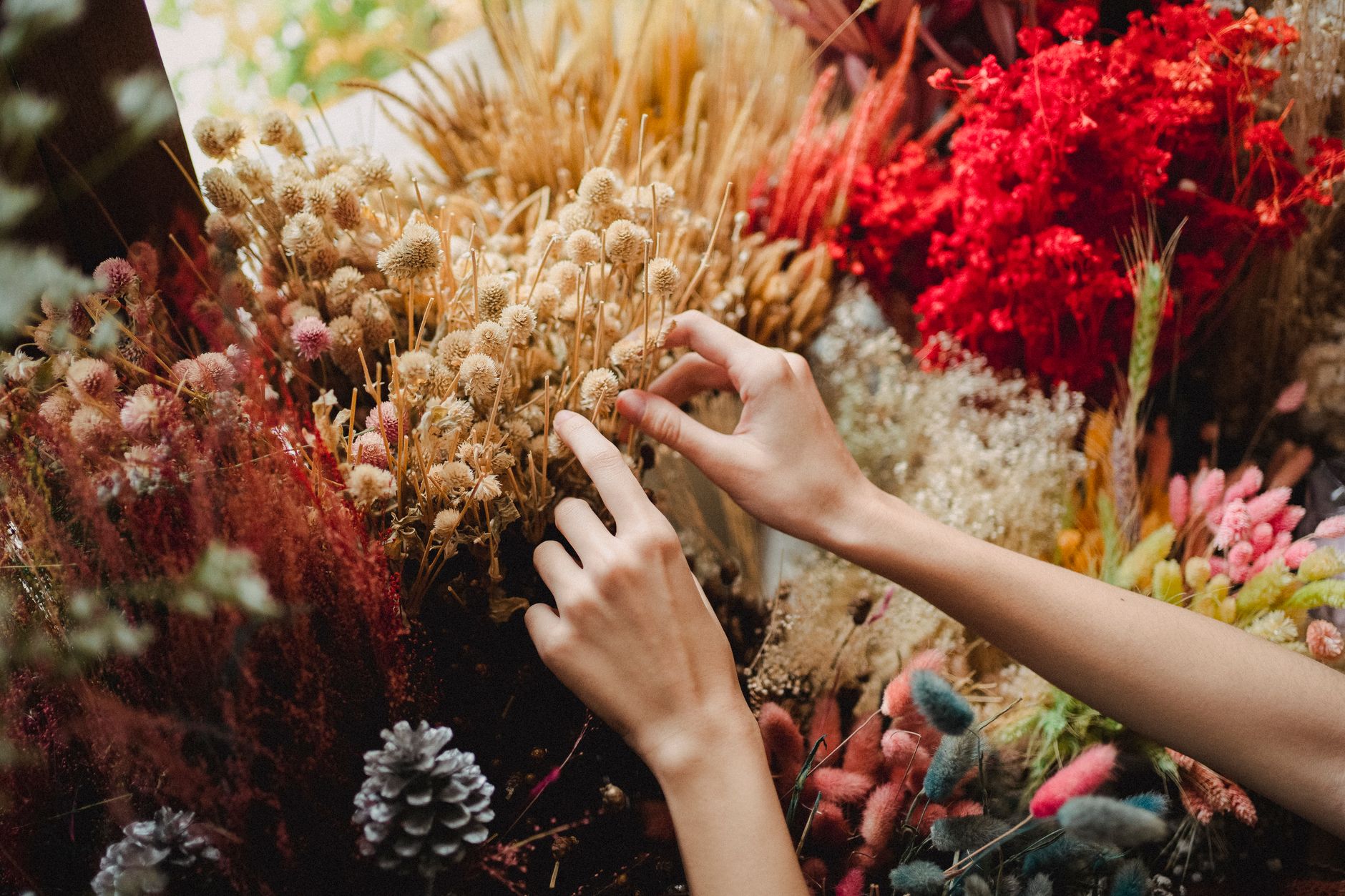
How does a bouquet from this class survive the journey home?
We wrap your finished arrangement in paper and secure the stems in a water-filled vial at the base. We give you a take-home instruction sheet: water daily, re-cut stems every 2–3 days, keep out of direct sun, remove wilting petals as they appear. If you're staying in a guesthouse, we wrap it in a plastic bag for transport and show you how to unwrap it without crushing stems. If you're traveling by bus or flight within 24 hours, keep it upright, mist the petals lightly, and avoid the hottest part of the day. We've had people carry arrangements on overnight trains; they last better than you'd expect if you follow the steps. If stems start dropping within two days, it's usually because the water wasn't changed or the vase wasn't clean (bacteria thrive in July heat).
Does arranging flowers connect to other experiences in Vietnam?
Many guests combine a flower arranging class with a farm and countryside visit to see where some flowers grow, or a cooking class in the morning followed by flowers in the afternoon. In Hanoi, some join an evening coffee workshop and arrange flowers in candlelight afterward—a romantic pairing. In Hoi An, a few guests do flowers one morning, then a street food and market tour the next to see the flower market in action. We can coordinate these as part of a longer stay; ask us about bundling experiences.
Decision table: July class styles and what suits you
| Class type | Best for | Duration | Takeaway | Why choose this |
|---|---|---|---|---|
| Small group (4–8 people) | Couples, friends, solo travelers meeting others | 2–2.5 hours | One bouquet per person | Cheaper per person, social energy, shared photo moment |
| Private (2–4 friends/family) | Families, small teams, anniversaries | 2.5–3 hours | One bouquet per person | Flexible pace, personal stories, photos in your own bubble |
| Extended (3+ hours, Hanoi only) | Deep learners, photography lovers | 3–3.5 hours | Bouquet + second smaller arrangement or centerpiece | Two techniques, more stems, styling for home or event |
What to check before you book a July class
Dates: July is warm and busy; many guests book 2–3 weeks ahead. Check availability early on WhatsApp.
Location: Hanoi classes are in a quiet lane off the old quarter; Hoi An classes are near the Ancient Town. Make sure the location suits your mobility and transport plans.
Group size: Small groups (4–8) balance intimacy and energy; private groups cost more per person but suit families with kids or people who prefer quiet focus.
Flowers in July: Expect tropical blooms and warm colors. If you have your heart set on pale spring pastels, July isn't the right month—reschedule for October or March.
Time of day: Morning (8:30–11:00) is cooler; afternoon (14:00–17:00) is hotter but many prefer the light. July heat is intense; let us know your preference.
Allergies or sensitivities: Tell us about lily pollen or hay fever so we can swap stems or adjust.
Solo travelers: You're welcome; you'll pair with others in a group class, or book private if you prefer to work alone.

FAQ
Can I arrange flowers as a complete beginner with no prior experience?
Yes, absolutely. We assume no prior knowledge. Most guests have never held a floral knife. We walk through every step—cutting, conditioning, spiral building, color balancing—and you end with a finished bouquet. July's robust flowers are forgiving and ideal for learning.
How long will the bouquet I make in July last?
7–10 days with proper care (daily water changes, fresh cuts, out of direct sun). July heat and humidity can shorten this to 5–7 days if conditions are very warm; we give you a care sheet with exact instructions to maximize life.
Do I need to bring anything or wear special clothes?
Wear something you don't mind getting damp—water splashes. Closed-toe shoes are safest around the floral knife. Bring your phone for photos. We provide aprons, tools, stems, vases, and wrapping paper.
Can kids join a July class, and what's the minimum age?
Yes. Kids 7+ work well with guidance; younger kids thrive in our family experiences where the activity is more playful than precise. We adjust for attention span and strength; most kids 7–12 love arranging and leave excited.
What if it rains heavily in July?
We're indoors in air-conditioned spaces, so rain doesn't cancel class. Extreme flooding is rare in July in urban areas where we operate, but if it occurs, we reschedule via WhatsApp within a few days.
Is this class a gift option for someone else, or only for direct participation?
Only for direct participation—you make the bouquet yourself. However, a gift experience with Cáo is a lovely alternative; ask us about gift bookings.
Ask about dates
Tell us the city, your dates and what you would like to try. We reply on WhatsApp in English with options and availability.
FAQ
Can I arrange flowers as a complete beginner with no prior experience?
Yes, absolutely. We assume no prior knowledge. Most guests have never held a floral knife. We walk through every step—cutting, conditioning, spiral building, color balancing—and you end with a finished bouquet. July's robust flowers are forgiving and ideal for learning.
How long will the bouquet I make in July last?
7–10 days with proper care (daily water changes, fresh cuts, out of direct sun). July heat and humidity can shorten this to 5–7 days if conditions are very warm; we give you a care sheet with exact instructions to maximize life.
Do I need to bring anything or wear special clothes?
Wear something you don't mind getting damp—water splashes. Closed-toe shoes are safest around the floral knife. Bring your phone for photos. We provide aprons, tools, stems, vases, and wrapping paper.
Can kids join a July class, and what's the minimum age?
Yes. Kids 7+ work well with guidance; younger kids thrive in our family experiences where the activity is more playful than precise. We adjust for attention span and strength; most kids 7–12 love arranging and leave excited.
What if it rains heavily in July?
We're indoors in air-conditioned spaces, so rain doesn't cancel class. Extreme flooding is rare in July in urban areas where we operate, but if it occurs, we reschedule via WhatsApp within a few days.
Is this class a gift option for someone else, or only for direct participation?
Only for direct participation—you make the bouquet yourself. However, a gift experience with Cáo is a lovely alternative; ask us about gift bookings.
More like this
Flower arranging workshops
Flower Arranging Workshop Ho Chi Minh City: How to Book
A flower arranging workshop in Ho Chi Minh City teaches you to design seasonal arrangements in a calm studio setting. We run small-group and private sessions with English-speaking hosts who walk you through technique, flower choice, and how to make arrangements last.
Flower arranging workshops
Flower arranging workshop in Ninh Binh for couples
A flower arranging workshop in Ninh Binh lets couples create an arrangement together in a calm setting, learning Vietnamese design principles while working with seasonal blooms.
Flower arranging workshops
Flower Arranging Workshop in Mekong Delta for Foreigners
We run intimate flower arranging workshops in family-owned gardens and workshops across the Mekong Delta, where you'll learn seasonal design by practicing alongside our hosts. Pick your own blooms, arrange three pieces, and take them home.