 Cáo Experiences
Home › Blog › Flower arranging workshops
Bouquet Making Class Vietnam for American Travelers: A Hands-On Guide
By the Cáo Experiences team · 2026-11-01
A bouquet-making class with Cáo Experiences is a 2–3 hour hands-on session in an intimate workshop space where you learn to arrange fresh Vietnamese flowers—dahlias, roses, hypericum, celosia, and local seasonal stems—using simple tools and professional techniques. You start by understanding flower anatomy and color theory, then design and build your own bouquet from scratch, guided by our hosts in English. Classes run in Hanoi, Hoi An, Da Lat, and Ho Chi Minh City, suit all skill levels, and cost is quoted per person depending on group size and flower selection. Most American travelers bring home their finished bouquet wrapped and packed for flight (we advise checking airline baggage rules beforehand). No prior experience needed; beginners worry most about "ruining" flowers, but we work with abundance—mistakes become learning. Ask us for dates and a quote on WhatsApp. Ask about dates on WhatsApp
What actually happens during a bouquet class?
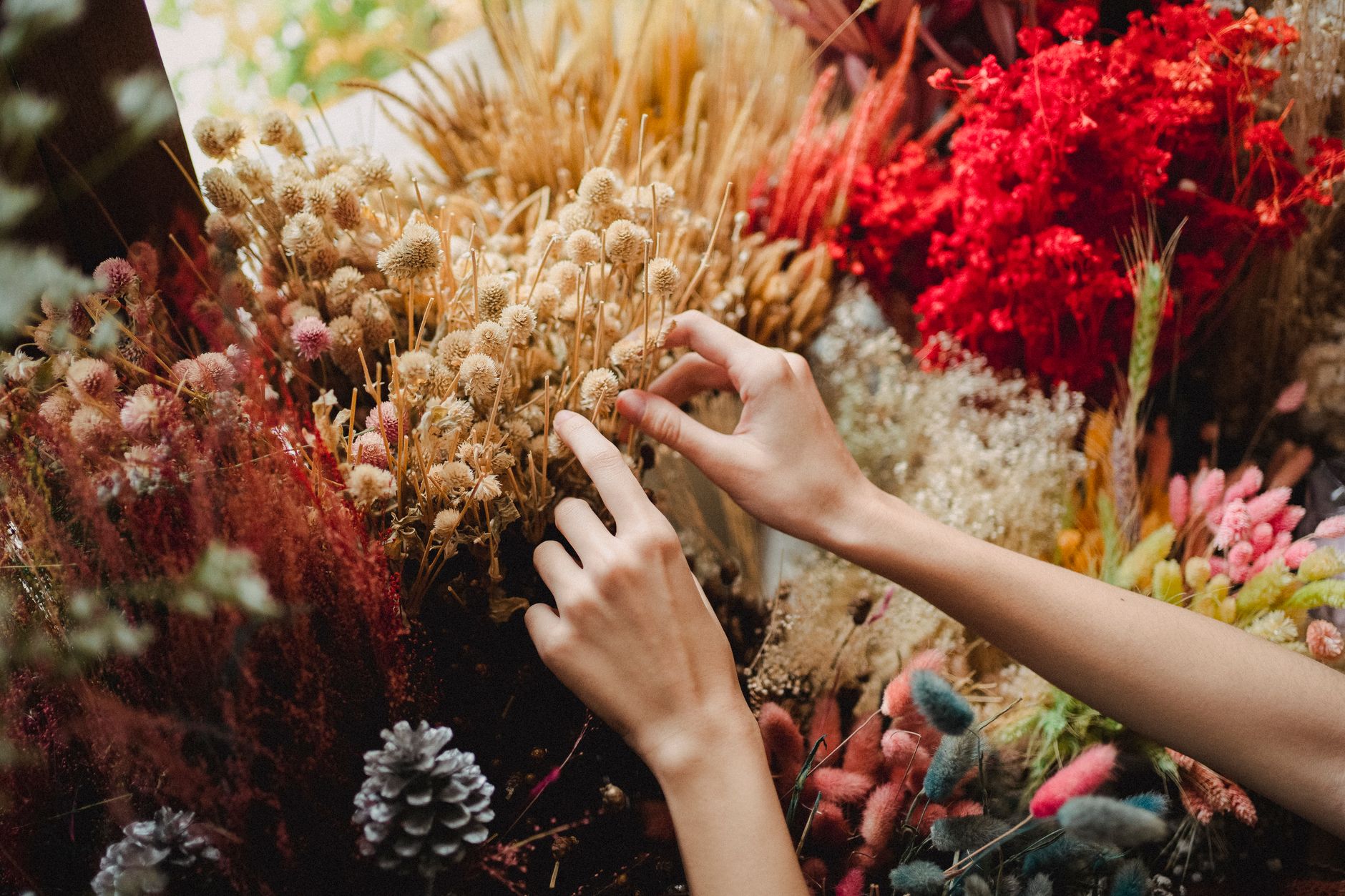
You arrive at our workshop—a quiet room in a colonial-era building or family lane, never a tourist shop—and we start with tea or water while introducing flower types by touch and smell. The first 20 minutes cover structure: focal flowers (big statement blooms), secondary flowers (filler and texture), and greenery (the frame). We show you how to hold stems, strip leaves, and cut at angles. Then you choose your color palette from the day's stock—soft pastels, deep jewel tones, or bold tropicals—and begin building. We move through your piece together: spiraling stems, balancing height, turning the bouquet to check all angles. Most people finish a hand-tied bouquet 8–10 inches in diameter. Last 15 minutes: wrapping in kraft paper or tissue, tying with twine or ribbon, hydration tips so it lasts 5–7 days. You leave holding something you made, not bought.

Will I mess up if I've never arranged flowers before?
Almost every American arrival says this. Here's honest truth: your first attempt will feel unbalanced. That's normal. We don't expect perfection; we teach decision-making. The "mistake" is actually the learning moment—you see why three roses clustered on one side looks wrong, then redistribute. Beginners usually worry about spacing, color clash, or making stems too short. We keep spare flowers on every table, so if a stem breaks or you don't like a choice, you pull it out and try another. The bouquet you take home won't look like a florist's Instagram photo, and that's the whole point—it's yours, built by your hands, with your taste. Confidence comes from the first hour. By hour two, people stop asking permission and start experimenting.
Explore our flower arranging workshop
How do you adapt classes for kids, older travelers, and groups?
For kids (ages 8+), we simplify height to 6–7 inches, use only pre-cut stems so no scissors confusion, and let them pick bold single-color bouquets—reds, sunflowers, greens. A parent or guardian works alongside. We keep the structure lesson short (5 minutes) and hands-on long. For seniors or those with grip concerns, we provide floral foam (a green block that holds stems without hand-tying) instead of the spiral technique—it's equally beautiful, less physical strain. For groups of 6+, we run the same session side-by-side; each person gets their own workspace and stems, but we teach once and circulate. Rain doesn't close us—we work indoors. Allergy sufferers should tell us in advance; some people react to pollen (we have low-pollen varieties), and a simple mask helps. For non-English speakers in your group, we use gesture, color cards, and WhatsApp translation. We've hosted multigenerational families, corporate teams, and friend groups—no one leaves without a bouquet and at least one laugh at how many leaves you actually pull off before you get it right.

How do I actually get my bouquet home on a plane?
This is the question every American asks. Here's what we've learned: most airlines allow wrapped bouquets in carry-on (fits overhead bin or under seat, depending on size), not checked luggage (pressure, temperature). We wrap yours in kraft paper with a cardboard sleeve and seal it with tape so stems don't shift. We also wrap the stem ends in wet paper towel inside a small plastic bag—keeps them hydrated for 8–12 hours. Before your class, check your specific airline's policy—some international carriers are stricter than US domestic. Pack it upright in your bag or ask the gate agent if there's a coat closet on the aircraft (yes, seriously—staff will sometimes stash a bouquet there). Bring a small vase or jar in your checked bag for the hotel, or ask your accommodation if they have one. If flying the next day, keep the bouquet in a cool, dark spot (not direct sun) and refresh water if possible. On a 13–16 hour flight to the US, expect some wilting, but petals stay vibrant for 2–3 days after arrival—enough to display and photograph.
| Travel timing | Packing method | Success rate | Best for |
|---|---|---|---|
| Same-day flight | Kraft wrap + wet towel, carry-on | High | Day classes before evening departure |
| Next-day flight | Wrapped, hotel vase, cool spot | Very high | Classic multi-day trip |
| Week-long stay | Wrapped, water refresh daily | Excellent | Classes early in visit |
| Checked baggage | Not recommended | Low risk but wilting likely | Only if carry-on impossible |
What other experiences pair well with a bouquet class?
If you're in Vietnam for a week, a bouquet class (2–3 hours) fits beautifully between longer activities. Many guests combine it with a Vietnamese cooking class the same day (morning flower, lunch cooking, evening meal you made). In Hanoi, pairing a bouquet session with a street food and market tour gives you a full sensory day—you see flowers at Quang Ba flower market in the early morning chaos, then arrange them calm and focused later. In Hoi An, we often suggest a class plus an afternoon tea experience in a local garden setting, or in Da Lat, flower class plus farm and countryside visit (Da Lat is Vietnam's flower capital—seeing where blooms grow changes how you think about arrangement). For couples, a private bouquet session followed by a Vietnamese coffee workshop in a quiet café is a memorable half-day. Solo travelers often book a group class to meet other people, then extend with art and culture or wellness experiences. The thread is hands-on, intimate, and slow—no rushing between tourist checkboxes.
Book your flower arranging session
What should you check before booking a class?
Flower season & availability. Vietnam has year-round blooms, but July–September imports are tighter and prices shift (we quote fresh each season). Ask us about what's in season when you're visiting.
Group size. Classes run 1–10 people. Larger groups need more workspace; we may split into back-to-back sessions. Confirm your party size early.
Allergy or sensory sensitivity. Pollen, strong floral scent, or latex (in some floral foam) can trigger reactions. Let us know in advance so we source alternatives.
Wrapped bouquet weight. A hand-tied bouquet wrapped for travel weighs 500–800 grams (about 1–1.75 lbs)—check airline carry-on restrictions.
Flower care at home (US). Once home, trim stems daily, change water every 2–3 days, keep away from direct sun and ripening fruit. Most bouquets last 7–10 days indoors.
Workshop access. Our spaces have stairs or narrow doorways in older buildings. If mobility is limited, mention it—we can sometimes arrange ground-floor alternatives or send photos of the space first.
FAQ
Do I need any prior flower-arranging experience?
No. We teach absolute beginners and experienced arrangers equally. Beginners often finish happier—there's no "correct" way, just your choices. We guide structure; you decide color and placement.
Can I do a private class just for my partner or family?
Yes. Private classes run on dates you choose (we coordinate via WhatsApp). Smaller groups (2–4 people) often feel more relaxed. Ask us for dates and availability.
What if I have a severe flower allergy?
Tell us before booking. We can source low-pollen varieties (some roses, carnations, greenery-heavy designs) or suggest an alternative experience like a craft workshop instead. Honesty upfront saves disappointment.
How long does the bouquet last after I make it?
5–7 days with daily water changes and stem trimming, longer if kept cool. Expect some petal drop by day 4—that's natural aging, not your fault.
What if my flight is the morning after the class—will the bouquet survive?
Usually yes, if wrapped and kept cool overnight. Keep it upright, add water once if possible, wrap it fresh before the airport. Carry-on is safest; checked baggage risks pressure damage.
Is there a rainy-day alternative if weather is bad?
No—we work indoors regardless. Rain doesn't affect classes. However, extreme weather (typhoon warning) would trigger rescheduling; we'd offer dates within your stay or full rescheduling on return. Ask about dates on WhatsApp --- Ready to arrange? See how a session runs—ask us about your dates, group size, and any dietary or access needs. We host bouquet classes in Hanoi, Hoi An, Da Lat, and Ho Chi Minh City year-round.
Ask about dates
Tell us the city, your dates and what you would like to try. We reply on WhatsApp in English with options and availability.
FAQ
Do I need any prior flower-arranging experience?
No. We teach absolute beginners and experienced arrangers equally. Beginners often finish happier—there's no "correct" way, just your choices. We guide structure; you decide color and placement.
Can I do a private class just for my partner or family?
Yes. Private classes run on dates you choose (we coordinate via WhatsApp). Smaller groups (2–4 people) often feel more relaxed. Ask us for dates and availability.
What if I have a severe flower allergy?
Tell us before booking. We can source low-pollen varieties (some roses, carnations, greenery-heavy designs) or suggest an alternative experience like a [craft workshop](/craft-workshops) instead. Honesty upfront saves disappointment.
How long does the bouquet last after I make it?
5–7 days with daily water changes and stem trimming, longer if kept cool. Expect some petal drop by day 4—that's natural aging, not your fault.
What if my flight is the morning after the class—will the bouquet survive?
Usually yes, if wrapped and kept cool overnight. Keep it upright, add water once if possible, wrap it fresh before the airport. Carry-on is safest; checked baggage risks pressure damage.
Is there a rainy-day alternative if weather is bad?
No—we work indoors regardless. Rain doesn't affect classes. However, extreme weather (typhoon warning) would trigger rescheduling; we'd offer dates within your stay or full rescheduling on return. [💬 Ask about dates on WhatsApp](https://wa.me/84338762340) --- *Ready to arrange? [See how a session runs](/contact)—ask us about your dates, group size, and any dietary or access needs. We host bouquet classes in Hanoi, Hoi An, Da Lat, and Ho Chi Minh City year-round.*
More like this
Flower arranging workshops
Flower Arranging Workshop Ho Chi Minh City: How to Book
A flower arranging workshop in Ho Chi Minh City teaches you to design seasonal arrangements in a calm studio setting. We run small-group and private sessions with English-speaking hosts who walk you through technique, flower choice, and how to make arrangements last.
Flower arranging workshops
Flower arranging workshop in Ninh Binh for couples
A flower arranging workshop in Ninh Binh lets couples create an arrangement together in a calm setting, learning Vietnamese design principles while working with seasonal blooms.
Flower arranging workshops
Flower Arranging Workshop in Mekong Delta for Foreigners
We run intimate flower arranging workshops in family-owned gardens and workshops across the Mekong Delta, where you'll learn seasonal design by practicing alongside our hosts. Pick your own blooms, arrange three pieces, and take them home.