
Home › Blog › Experiences for families and kids
Family Activities Vietnam vs Thailand: Which Hands-On Experiences Win
By the Cáo Experiences team · 2026-11-06
Vietnam and Thailand both run cooking classes, farm days, and craft workshops for families, but they differ in rhythm, cost base, and what children encounter. Vietnam's family activities center on rice paddies, street kitchens, and coffee farms in the Central Highlands; Thailand leans toward elephant sanctuaries, temple visits, and beachside resorts. Vietnam's wet season runs May–September (floods in the north, humidity everywhere); Thailand's is similar but shifts by region—the Gulf coast floods October–November. Cáo Experiences runs family sessions in Hanoi, Saigon, Hoi An, and Da Lat; most activities suit ages 5+ with adult supervision, take 3–4 hours, and let kids cook, plant, or feed animals hands-on. Both countries require sun protection and water bottles. Vietnam's narrow lanes and motorbikes mean smaller groups move easier; Thailand's wider infrastructure suits larger family clusters. Ask us for dates and a detailed family plan that matches your dates and what your kids actually enjoy. Ask about dates on WhatsApp
What makes Vietnam's family activities different from Thailand's?
Vietnam's family experiences focus on process over spectacle: kids peel herbs in a family kitchen, plant lettuce in a wet rice paddy, or learn to roast coffee beans in a pine-forest workshop. Thailand tends toward encounter-based learning—riding elephants, feeding fish in temple pools, snorkeling. Neither is wrong, but they appeal to different kids. A child who loves getting her hands dirty and tasting raw ingredients thrives in Vietnam's cooking and farm days. A child who wants to see animals and visit famous landmarks finds more of that in Thailand. Vietnam's family activities happen in tight, walkable spaces—a lane off the old quarter, a village commune house, a small-holder farm outside town. You're usually working with the host family, not performing for them. Rain in Vietnam (May–September in the north, sporadic in the south year-round) means we reschedule or move indoors to a covered kitchen; it rarely cancels a day. Thailand's infrastructure handles wet weather better, but so do our contingency plans in Vietnam.
Conclusion: Choose Vietnam if your family likes learning by doing in intimate, local spaces; choose Thailand if they want wildlife encounters and famous landmarks.
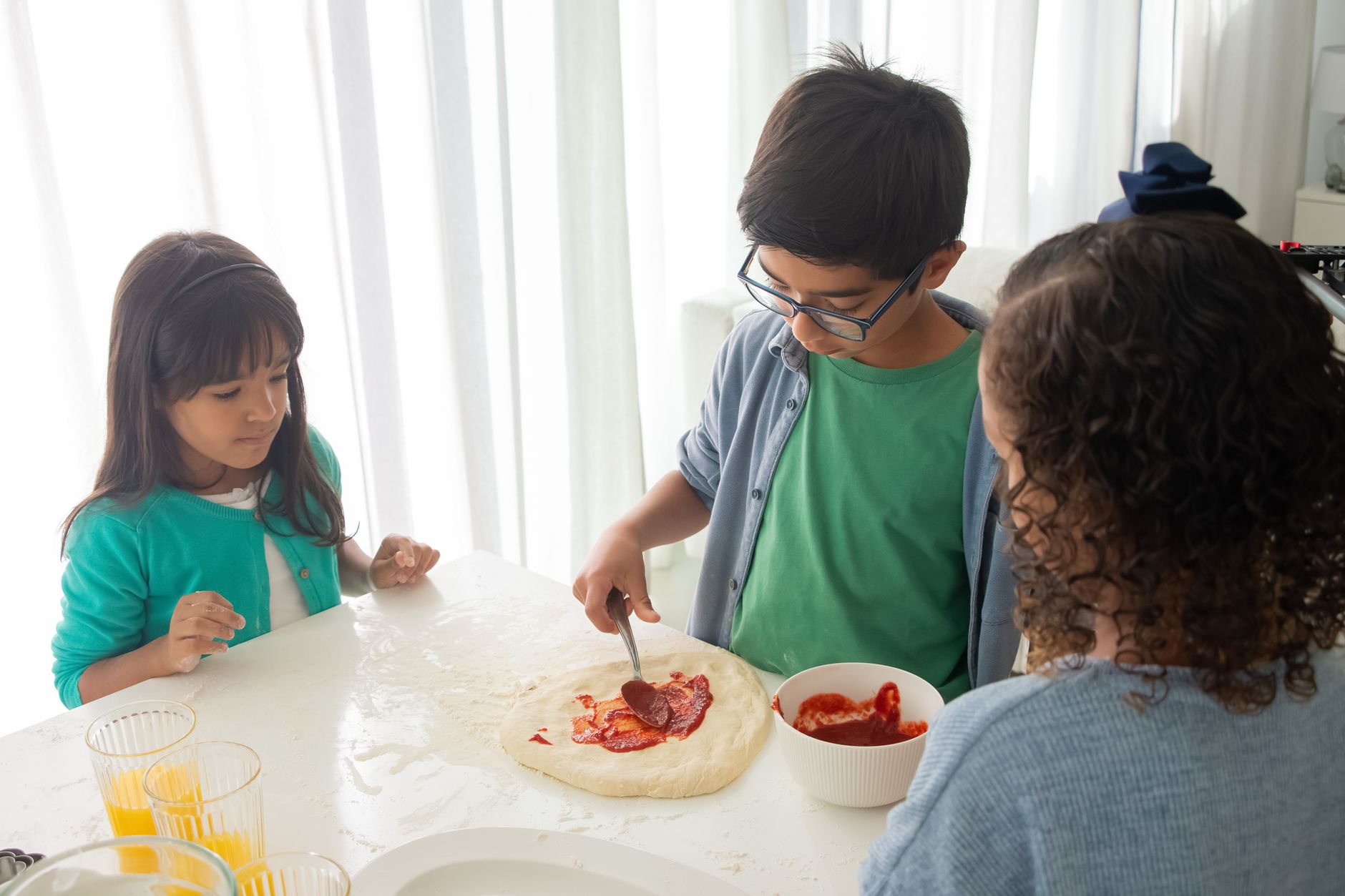
Which family activities suit which age groups?
Ages 5–7: Both countries work, but Vietnam's cooking classes and gentle farm days feel safer for younger hands. Kids at this age can stir a pot, crack an egg, or water plants without needing a lot of independence. We adapt family experiences by pairing kids with an adult at each step—no child works alone. Thailand's elephant sanctuaries require stricter height and strength rules; many exclude kids under 8. In Vietnam, a 5-year-old can hand-roll spring rolls alongside a grandparent in a home kitchen. Rain rarely stops us; we just shift to a covered workspace.
Ages 8–12: Peak range for both. Vietnam's cooking class and craft workshops let kids learn a full dish or item and take it home. They're coordinated enough to use a knife with guidance, paddle a canoe, or string beads. Thailand's activities here overlap more—kids can do cooking too, but the big draw is animal interaction. Both countries suit this age equally well if you pick activities that match what your kid loves.
Ages 13+: Teens in Vietnam gravitate toward art and culture classes, coffee workshop depth, and horse riding experience adventure. Thailand's activities feel more touristy to this age; Vietnam's feel more real because the workshops are genuinely how locals learn.
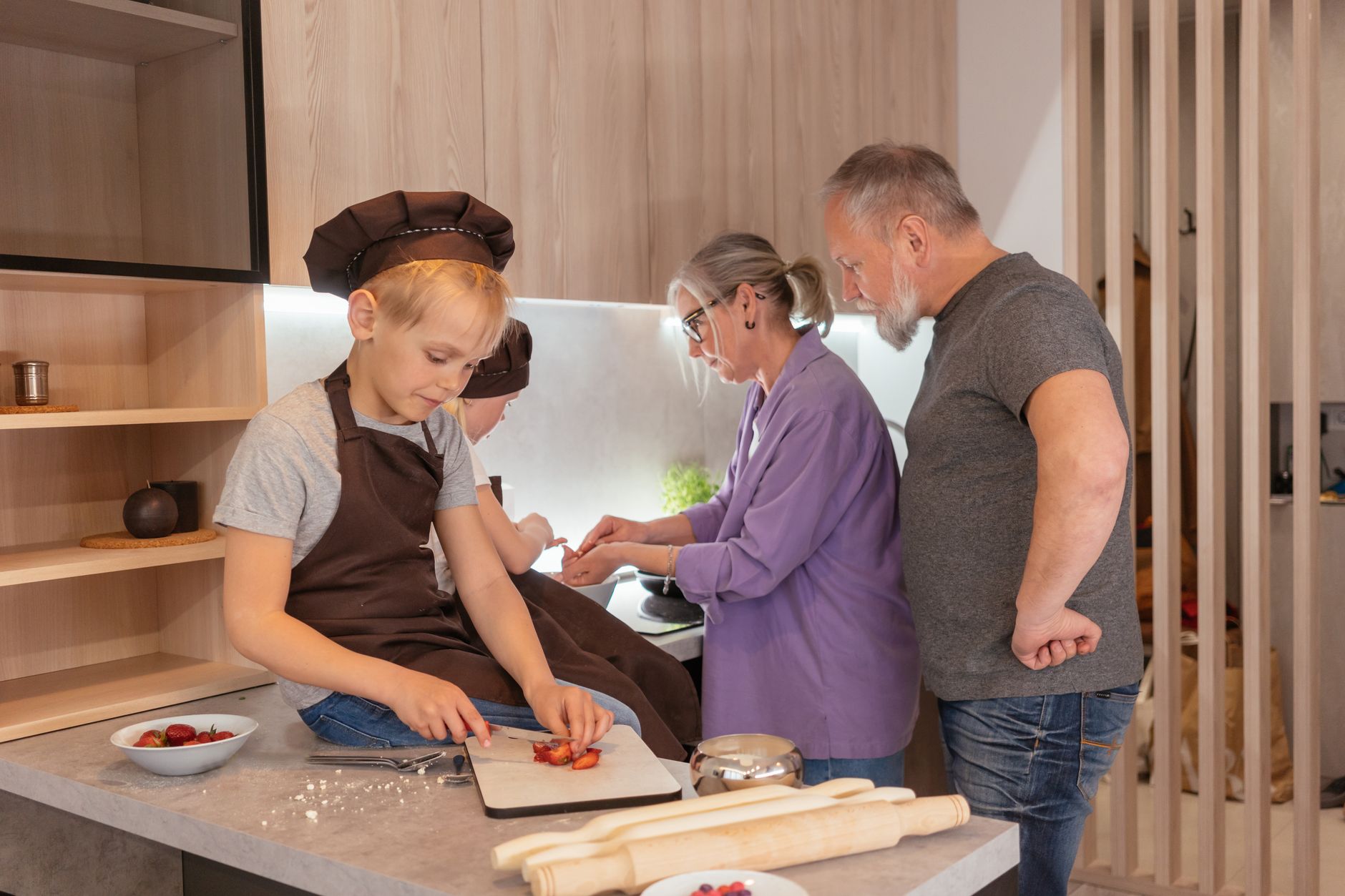
Ages 65+: Vietnam's wellness and farm experience days, which emphasize slow pace and no physical strain, suit seniors better than Thailand's trekking and temple climbing. We adapt every session: no one stands for more than 30 minutes, water is always nearby, and we stop if anyone needs to rest.
Conclusion: Both suit ages 5–12 equally; Vietnam wins for ages 13–17 and 65+ because the intensity and pacing are gentler.
How do rainy seasons affect family plans in each country?
| Factor | Vietnam | Thailand | What this means for families |
|---|---|---|---|
| Wet season | May–Sept (north); year-round spells (south) | May–Oct (most regions); Oct–Nov (Gulf coast) | Book 3–4 alternative dates; ask us which month suits your dates |
| Reschedule likelihood | 15–20% of sessions move or compress | 10–15% (infrastructure handles water better) | Vietnam = build in a flex day; Thailand = tighter schedule possible |
| Indoor backup options | Covered kitchens, market halls, craft spaces | Malls, hotel workshops, temples | Both have backup; Vietnam's feel more authentic |
| What kids wear | Light, quick-dry clothes; waterproof bag for phones | Same, plus reef shoes if water-based | Budget for a full change of clothes both days |
| Activity type affected most | Street food tour, farm experience | Hiking, beach days, outdoor temple tours | Plan indoor-friendly activities (cooking, craft) as primaries |
Conclusion: Rain is predictable; we reschedule, not cancel. Vietnam's wet season is longer but doesn't stop farm or cooking work. Thailand's is shorter but hits beaches harder.
What do kids actually learn in Vietnam's hands-on family sessions?
A typical morning in a Vietnamese cooking class: your family arrives at a family kitchen in a lane off the old quarter around 8:30 a.m. The host shows you their garden—basil, mint, coriander growing in recycled containers. Kids pick what they'll use. By 9 a.m., everyone's at the counter. A 10-year-old learns to hold a knife safely and slice lemongrass; a 7-year-old pounds chilies in a mortar. You're not making restaurant food; you're making what that family eats for lunch: maybe a soup, a stir-fry, a dipping sauce. Kids taste raw ingredients—some discover they like cilantro; others spit it out. By noon, you've cooked 3–4 dishes together and eaten them. That's not a performance; that's how a kid learns flavor, texture, and that cooking is a daily skill, not magic.
In a farm experience day outside Da Lat or in the Mekong, kids plant or harvest vegetables (depending on season), feed ducks or chickens, and learn why mud exists. A 6-year-old gets genuinely filthy and doesn't mind because the farmer's 8-year-old is right there doing the same. By contrast, Thailand's farm tourism often means you watch the farmer work while you eat a meal. Both teach something, but one teaches doing; the other teaches seeing. Thailand's strength—wildlife sanctuaries—is harder to match in Vietnam because of land use. What Vietnam offers instead is that a kid eats breakfast with the farmer's family, helps carry eggs to the market, and understands where breakfast comes from.
Conclusion: Vietnam's sessions embed kids into local life for 3–4 hours; they're not visitors performing an activity.

Which country's family activities are easier to fit into a short holiday?
If you have 5–7 days in Southeast Asia, Vietnam's geography works in your favor. Our family experiences in Hanoi, Saigon, Hoi An, and Da Lat mean you can pick one city and do 2–3 activities without moving hotels. A cooking class takes 3 hours; a coffee workshop or flower arranging takes 2. You're back by early afternoon. Thailand requires more travel between activity hubs—Bangkok is far from elephant sanctuaries; Chiang Mai is far from the islands. If you're island-hopping in Thailand, you lose 1–2 days to travel and ferries. Vietnam's cities are closer together, and activities are in the city, not an hour's minibus ride out. If your family has only 3–4 days, Vietnam wins outright. If you have 10+ days and want to change scenery, Thailand's spread-out layout works fine.
Our group and corporate sessions also run in both countries, so if you're traveling with extended family or multiple families, we can stagger activities or run parallel classes. But the ease of scheduling—especially with young kids who get tired of transit—favors Vietnam.
Conclusion: Vietnam suits short holidays and stays in one city; Thailand needs more time and flexibility for travel between activity zones.
How do you choose between "learning local skills" and "encountering wildlife"?
This is the core difference. Vietnam's cooking class, tea experience, craft workshops, and art classes teach your family how locals live—a skill they can practice at home. Thailand's elephant sanctuaries, snorkeling, and zip-lining are memories—transformative to witness but harder to replicate later.
Ask yourself:
- Does your 8-year-old want to make something they can show their friends at school? (Vietnam wins.)
- Does she want to post a photo with an animal and feel like an adventurer? (Thailand wins.)
- Will your senior parent enjoy sitting at a table for 3 hours learning to arrange flowers with a local teacher? (Vietnam—and we keep the pace gentle.)
- Or does she prefer walking slowly through a temple garden and resting often? (Thailand—but Vietnam has that too in Da Lat's gardens.)
Neither is better. A family that values skills, food, and local connection thrives in Vietnam. A family that values adventure, novelty, and Instagram moments thrives in Thailand. Many families want both—visit Thailand for 5 days, then Vietnam for 5 days. That works. Just know the trade-off: in Vietnam, you come home understanding how rice is planted; in Thailand, you come home understanding how a temple functions and what an elephant sanctuary actually does.
Conclusion: Vietnam = skills and connection; Thailand = encounters and novelty. Neither is wrong—know what your family values first.
What to check before you book a family session
- Age and ability: Ask us which activities suit your youngest and oldest. We adapt for all levels, but some activities (horse riding, certain craft steps) have real minimum ages for safety.
- Dietary needs: Tell us about allergies, vegetarian preferences, and foods kids dislike. Cooking classes can pivot to different recipes; farm days don't hinge on food but we confirm it.
- Rain date flexibility: If you're in a short window, ask us which month is driest for your destination and whether we can reschedule with notice.
- Physical comfort: Heat, humidity, and walking. Vietnam in July is 35°C+ and sticky. Thailand is the same. If your family struggles with that, book December–February instead (both countries).
- Language: We host in English. Local hosts may speak limited English; we translate and explain. Kids usually don't mind—they learn by doing, not words.
- Group size: Solo families, multi-family groups, and solo travelers all work. Ask us what's running and what suits your dates.
See how a session runs
FAQ
Is it safer for kids to do activities in Vietnam or Thailand?
Both are safe for supervised family activities in established tourist areas. Vietnam's narrow lanes mean smaller groups, so kids stay closer together. Thailand's wider infrastructure feels more spacious. Neither is objectively safer; it depends on your child's comfort with crowds and noise. Ask us about group size and layout for your specific activity.
Do kids get bored in a 3-hour cooking class or farm day?
No, because they're doing the work, not watching. A 6-year-old is stirring, tasting, and eating; time goes fast. If a child shows fatigue (usually after 2.5 hours), we wrap up early with no penalty. We've never had a kid want to leave an activity—they're usually hungry for more.
Can we do activities in Vietnam if we have a toddler (under 5)?
Yes, but with limits. A toddler can sit with a parent at a cooking class and play with water or a toy while the older sibling works. Farm days are harder because of mud, animals, and no shade. Ask us—we'll be honest about whether your toddler will enjoy it or just cry.
What's the cost difference between Vietnam and Thailand family activities?
We don't publish prices here, but ask us for a quote on WhatsApp. Both countries' activities vary by group size, location, and length. Private sessions (one family) cost more per person than group sessions. Vietnam's small-group sessions often include transport and lunch; check what's included in each quote.
If we have only 4 days, can we do activities in both Vietnam and Thailand?
Technically yes, but you'd spend 1–2 days flying and traveling between countries, leaving only 2–3 days for activities. We'd recommend picking one country and doing 2–3 activities there instead. If you have 8+ days, splitting time works well.
Do we need any special skills or fitness to join a family activity?
No. Our cooking class, flower arranging, and craft workshops require no prior experience. Horse riding experience is for all levels—we match beginners with calm horses and short rides. Farm experience involves mud and walking; if anyone has mobility limits, tell us and we adapt. --- Ask about dates on WhatsApp
Ask about dates
Tell us the city, your dates and what you would like to try. We reply on WhatsApp in English with options and availability.
FAQ
Is it safer for kids to do activities in Vietnam or Thailand?
Both are safe for supervised family activities in established tourist areas. Vietnam's narrow lanes mean smaller groups, so kids stay closer together. Thailand's wider infrastructure feels more spacious. Neither is objectively safer; it depends on your child's comfort with crowds and noise. Ask us about group size and layout for your specific activity.
Do kids get bored in a 3-hour cooking class or farm day?
No, because they're doing the work, not watching. A 6-year-old is stirring, tasting, and eating; time goes fast. If a child shows fatigue (usually after 2.5 hours), we wrap up early with no penalty. We've never had a kid want to leave an activity—they're usually hungry for more.
Can we do activities in Vietnam if we have a toddler (under 5)?
Yes, but with limits. A toddler can sit with a parent at a cooking class and play with water or a toy while the older sibling works. Farm days are harder because of mud, animals, and no shade. Ask us—we'll be honest about whether your toddler will enjoy it or just cry.
What's the cost difference between Vietnam and Thailand family activities?
We don't publish prices here, but ask us for a quote on WhatsApp. Both countries' activities vary by group size, location, and length. Private sessions (one family) cost more per person than group sessions. Vietnam's small-group sessions often include transport and lunch; check what's included in each quote.
If we have only 4 days, can we do activities in both Vietnam and Thailand?
Technically yes, but you'd spend 1–2 days flying and traveling between countries, leaving only 2–3 days for activities. We'd recommend picking one country and doing 2–3 activities there instead. If you have 8+ days, splitting time works well.
Do we need any special skills or fitness to join a family activity?
No. Our cooking class, flower arranging, and craft workshops require no prior experience. Horse riding experience is for all levels—we match beginners with calm horses and short rides. Farm experience involves mud and walking; if anyone has mobility limits, tell us and we adapt. --- [💬 Ask about dates on WhatsApp](https://wa.me/84338762340)
More like this
Experiences for families and kids
Family workshop Vietnam vs Thailand: where to take kids in 2026
Vietnam and Thailand both offer immersive family workshops, but the pace, cost structure, and focus differ significantly. We run both types of sessions at Cáo Experiences and can help you choose.
Experiences for families and kids
Family Workshop Vietnam Gift Voucher: What Works Best
A family workshop gift voucher in Vietnam lets relatives experience cooking, craft, horse riding or tea together—no tickets, no queues, real hands-on time. We help you pick the right session type and duration for the ages and interests in your group.
Experiences for families and kids
Family workshops in Vietnam for Indian travelers: what to expect
Indian families visiting Vietnam often wonder how to keep children engaged and learn something authentic together. Cáo Experiences runs small-group and private workshops—cooking, coffee, flower arranging, craft, and farm days—designed for kids, parents, and grandparents, hosted in English with real