
Home › Blog › Experiences for families and kids
Family Cooking Class Hoi An: What to Expect and How to Prepare
By the Cáo Experiences team · 2026-11-06
A family cooking class in Hoi An through Cáo Experiences is a hands-on session where you cook 3–4 complete dishes in a home kitchen in the old town, learn knife skills and flavor balancing, and eat together at the end. Classes run 3–4 hours, usually morning or afternoon, suit mixed ages and skill levels, and include ingredient shopping at a local market first. There's no "right answer"—we adapt cooking pace for kids, offer shortcuts for seniors with mobility concerns, and swap dishes for allergies. Ask us for dates and a quote on WhatsApp; cost varies by group size and private vs. small-group format.
Why do families actually choose a cooking class over a restaurant dinner?
You're eating the meal anyway—a cooking class lets you and your kids, parents, or cousins make it together, talk through the "why" (why fish sauce smells strong but tastes balanced, why you pound lemongrass before using it), and own the skill afterward. A restaurant is passive; a kitchen session builds a story your family retells. You leave with muscle memory, not just a photo.

How do we run a session, hour by hour?
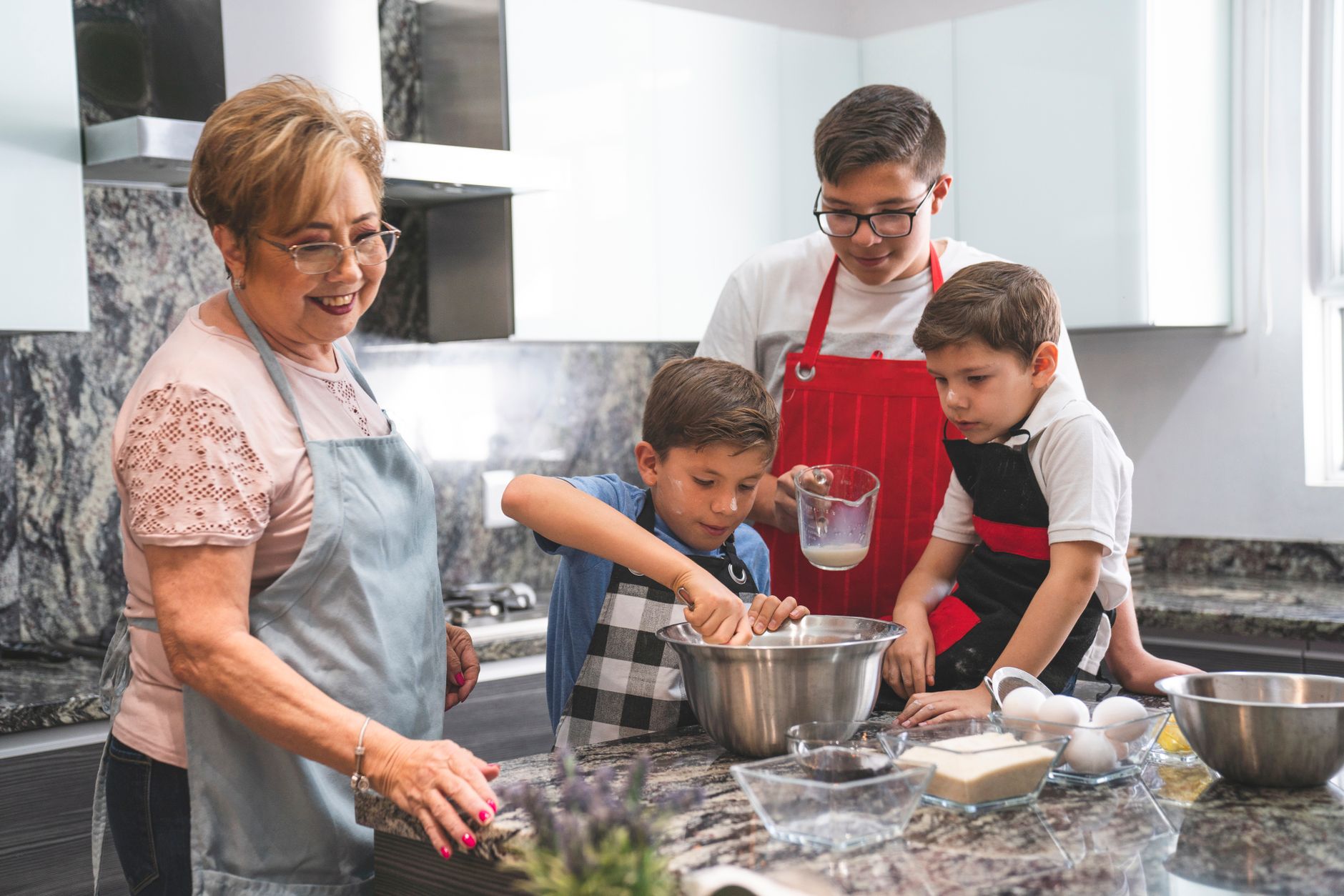
We meet at a family kitchen in a lane off the old quarter around 8:00 or 13:00. First 30 minutes: walk to a local wet market together—you pick fresh herbs, chilies, fish or meat, rice paper—and the host explains what to look for and why. Back in the kitchen, you wash hands, tie on aprons, and cook. One host demos a technique (how to julienne ginger without smashing it, how to balance salt and acid in a sauce), then you do it with guidance. Courses run staggered—while someone stir-fries, another person rolls spring rolls, a third makes a dipping sauce. Kids often get rolling and shaping; teenagers and adults handle heat and knife work. Last 30 minutes: set the table, plate up, eat together, taste what you made, ask questions. Total: 3–3.5 hours.
What dishes do we actually cook?
We choose 3–4 dishes based on your interests and season. A typical menu might be: fresh summer rolls with shrimp and herbs, a curry paste cooked from scratch, stir-fried vegetables with garlic and fish sauce, and fried shallot-topped rice or noodles. Vegetarian groups cook tofu-based versions. Seafood lovers swap in grilled fish with turmeric. We ask about dietary needs before you arrive and build the menu with you—no surprises on the day.
What happens if someone can't chop or stand long?
Kids aged 6–9 often lack hand strength for a chef's knife; we give them a smaller knife or a vegetable cutter, and they prep softer items (tearing herbs, breaking beans). Teenagers and adults usually manage standard knives after a quick safety demo. Seniors with arthritic hands or balance concerns: we offer seating at the counter, pre-chop tougher vegetables before the class, and let them focus on mixing sauces, rolling, or plating instead. If someone needs to sit throughout, that's fine—we adapt the role, not the experience. Rain doesn't stop us; the kitchen is indoors.
How do we handle allergies, dietary rules, and picky eaters?
Tell us on WhatsApp before you book. We swap fish sauce for soy sauce, remove shrimp, cook tofu-only versions, use coconut milk instead of a shellfish-based sauce—whatever you need. Picky kids sometimes won't eat the finished dish, and that's okay; they've still learned the technique and watched flavors build. Parents are often surprised their child will try something they made themselves, even if they reject it at home.
Is there a real difference between a private class and a small-group one?
Yes. A private class (your family only, typically 2–8 people) means the host tailors pacing entirely to you—your kids take longer with knife work, you do fewer dishes but deeper dives, or you ask 20 questions about Vietnamese culinary history without rushing. You also control music, rhythm, and whether someone eats more rolls and skips the rice. A small-group class (up to 12 people, usually 2–3 family units) means your kids cook alongside other kids, there's social energy, and you learn alongside strangers—some guests prefer that collaborative vibe. Both are hands-on; the difference is customization vs. community.

What should kids and seniors wear and bring?
Wear closed-toe shoes (no flip-flops near a hot stove or wet floor) and clothes you don't mind getting splashed—turmeric stains, so avoid white or dry-clean-only fabrics. Bring a small notebook if you want to jot down ratios (1 tablespoon fish sauce to 2 limes, for example). We provide aprons, knife-sharpening services, and water. Kids sometimes bring a small camera to photograph their plate. Sunglasses help if you're sensitive to onion fumes.
What if you're a complete beginner or a confident cook?
Both work. A beginner parent and a teenage cook at the same table actually balance well—the teen handles knife speed, the parent focuses on seasoning logic. We don't assume you can cook and don't slow down unnecessarily for confident cooks; we pitch to "you've cooked at home before, maybe not Vietnamese food, and you want to understand the principles." If your group includes a chef, great—they often ask questions about sourcing and seasonality that deepen everyone's learning.
How do you decide which experiences are right for your group?
| Situation | Best fit | Why it works |
|---|---|---|
| Multigenerational (grandparent, parent, kid) | Private cooking class | Pacing adapts to everyone; seniors sit, kids chop soft items, adults handle heat. |
| Teenage "reluctant learner" | Small-group class | Peer energy often engages kids who'd resist at home; they cook for friends. |
| Couples or siblings only | Small-group or private | Either feels natural; group adds social angle, private allows wandering conversations. |
| Large family (8+) | Private class, two hosts | One host manages the stove, one helps kids and older adults at prep stations. |
| Visiting for one day | Morning class + market walk | Fits a half-day itinerary; you cook lunch and eat, done by 11:30–12:00. |
Beyond cooking: what else might your family want in Hoi An?
If your group enjoys hands-on learning, you might also explore flower arranging workshops (kids aged 8+ love it, adults find it meditative), or a farm and countryside experience outside town (pick vegetables, meet animals, see where food starts). Some families pair a morning cook class with an afternoon street food and market tour to taste vendor food and see how professionals work—different energy, no cooking required. We also run tea experiences for quieter afternoons, especially with older relatives. Check what's available in Hoi An and build a custom day with us.
What to check before you ask about a date
- Group size and ages. Tell us the exact mix (2 adults, 1 child aged 7, 1 teen aged 15, 1 grandparent). We customize pacing and knife size accordingly.
- Dietary needs. Vegetarian, allergies, religious rules, dislikes—anything that changes the menu.
- Mobility or stamina. No shame in saying "my parent walks slowly" or "my 4-year-old can manage 2 hours max." We adapt.
- Cooking experience. Are you all kitchen-novices, or does someone cook at home already? Shapes our teaching angle.
- What time of year. Early morning in summer gets hot; we can start at 7:00 instead of 8:00. December is cooler and pleasant.
- Language confidence. We speak English; if your group includes a non-English speaker, let us know—we slow down and use images.
FAQ
Can a 5-year-old really cook in a class, or will they just be bored?
Age 5 is the edge—some thrive (tearing herbs, watching, eating), others get restless after 90 minutes. We recommend age 6+ for a full 3-hour class, or we can run a 90-minute "young chef" version (shorter, more plating and tasting, less knife work). Ask us when you inquire.
What if my family is vegetarian or has a shellfish allergy?
We build the menu around your needs before you arrive. Vegetarian groups cook curry, stir-fries, fresh rolls with tofu or mushroom, and noodles—just as flavorful and hands-on. Shellfish allergy: we use soy sauce or a mushroom-based umami sauce instead of fish sauce. No compromises on taste.
Do we really shop at the market, or is it mainly a photo op?
We actually shop. You pick what goes into your pot, the host explains what's ripe and why, and you carry it back to the kitchen. It's 20–30 minutes and genuinely useful—kids learn where basil comes from, adults spot good chilies. Rain doesn't stop the market; it's mostly covered stalls anyway.
How many dishes do we cook, and is it a full meal?
Three to four dishes, yes—usually a soup or salad, a curry or stir-fry, a rice or noodle base, and fresh rolls. You eat everything together at the end. It's a proper lunch or early dinner, not a tasting menu.
Can we take leftover food home or get recipes?
You eat what you make fresh in the kitchen—that's the meal for the day. We don't package leftovers for takeaway. We do give you a simple written recipe (with ratios and photos) via WhatsApp after the session, so you can cook at home. Some families cook the same dish the next week in their hotel kitchen or back home.
Is a private class worth the cost compared to a small-group class?
Private means zero waiting, fully customized menu and pacing, and you control the vibe (music, questions, timing). Small-group adds social energy, other families, and a slightly lower price per person. Both are genuinely hands-on; choose based on whether you want tailoring or community. Ask us for both quotes.
Ask about dates
Tell us the city, your dates and what you would like to try. We reply on WhatsApp in English with options and availability.
FAQ
Can a 5-year-old really cook in a class, or will they just be bored?
Age 5 is the edge—some thrive (tearing herbs, watching, eating), others get restless after 90 minutes. We recommend age 6+ for a full 3-hour class, or we can run a 90-minute "young chef" version (shorter, more plating and tasting, less knife work). Ask us when you inquire.
What if my family is vegetarian or has a shellfish allergy?
We build the menu around your needs before you arrive. Vegetarian groups cook curry, stir-fries, fresh rolls with tofu or mushroom, and noodles—just as flavorful and hands-on. Shellfish allergy: we use soy sauce or a mushroom-based umami sauce instead of fish sauce. No compromises on taste.
Do we really shop at the market, or is it mainly a photo op?
We actually shop. You pick what goes into your pot, the host explains what's ripe and why, and you carry it back to the kitchen. It's 20–30 minutes and genuinely useful—kids learn where basil comes from, adults spot good chilies. Rain doesn't stop the market; it's mostly covered stalls anyway.
How many dishes do we cook, and is it a full meal?
Three to four dishes, yes—usually a soup or salad, a curry or stir-fry, a rice or noodle base, and fresh rolls. You eat everything together at the end. It's a proper lunch or early dinner, not a tasting menu.
Can we take leftover food home or get recipes?
You eat what you make fresh in the kitchen—that's the meal for the day. We don't package leftovers for takeaway. We do give you a simple written recipe (with ratios and photos) via WhatsApp after the session, so you can cook at home. Some families cook the same dish the next week in their hotel kitchen or back home.
Is a private class worth the cost compared to a small-group class?
Private means zero waiting, fully customized menu and pacing, and you control the vibe (music, questions, timing). Small-group adds social energy, other families, and a slightly lower price per person. Both are genuinely hands-on; choose based on whether you want tailoring or community. Ask us for both quotes.
More like this
Experiences for families and kids
Family workshop Vietnam vs Thailand: where to take kids in 2026
Vietnam and Thailand both offer immersive family workshops, but the pace, cost structure, and focus differ significantly. We run both types of sessions at Cáo Experiences and can help you choose.
Experiences for families and kids
Family Workshop Vietnam Gift Voucher: What Works Best
A family workshop gift voucher in Vietnam lets relatives experience cooking, craft, horse riding or tea together—no tickets, no queues, real hands-on time. We help you pick the right session type and duration for the ages and interests in your group.
Experiences for families and kids
Family workshops in Vietnam for Indian travelers: what to expect
Indian families visiting Vietnam often wonder how to keep children engaged and learn something authentic together. Cáo Experiences runs small-group and private workshops—cooking, coffee, flower arranging, craft, and farm days—designed for kids, parents, and grandparents, hosted in English with real