 Cáo Experiences
Home › Blog › Flower arranging workshops
Floristry class in Hanoi: small group hands-on arranging
By the Cáo Experiences team · 2026-11-01
Our floristry classes at Cáo Experiences run in small groups (4–8 people) in a light studio near the old quarter in Hanoi. Sessions last 2 hours and are hosted in English. You'll condition stems, learn proportion and color theory, and design one finished arrangement to take home. We adapt for all skill levels—beginners don't need to know the names of flowers beforehand. Each person works with fresh seasonal blooms. Ask us for dates and a quote on WhatsApp; we fill classes year-round and can schedule private sessions for couples, families, or corporate groups who prefer their own time.
What actually happens in a 2-hour session?
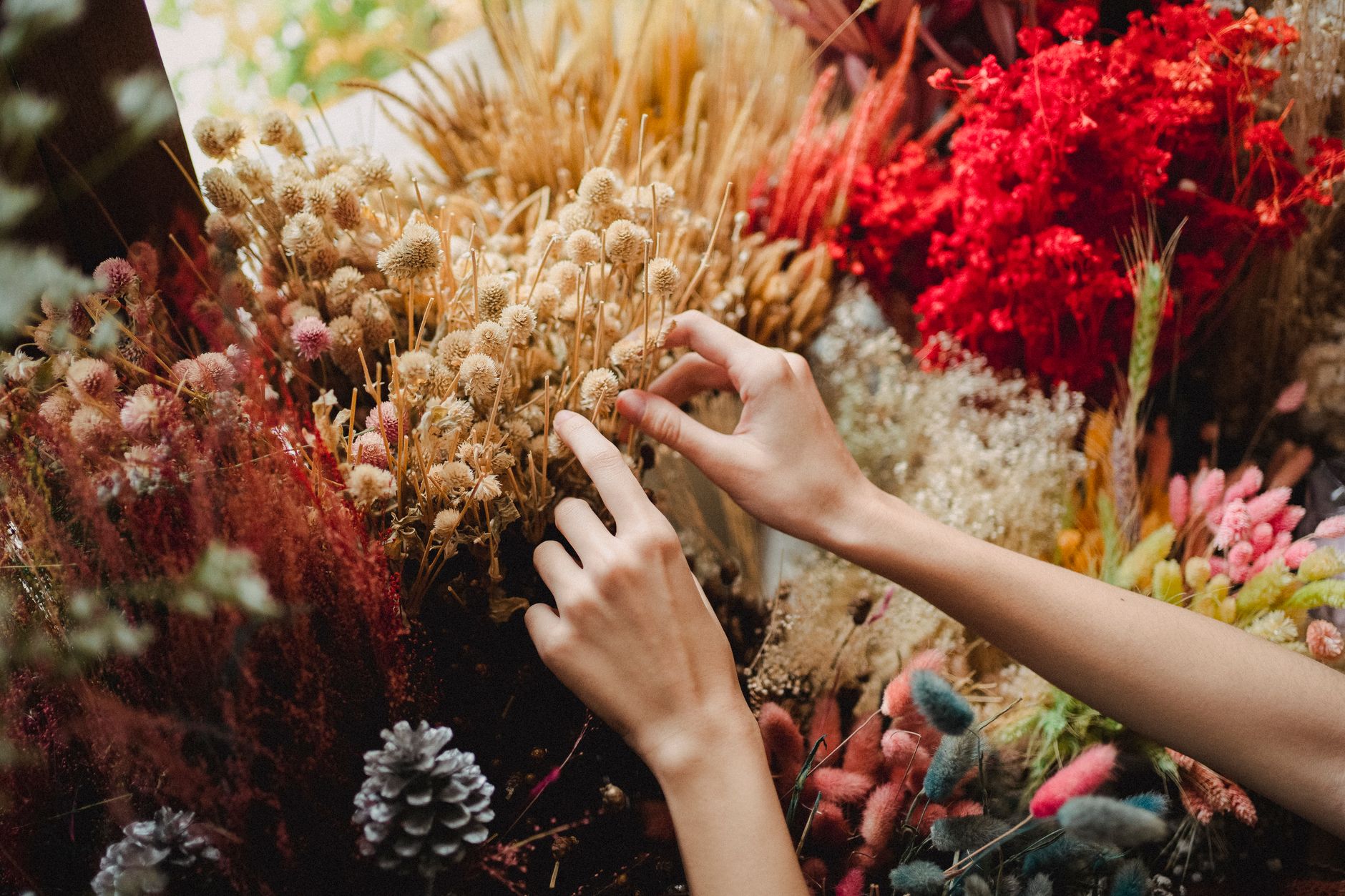
You'll arrive 10 minutes early so we can settle you in and show you the studio layout. We start by walking through the bucket—the fresh flowers we've sourced that morning from the wholesale market—so you know what's available and what's in peak condition. Then we demo one full arrangement (a hand-tied posy or a vase design, depending on what the group votes for) while you watch and take notes. We show you how to hold the knife, strip leaves without crushing stems, measure angles, and layer color. By 30 minutes in, you're holding blooms and making real cuts. We don't lecture for an hour; we work alongside you. You design your own arrangement while we walk the group, offer tweaks, and answer questions one-to-one. In the last 15 minutes, we wrap it (if it's a hand-tied) or settle it in a container, and you photograph it. Most people leave with a 3-week-life arrangement and a real sense of how to repeat it at home.

Who should book, and who might not fit?
This class suits couples wanting a date, friends on a weekend, solo travelers, families (kids age 10+), and corporate groups looking for a team activity that isn't a trust fall. Seniors enjoy it deeply—there's no standing for long, the work is meditative, and the pace is low-pressure. If you have severe arthritis or dexterity issues, let us know: we can adapt the knife work and focus on design and color choice instead. People who want to photograph finished work or learn Latin plant names sometimes feel the class is too tactile and not knowledge-heavy enough—that's fair feedback. If you're a florist looking for professional technique, we teach design and amateur-level skills; this isn't trade training. If you're allergic to pollen or have respiratory issues, mention it when you book; we can ventilate the studio well and use lower-pollen varieties, though some risk remains.
How does our studio set-up work in practice?
The space is a working studio with clean bench tables for 4–8 people, good light, and a water station. You wear an apron (we supply) and work at your own pace. We keep the floor dry—water happens—and have towels ready. There's usually music playing softly, and the pace feels more like a craft workshop than a classroom. Beginners often ask if the space feels "professional" or "Instagram-y," and it's honestly neither: it's a real studio where work happens, with proper tools and a casual vibe. If you're worried about making a mess or feeling self-conscious, the energy is collaborative and low-judgment; everyone's learning, and mistakes (a stem cut too short, a color choice you want to redo) are part of the process. On rainy days, which happen in Hanoi, the session runs exactly as planned indoors. We've never cancelled for weather.
What should you bring and wear?
Wear something you don't mind getting water or plant material on; an apron covers most of you, but hands will be wet. Closed shoes are better than flip-flops (safety). Bring a phone or camera if you want photos of your finished work. Leave jewelry that might catch on thorns at home or remove it before we start. Some people bring a friend's address so they can gift the arrangement instead of carrying it home on the metro; that works fine, though we'll wrap it in kraft and a bag that's safe to travel with. If you have long nails, let us know: we'll adjust knife technique so you're comfortable. Allergies to specific flowers (some people react to chrysanthemums or hypericum berries) should be mentioned when you book, not on the day.
How does skill level actually work in a group?
We don't separate by ability. A first-time arranger sits next to someone who's done floristry once before, and the mix is good—there's no pressure to "keep up" because there's no race. Our role is to offer more help to people who are hesitant and give more space to people who want to experiment. A common beginner worry is "what if I choose the wrong flowers?" The answer is there's no wrong choice; if a color combination surprises you, that's real design learning. We've had groups where half the people design tight, linear arrangements and half go wild with asymmetry and texture—all beautiful, all valuable. If you're genuinely nervous about your hands, we show you how to hold the knife and stem; by 20 minutes in, muscle memory is doing the work and your mind relaxes. Kids (age 10+) work slower and need more hand-over-hand guidance, but they retain technique brilliantly and often surprise adults with their color sense.
When's the best time to book, and how does availability work?
We run classes most weeks during the year, with more sessions in spring and autumn (cooler weather, more variety at market). Summer in Hanoi is hot and humid, so some flowers fade fast; winter is shorter supply. We coordinate entirely on WhatsApp—you message us your preferred date, group size, and whether you want a specific design style or just "whatever's fresh," and we confirm availability and send you the booking details. Private groups (8+ people, or if you want a specific time) can request any day; we'll source flowers and host you. School groups and corporate teams often book through their contact person; we've run sessions for expat networks, international schools, and business retreats. The turnaround is usually confirmed within 24 hours. If you're visiting Hanoi for only a few days, tell us your window and we'll find a slot that fits. Explore what other experiences we run to see if you'd like to combine floristry with a Vietnamese cooking class or tea experience on the same day—some groups do a half-day mix.
| Session type | Who it's for | What's included | Why choose it |
|---|---|---|---|
| Open small group (4–8) | Solo travelers, couples, friends | 2-hour session, all blooms & tools, finished arrangement, apron | Meet other guests, fixed dates, easy to book |
| Private group (8+ or custom date) | Corporate teams, families, friend groups | Custom time, all blooms & tools, finished arrangement per person | Full control, no strangers, team bonding |
| Couple's session | Partners, anniversaries, dates | 2 hours, double arrangement (one per person or one shared), private studio time | Intimate, romantic, no pressure |
What should you check before you book?
Before you confirm, ask yourself: (1) Do I have 2 hours free, plus 20 minutes travel to the studio? (2) Am I okay getting my hands wet and dirty? (3) Do I want to take the arrangement home immediately, or would I prefer it wrapped and collected later? (4) Are there flowers I'm allergic to or strongly dislike? (5) If I'm in a group, do I want to meet new people or keep it private? Once you've answered those, message us the date, group size, and any dietary or allergy notes (in case we offer tea or snacks afterward). We'll send you the address, parking info if you're driving, and remind you the day before. No cancellation hassle if plans genuinely change—just let us know early enough for us to offer the slot to someone else.
How does floristry link to other Hanoi experiences?
Many of our guests combine the floristry class with other afternoon or morning activities. A flower arranging workshop pairs beautifully with a coffee workshop (you design a centerpiece, then sit down to talk about Vietnamese coffee over a cup). Some groups do floristry in the morning and a street food and market tour in the afternoon—you see the flower market, the food market, and come away with both skills and a full belly. For families, family experiences like a craft session or farm experience outside Hanoi often happen on the same weekend trip. We can coordinate all of it over WhatsApp and make sure timing works. More stories from our hosts about how sessions actually run are worth a read if you want a real sense of the vibe.
What to expect if you're new to flower work
The most common first-timer fear is "I'll kill the flowers" or "I'll cut them wrong and they'll die." Reality: flowers are tougher than they look, and even a poor cut lets them drink water for weeks. We show you how to angle a knife so water uptake is clean, but if you mess up, you'll notice during the class (the stem won't stand tall) and we'll demo it again. By your second or third cut, your hands know the angle. People also worry they'll copy the demo instead of thinking for themselves. That's not how we work—the demo is a reference, not a template. If your arrangement looks nothing like what we made, that's the point. We're teaching you proportion (how tall should the focal flower be? what ratio of color?), not step-by-step reproduction. One last honest note: floristry is physically easier than cooking or horse riding, but it requires a calm mind and patience. If you're rushed or agitated, the flowers feel it and the work is less fun. We deliberately keep the pace slow so you can settle in. Most people leave saying they didn't expect to feel so calm.
See how a session runs

FAQ
Can I book if I've never done any floristry before?
Absolutely. We design every session for mixed skill levels, and beginners often create their best work because they have no preconceptions about what "should" happen. We'll show you how to hold the knife, strip stems, and measure angles—no prior knowledge needed.
What if I'm in the group but don't want to do the full arrangement—can I just watch?
You can, but we gently encourage hands-on work because the learning is in the doing. If you have mobility or confidence concerns, tell us beforehand and we'll adapt: you might design the arrangement while someone else cuts, or focus on color and shape without the knife work.
Do you provide flowers, or do I bring my own?
We source fresh seasonal blooms from the wholesale market the morning of the class. You'll see the full range when you arrive and help choose what goes into your arrangement. Flowers are included in the session cost.
How long does the finished arrangement last at home?
If you follow the care tips we give you (fresh water every two days, recut the stems every 4–5 days, keep it away from direct sun and ripening fruit), you'll get 2–3 weeks of life. Some flowers fade faster in Hanoi's heat; in cooler seasons, they last longer.
Can I do this if I have arthritis or hand tremors?
Yes. Mention it when you book and we'll adapt the knife work or focus on design and color choice instead. The goal is learning and enjoying, not proving anything. We've hosted guests with limited dexterity and they loved it.
What's the group size, and will I feel crowded?
Small groups are 4–8 people, so there's plenty of bench space and one-on-one help. If you book a private session, you can be just you, a partner, or your whole friend group—no strangers.
Ask about dates
Tell us the city, your dates and what you would like to try. We reply on WhatsApp in English with options and availability.
FAQ
Can I book if I've never done any floristry before?
Absolutely. We design every session for mixed skill levels, and beginners often create their best work because they have no preconceptions about what "should" happen. We'll show you how to hold the knife, strip stems, and measure angles—no prior knowledge needed.
What if I'm in the group but don't want to do the full arrangement—can I just watch?
You can, but we gently encourage hands-on work because the learning is in the doing. If you have mobility or confidence concerns, tell us beforehand and we'll adapt: you might design the arrangement while someone else cuts, or focus on color and shape without the knife work.
Do you provide flowers, or do I bring my own?
We source fresh seasonal blooms from the wholesale market the morning of the class. You'll see the full range when you arrive and help choose what goes into your arrangement. Flowers are included in the session cost.
How long does the finished arrangement last at home?
If you follow the care tips we give you (fresh water every two days, recut the stems every 4–5 days, keep it away from direct sun and ripening fruit), you'll get 2–3 weeks of life. Some flowers fade faster in Hanoi's heat; in cooler seasons, they last longer.
Can I do this if I have arthritis or hand tremors?
Yes. Mention it when you book and we'll adapt the knife work or focus on design and color choice instead. The goal is learning and enjoying, not proving anything. We've hosted guests with limited dexterity and they loved it.
What's the group size, and will I feel crowded?
Small groups are 4–8 people, so there's plenty of bench space and one-on-one help. If you book a private session, you can be just you, a partner, or your whole friend group—no strangers.
More like this
Flower arranging workshops
Flower Arranging Workshop Ho Chi Minh City: How to Book
A flower arranging workshop in Ho Chi Minh City teaches you to design seasonal arrangements in a calm studio setting. We run small-group and private sessions with English-speaking hosts who walk you through technique, flower choice, and how to make arrangements last.
Flower arranging workshops
Flower arranging workshop in Ninh Binh for couples
A flower arranging workshop in Ninh Binh lets couples create an arrangement together in a calm setting, learning Vietnamese design principles while working with seasonal blooms.
Flower arranging workshops
Flower Arranging Workshop in Mekong Delta for Foreigners
We run intimate flower arranging workshops in family-owned gardens and workshops across the Mekong Delta, where you'll learn seasonal design by practicing alongside our hosts. Pick your own blooms, arrange three pieces, and take them home.