 Cáo Experiences
Home › Blog › Flower arranging workshops
Floristry Class in Hoi An for Families: Learn Flower Arranging Together
By the Cáo Experiences team · 2026-11-01
A floristry class in Hoi An with Cáo Experiences is a two-hour hands-on session where families—parents, grandparents, teenagers, even children aged 8+—gather in a creative studio to learn flower design basics from our host. You'll work with fresh seasonal blooms, learn two or three classic arrangement techniques (spiral, asymmetrical, mass), and take home what you make. Sessions run most mornings and afternoons, suited to mixed ages and zero prior skill. We adapt for children who need shorter focus time, seniors who prefer seated work, and anyone with flower allergies (we source alternatives). Cost varies by group size and season; ask us for dates and a quote on WhatsApp. Avoid booking in peak rain season if you're concerned about supply delays.
We run small-group flower arranging workshops in Hoi An where families—parents, grandparents, teenagers, even children aged 8+—gather in a creative studio to learn flower design basics from our host. You'll work with fresh seasonal blooms, learn two or three classic arrangement techniques (spiral, asymmetrical, mass), and take home what you make. Sessions run most mornings and afternoons, suited to mixed ages and zero prior skill. We adapt for children who need shorter focus time, seniors who prefer seated work, and anyone with flower allergies (we source alternatives). Cost varies by group size and season; ask us for dates and a quote on WhatsApp. Avoid booking in peak rain season if you're concerned about supply delays.
Why choose a family flower class over solo travel activities?
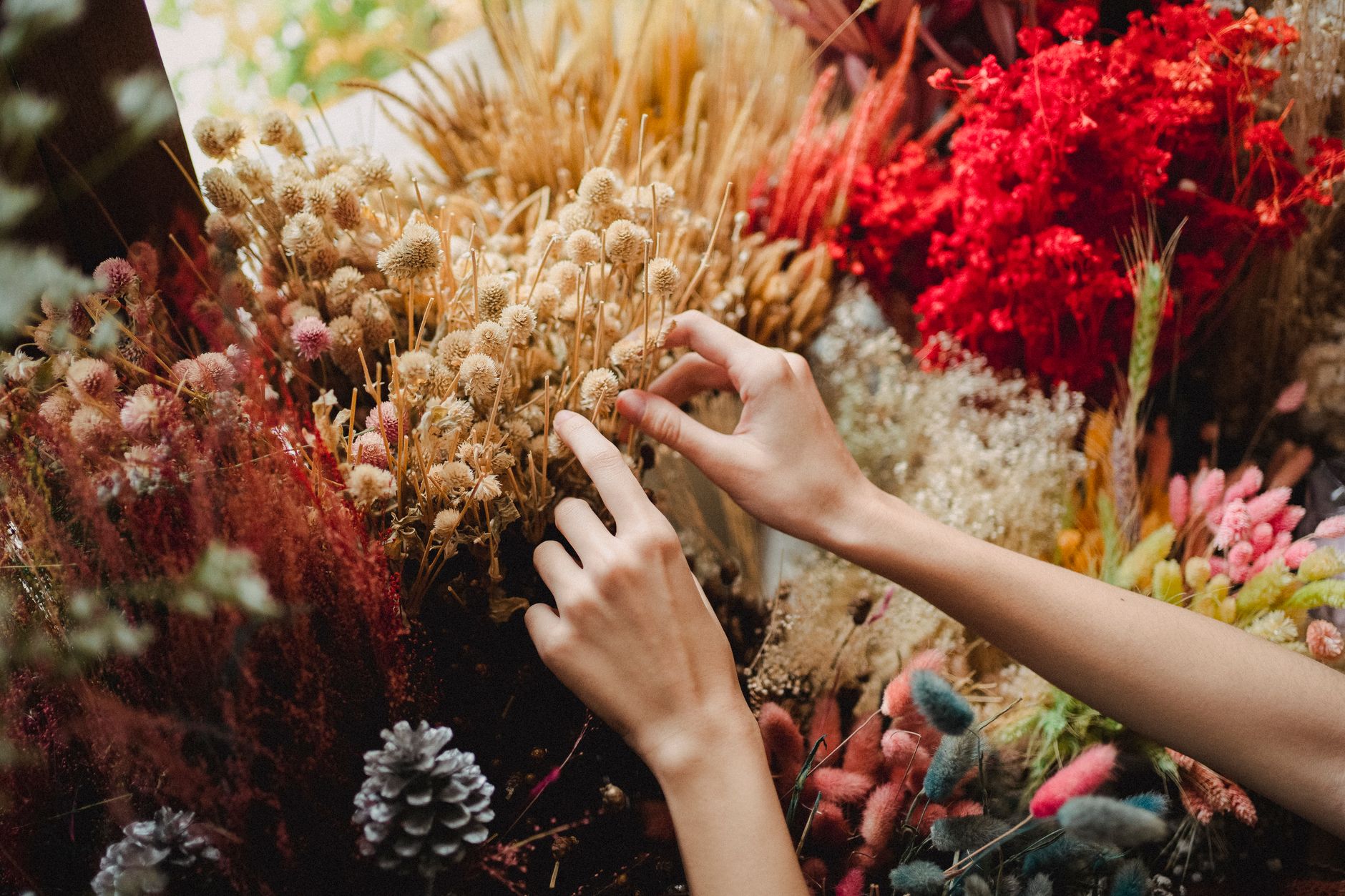
A flower class is one of the rare experiences where every age actually does something together—not just watches. Your eight-year-old learns color theory while trimming stems; your teenager discovers why tight spirals matter; your parent learns a new skill alongside you. We've found families stay more engaged when they're making with their hands rather than standing in a museum. Unlike markets or landmarks, you're creating something personal in a calm space, talking naturally as you work. By the end, everyone leaves with an arrangement they chose the flowers for—a keepsake from a shared afternoon.
What does a two-hour session actually include, hour by hour?
You arrive 10 minutes early; we show you where to set down bags and greet the other family or group. The host walks through a live demo—how to cut stems at a 45-degree angle, how to build a base, why balance matters—while you watch and ask questions. Then you each pick three to five stems from our seasonal supply and start arranging into a ceramic or glass vase we provide. For younger kids, we offer lighter branches and pre-cut foam so they can experiment without frustration. The host moves around, offers tips without correcting unless asked, and pauses halfway through so everyone can step back and assess. In the final 20 minutes, we photograph your work, answer any last questions, and pack your arrangement carefully in a carry box so it survives the journey back to your hotel.
How do we adapt for different ages and abilities?
Children under ten work best with simpler tools: we give them pre-cut foam, softer stems (like wheat or eucalyptus), and sometimes a small "practice" arrangement to understand the basics before the final piece. Teenagers often want more control—we show them how to strip leaves, work with harder greenery, and try asymmetrical or modern styles. Adults who've never touched a flower often worry they'll "mess it up"; we remind them there's no wrong way, and the host models a few starts so you see it's trial-and-error. Seniors who tire easily sit on a stool at a lower table; we bring stems and water to them rather than requiring standing. Anyone with pollen allergies gets advance notice and we source hypoallergenic blooms like roses or orchids. We've also run sessions for families with autism-spectrum kids—quieter pacing, no sudden changes, a calm corner to step into if needed.

When's the best season to book, and what happens in rain?
Fresh flower supply is fullest from October through March, when cooler weather keeps blooms crisp longer and variety is wide—dahlias, chrysanthemums, local roses, imported foliage. April to June is warmer and flowers wilt faster, but we have reliable stock year-round. July to September overlaps the rainy season; flowers still arrive, but heavy downpours can disrupt supply or delay the host's travel to the studio. If rain is forecast on your booked date, we reschedule at least 48 hours ahead or offer an alternative time that week. We've never cancelled mid-session, but we do notify families early if we're concerned about supply that morning. Pack an umbrella and wear shoes with grip if you're visiting during monsoon—the lanes around the old quarter can get slick.
Which family member benefits most—and is there a comparison?
| Who's joining | What they get from floristry | Other experiences to pair with | Why it works |
|---|---|---|---|
| Young kids (8–11) | Sensory play, color mixing, pride in a take-home gift | Farm and countryside days for outdoor learning | Hands-on, no sitting still, immediate result |
| Teenagers (12–17) | Creative choice, stress relief, an Instagram moment, chat with parents in a calm space | Art and culture classes for deeper creative practice | Feels cool, not "family activity," they direct their own design |
| Parents/adults | Skill-building, a break from sightseeing, conversation without phones | Vietnamese coffee workshop for another craft skill | Meditative, productive, social |
| Grandparents | Gentle activity, seated comfort, storytelling time with grandkids | Tea experiences for another slow practice | No pressure, no loud noise, meaningful together-time |
The truth: almost every age enjoys it, but teenagers are often skeptical beforehand and surprised how much they focus. Grandparents find it deeply calming. Young kids love the mess and the pride. Parents love watching everyone engaged.
Learn about our flower arranging sessions
How do we price a family group, and what questions should you ask first?
We price by group size, session length, and season—not by number of people. A family of four pays less per head than a couple; a private session costs more than a shared class. Seasonal blooms affect cost slightly (winter stock is easier to source locally). We do not list fixed prices publicly because supply and your exact dates matter. Before you commit, ask us: How many people in your group? Do any kids have flower allergies or sensory issues? Do you want a private session or a shared one? When are you in Hoi An? What's your rough budget band? This information lets us match you with the right date, avoid scheduling conflicts, and source blooms accordingly. We'll quote you within 24 hours via WhatsApp.
Check these details before booking:
- Does everyone in your group actually want to attend, or is one person being persuaded?
- Can you all arrive within a 10-minute window? Late arrivals mean less time for them.
- If kids are very young, who will help them if they need the bathroom mid-session?
- Are you OK transporting a wet arrangement by tuk-tuk, or do you need it held at the studio until the next day?
- Do you have a specific color palette in mind, or do you trust the host to suggest what's fresh?
If you're in Hoi An exploring family experiences broadly, we also offer cooking classes where kids and parents cook a meal together, street food and market tours that teach about local ingredients, and craft workshops for hands-on making in other mediums. Many families do a flower class in the morning and a cooking class in the afternoon. We coordinate timing and can link your host notes so the second session picks up on what worked for your group. It's worth asking if you're staying a few days.
The honest summary: Hoi An's old town is beautiful but crowded. A floristry class gets you off the main streets, into a calm studio, learning something real with people you came to Vietnam with. No photos of it will make social media famous, but the arrangement will sit on a shelf at home for a week, and every time someone asks where it came from, you'll tell the story of the afternoon you all made it together.

FAQ
Can we do a private session just for our family, or does ours have to join another group?
Both options work. We run shared classes on set days and private sessions by request. Private costs more but you choose the exact date, time, and if you want it quieter. Shared classes are more social—you meet other travelers—and usually cost less per person. Ask us which suits your group.
What if a child is very anxious about "messing up" the arrangement?
We tell them there's no right answer—flower arranging isn't like cooking (no "ruined" recipe). We show them a few messy, beautiful, lopsided arrangements we made on purpose. Most kids relax once they see the host's first attempt isn't perfect either. For very nervous kids, we suggest starting with a simple bud vase (fewer stems, less pressure) before a full arrangement.
Are the flowers we use ethically sourced, and are they local?
Most blooms are from regional growers in northern Vietnam, supplemented with imports when seasonal supply is thin. We buy from suppliers we know personally. We don't use plastic or florist foam when possible—we lean toward mechanics and natural stems. If ethics matter deeply to you, mention it when you book and we'll tell you that week's exact sources.
Can we eat or drink during the class, and what should we wear?
Yes—bring water, tea, or coffee; we can provide hot water if you ask ahead. Wear clothes you don't mind getting a little wet (flower water stains fade). Aprons are available. Avoid loose jewelry that catches on branches. Closed-toe shoes are better for the studio floor.
What happens to the arrangement after the class ends—can it last the whole trip?
Yes, if you care for it. Keep it in cool shade, away from direct sun and fruit bowls (ethylene gas wilts flowers). Change the water every two days and re-cut stems if you can. Arrangements last 5–10 days indoors. Some families keep theirs alive for two weeks. If you're leaving Hoi An in two days, the flowers will still be fresh; just enjoy them in your hotel and say goodbye gracefully.
Is this class better for a family or a couple, or both?
Both thrive for different reasons. Families love the shared memory and kids' concentration. Couples often choose it as a calm, creative date—less noisy than a cooking class, more interactive than a tour. Grandparents with grandkids have told us it's the highlight of their trip. We've never heard regret from any group composition. ===CTA BUTTONS=== Learn about our flower arranging sessions Ask about dates on WhatsApp See how a session runs
Ask about dates
Tell us the city, your dates and what you would like to try. We reply on WhatsApp in English with options and availability.
FAQ
Can we do a private session just for our family, or does ours have to join another group?
Both options work. We run shared classes on set days and private sessions by request. Private costs more but you choose the exact date, time, and if you want it quieter. Shared classes are more social—you meet other travelers—and usually cost less per person. Ask us which suits your group.
What if a child is very anxious about "messing up" the arrangement?
We tell them there's no right answer—flower arranging isn't like cooking (no "ruined" recipe). We show them a few messy, beautiful, lopsided arrangements we made on purpose. Most kids relax once they see the host's first attempt isn't perfect either. For very nervous kids, we suggest starting with a simple bud vase (fewer stems, less pressure) before a full arrangement.
Are the flowers we use ethically sourced, and are they local?
Most blooms are from regional growers in northern Vietnam, supplemented with imports when seasonal supply is thin. We buy from suppliers we know personally. We don't use plastic or florist foam when possible—we lean toward mechanics and natural stems. If ethics matter deeply to you, mention it when you book and we'll tell you that week's exact sources.
Can we eat or drink during the class, and what should we wear?
Yes—bring water, tea, or coffee; we can provide hot water if you ask ahead. Wear clothes you don't mind getting a little wet (flower water stains fade). Aprons are available. Avoid loose jewelry that catches on branches. Closed-toe shoes are better for the studio floor.
What happens to the arrangement after the class ends—can it last the whole trip?
Yes, if you care for it. Keep it in cool shade, away from direct sun and fruit bowls (ethylene gas wilts flowers). Change the water every two days and re-cut stems if you can. Arrangements last 5–10 days indoors. Some families keep theirs alive for two weeks. If you're leaving Hoi An in two days, the flowers will still be fresh; just enjoy them in your hotel and say goodbye gracefully.
Is this class better for a family or a couple, or both?
Both thrive for different reasons. Families love the shared memory and kids' concentration. Couples often choose it as a calm, creative date—less noisy than a cooking class, more interactive than a tour. Grandparents with grandkids have told us it's the highlight of their trip. We've never heard regret from any group composition. ===CTA BUTTONS=== [🌸 Learn about our flower arranging sessions](/flower-arranging) [💬 Ask about dates on WhatsApp](https://wa.me/84338762340) [🍜 See how a session runs](/contact)
More like this
Flower arranging workshops
Flower Arranging Workshop Ho Chi Minh City: How to Book
A flower arranging workshop in Ho Chi Minh City teaches you to design seasonal arrangements in a calm studio setting. We run small-group and private sessions with English-speaking hosts who walk you through technique, flower choice, and how to make arrangements last.
Flower arranging workshops
Flower arranging workshop in Ninh Binh for couples
A flower arranging workshop in Ninh Binh lets couples create an arrangement together in a calm setting, learning Vietnamese design principles while working with seasonal blooms.
Flower arranging workshops
Flower Arranging Workshop in Mekong Delta for Foreigners
We run intimate flower arranging workshops in family-owned gardens and workshops across the Mekong Delta, where you'll learn seasonal design by practicing alongside our hosts. Pick your own blooms, arrange three pieces, and take them home.