 Cáo Experiences
Home › Blog › Flower arranging workshops
Floristry class Vietnam for Korean travelers: what to expect
By the Cáo Experiences team · 2026-11-01
A floristry class in Vietnam for Korean travelers is a small-group or private flower arranging workshop where you learn to compose seasonal blooms in traditional and modern Vietnamese styles, guided entirely in English by local hosts. Sessions run 2–3 hours in a family flower studio or garden setting; you work with fresh stems, foliage, and vessels provided, handling technique, color balance, and proportion hands-on. No prior skill is needed. The experience includes tools, materials, tea or coffee, and you leave with your finished arrangement. Cáo Experiences coordinates all booking and timing via WhatsApp with no language barrier. Cost varies by group size and season; ask us for dates and a quote on WhatsApp to fit your trip.
Why Korean travelers choose flower arranging in Vietnam
Korean flower culture—ikebana, Korean style (당꽃)—values minimalism and asymmetry. Vietnamese floristry blends French colonial influence, Buddhist temple traditions, and tropical abundance. For Korean visitors, this contrast is refreshing: you're learning something distinct from home, not replicating a skill you already study. The aesthetic is bolder, fuller, and rooted in a landscape you're visiting for the first time. Many Korean groups tell us afterward that the session became the highlight of their trip because it was tactile, creative, and deeply tied to the place they were in.
What happens step-by-step in a typical session
Hour one: arrival and introduction. You arrive at the studio space—a calm room with tables, fresh water, and flowers already arranged in buckets by type and color. Your host walks you through the tools: scissors, floral tape, foam or holder. You handle a few stems to feel the cut, the flexibility. If rain is heavy, we continue indoors; if you've booked a garden visit, we stay under cover or reschedule. The host shows 3–4 finished arrangements on the table: modern linear, rounded, low and wide, tall and dramatic. You choose a style that appeals to you, or combine ideas.
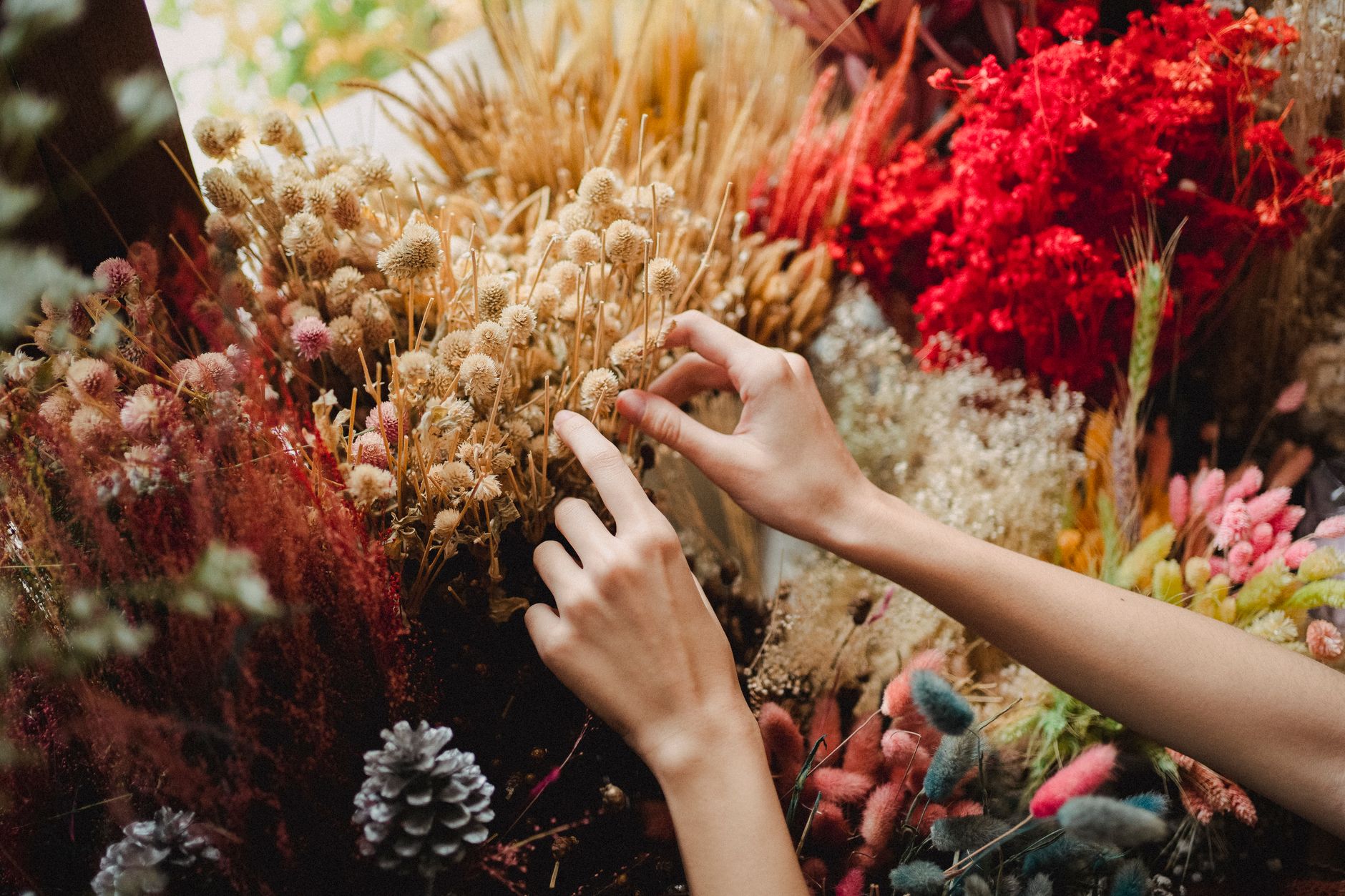
Hour two: building your arrangement. You select blooms from the buckets—roses, chrysanthemums, orchids, local greens depending on season. The host stands beside you, pointing out balance: "This pink is loud; add a pale green here to rest the eye." You cut stems at angles, strip lower leaves, place them in foam or a holder. Mistakes happen: a stem is too short, you over-crowd one side. The host steps in gently: "Try removing that one, step back, look at the shape." Kids under 12 often need more hand-over-hand help; seniors may sit and the host assists with heavy lifting. Allergies to pollen are real—tell us beforehand and we choose varieties or offer a mask.
Final 30 minutes: wrap and photograph. Your arrangement is done. The host wraps the base in brown paper or a sleeve to protect it for travel. You photograph it, maybe with your group. The host explains how to keep it fresh at your hotel (daily water top-ups, avoid direct sun, mist the leaves). This is the moment Korean travelers say "this is going home with me"—and most do carry it on the flight or arrange shipping.
How to prepare: what to wear, bring, and know beforehand
Wear an apron or clothes you don't mind getting wet—flower stems release water and foliage can stain. Closed-toe shoes are safer around scissors and wet surfaces. Bring your phone for photos; we have water and tea, so you don't need to carry much. If you have a severe pollen allergy, tell us when you book via WhatsApp so we can source hypoallergenic varieties or adjust the plan. If you're visiting during the rainy season (May–September), expect higher humidity and dewier blooms, which actually last longer after you leave. We postpone only if lightning is active; drizzle doesn't stop us.
For families with children, we shorten the session to 90 minutes and use softer foam and safety scissors. Teenagers (13+) join the full class. Seniors are welcome; we offer a chair-based option where the host does the heavy cutting and you arrange at table height. Groups of 4+ often book a private session, which costs more but lets you work at your own pace and even customize the theme—Korean-inspired colors, seasonal blooms, gifts for friends back home.
Difference between floristry styles: Korean, Vietnamese, and hybrid
| Style | Character | Best for | What you'll learn |
|---|---|---|---|
| Korean (minimalist, asymmetric) | Fewer stems, negative space, line-focused | Travelers who study ikebana or want calm aesthetics | Restraint, proportion, the power of emptiness |
| Vietnamese (abundant, layered, colorful) | Many stems, full form, bold color mixing | First-time arrangers, those drawn to lush gardens | Layering, color harmony, density and movement |
| Hybrid (what many of our guests create) | Balanced fullness with breathing room | Everyone—it's forgiving and photogenic | How to blend traditions and trust your eye |
Our hosts guide you toward whichever resonates. Korean visitors often arrive wanting minimalism but find themselves adding "just one more stem" and discovering they like abundance. That shift is part of the learning.

Where to take a class: Hanoi, Hoi An, Da Lat, or Da Nang
Flower arranging workshops in Hanoi run year-round in studios within walking distance of the Old Quarter. Cool, dry weather (October–March) means longer-lasting blooms and outdoor sessions in garden courtyards. Da Lat is Vietnam's flower capital—cooler, misty, with indigenous dahlias and chrysanthemums; classes feel intimate and the air smells of soil and greenhouses. Hoi An offers riverside studios where you arrange by lantern light at dusk—magical for couples. Da Nang is newer for us but increasingly popular with Korean group bookings.
Ask via WhatsApp which city fits your dates. Most Korean travelers book Hanoi because it's the hub; Hoi An and Da Lat are favorites for longer stays or those building a multi-day journey.
What to do after: keeping your arrangement and taking it home
Your arrangement will last 5–7 days indoors in cool, humid air and fresh water. Keep it out of direct sun and away from fruit and heaters (both release ethylene gas, which wilts flowers fast). Change the water every two days and re-cut the stems by half an inch.
For air travel home: wrap the base firmly in plastic and place it upright in a sturdy box with padding. Airlines usually allow wrapped florals as checked baggage if the box is secure. Many Korean travelers ship their arrangement to a hotel in the next city or home; we can advise on a florist partner for that, though we don't handle shipping directly.
If you want to extend the memory, consider pairing the class with a coffee workshop or Vietnamese cooking class the same day—many Korean groups do a "cultural morning" of food, flowers, and craft. Or book a farm and countryside experience the next day to see where some blooms are grown.
Real questions Korean travelers ask before booking
Do I need to speak Vietnamese? No. We teach entirely in English. You'll hear Vietnamese flower names (hoa hồng = rose, hoa cúc = chrysanthemum) and may pick up a few words, but the class doesn't require it.
What if I kill a plant at home? Florists expect it. The arrangement is designed to be beautiful for a week, then it's okay to compost. Some guests press a few stems in a book as a keepsake instead.
Can I buy flowers and do this myself back in Korea? You can, but the learning happens with a real host watching your hands, correcting your angle, suggesting that specific yellow-green stem. Plus, Vietnamese tropical varieties aren't as accessible in Seoul.
Is this a touristy or an authentic experience? It's authentic—your host is a local florist or garden-keeper who arranges professionally. We're small-group, not a factory class. Korean groups often feel they've met a real person and learned something they'll use.
What if I'm traveling solo? You'll join a small group (usually 4–6 people) unless you book a private session. Solo Korean travelers often tell us they made friends in the class—flower-arranging naturally opens conversation.
Is there a rainy-day plan? Yes. If the weather is dangerous (lightning), we reschedule within your trip. Light rain continues indoors. High humidity is actually good—flowers stay fresher longer.
What to check before you book: Confirm your dates and group size with us on WhatsApp—availability shifts by season. Tell us about allergies or mobility needs so we can prepare. Check that your hotel is okay with you bringing a wet, wrapped arrangement back. Pack a small plastic bag to protect your apron or clothes. Bring your phone fully charged for photos.
For dates, pricing, and to book a session that fits your Korean travel group, ask us on WhatsApp. We'll send you a few image examples and confirm availability within 12 hours.

FAQ
Can a group of 8 Korean travelers book a private class together?
Yes. Private classes cost more than small-group but let all 8 of you work at your pace, choose one shared theme, and have the host's full attention. WhatsApp us your dates and group size for a quote.
Is there a class that combines cooking and flowers?
Not in one session, but many groups book a cooking class in the morning and arranging in the afternoon. Same day, different studios, full immersion. We coordinate both via WhatsApp.
What happens if a flower I choose is wilting or broken?
You choose another from the bucket. Fresh stems are there so you always have options. The host's job is to help you find the right bloom for your design.
Will I understand color theory if I don't speak English fluently?
Yes. The host uses simple English ("light, dark, warm, cool") and shows you examples. You're learning by doing and watching, not reading. Korean travelers with basic English manage fine.
Can I do this experience with my kids?
Yes. Families with children aged 6+ are welcome. We adapt the time (90 minutes instead of 3 hours) and use softer materials. Younger kids may focus on choosing colors; older kids do more of the building themselves.
How early should I book before my trip?
Ideally 3–4 weeks ahead so we can secure fresh blooms and arrange a good time slot. Last-minute bookings (1–2 weeks) sometimes work, especially in the low season. Ask on WhatsApp with your dates.
Ask about dates
Tell us the city, your dates and what you would like to try. We reply on WhatsApp in English with options and availability.
FAQ
Can a group of 8 Korean travelers book a private class together?
Yes. Private classes cost more than small-group but let all 8 of you work at your pace, choose one shared theme, and have the host's full attention. WhatsApp us your dates and group size for a quote.
Is there a class that combines cooking and flowers?
Not in one session, but many groups book [a cooking class](/cooking-class) in the morning and arranging in the afternoon. Same day, different studios, full immersion. We coordinate both via WhatsApp.
What happens if a flower I choose is wilting or broken?
You choose another from the bucket. Fresh stems are there so you always have options. The host's job is to help you find the right bloom for your design.
Will I understand color theory if I don't speak English fluently?
Yes. The host uses simple English ("light, dark, warm, cool") and shows you examples. You're learning by doing and watching, not reading. Korean travelers with basic English manage fine.
Can I do this experience with my kids?
Yes. [Families with children aged 6+](/family-experiences) are welcome. We adapt the time (90 minutes instead of 3 hours) and use softer materials. Younger kids may focus on choosing colors; older kids do more of the building themselves.
How early should I book before my trip?
Ideally 3–4 weeks ahead so we can secure fresh blooms and arrange a good time slot. Last-minute bookings (1–2 weeks) sometimes work, especially in the low season. Ask on WhatsApp with your dates.
More like this
Flower arranging workshops
Flower Arranging Workshop Ho Chi Minh City: How to Book
A flower arranging workshop in Ho Chi Minh City teaches you to design seasonal arrangements in a calm studio setting. We run small-group and private sessions with English-speaking hosts who walk you through technique, flower choice, and how to make arrangements last.
Flower arranging workshops
Flower arranging workshop in Ninh Binh for couples
A flower arranging workshop in Ninh Binh lets couples create an arrangement together in a calm setting, learning Vietnamese design principles while working with seasonal blooms.
Flower arranging workshops
Flower Arranging Workshop in Mekong Delta for Foreigners
We run intimate flower arranging workshops in family-owned gardens and workshops across the Mekong Delta, where you'll learn seasonal design by practicing alongside our hosts. Pick your own blooms, arrange three pieces, and take them home.