 Cáo Experiences
Home › Blog › Flower arranging workshops
Flower Arranging Class in Hanoi: What to Expect
By the Cáo Experiences team · 2026-11-01
A flower arranging class in Hanoi runs 2.5 to 3 hours in a hands-on studio or family space in the old quarter or inner city. We guide you through stem preparation, balance, and color theory using seasonal fresh flowers—usually orchids, chrysanthemums, or imported roses. You design two or three arrangements; the first is always a simple vase bouquet so beginners feel confident. We provide all tools (floral shears, foam, containers) and take your finished work home wrapped for travel. Rain moves us to a covered workshop indoors; we adapt for kids (shorter session, pre-cut stems) and arthritis (we cut, you arrange). Cáo Experiences charges per session for small groups or private booking; ask us for dates and a quote on WhatsApp. Wear clothes you don't mind getting wet—flower stems drip water and pollen stains fabric. Ask about dates on WhatsApp
What actually happens hour by hour in a Hanoi flower class?
You arrive 10 minutes early. We show you the workspace, introduce the flowers on the table—we name each type in English and Vietnamese—and explain what's fresh that week. For the first 20 minutes, we talk through stem angles, how to strip leaves so they don't rot in water, and why shorter stems go in the center. Then you pick up shears.
Most people hesitate at first. The stems are tougher than you expect, and you worry about cutting at the "wrong" angle. We work beside you. By stem five, your grip relaxes. You move to the foam or vase your host has prepared and place your first flower. There's a visible pause—everyone checks the height, tilts their head. This moment never gets old.
The next 90 minutes is trial, adjustment, and conversation. You finish your first arrangement (a small vase bouquet). We take a photo. You start a second—this one bigger, or a different shape. If you're tired, we show you how to create movement with foliage. If you're building momentum, we introduce asymmetrical balance or a structured spiral. By the final 20 minutes, you're wrapping both pieces in kraft paper, learning how to tie them so they survive the motorbike ride home.
We close with water instructions: change the water every two days, trim stems at a 45-degree angle, remove lower leaves. Your arrangements last 5–7 days indoors.
Explore flower arranging experiences

Do I need any experience or special skills?
No. We've taught people aged 8 to 78—architects, office workers, travelers who've never held shears. The skill isn't artistic talent; it's understanding proportion and patience. Beginners worry they'll "ruin" a flower or make something ugly. Flowers are forgiving. A "mistake" stem often looks intentional once it's surrounded by two others. We've never seen an arrangement that didn't work.
If you have arthritis, tremor, or limited hand strength, tell us when you book. We cut all the stems to length. You focus on placement and design. The session remains the same length and is just as satisfying.
Children under 12 usually do a 90-minute session (shorter than the adult version) with pre-cut stems and lightweight containers. They often make one bouquet and a small gift arrangement for a parent or sibling. Kids love the responsibility of "designing" and the immediate result they can touch.
Why are Vietnamese flowers different, and does it matter?
Vietnam grows orchids, chrysanthemums, and carnations year-round in the central highlands. Hanoi's main flower market supplies florists with these plus imported roses (usually from Da Lat, 1,200 meters up, where cooler nights extend the bloom). Imported tulips and peonies arrive in winter and cost more.
Vietnamese arrangements traditionally pair dense flower clusters with trailing green foliage and rarely use sparse, minimal styles. This shapes the flowers we source. When you arrange with Vietnamese flowers, you're learning the aesthetic people here understand. A tight, layered bouquet feels right in this context.
Does it matter? Only if you're curious about it. We use whatever is in season and fresh that week. The technique—cutting, stripping, building structure—works the same whether you're holding a carnation or a rose. But knowing that chrysanthemums symbolize joy here, or that certain flowers appear in Tet arrangements, adds meaning to what you're doing.
What's the honest difference between arranging alone and in a group class?
Aspect | Group Class (3–5 people) | Solo or Pair Session | Why it matters ---|---|---|--- Attention | Shared; host circulates | Dedicated; 1-on-1 feedback | Beginners gain confidence faster solo; groups feel social and fun Cost per person | Lower | Higher | Ask us for a quote; group rates apply Flowers available | Curated selection | Full choice; we can add requests | Pairs can request a specific color or theme Pace | Moderate; suited to mixed levels | You set it | Some prefer unhurried; others like structure Talking & stories | High; you meet other travelers | Quiet; focused | Depends on whether you want to hear about flower language or focus Distraction | Low (everyone's busy) | Zero | Matters if you need silence to concentrate Wrapping & photos | Communal; quick | Slow; detailed | Group members leave by the clock; pairs often stay 20 minutes longer
Group classes suit people who want community, cost-efficiency, and the energy of others learning. Private sessions work for couples, families, or anyone who finds groups tiring. Honestly, both are rewarding. We've hosted 63-year-old women in groups who came away saying they'd book a private one next time to experiment freely. We've also hosted couples in pairs who wished they'd chosen a group because the host's jokes made the time fly.
Book a private or group session
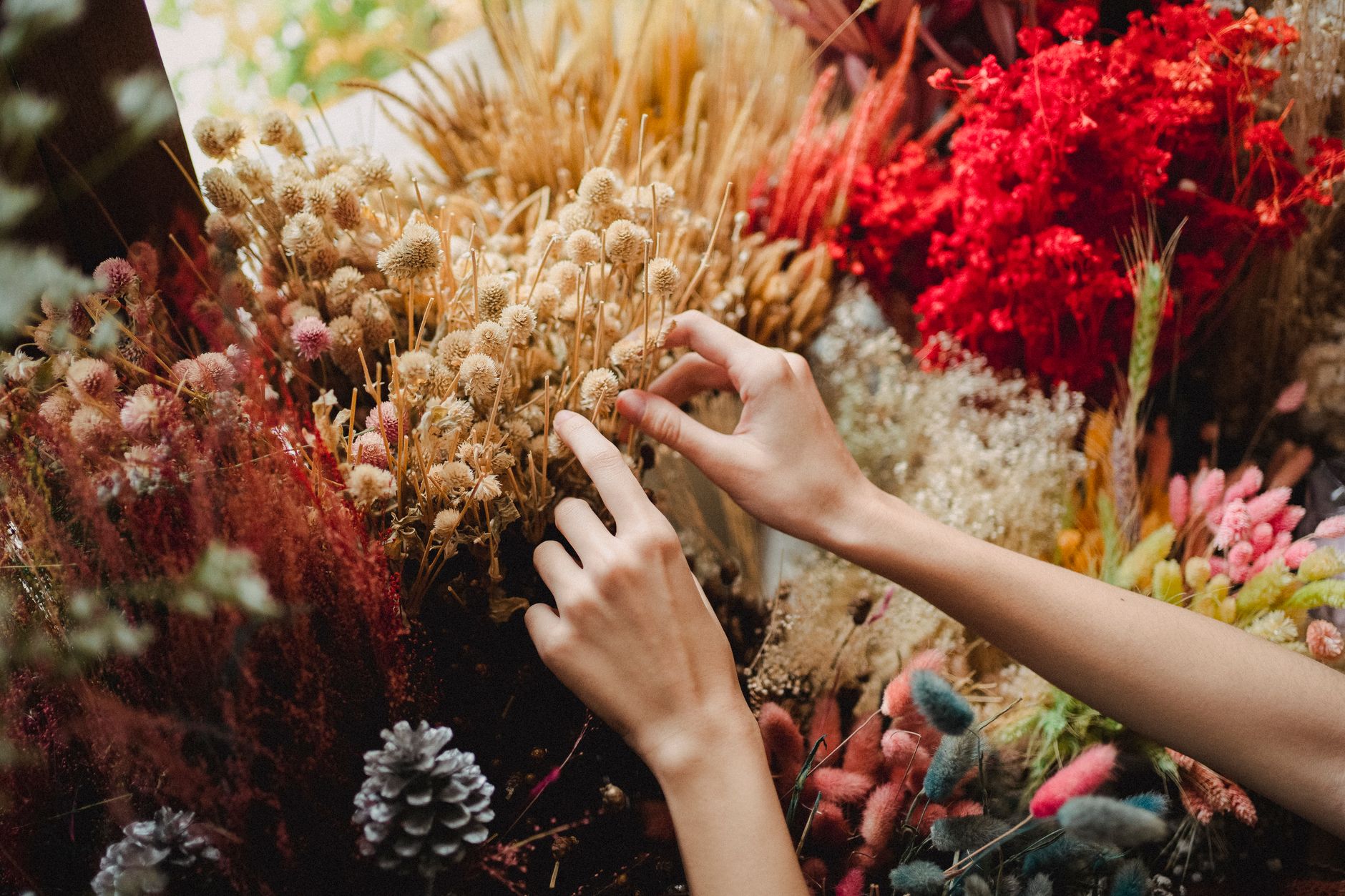
How do we adapt for rain, allergies, and dietary needs?
Rain is normal in Hanoi April–September. We host indoors in a covered studio or family kitchen with a big table—the same quality of light, same flowers, no compromise. Wind is the only real issue (outdoor classes in Da Nang or Hoi An can be affected), and we rarely schedule outdoor sessions in monsoon season without checking forecasts.
Pollen allergies: tell us beforehand. Some flowers—chrysanthemums, lilies—release heavy pollen. We source pollen-free varieties (florists can order them) or swap in roses and orchids. Latex allergy: we use non-latex floral foam and plastic shears handles instead of rubber-grip ones. Mild hay fever usually improves once you're inside and settled; the first 10 minutes in a flower-heavy space is always more intense.
We rarely integrate food into flower classes, but if you're joining a combo experience (say, a morning flower class and afternoon Vietnamese cooking class), we adapt the meal to allergies, vegetarian diets, or preferences you mention. Tell us in your booking message.
Children under 6 often need a parent seated next to them to hand stems and narrate what's happening. Kids 6–12 work independently with gentle guidance. Seniors with balance issues sit in a sturdy chair at table height; we bring flowers to them rather than asking them to reach.
What should you wear and bring, and what not to do?
Wear clothes you don't mind getting wet and stained. Flower stems drip. Pollen from older flowers doesn't wash out easily. Avoid silk or expensive pieces. Closed-toe shoes are fine, but we're indoors, so house shoes or sneakers work equally.
Bring nothing except a phone (for photos) and a small bag or backpack to carry your wrapped arrangements home. We provide floral shears, foam, containers, string, kraft paper, and water. If you're on a motorbike or bicycle, your wrapped bouquet fits a bag or basket. If you're in a car, lay it flat on the seat or passenger side.
Don't bring children under 4 (they can't sit still for 90 minutes and shears aren't safe). Don't assume your favorite flower is in stock—we use seasonal, local stock. Don't wear perfume or heavy cologne; it clashes with fresh flowers and can irritate your own senses. Don't schedule a class if you're sick or on antibiotics that make you photosensitive (sunlight through studio windows can irritate skin). Don't forget to ask us about your specific need—allergies, mobility, preference for color or style—when you message us.
What to check before you book
- Dates and availability: We run classes Tuesday–Sunday in Hanoi; Mondays are prep days. Ask us on WhatsApp for a quote and available slots.
- Group size or private: Confirm whether you want a small group (usually 3–5 people) or a session just for you, your partner, or your family.
- Skill level: You don't need experience, but if you have a design preference (tight European style vs. loose garden style), mention it.
- Allergies or mobility needs: Tell us pollen sensitivities, arthritis, balance concerns, or anything that affects how you sit, grip, or breathe in a flower-filled space.
- What to do with your arrangements: We wrap them for travel. If you're leaving Hanoi the next day, ask us how to keep them fresh in a hotel room.
- Weather: If you're visiting in monsoon season (May–September), confirm the session is still outdoors or will move indoors.
- Cancellation: Ask us about our cancellation policy when you book.
See flower experiences in Hanoi
Curious about learning other crafts while you're in Hanoi? We also run Vietnamese cooking class and coffee workshop sessions in the same locations. Many travelers combine a morning flower session with an afternoon activity, or spend a day in the countryside at a farm and countryside experience before returning for a class. It all depends on what speaks to you.

FAQ
How do I book a flower arranging class in Hanoi, and when are you available?
Message us on WhatsApp with your preferred dates, group size, and any allergies or needs. We run classes Tuesday–Sunday and reply within 24 hours with available times and a quote. Pairs and small groups have more flexibility than large corporate bookings.
Can I take a class if I'm visiting for just one day, or do I need to stay longer?
One day is enough. A 2.5-hour class fits easily into a morning or afternoon. Many travelers fit it alongside a market visit or coffee workshop the same day.
Will my flowers last if I'm leaving Hanoi the next day?
Yes, if you follow our care instructions: change water daily, trim stems, remove lower leaves, keep them out of direct sun and away from ripening fruit. Bouquets last 5–7 days indoors. We'll give you wrapping tips for transport.
Are classes offered in other Vietnamese cities, or only Hanoi?
We run flower arranging in Hanoi, and we also guide workshops in other locations. Ask us about experiences in Hoi An, Da Lat, and Da Nang—we can arrange something tailored to you.
What's the age range for classes, and can my kids join?
Kids 6–12 do well in a shorter 90-minute session with pre-cut stems. Under 6 is difficult—they can't sit still long enough. Teens and adults of any age are welcome; we've taught people in their 80s.
Do I need to have an artistic eye or design sense to enjoy this?
No. The class teaches you proportion, balance, and technique—not "art." Beginners often feel their first arrangement is ugly until we point out what they did right. By the second one, you'll see your own eye developing.
What happens if I'm allergic to pollen or have sensitive skin?
Tell us when you book. We can source pollen-free flowers, use non-latex foam, or swap high-pollen species for roses and orchids. Mild allergies usually settle once you're seated and working.
Ask about dates
Tell us the city, your dates and what you would like to try. We reply on WhatsApp in English with options and availability.
FAQ
How do I book a flower arranging class in Hanoi, and when are you available?
Message us on WhatsApp with your preferred dates, group size, and any allergies or needs. We run classes Tuesday–Sunday and reply within 24 hours with available times and a quote. Pairs and small groups have more flexibility than large corporate bookings.
Can I take a class if I'm visiting for just one day, or do I need to stay longer?
One day is enough. A 2.5-hour class fits easily into a morning or afternoon. Many travelers fit it alongside a market visit or coffee workshop the same day.
Will my flowers last if I'm leaving Hanoi the next day?
Yes, if you follow our care instructions: change water daily, trim stems, remove lower leaves, keep them out of direct sun and away from ripening fruit. Bouquets last 5–7 days indoors. We'll give you wrapping tips for transport.
Are classes offered in other Vietnamese cities, or only Hanoi?
We run flower arranging in Hanoi, and we also guide workshops in other locations. Ask us about [experiences in Hoi An](/destinations/hoi-an), [Da Lat](/destinations/da-lat), and [Da Nang](/destinations/da-nang)—we can arrange something tailored to you.
What's the age range for classes, and can my kids join?
Kids 6–12 do well in a shorter 90-minute session with pre-cut stems. Under 6 is difficult—they can't sit still long enough. Teens and adults of any age are welcome; we've taught people in their 80s.
Do I need to have an artistic eye or design sense to enjoy this?
No. The class teaches you proportion, balance, and technique—not "art." Beginners often feel their first arrangement is ugly until we point out what they did right. By the second one, you'll see your own eye developing.
What happens if I'm allergic to pollen or have sensitive skin?
Tell us when you book. We can source pollen-free flowers, use non-latex foam, or swap high-pollen species for roses and orchids. Mild allergies usually settle once you're seated and working.
More like this
Flower arranging workshops
Flower Arranging Workshop Ho Chi Minh City: How to Book
A flower arranging workshop in Ho Chi Minh City teaches you to design seasonal arrangements in a calm studio setting. We run small-group and private sessions with English-speaking hosts who walk you through technique, flower choice, and how to make arrangements last.
Flower arranging workshops
Flower arranging workshop in Ninh Binh for couples
A flower arranging workshop in Ninh Binh lets couples create an arrangement together in a calm setting, learning Vietnamese design principles while working with seasonal blooms.
Flower arranging workshops
Flower Arranging Workshop in Mekong Delta for Foreigners
We run intimate flower arranging workshops in family-owned gardens and workshops across the Mekong Delta, where you'll learn seasonal design by practicing alongside our hosts. Pick your own blooms, arrange three pieces, and take them home.