
Home › Blog › Flower arranging workshops
Flower Arranging Class in Mekong Delta for Foreigners
By the Cáo Experiences team · 2026-11-06
Cáo Experiences runs small-group and private flower arranging workshops in family kitchens throughout the Mekong Delta, typically 3–5 hours, where you'll learn to handle local seasonal flowers, create a finished arrangement to take home, and understand the symbolism behind colours and placements. We work in English with WhatsApp coordination. Sessions suit beginners—no prior skill needed—couples, solo travellers, and families with children aged 8+. We adapt for allergies (pollen sensitivities), mobility needs, and rainy weather by moving into covered spaces. Cost and exact dates vary by group size and flower availability; ask us for a custom quote on WhatsApp. Ask about dates on WhatsApp
Why choose the Mekong Delta over city flower classes?
The Mekong Delta hosts year-round flower farms and seasonal markets; arranging here means you work with blooms at peak freshness, often picked that morning. City workshops sometimes use imported or pre-aged stock. We source directly from growers within 10–15 km of our session spaces, which means better colours, longer vase life, and lower environmental cost. You also meet growers, see how flowers travel from field to arrangement, and understand regional seasonality in a way urban classes cannot offer. That direct connection—farm to hand to home—shapes every arrangement you make.
What flowers will you actually arrange?
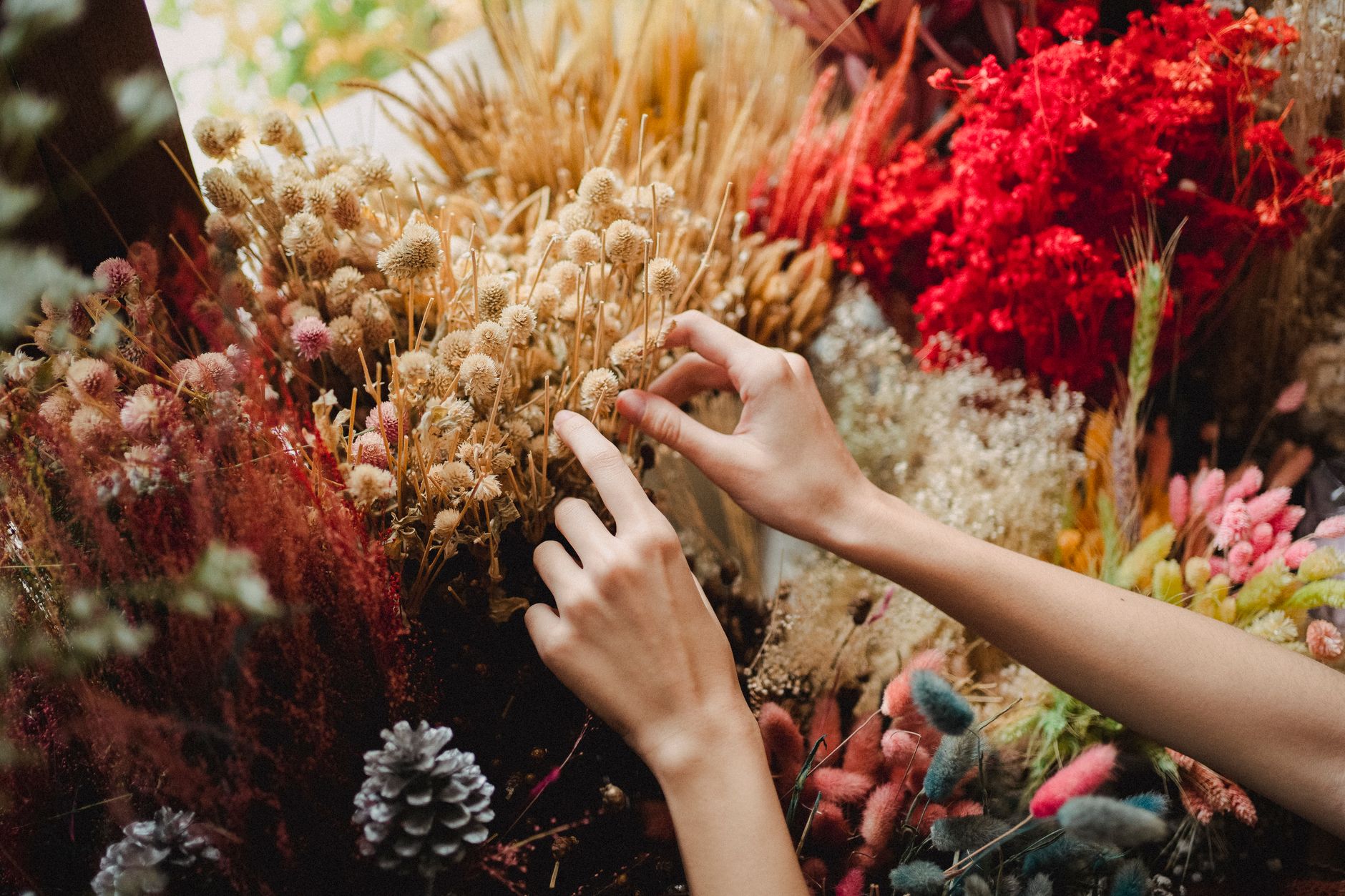
Seasons shift the palette. In cooler months (November–February), roses, carnations, and chrysanthemums dominate; spring brings sunflowers, gladiolus, and local wildflowers; summer focuses on tropical types—anthurium, bird-of-paradise, orchids—and autumn returns to dahlias and celosia. We never guarantee specific blooms; instead, we teach you how to compose with whatever is fresh that day. You'll learn to assess stem strength, choose focal flowers versus filler, balance colour temperature, and create height and asymmetry. By session end, you'll have a finished 30–40 cm arrangement in a vessel we provide or you bring.
Explore our flower arranging experience
How does a typical morning or afternoon session flow?
We begin with tea and a 20-minute introduction: flower types, symbolism, and the tools—scissors, floral foam, wire, tape. You'll handle three or four practice stems to learn cutting angles and depth before touching your own arrangement. Then we move to your workspace—usually a simple wooden table in natural light—and you select blooms from our prepared buckets, guided by our host. We stand beside you, adjust stem placement, suggest colour balances, but you make final decisions. Midway, most people pause for photos and a water break. By hour two, your arrangement takes shape; in the last 30–45 minutes, we refine and troubleshoot (yes, stems slip; we show you quick fixes). You'll wrap it in newspaper and carry it home.
Do you adapt the class for kids, seniors, or physical limits?
Absolutely. Children aged 8–12 work at a lower table, use child-safe scissors, and often create smaller cube or bud-vase arrangements—just as meaningful, less frustrating. Seniors who stand for long periods sit on a stool, and we bring flowers to them rather than asking them to reach. People with arthritis or hand weakness use pre-cut stems and foam holders we pre-position. Pollen allergies? We choose low-pollen varieties (roses over lilies, dahlias over chrysanthemums) or give you a lightweight mask. Rain doesn't stop us; all our session spaces have covered work areas with natural or soft artificial light. The experience shifts slightly—perhaps more time indoors, simpler stems—but the learning and the final piece remain genuine.
How do you handle allergies, dietary needs, or special requests?
We ask you to mention allergies and mobility needs when you book. For pollen sensitivities, we pre-assess our flower stock and either swap varieties or you wear a light mask; neither diminishes the class. If you're pregnant, recovering from surgery, or prefer to sit the whole time, we adapt without comment. Dietary: we often serve light refreshments (tea, coffee, biscuits) partway through; tell us about restrictions and we'll arrange alternatives. If you want to focus on a specific style—say, minimalist or temple arrangements—or work with your own flowers brought from a market trip, mention it upfront and we'll build the session around that.
What's the real difference between a half-day and full-day session?
A half-day (3–3.5 hours) covers fundamentals: one finished arrangement, plenty of hands-on time, light refreshments, home with your piece. A full day (5–6 hours) adds depth: two arrangements (different styles—say, a vase and a shallow pedestal), a farm or market visit to see growers or source flowers yourself, a longer lunch break with local food, and time to learn about Vietnamese floral traditions in homes, pagodas, and Lunar New Year displays. Full-day guests often feel more confident improvising after the session. Both suit tourists and expats; choose half-day if you have other activities, full-day if you want immersion.
What to check before you book
| Aspect | Half-day | Full-day | What matters |
|---|---|---|---|
| Duration | 3–3.5 hours | 5–6 hours | Fits your schedule? |
| Arrangements created | 1 finished piece | 2 pieces, different styles | More variety or depth? |
| Farm or market visit | No | Often yes | Want to see flowers sourced? |
| Meal included | Snacks & tea | Light lunch | Dietary restrictions? |
| Best for | Quick learners, busy schedules | Couples, serious learners, families | What's your goal? |
| Physical demand | Standing 2.5 hours | Standing 3–4 hours with breaks | Mobility or endurance concerns? |
| Group size | 2–6 people typical | 2–8 people | Preference for intimate or social? |

Comparing Cáo's flower arranging with other formats you might see
City boutique classes (in a florist shop): faster pace, imported flowers, focus on commercial designs (wedding centrepieces, gift boxes), 2–3 hours, polished aesthetic. Best if you want a specific style for an event.
Online tutorials: flexible timing, repeatable, no material cost. Miss the texture of actual stems, the smell, the real feedback when something droops.
Farm-stay flower sessions: often longer and cheaper, fewer language resources, less instruction, more DIY. Good if you speak some Vietnamese and want raw experience.
Cáo's model: small groups (2–6), English-hosted, local seasonal blooms, teaching emphasis, warm pacing, farm-to-table transparency, adaptation for all abilities. You leave with a real skill and a piece you made, not a pre-made gift box. Ideal if you're visiting 3–10 days, want to understand how flowers work, and prefer genuine interaction over volume.
How do we handle the rainy season?
The Mekong Delta gets heavy rainfall June–September. Rain doesn't stop us; it rarely stops the flowers either. We move indoors to covered kitchens or pavilions with natural light and good airflow. Flowers can get damp before arranging—we dry stems and leaves with soft towels. Humidity actually keeps blooms fresher longer, so many rainy-season arrangements last longer than dry-season ones at home. Foam is trickier on very wet days (it absorbs water), so we use water-retention alternatives. Your finished piece travels home in a sealed plastic sleeve to protect it. We always coordinate timing with you; if a typhoon warning is active, we reschedule. Otherwise, rain is just part of the Delta rhythm.
Who is this experience really for?
- Couples on a slow getaway: intimate setting, shared creative time, something to take home and remember by.
- Solo travellers 25–65: meet local hosts, learn a portable skill, fit a 3–4 hour session around other plans.
- Families with children 8+: kids focus differently (often more playful, less perfectionist), parents relax, shared memory.
- Expats living in the Delta: deepens connection to local agriculture, seasonal rhythm, and neighbours.
- Corporate small groups (4–8 people): team bonding without high-stakes competition, everyone walks away with something tangible. See our group and corporate experiences for tailored team options.
- People recovering from burnout: the pace is gentle, the focus is tactile, no pressure to be "good at it."
Not ideal if you need a high-impact Instagram moment (the Delta is rural and quiet) or prefer a perfectly polished finished product (we teach, not produce for you).
What should you wear and bring?
Wear comfortable clothes you don't mind getting soil or plant debris on—a simple shirt or apron works. Closed shoes (you may walk to a garden or market). Bring a small bag or backpack to carry your finished arrangement home (we provide newspaper wrapping, but a sturdy bag prevents stem breakage). Sunscreen and a hat if you're sensitive; we shade work areas, but midday Delta sun is intense. A phone for photos (but leave it aside during hands-on time; the flowers deserve your attention). We provide scissors, floral foam, tape, water, and vessels. No need to bring flowers or tools unless you have a specific request.
How do we coordinate with you?
We manage everything via WhatsApp: you message us your preferred dates, group size, any allergies or mobility notes, and language needs. We confirm a date (usually 5–7 days ahead), send you a location pin, photo of that day's flowers, and a reminder the night before. You arrive 10 minutes early; we brief you on the house, restroom, water. Sessions start on time. After, we help pack your arrangement and often chat about what to do with it (yes, it can last 7–10 days in a cool spot). We email you photos the next day and stay in touch—many guests send us photos weeks later of their flowers still blooming.
Why the Mekong Delta and not Hanoi, Hoi An, or Ho Chi Minh City?
The Delta is where flowers are grown, not just sold. You're arranging 5–10 km from the fields. Experiences in Hanoi, Da Nang, and Ho Chi Minh City offer convenience and speed, but the Delta offers truth: soil under fingernails (if you visit a farm), growers' names, seasonal reality, and landscapes shaped by water and agriculture. If you're time-pressed, a city class works. If you have a day and want to understand where your flowers come from, the Delta is incomparable.
What other experiences pair well with flower arranging?
Many guests combine flower arranging with a Vietnamese cooking class—morning flowers, afternoon cooking with market ingredients, both hands-on and seasonal. Or a coffee workshop in the Delta (we have local roasters) plus flowers. Families often add a farm experience to meet animals, see crops, and arrange flowers all in one long day. If you're staying longer, a street food and market tour gives you context for the ingredients in that cooking class. See more stories from our hosts for other Delta combinations.

FAQ
Do I need any flower arranging experience to join?
No. We teach absolute beginners every session. You'll learn as you go, and our hosts guide you through every step. By the end, you'll have a finished, beautiful arrangement made entirely by you.
Can I arrange flowers in a specific style—minimalist, temple, wedding?
Yes. Tell us your preference when you book. We'll source flowers and teach techniques that match your interest. Vietnamese temple arrangements and minimal asymmetrical styles are especially popular.
What happens if I don't like my arrangement at the end?
We'll help you adjust it. Most concerns are easy fixes—a stem too high, a colour balance off. We're here to refine, not judge. Almost every guest loves their piece once we troubleshoot together.
How long does the arrangement last at home?
7–12 days in a cool room with fresh water changed every 2–3 days. The Delta's cooler months (Nov–Feb) extend vase life. Summer heat shortens it. We give you care tips in person.
Is it suitable for very young children or elderly people with limited mobility?
Children 8+ enjoy it; younger kids may need more breaks. Seniors and people with limited mobility can sit the entire time; we adapt heights, bring flowers to you, and use pre-cut stems. Mention your needs upfront.
What if it rains heavily on my session day?
We reschedule or move indoors to a covered space. Rain doesn't damage flowers; it actually keeps them fresher. We'll coordinate with you immediately if weather is severe.
Can I bring my own flowers to arrange?
Yes, if you source them from a local market that morning. We'll teach you how to condition and work with them. This adds a personal dimension many guests love.
How do we get our arrangement home safely on a motorbike or bus?
We wrap it securely in newspaper and you carry it upright in a bag or backpack. Most arrangements survive travel fine. If you're worried, we can arrange a car pickup (ask us about this).
What's included in the price, and are there hidden costs?
Ask us for a custom quote on WhatsApp. Typically, the session fee covers instruction, all flowers and materials, a vessel, light refreshments, and photos. Travel to the location is your cost; we'll send you the address. No hidden fees.
Can I book a private session just for two people, or must it be a group?
We run both private pairs and small groups (4–6). Private sessions cost more but allow full customization. Message us to compare options for your dates.
Ask about dates
Tell us the city, your dates and what you would like to try. We reply on WhatsApp in English with options and availability.
FAQ
Do I need any flower arranging experience to join?
No. We teach absolute beginners every session. You'll learn as you go, and our hosts guide you through every step. By the end, you'll have a finished, beautiful arrangement made entirely by you.
Can I arrange flowers in a specific style—minimalist, temple, wedding?
Yes. Tell us your preference when you book. We'll source flowers and teach techniques that match your interest. Vietnamese temple arrangements and minimal asymmetrical styles are especially popular.
What happens if I don't like my arrangement at the end?
We'll help you adjust it. Most concerns are easy fixes—a stem too high, a colour balance off. We're here to refine, not judge. Almost every guest loves their piece once we troubleshoot together.
How long does the arrangement last at home?
7–12 days in a cool room with fresh water changed every 2–3 days. The Delta's cooler months (Nov–Feb) extend vase life. Summer heat shortens it. We give you care tips in person.
Is it suitable for very young children or elderly people with limited mobility?
Children 8+ enjoy it; younger kids may need more breaks. Seniors and people with limited mobility can sit the entire time; we adapt heights, bring flowers to you, and use pre-cut stems. Mention your needs upfront.
What if it rains heavily on my session day?
We reschedule or move indoors to a covered space. Rain doesn't damage flowers; it actually keeps them fresher. We'll coordinate with you immediately if weather is severe.
Can I bring my own flowers to arrange?
Yes, if you source them from a local market that morning. We'll teach you how to condition and work with them. This adds a personal dimension many guests love.
How do we get our arrangement home safely on a motorbike or bus?
We wrap it securely in newspaper and you carry it upright in a bag or backpack. Most arrangements survive travel fine. If you're worried, we can arrange a car pickup (ask us about this).
What's included in the price, and are there hidden costs?
Ask us for a custom quote on WhatsApp. Typically, the session fee covers instruction, all flowers and materials, a vessel, light refreshments, and photos. Travel to the location is your cost; we'll send you the address. No hidden fees.
Can I book a private session just for two people, or must it be a group?
We run both private pairs and small groups (4–6). Private sessions cost more but allow full customization. Message us to compare options for your dates.
More like this
Flower arranging workshops
Flower Arranging Workshop in Phu Quoc: How to Book
A flower arranging workshop in Phu Quoc teaches you to design with fresh tropical and temperate stems in a hands-on morning or afternoon session. We run small-group classes in English, hosted in a garden studio setting—no experience needed.
Flower arranging workshops
Floristry class in Sapa: what to expect
A floristry class in Sapa means learning seasonal arrangement techniques in a quiet studio space, using fresh local flowers. We guide you through cutting, composition and color pairing—no experience needed.
Flower arranging workshops
Floristry class in Hanoi for solo travelers: what to expect
Solo travelers in Hanoi often wonder whether a flower-arranging class suits a single person. We run weekly small-group and private sessions where solo guests learn hand-tied bouquets, seasonal wreaths, and Vietnamese floral design—no skills needed, English-led, afternoons and mornings available.