
Home › Blog › Flower arranging workshops
Flower arranging class in Sapa in English
By the Cáo Experiences team · 2026-11-06
Our flower arranging classes in Sapa meet in a traditional family workspace in the old quarter, where we work with seasonal blooms sourced from local growers. A typical session runs 3–4 hours and covers flower selection, conditioning, structure and balance, and how Vietnamese arrangements differ from Western styles. You'll create two finished pieces to take home (or gift locally). We teach in English, welcome all skill levels, and adapt for kids, seniors, groups and dietary needs. Class size stays small—usually 2–6 people—so each guest gets hands-on attention. Ask us for dates and a quote on WhatsApp; availability shifts with the season and local bloom supply. No florist training required; come curious and ready to work with your hands. Ask about dates on WhatsApp
What exactly happens during a Sapa flower class?
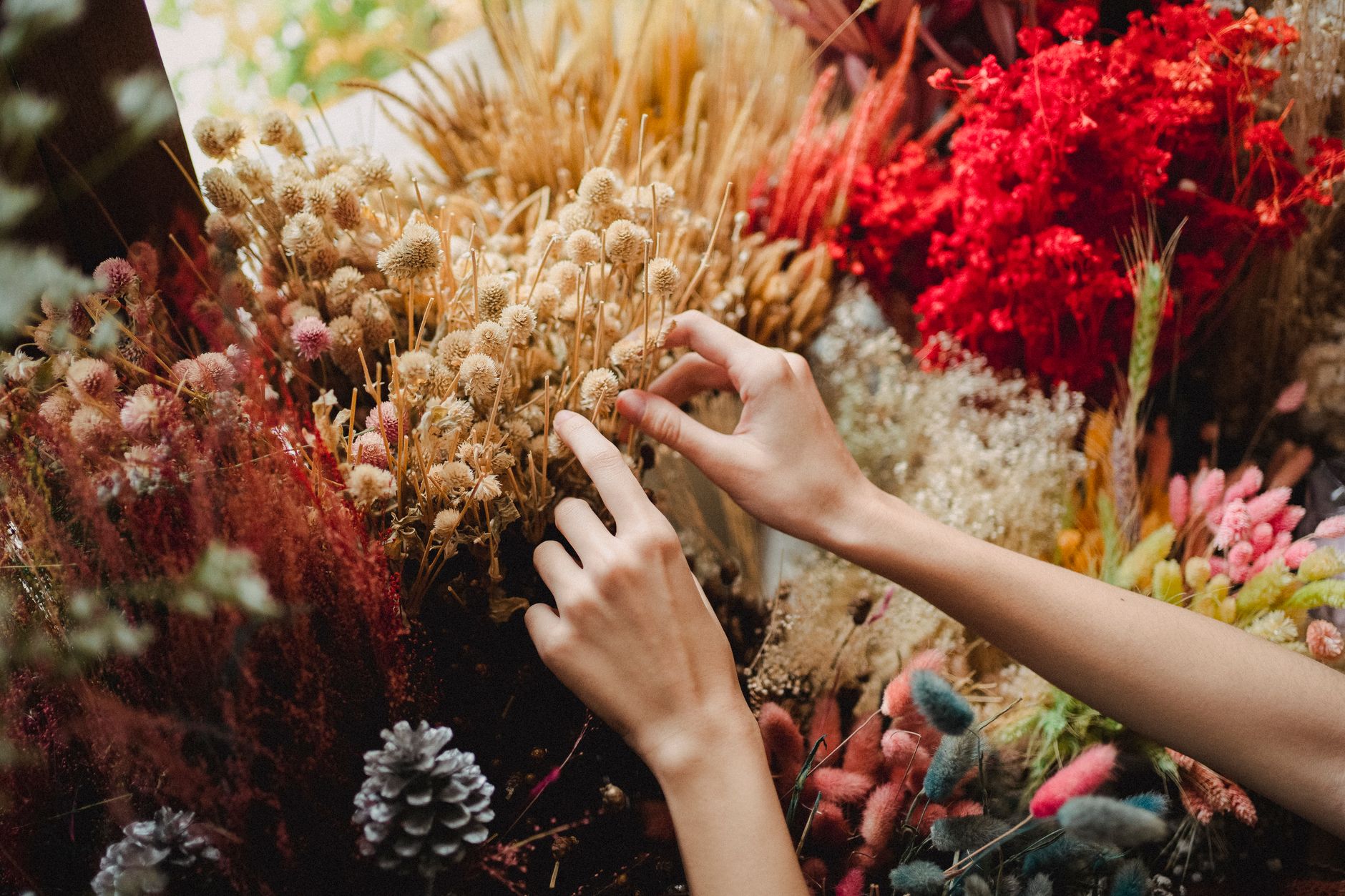
We meet you mid-morning at a family workspace tucked into a lane off the old quarter. The space is a working flower studio—not a cafe or retail shop—with wooden tables, fresh water sources, and buckets of stems sorted by type. You'll start by handling 8–12 varieties of seasonal flowers (roses, chrysanthemums, statice, eucalyptus, local greenery). We show you how to strip leaves, cut stems at angles, and condition blooms so they last. Then you learn the Vietnamese principle of asymmetry and negative space—how to build height, anchor a base, and leave breathing room. By mid-session you're arranging your first piece (usually a tall vase design). After a short break we guide a second arrangement, often in a shorter vessel or hand-tied style. You wrap both to carry home, and we take a photo. Total time is 3–4 hours including breaks. Most guests leave with sore fingers and damp clothes—it's real work, not a demo.
Explore flower arranging workshops
How is Sapa different from flower classes in Hanoi or Da Lat?
Sapa's mountain altitude and cool climate mean blooms last longer on the stem and have different color range than lowland varieties. Local growers focus on hardy cultivars suited to the terrain. In our Sapa sessions we work with what's fresh that week—you might see hardy roses, local chrysanthemums, and wild greenery unavailable in Hanoi. The workspace itself sits quieter than a Hanoi old-quarter studio, with views toward the valley. If you're already visiting Sapa's countryside for trekking or homestays, a half-day flower class fits neatly between activities. Da Lat, our sister mountain town, has similar conditions but focuses more on commercial floristry; Sapa's style leans toward arrangement as a craft and meditation practice. Hanoi classes run year-round in busier group settings. Choose Sapa if you want mountain air, a slower pace, and smaller cohort; choose Hanoi if you need more session dates or prefer urban energy.
Should I book a private class or join a small group?
Class type | Who it's for | Why choose it | Time needed ---|---|---|--- Small group (2–6 people) | Travelers, couples, friends, solo guests meeting others | You share ideas, learn together, costs are lower | 3–4 hours mid-morning or afternoon Private (1–2 people, sometimes 3) | Families wanting solo attention, corporate groups, anniversaries | Full focus on your pace and interests, flexible timing | 3–4 hours, can start earlier or later Extended private (half-day or full-day) | Deep learners, teams, wedding party pre-events | Time for extra designs, tea breaks, guided sourcing | 5–7 hours, includes market or farm visit
Most first-timers choose small group—you'll meet other travelers, share scissors and materials efficiently, and the group energy keeps the pace light. Private works if you're traveling with kids (we adapt for ages 8+) or want to surprise a partner with a couples' experience. Full-day private lets us add a visit to a local grower or include tea and snacks. Ask us for dates and a quote on WhatsApp to discuss which fits your trip.

What if I have no experience—or arthritis, allergies, or fear?
Beginners worry they'll damage the flowers or feel clumsy. In truth, flowers are tougher than you think, and "mistakes" teach the best lessons. We've hosted guests aged 7 to 78, left-handed and ambidextrous, with shaky hands and strong ones. Here's what we adapt:
- No prior florist skill needed. We show you each step, repeat as often as you need, and don't judge speed or style.
- Arthritis or weak grip? We pre-condition stems, use lighter greenery, and can shorten class to 2 hours with fewer arrangements. Bring any hand supports you use; we have cushioned scissors available.
- Allergies to pollen or foliage? Tell us in advance. We source low-pollen varieties, keep tissues and antihistamine on hand, and can substitute greens.
- Fear of getting dirty? We provide aprons, towels, and a hand-washing station. Yes, you'll have wet sleeves and leaf bits in your hair—it's part of the charm.
- Kids tagging along? Children 8+ can participate fully or do a shorter 2-hour version with simpler vessels and pre-cut stems. Younger kids stay welcome if a parent supervises; they often do a mini arrangement or help arrange with guidance.
- Rain? Sapa rain is common. We work indoors, so light rain is no problem. Heavy rain (rare during class hours) means we reschedule—we'll offer another date within two weeks.
We've never had a guest regret showing up. Message us on WhatsApp about any specific concern.
How does a flower class connect to other Sapa experiences?
If you're spending 2+ days in Sapa, layer the flower class with other hands-on activities. Many guests combine it with Vietnamese cooking in a family kitchen, a farm experience visiting local vegetable growers, or a tea experience learning about Sapa's heritage teas. Couples often book flower arranging plus a horse riding session in the countryside. Families with kids might pair it with art and culture classes or afternoon tea. The old quarter where we teach is walking distance from Hoan Kiem Lake and local cafes, so you can explore before or after. Solo travelers often join our group experiences to meet other guests over a shared meal after the class. All our Sapa sessions coordinate via WhatsApp, so we can chain experiences into a loose itinerary. See what other hosts are sharing from the region, or contact us to build a custom day.
See all Cáo experiences
What to check before you book
- Confirm your exact dates. Sapa bloom variety shifts with season (spring/early summer has more roses and local greens; autumn brings hardy mums). We source fresh each week, so availability varies. Ask us what's in season for your dates.
- Tell us about any injuries, allergies or mobility limits when you message. We adapt quietly and without fuss, but we need to know in advance to source safe materials and adjust pacing.
- Ask whether kids are included. Ages 8+ can join fully; younger kids need parent supervision. We'll let you know what's realistic for their age and the group mix.
- Clarify pickup and dropoff. We don't arrange transport, but we can suggest reliable taxis or walking routes from your accommodation. Most guests arrive on foot from the town center in 5–10 minutes.
- Bring an apron or wear clothes you don't mind staining. Water, soil, and leaf debris are part of the work. Wear closed shoes (the studio floor is damp).
- Decide on your finished pieces. You take home two arrangements in basic vessels we provide. If you want florist-grade wrapping for air travel, tell us ahead—we have options but need notice.
Ask us for dates and a quote on WhatsApp. We'll reply within a few hours.

FAQ
Is the class in English or Vietnamese?
All our Sapa flower classes are taught in English. Our hosts are bilingual and explain every step clearly. If you'd prefer Vietnamese practice, mention it when you book—we can incorporate some vocabulary naturally.
Can I do this as a solo traveler, or is it only for couples and groups?
Solo travelers are very welcome. Most small-group classes have a mix of solo guests, couples, and friends. You'll work independently at your own table but share the space and often chat. If you prefer privacy, private one-on-one sessions are available.
What happens to the flowers I arrange—do I take them home?
Yes, both arrangements come home with you in basic vessels we provide. Flowers typically last 5–7 days in water in a cool room. If you're leaving Sapa the next day, we can wrap them carefully, but they're designed for enjoyment in your accommodation, not long transport.
Do I need to bring any tools or supplies?
No. We provide all scissors, holders, vessels, water, and flowers. Bring only yourself, comfortable clothes, and an apron or something you don't mind getting damp. We have hand towels and a washbasin on-site.
What's the real reason to book Sapa instead of trying a flower class in my home city?
You're learning Vietnamese design principles in a mountain setting where flowers grow differently, from local sources. The pace is slower, the group is small, and the experience is embedded in a place—not a franchise studio. You'll meet other travelers and see how a working family uses flowers in daily life. It's a craft class tied to place and culture, not just flower mechanics.
Ask about dates
Tell us the city, your dates and what you would like to try. We reply on WhatsApp in English with options and availability.
FAQ
Is the class in English or Vietnamese?
All our Sapa flower classes are taught in English. Our hosts are bilingual and explain every step clearly. If you'd prefer Vietnamese practice, mention it when you book—we can incorporate some vocabulary naturally.
Can I do this as a solo traveler, or is it only for couples and groups?
Solo travelers are very welcome. Most small-group classes have a mix of solo guests, couples, and friends. You'll work independently at your own table but share the space and often chat. If you prefer privacy, private one-on-one sessions are available.
What happens to the flowers I arrange—do I take them home?
Yes, both arrangements come home with you in basic vessels we provide. Flowers typically last 5–7 days in water in a cool room. If you're leaving Sapa the next day, we can wrap them carefully, but they're designed for enjoyment in your accommodation, not long transport.
Do I need to bring any tools or supplies?
No. We provide all scissors, holders, vessels, water, and flowers. Bring only yourself, comfortable clothes, and an apron or something you don't mind getting damp. We have hand towels and a washbasin on-site.
What's the real reason to book Sapa instead of trying a flower class in my home city?
You're learning Vietnamese design principles in a mountain setting where flowers grow differently, from local sources. The pace is slower, the group is small, and the experience is embedded in a place—not a franchise studio. You'll meet other travelers and see how a working family uses flowers in daily life. It's a craft class tied to place and culture, not just flower mechanics.
More like this
Flower arranging workshops
Flower Arranging Workshop in Phu Quoc: How to Book
A flower arranging workshop in Phu Quoc teaches you to design with fresh tropical and temperate stems in a hands-on morning or afternoon session. We run small-group classes in English, hosted in a garden studio setting—no experience needed.
Flower arranging workshops
Floristry class in Sapa: what to expect
A floristry class in Sapa means learning seasonal arrangement techniques in a quiet studio space, using fresh local flowers. We guide you through cutting, composition and color pairing—no experience needed.
Flower arranging workshops
Floristry class in Hanoi for solo travelers: what to expect
Solo travelers in Hanoi often wonder whether a flower-arranging class suits a single person. We run weekly small-group and private sessions where solo guests learn hand-tied bouquets, seasonal wreaths, and Vietnamese floral design—no skills needed, English-led, afternoons and mornings available.