 Cáo Experiences
Home › Blog › Flower arranging workshops
Flower Arranging Class Vietnam for Indian Travelers
By the Cáo Experiences team · 2026-11-01
We host flower arranging workshops in Hanoi and Hoi An, designed for absolute beginners and families. Each 2–2.5 hour session happens in a light-filled studio space; you'll arrange 3–4 pieces using seasonal Vietnamese flowers—lotus, chrysanthemum, tropical greens—and take them home wrapped. Classes run daily except major holidays; small groups (2–8 people) are coordinated via WhatsApp. Indian travelers often choose this as a calm, offline cultural moment between city walking and food tours. No prior skill needed; we teach hand-tying, vessel selection, and how Vietnamese florists interpret balance differently than Western traditions. You'll wear comfortable clothes (no special shoes). The session flows from intro to demo to your own arrangement, with tea and time to chat. Cáo Experiences quotes dates and session times on request—ask us for availability that matches your itinerary. Ask about dates on WhatsApp
Why do Indian travelers choose flower arranging over other craft workshops?
Most Indian guests arrive with experience of marigold, jasmine, and rose garlands from home festivals. Vietnamese arrangement feels refreshingly different: we use tropical stems, looser posture, and lower vessels than garland-making. The class becomes a bridge—recognizing flowers you know (mums, gladiolus) arranged in an unfamiliar way. Many Indian travelers tell us afterward that learning Vietnamese proportion and green-to-bloom ratio shifts how they see floral design entirely. It's meditative, portable (you carry your arrangement back to your hotel), and requires no language beyond gesture and demonstration.
Compared to cooking classes (which demand focus on heat and timing) or coffee workshops (which involve grinder noise and steam), flower work is quiet and social. You can chat with your partner or group while arranging. Many couples and small families say it's one of the few activities where everyone leaves with a finished, beautiful object they made themselves—a tangible memory.

What exactly happens during a 2-hour class?
First 20 minutes: We arrive at the studio, sit with water and tea, and you handle fresh stems to feel texture. We show you our flowers for the day—which grow when, why we choose them, how Vietnamese weddings and Tet markets use different blooms. You meet the arranger (someone trained in both Vietnamese and international techniques), and we adjust the plan if anyone has flower allergies (very rare, but we ask).
Next 30 minutes: Live demo. You watch us create one complete arrangement from scratch—how to strip leaves, angle the tallest stem, layer color backward and forward, anchor with technique rather than floral foam (we use both, depending on vessel). We narrate slowly and repeat steps. Many Indian guests photograph this; we're fine with that.
Final 60 minutes: You arrange. We circulate, adjust your hand position (many people hold stems too tight—we loosen grip), suggest color order, and ask what you're aiming for. Beginners often worry they'll "ruin" the flowers; we remind you that stems are forgiving, green hides mistakes, and three blooms with space between them beats a crowded mess. We have extra stems available so you can try again. You wrap your piece in tissue and kraft paper, take it home. If it's your hotel room, we brief you on water change (fresh water daily, cut stem ends clean, remove lower leaves).
By hour's end, most guests have made something they'd never expect to make alone.
How do we adapt classes for Indian dietary customs and family groups?
We ask about vegetarian preferences when you message us (nearly all our Indian guests are veg; we confirm with our tea/water provider). For family sessions with children aged 6+, we use shorter stems so young hands can manage weight. Teens and adults work with full-length material. We've had three-generation groups: grandmother, parent, child. The grandmother often takes the lead once she realizes it's not Western floristry; the child gets frustrated with precision and we swap them to a "color wash" approach (pile blooms loosely, greenery frames them, it's beautiful and forgiving).
For seniors or anyone with hand arthritis, we use pre-stripped stems (you focus on arrangement, not prep) and lighter vessels. We also offer seated-only classes if standing isn't comfortable; the table height adjusts. Never feel you have to disclose health details in advance; just mention mobility preferences when you ask about dates.
What's the real difference between Vietnamese and Indian flower arrangements?
| Aspect | Indian tradition | Vietnamese style | What you'll learn |
|---|---|---|---|
| Focal flowers | Marigold, rose, jasmine (fragrant, dense) | Mum, gladiolus, local greens (textured, airy) | How vessel height changes bloom prominence |
| Structure | Garland = linear, woven | Asymmetric triangle or crescent (borrowed from Japanese ikebana and French école) | Negative space is intentional, not wasted |
| Greenery | Minimal, supportive | 40–60% of total volume | How green reads as a color, not filler |
| Water technique | Garland doesn't sit in water long | Vase life = 7–10 days if you refresh | Daily maintenance transforms viewing |
| Occasions | Temple, wedding, home altar | Table centerpiece, office desk, gift | Arrangements suit different rituals |
The biggest shift: Indian floristry emphasizes abundance and fragrance; Vietnamese emphasizes calm and line. By hour two, Indian guests often say, "Oh, I see—it's about what you don't include."
What should you bring and wear to make the experience smooth?
Wear light, washable clothing—you'll have wet hands, pollen dust, and the occasional green mark on fabric. Closed-toe shoes are fine but not essential (we're indoors, clean). Bring a phone for photos and to note care tips we write down for you. Leave jewelry that catches on stems at home or remove it during class. Sunglasses aren't needed (we're indoors, bright but not glaring).
We provide: clean scissors (sharp, personal to you for that session), all stems and vessels, water, newspaper under your workspace, waste basket. You leave with: your finished arrangement, wrapped; a small care card (water every two days, remove wilted leaves, cut 1 cm off stems; blooms last 8–12 days in a cool room). If your hotel room is very warm, we suggest the bathroom window at night (cooler, diffuse light).
One detail: if you're traveling with luggage, your arrangement does fit in a carry-on bag (we wrap it snugly) and survives a 1–2 hour taxi ride. For longer journeys, ask us—we've packed arrangements for plane journeys to Bangkok and back.
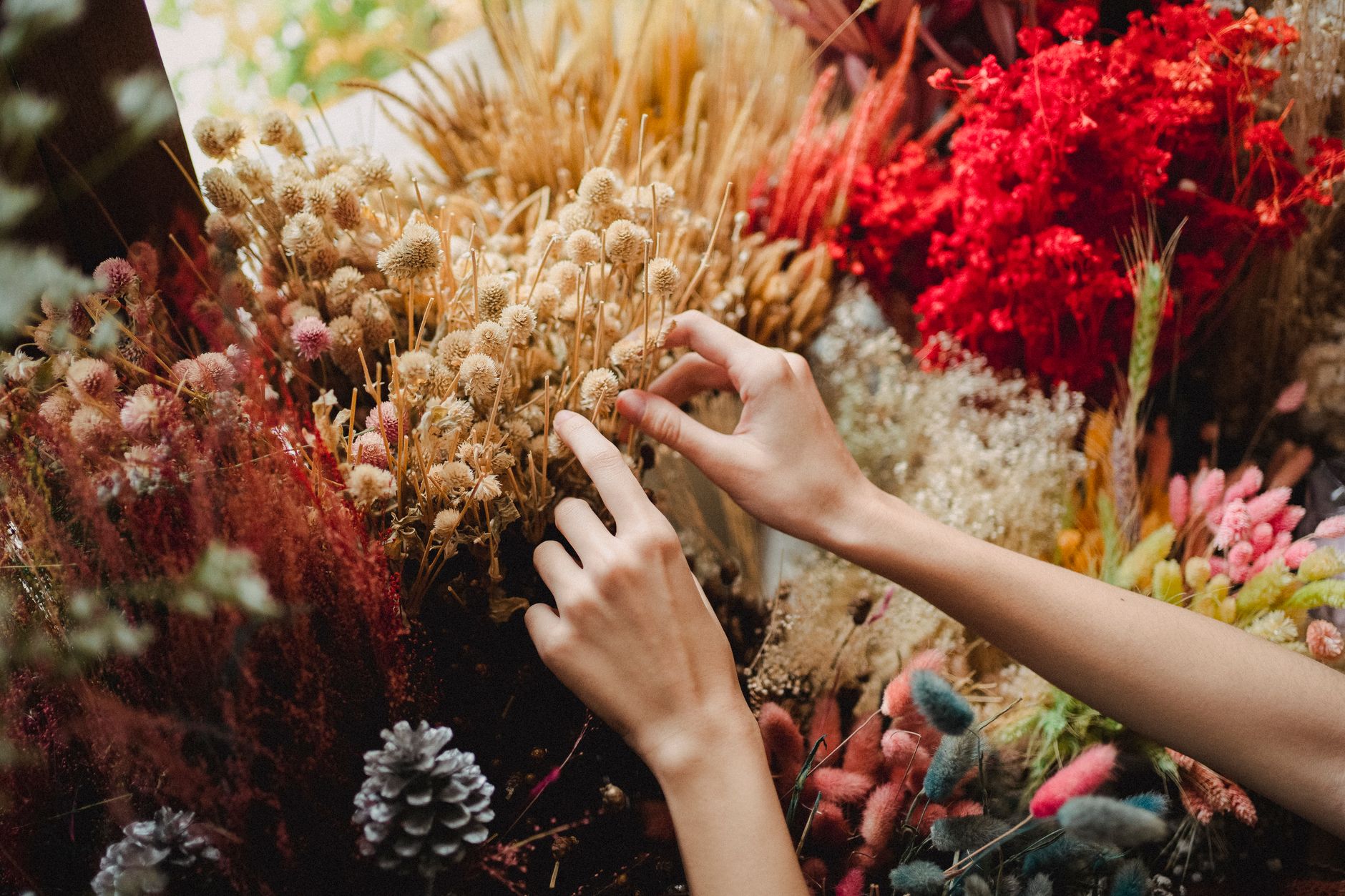
How do we run classes during the rainy season, and what happens if you're unwell?
Vietnam's rainy season (May–September in the north, October–December in the center) doesn't cancel anything. Flowers still arrive fresh (delivered to our suppliers during rain). The studio has good drainage and we keep the space dry. You might hear rain on the roof; it's peaceful. Humidity is high, which actually helps blooms last longer.
If you fall ill on the class day, message us as soon as you know. We'll reschedule you to a date within the next two weeks (subject to availability). We understand that traveler illness happens—jet lag, food sensitivity, temple tours in heat. No penalty; we coordinate the new date via WhatsApp.
Which Vietnam destinations offer classes, and how do we coordinate if you're traveling between cities?
Hanoi classes run Tuesday–Sunday year-round. Hoi An classes run Wednesday–Saturday. We also arrange private group sessions in Da Nang and Da Lat if you're traveling with a larger group (6+ people). Many Indian travelers spend 5 days in Hanoi, 3 in Hoi An, and book a class in each city—the vessels and flowers differ, so you arrange twice with different materials, which deepens the skill.
To coordinate between cities, tell us your full itinerary when you first message. We liaise with our co-hosts in each location and confirm dates together. The experience repeats the same structure but uses locally available blooms—so your Hanoi arrangement might include water hyacinth and local mum; Hoi An might feature coastal greens and imported roses that arrive at the Hoi An markets. Same skill, different palette.
What to check before you book
- Message us on WhatsApp first. We confirm actual dates based on group size and your arrival date. Class times vary (morning or afternoon); we fit your schedule.
- Tell us if you have flower allergies (rare but real—pollen, latex in stems). We adjust flowers or have you work with pre-prepped stems.
- Mention if you're traveling with kids under 8. We can include them, but they'll need close adult supervision and simpler tasks (filling vessels with greenery rather than arranging).
- Ask about the nearest studio location to your accommodation. Hanoi classes are in the old quarter; Hoi An classes are walkable from the ancient town. Travel time is usually 10 minutes by taxi or 25 minutes on foot.
- Bring phone or write down the care card we give you. Most guests forget the "cut every two days" rule and their arrangements last only 5 days instead of 10—don't let that be you.
Pair this experience with other workshops and activities
Many Indian travelers combine flower arranging with our art and culture classes—calligraphy, water-color, lacquer intro—in a single afternoon. Others book tea experiences before or after (tea at a family house in Hanoi's historical quarter, then arrange flowers you found at a market that morning). We've also seen guests pair arranging with farm and countryside experiences—visit a flower farm outside the city, see how blooms are grown, then arrange them the next day.
If you're interested in gifts for people back home, our craft workshops include other maker skills, and we have partners who frame your arrangement photos or press a single bloom you love into a keepsake card.
See how a session runs

FAQ
Do I need to know anything about flowers to join?
No. Absolute beginners are our standard guest. We assume you've seen flowers but never arranged them. We teach you grip, stem length, color, and balance from zero.
What if I'm traveling alone and feel awkward in a group?
Groups stay small (2–8 people). If you're alone, we often pair you with another solo traveler or couple from a nearby hotel. We all stand around one large table, so it's collaborative, not lonely. Many Indian solo travelers say this is their favorite calm moment of the trip.
Will my arrangement really last two weeks if I care for it properly?
Most will last 8–12 days in a cool room (under 22°C). Hotel rooms are often warmer. Some blooms (chrysanthemum, eucalyptus) outlast others (orchid, tulip). We tell you which are in your piece so you set realistic expectations. Change water every 2–3 days, remove wilted leaves, trim 1 cm off stems.
Can I buy extra flowers or vessels to take home if I want to practice at my hotel?
Yes. We can point you to the nearest family flower shop (10 minutes by taxi from our studio) where you can buy a small bunch and a simple vase. They're cheap and cheerful. We don't markup flowers; we direct you to local prices. You'll arrange on your own, and the hotel staff usually help with water placement.
What if I want to send an arrangement to someone in Vietnam as a gift after I leave?
We can advise you on local flower delivery services (we recommend three trusted family shops in Hanoi and Hoi An) and we can brief you on how to describe what you want via messaging. We don't make arrangements for sale; we teach you to make them yourself, which is the whole point.
Are classes different if I book privately vs. joining a group?
Structure is the same, but private groups (4+ people you bring) set the pace together. You can ask more questions, take longer on your piece, or repeat the demo. Group classes (booking as individuals or couples) move at an average pace to finish by the stated end time. Both are good; private is more flexible if you're learning together with family.
Ask about dates
Tell us the city, your dates and what you would like to try. We reply on WhatsApp in English with options and availability.
FAQ
Do I need to know anything about flowers to join?
No. Absolute beginners are our standard guest. We assume you've seen flowers but never arranged them. We teach you grip, stem length, color, and balance from zero.
What if I'm traveling alone and feel awkward in a group?
Groups stay small (2–8 people). If you're alone, we often pair you with another solo traveler or couple from a nearby hotel. We all stand around one large table, so it's collaborative, not lonely. Many Indian solo travelers say this is their favorite calm moment of the trip.
Will my arrangement really last two weeks if I care for it properly?
Most will last 8–12 days in a cool room (under 22°C). Hotel rooms are often warmer. Some blooms (chrysanthemum, eucalyptus) outlast others (orchid, tulip). We tell you which are in your piece so you set realistic expectations. Change water every 2–3 days, remove wilted leaves, trim 1 cm off stems.
Can I buy extra flowers or vessels to take home if I want to practice at my hotel?
Yes. We can point you to the nearest family flower shop (10 minutes by taxi from our studio) where you can buy a small bunch and a simple vase. They're cheap and cheerful. We don't markup flowers; we direct you to local prices. You'll arrange on your own, and the hotel staff usually help with water placement.
What if I want to send an arrangement to someone in Vietnam as a gift after I leave?
We can advise you on local flower delivery services (we recommend three trusted family shops in Hanoi and Hoi An) and we can brief you on how to describe what you want via messaging. We don't make arrangements for sale; we teach you to make them yourself, which is the whole point.
Are classes different if I book privately vs. joining a group?
Structure is the same, but private groups (4+ people you bring) set the pace together. You can ask more questions, take longer on your piece, or repeat the demo. Group classes (booking as individuals or couples) move at an average pace to finish by the stated end time. Both are good; private is more flexible if you're learning together with family.
More like this
Flower arranging workshops
Flower Arranging Workshop Ho Chi Minh City: How to Book
A flower arranging workshop in Ho Chi Minh City teaches you to design seasonal arrangements in a calm studio setting. We run small-group and private sessions with English-speaking hosts who walk you through technique, flower choice, and how to make arrangements last.
Flower arranging workshops
Flower arranging workshop in Ninh Binh for couples
A flower arranging workshop in Ninh Binh lets couples create an arrangement together in a calm setting, learning Vietnamese design principles while working with seasonal blooms.
Flower arranging workshops
Flower Arranging Workshop in Mekong Delta for Foreigners
We run intimate flower arranging workshops in family-owned gardens and workshops across the Mekong Delta, where you'll learn seasonal design by practicing alongside our hosts. Pick your own blooms, arrange three pieces, and take them home.