 Cáo Experiences
Home › Blog › Flower arranging workshops
Flower Arranging Workshop in Hanoi: What to Expect
By the Cáo Experiences team · 2026-11-01
A flower arranging workshop with Cáo Experiences runs 2–3 hours in a working studio space in central Hanoi. You'll learn to condition fresh blooms, understand colour balance and stem mechanics, then design your own arrangement to take home—usually a vase or hand-tied bouquet. Sessions suit complete beginners and couples equally; we adapt for kids (shorter focus, easier flowers), seniors (seated stations, no heavy lifting), and groups (we split into smaller teams if needed). Expect to pay a per-person rate that scales with group size; ask us for dates and a quote on WhatsApp. Rain doesn't stop us—the studio is indoors. Most guests worry about "ruining" flowers or having no eye for design; we teach you that arrangement is a skill, not talent, and mistakes become learning. Ask about dates on WhatsApp
What does a two-hour session actually look like, hour by hour?
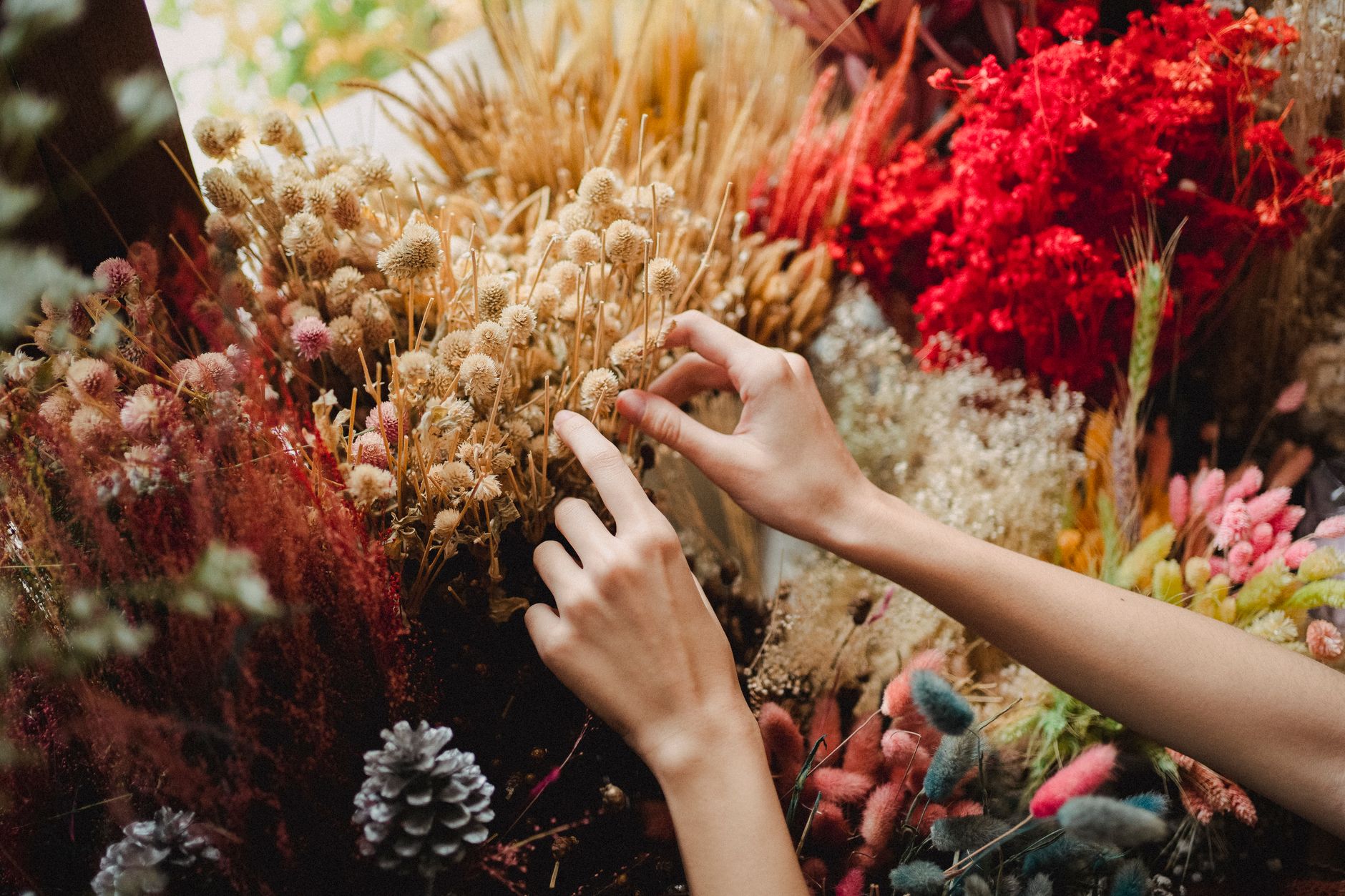
0:00–0:15: Meet the florist, tour the studio, handle flowers. You arrive to find tables set with fresh blooms we've sourced that morning—roses, dahlias, greenery, seasonal stems. We show you how to strip leaves, cut at 45 degrees, and feel which stems are ready. No one has done this before; we start by letting you touch and smell everything. The florist explains why conditioning matters: a hydrated stem holds colour and shape for 1–2 weeks at home.
0:15–0:45: Learn the mechanics. We introduce form—triangle, spiral, dome, linear—through real examples on demo vases. You'll see why a longer focal flower (the eye-catcher) sits lower and off-center, and how filler stems hide the mechanics. We do a live demo: one arrangement, everyone watches, questions encouraged. It's not about copying; it's about understanding the why. You'll feel the difference between a tight grid (formal, European) and a looser spiral (romantic, garden-like).
0:45–2:00: Design and build your own. You choose your flowers, vase, and style. The florist walks the room, asking questions—What feeling do you want? Tall and dramatic or low and dense?—not correcting, but guiding your eye. Kids get shorter stems and softer flowers (dahlias over roses with thorns); seniors work at standing height or seated if preferred; couples often collaborate, then each take a stem to surprise the other. By 1:45, everyone's arrangement is standing and theirs to keep.
1:45–2:00: Wrap and care. We show you how to wrap your vase (newspaper or kraft paper), place it safely in a box if you're carrying it on a motorbike or taxi, and how to keep it fresh at home: cool water, recut stems every 3 days, remove lower leaves. Many guests ask if they can post photos; we love that. Then we pack up, exchange WhatsApp details, and you leave with a real arrangement and muscle memory.
Rain never happens inside the studio, and we keep water and cold tea on hand. Allergies to pollen? We note that when you book and can adjust flowers or have you wear gloves.
Who actually signs up, and does it suit me?
We see couples on date days, solo travelers wanting to slow down, visiting parents and adult kids, small groups of friends who booked together, expat families, and the occasional corporate team-building group. A workshop suits you if you:
- Are curious but nervous. You don't need a "green thumb." Most guests arrive saying, "I kill houseplants." Flower arranging is different: you're using freshly cut blooms, not keeping them alive for months. It's a workshop, not a garden.
- Want a souvenir that lasts. Your arrangement will hold for 1–2 weeks with care. That's longer than any cafe photo or postcard.
- Have 2–3 free hours. Shorter workshops feel rushed. We protect the time so you're not glancing at your phone.
- Are visiting Hanoi and want to meet locals. The florist has a story: where they source each bloom, why certain colours matter in Vietnamese tradition, what happens to leftover stems.
What doesn't suit: Very young children (under 6) lose focus and can't hold 20-cm stems safely; purely transactional experiences (people who want to "do" something fast and tick a box). If you're jet-lagged or have only 90 minutes, ask us about a shorter craft option.
What flowers will I actually work with, and can I choose?
We don't tell you the exact species in advance—that changes week to week based on what's in season and what local growers have fresh. But we always include:
- One focal flower (a large, eye-catching bloom): usually roses, dahlias, peonies (spring), or chrysanthemums.
- Secondary flowers (filler, colour contrast): statice, carnations, alstroemeria, or garden blooms.
- Greenery (texture, structure): eucalyptus, ruscus, or aspidistra leaves.
- Possibly branches (line, height): pussy willow or contorted hazel in winter.
You do choose which of these to use and in what proportion. If you hate a colour or have a pollen allergy, tell us when you book. We'll swap it—no ceremony, no extra cost.
A comparison of what you're learning across three common styles:
| Style | Focal placement | Stem angle | Best for | Time to learn |
|---|---|---|---|---|
| European/formal | Centre, tight | Radial (fan-like) | Weddings, gifts | 45 min |
| Garden/spiral | Offset, loose | All stems cross at base | Loose, natural look | 60 min |
| Linear/modern | Off to side | Parallel, architectural | Contemporary homes | 50 min |
Most guests do one style deeply rather than three; we guide you to the one that matches your home or why you're here.
What if I'm a complete beginner or worried about messing up?
Every single guest is a beginner on their first day. We've had surgeons, lawyers, hairdressers, students, retirees—none of them had arranged flowers before. Here's what actually happens:
You won't "ruin" flowers. Stems are expendable. We have extras. If you cut one at the wrong angle, we show you again. If you place a stem and hate it, pull it out. The florist will never say, "No, don't." They'll say, "Let's try turning that one."
There's no single "right" answer. Two guests making the "same" arrangement will have different results, and both are beautiful. We don't grade. We ask questions: How do you feel about the height? Does the colour balance feel right to you? You're learning to trust your eye, not follow a template.
Mistakes teach fastest. If your spiral is a bit loose instead of tight, you'll see why next time. If your colours clash, you'll remember. This is true for everyone—the florist in the room has "messed up" hundreds of times.
Ask about earlier sessions if you want to see examples or read what other guests thought. Visit our blog for real session stories.

How do I prepare, what should I wear, and what do I bring?
Wear:
- Something you don't mind getting wet. Flower stems drip, your hands will be damp.
- Closed-toe shoes or sandals (water on tile floors).
- An apron if you have one (we have spares; not essential).
- Bring a small crossbody bag or backpack—you'll have hands full with your finished arrangement.
Don't bring:
- Perfume or strong scent (clashes with the flowers and studio air).
- More than one person's water bottle (we provide water).
Before you arrive:
- Eat something light an hour before (we focus better on a non-empty stomach, but large meals make people sluggish).
- Check the weather—if it's 35°C and humid, we keep the studio cool and offer water frequently.
- Message us the day before on WhatsApp if you have an allergy, mobility need, or diet preference (some people bring their own tea).
- Arrive 10 minutes early to find parking or ask for the lane entrance.
After you leave:
- Transport your vase in a sturdy bag or box; wet stems and motorbike speed don't mix.
- Get it home and into cool water within 2 hours if possible.
- Recut stems at 45 degrees, remove lower leaves, change water every 2 days.
- Keep out of direct sun and away from fruit bowls (ethylene gas shortens vase life).
- It'll last 10–14 days if the room is cool; 5–7 days in heat.
Can I book this for a group, or is it better as a solo/couple experience?
Solo, couple, or group—we run all three. Here's the honest breakdown:
Solo (1 person): Most meditative. You get full attention from the florist, can ask every question, and pace yourself. Some solo guests say it's the only quiet thing they did in Hanoi.
Couple (2 people): You can work side-by-side or collaborate. Some couples do one arrangement together; others each make their own and compare. Tension arises only if one person decides "your colour choice is wrong"—we gently remind you they're yours to keep.
Small group (3–6 friends): High energy, more laughing, people steal each other's ideas. Takes a few minutes longer because there's more chat, which we love.
Larger groups (7–15 people for a team or celebration): We split into two shifts or run back-to-back sessions. One florist can teach max 6–8 at once comfortably; beyond that, a second florist joins (same quality, more cost; ask for a quote).
Corporate teams sometimes book this as a team-building experience; we've found it works because it's non-competitive, visual, and people leave with a real object. Learn more about group and team sessions.
What about kids, seniors, or people with mobility limits?
Kids (6–12): They love this. We give them shorter stems (easier to hold), softer flowers (dahlias over roses), and a simpler form (usually dome or triangle). They often ask better questions than adults. Time can be 90 minutes instead of 2 hours; we let them focus on one arrangement, and the florist sits with them. Expect colour chaos and arrangement logic you didn't expect. Parents often say their kid concentrates better here than anywhere else.
Teens (13–17): Same as adults, but we've noticed they're often skeptical at first ("I'm not creative") and then genuinely surprised they like it. The florist treats them like adults, which shifts something. They'll Instagram the result.
Seniors (65+): We've run workshops for people in their 80s. We ensure seated tables (no standing for 2 hours), lighter stems, and the florist standing closer. We take our time with explanations. Some seniors say it's the first time they've made something beautiful since retirement. Mobility aids and wheelchairs are fine; the studio is accessible, but message us ahead.
Pregnancy: Totally fine. Avoid long-standing if you're late-term; we adapt. Pollen can trigger nausea in some pregnant people, so mention it when you book.
Chronic pain or joint limits: Tell us. We'll adjust—shorter stems, lighter flowers, seated work, or less time on feet. We're not medical professionals, but we're practical.
How do I actually book, and what's the next step?
- Message us on WhatsApp with your preferred date, group size, and any notes (allergies, mobility, dietary preference for tea/coffee). We'll confirm availability and send a quote.
- We'll send a link or bank details for payment (adjust this to your region). Payment confirms the booking.
- The day before, we'll message a studio location, parking note, and a photo so you know what to expect.
- You arrive, we greet you, session begins. No surprise, no stress.
See how a session runs
If you want to read other guests' real accounts, visit our blog. If you're in Hanoi and interested in other hands-on experiences, we also run Vietnamese cooking classes, coffee workshops, farm days, and more—ask us what suits your schedule.

FAQ
Do I need to bring my own flowers or vase?
No. We provide fresh flowers and vases. You take your finished arrangement home in the vase, wrapped safely.
What if I don't like the colour of my arrangement halfway through?
Pull stems out and swap them. That's not failure—that's the learning. We have extras on hand.
Can I buy the flowers to take home separately if I love them?
Not usually; the workshop blooms are sourced for that day. But we can suggest where to buy your own after, and the florist will advise you on what lasts longest.
How long does the arrangement last at home?
10–14 days if your home is cool and you change water every 2–3 days. In Hanoi heat, expect 5–7 days.
Is this suitable as a gift experience for someone else?
Yes. You can buy a voucher (ask us); they choose their date. Or join together—many people gift a workshop they do with the recipient.
What if I'm allergic to pollen?
Tell us when you book. We'll use low-pollen flowers, and you can wear gloves. We can also open windows or provide masks if needed.
Do you offer online tutorials or kits I can do at home?
No. We believe arranging is hands-on—you need to feel the stems, see the light, smell the blooms. Virtual doesn't replace that.
What if the weather is very hot or rainy?
The studio is indoors and climate-controlled. Rain doesn't affect us. Heat means we offer more water and keep things cool; we adjust pace but don't cancel.
Can I take photos during the workshop?
Yes, please. We love it. Just keep your phone out of the water and flower buckets.
Is there a discount if I book multiple workshops or refer a friend?
Ask us. We sometimes offer combined packages, but we don't have a set referral scheme—we prefer to work it out case by case.
Ask about dates
Tell us the city, your dates and what you would like to try. We reply on WhatsApp in English with options and availability.
FAQ
Do I need to bring my own flowers or vase?
No. We provide fresh flowers and vases. You take your finished arrangement home in the vase, wrapped safely.
What if I don't like the colour of my arrangement halfway through?
Pull stems out and swap them. That's not failure—that's the learning. We have extras on hand.
Can I buy the flowers to take home separately if I love them?
Not usually; the workshop blooms are sourced for that day. But we can suggest where to buy your own after, and the florist will advise you on what lasts longest.
How long does the arrangement last at home?
10–14 days if your home is cool and you change water every 2–3 days. In Hanoi heat, expect 5–7 days.
Is this suitable as a gift experience for someone else?
Yes. You can buy a voucher (ask us); they choose their date. Or join together—many people gift a workshop they do with the recipient.
What if I'm allergic to pollen?
Tell us when you book. We'll use low-pollen flowers, and you can wear gloves. We can also open windows or provide masks if needed.
Do you offer online tutorials or kits I can do at home?
No. We believe arranging is hands-on—you need to feel the stems, see the light, smell the blooms. Virtual doesn't replace that.
What if the weather is very hot or rainy?
The studio is indoors and climate-controlled. Rain doesn't affect us. Heat means we offer more water and keep things cool; we adjust pace but don't cancel.
Can I take photos during the workshop?
Yes, please. We love it. Just keep your phone out of the water and flower buckets.
Is there a discount if I book multiple workshops or refer a friend?
Ask us. We sometimes offer combined packages, but we don't have a set referral scheme—we prefer to work it out case by case.
More like this
Flower arranging workshops
Flower Arranging Workshop Ho Chi Minh City: How to Book
A flower arranging workshop in Ho Chi Minh City teaches you to design seasonal arrangements in a calm studio setting. We run small-group and private sessions with English-speaking hosts who walk you through technique, flower choice, and how to make arrangements last.
Flower arranging workshops
Flower arranging workshop in Ninh Binh for couples
A flower arranging workshop in Ninh Binh lets couples create an arrangement together in a calm setting, learning Vietnamese design principles while working with seasonal blooms.
Flower arranging workshops
Flower Arranging Workshop in Mekong Delta for Foreigners
We run intimate flower arranging workshops in family-owned gardens and workshops across the Mekong Delta, where you'll learn seasonal design by practicing alongside our hosts. Pick your own blooms, arrange three pieces, and take them home.