
Home › Blog › Flower arranging workshops
Flower Arranging Workshop in Ninh Binh in English
By the Cáo Experiences team · 2026-11-06
Cáo Experiences runs small-group and private flower arranging workshops in Ninh Binh in English, hosted in a family kitchen or workshop space in the quiet countryside outside town. Sessions run three to four hours, typically morning or early afternoon, and include an introduction to tools, fresh seasonal flowers sourced that week, step-by-step instruction in Western and Vietnamese design styles, and you take home what you've made. Beginners are normal; we adapt pace and complexity by guest skill and confidence. Cost varies by group size and flower availability; ask us for dates and a quote on WhatsApp. Avoid booking during Lunar New Year when sourcing is unpredictable; rain doesn't stop us, though indoor space is limited for large groups.
Why choose Ninh Binh for a flower workshop instead of Hanoi?
Ninh Bihn's landscape—limestone karsts, rice paddies, quiet river lanes—shapes what flowers thrive here and how local growers source them. In Hanoi, floristry workshops often import mass-market blooms; we work with seasonal, regional flowers grown by small producers in nearby valleys. You see the real supply chain, meet growers' families sometimes, and learn why certain blooms are cheaper or fresher in different months. The slower pace also means no rush between steps—you're not squeezing a class into a lunch break. Most guests tell us the quietness itself teaches them to slow down and notice colour and texture more carefully than they would in a city studio.
What exactly do you learn and make in a session?
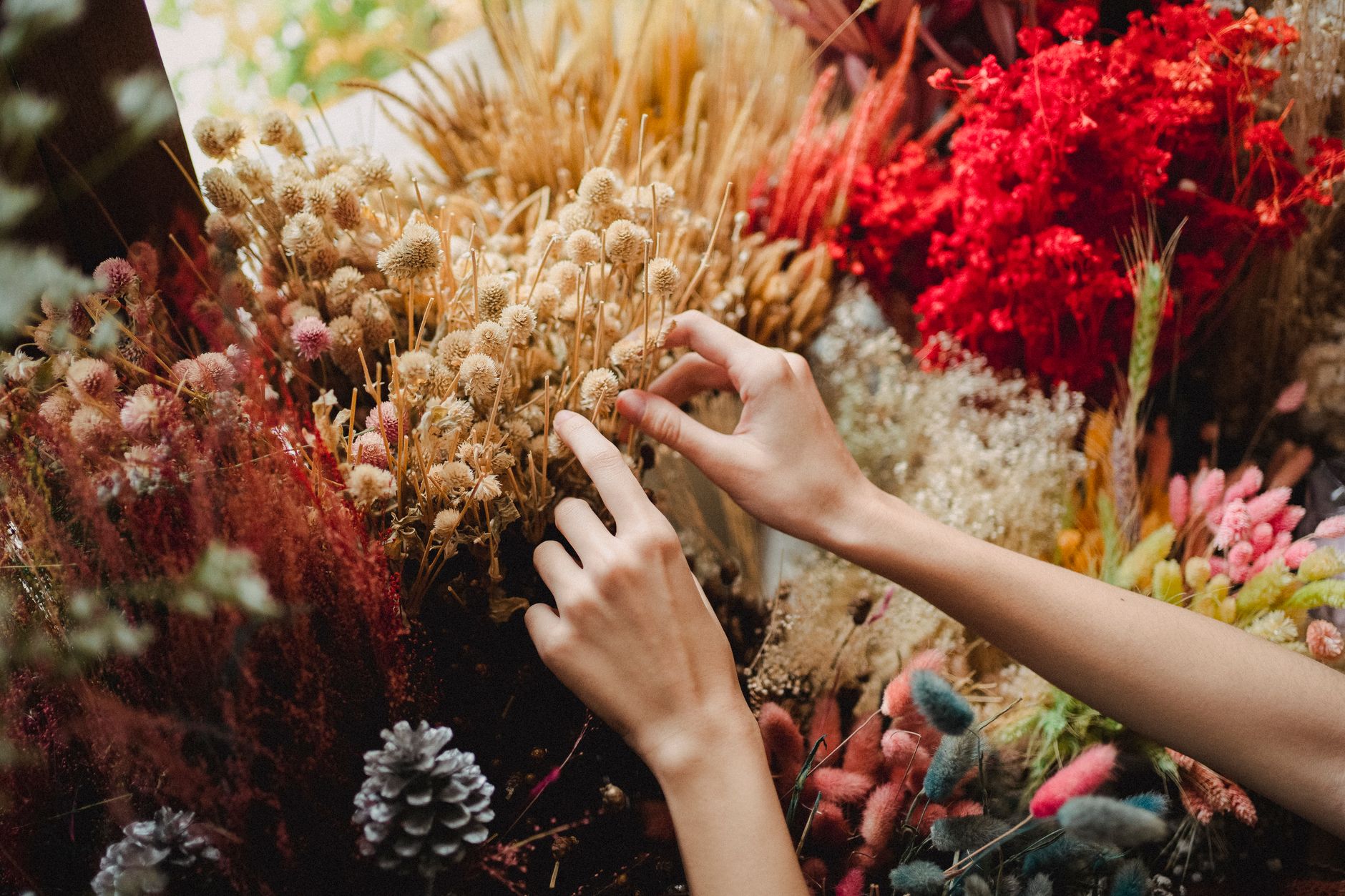
We start with tool safety and basic terminology—what a petal-bruise is, why conditioning matters, the difference between a line flower and a filler. Then you'll design two or three pieces, depending on pace: typically a hand-tied bouquet using a spiral or concentric technique, a low vase arrangement, and sometimes a smaller gift arrangement. We show you how Western "golden ratio" proportions work, then contrast that with traditional Vietnamese asymmetry (often three stems, negative space as a design choice). You practise cutting at angles, removing lower leaves, anchoring stems in floral foam, and balancing visual weight so an arrangement doesn't tip. By the end, most people surprise themselves: what looked chaotic an hour in becomes coherent. You take everything home; we wrap it loosely so it travels safely on a motorbike or in a car.
How do we adapt for kids, seniors, or mixed skill levels?
Children (age 6+) make smaller, looser arrangements—we focus on fun and sensory exploration rather than strict technique, and we always pair them with an adult for safety around pruners. Seniors sometimes worry their hands won't be steady; we use heavier mechanics (like wire and tape) instead of floral foam if that helps, and never rush. If one person in a group is a florist and another has never held pruners, the experienced person often helps the beginner, which deepens their own learning. We've had couples where one does all the arranging and one does the talking—both learn differently. The key is honesty during WhatsApp booking: tell us your guest mix, any mobility concerns, any flower allergies (rare, but pollen sensitivity is real), and we'll shape the session so everyone feels capable, not lost.
What happens if the weather turns rainy or flowers aren't available?
Ninh Binh's countryside gets heavy rain July to September; we can still run sessions indoors in a covered family kitchen or workshop space, though group size shrinks (maximum 6–8 instead of 12). We always source flowers the morning of, so availability depends on what local growers harvested that week. If your preferred colour or type isn't ready—say you wanted lots of dahlias in June—we adapt with what's fresh and explain why (maturity cycle, weather, demand). We've never cancelled outright, but we have rescheduled groups by a day or two to hit peak flower freshness. During Lunar New Year (late January–early February), most growers take family time, so we don't offer sessions then. Ask us for dates and a quote on WhatsApp and mention your preferred month so we can be upfront about what's realistic.

How does this compare to other flower workshops available in Vietnam?
| Workshop type | Location | What's included | Session length | Best for |
|---|---|---|---|---|
| Cáo Experiences flower arranging | Ninh Binh countryside | Seasonal local blooms, two designs, take-home, English host | 3–4 hours | Small groups, meaningful learning, quiet setting |
| Urban Hanoi florist studios | Hanoi old quarter | Fixed weekly designs, imported flowers, evening slots | 2–3 hours | Hanoi day-trippers, tight schedules |
| Resort-based workshops | Da Lat, coastal towns | Large group classes, tourist-pace, standard arrangements | 1.5–2 hours | Package-holiday add-ons, no prior booking |
| Farm and countryside experiences with floristry add-on | Rural regions | Farming morning + afternoon flowers | Full day | Couples, families, slower travelers |
Ninh Bihn's advantage: we're not charging city overhead, so cost is lower, and the countryside itself slows people down—that's the real difference. You're not competing for attention in a busy studio. You also learn directly from people who live with seasonal rhythms, not generic "floristry facts."
Explore our flower arranging workshop
What do you need to bring and wear?
Wear clothes you don't mind getting wet or stained—flower stems seep, and conditioning water splashes. Closed-toe shoes or sandals with back support (you'll be standing); avoid dangly jewellery (it catches on thorns and pruners). Bring a phone or camera if you want to photograph your work; many guests send us pictures months later. In rainy season (May–September), bring a light rain jacket in case we're partly outdoors. We provide all tools, flowers, vases, floral foam, wrapping, and water. Bring water or tea—we'll have some, but staying hydrated during four hours of focus helps. If you have a severe pollen allergy or latex sensitivity (some people react to floral foam), tell us beforehand; we can prep alternatives or adjust your station.
What to check before booking your session
- Confirm the date works. We don't run sessions daily; availability depends on when our hosts are free and flowers are fresh. Text us a few preferred dates.
- Tell us your group size and who's coming. Kids? Seniors? Mixed abilities? Each changes how we pace and teach.
- Mention any allergies or mobility needs. We adapt easily if we know in advance.
- Expect the session indoors or partially outdoors. In dry season, we might work in a open-sided shelter; in rainy months, a covered kitchen. Both work; neither is "worse."
- Plan transport. You'll carry wrapped arrangements, so a car or spacious motorbike helps. We can advise on how to pack them.
- Ask about nearby activities. Ninh Binh has horse riding experiences and farm days nearby—many guests pair a flower workshop with a countryside afternoon or morning.
Pages from our team you may need

FAQ
Do I need any experience with flowers to join?
No. Most guests have never arranged before. We teach from step one: how to hold pruners, what conditioning is, why stems need angles. Confidence grows fast once you see your first piece come together.
Can I book a private session just for two people, or is it always group?
Both. Minimum group size for a shared session is usually two guests; private sessions (any size) cost more but let you set the time and design focus. Ask us for dates and a quote on WhatsApp.
How long do the arrangements last after I take them home?
About 5–7 days if you change the water daily, strip lower leaves, and re-cut stems every two days. Hand-tied bouquets last longer than vase arrangements because they hold more water. We'll give you care tips written down.
What if I'm allergic to pollen?
Tell us before booking. We can choose low-pollen varieties (like roses, some orchids), place blooms where you're not directly inhaling, or use antihistamine beforehand. A few guests wear a light mask during conditioning—it works.
Is the workshop suitable for a special occasion like a bachelorette or team day?
Yes. Group and team experiences suit bachelorette groups, work retreats, and family gatherings. We adapt the session length, add a meal break, or pair floristry with another Cáo experience like a coffee workshop or countryside farm day. Tell us the vibe you want.
How is this different from a standard flower-arranging class at a craft school?
We're small, in the countryside, and use what's seasonal and local—not a curriculum repeated every week. You learn from someone living in Ninh Bihn, not a franchised programme. The pace is slower, and you take home real arrangements, not class examples.
Ask about dates
Tell us the city, your dates and what you would like to try. We reply on WhatsApp in English with options and availability.
FAQ
Do I need any experience with flowers to join?
No. Most guests have never arranged before. We teach from step one: how to hold pruners, what conditioning is, why stems need angles. Confidence grows fast once you see your first piece come together.
Can I book a private session just for two people, or is it always group?
Both. Minimum group size for a shared session is usually two guests; private sessions (any size) cost more but let you set the time and design focus. [Ask us for dates and a quote on WhatsApp](https://wa.me/84338762340).
How long do the arrangements last after I take them home?
About 5–7 days if you change the water daily, strip lower leaves, and re-cut stems every two days. Hand-tied bouquets last longer than vase arrangements because they hold more water. We'll give you care tips written down.
What if I'm allergic to pollen?
Tell us before booking. We can choose low-pollen varieties (like roses, some orchids), place blooms where you're not directly inhaling, or use antihistamine beforehand. A few guests wear a light mask during conditioning—it works.
Is the workshop suitable for a special occasion like a bachelorette or team day?
Yes. [Group and team experiences](/group-and-corporate) suit bachelorette groups, work retreats, and family gatherings. We adapt the session length, add a meal break, or pair floristry with another [Cáo experience](/destinations/hoi-an) like a [coffee workshop](/coffee-workshop) or [countryside farm day](/farm-experience). Tell us the vibe you want.
How is this different from a standard flower-arranging class at a craft school?
We're small, in the countryside, and use what's seasonal and local—not a curriculum repeated every week. You learn from someone living in Ninh Bihn, not a franchised programme. The pace is slower, and you take home real arrangements, not class examples.
More like this
Flower arranging workshops
Flower Arranging Workshop in Phu Quoc: How to Book
A flower arranging workshop in Phu Quoc teaches you to design with fresh tropical and temperate stems in a hands-on morning or afternoon session. We run small-group classes in English, hosted in a garden studio setting—no experience needed.
Flower arranging workshops
Floristry class in Sapa: what to expect
A floristry class in Sapa means learning seasonal arrangement techniques in a quiet studio space, using fresh local flowers. We guide you through cutting, composition and color pairing—no experience needed.
Flower arranging workshops
Floristry class in Hanoi for solo travelers: what to expect
Solo travelers in Hanoi often wonder whether a flower-arranging class suits a single person. We run weekly small-group and private sessions where solo guests learn hand-tied bouquets, seasonal wreaths, and Vietnamese floral design—no skills needed, English-led, afternoons and mornings available.