
Home › Blog › Experiences for families and kids
Grandparents and Kids Activities Vietnam: Hands-On Experiences
By the Cáo Experiences team · 2026-11-06
Multi-generational travel in Vietnam works best when grandparents and kids do something hands-on together—not sightseeing sideline. Cáo Experiences runs family experiences in Hanoi, Hoi An, Da Lat and Ho Chi Minh City that fit mixed ages and energy levels: Vietnamese cooking classes where both grandchildren and grandparents chop herbs at the same table; farm and countryside days with quiet pacing; flower arranging workshops that don't tire seniors; art and culture classes where skill doesn't matter. Sessions run 2–3 hours, usually mornings. We adapt for stiff joints, slower processing, hearing aids, grandparents who tire by midday, grandchildren who fidget. No prior skill needed. Sessions include snacks, instruction in English, real tools and ingredients—not tourist theatre. WhatsApp coordination means no rigid booking—we arrange timing around naps, medication schedules, school holidays. Costs vary by group size and experience type; ask us for dates and a quote on WhatsApp.
Why do grandparents and kids connect through cooking class in Vietnam?
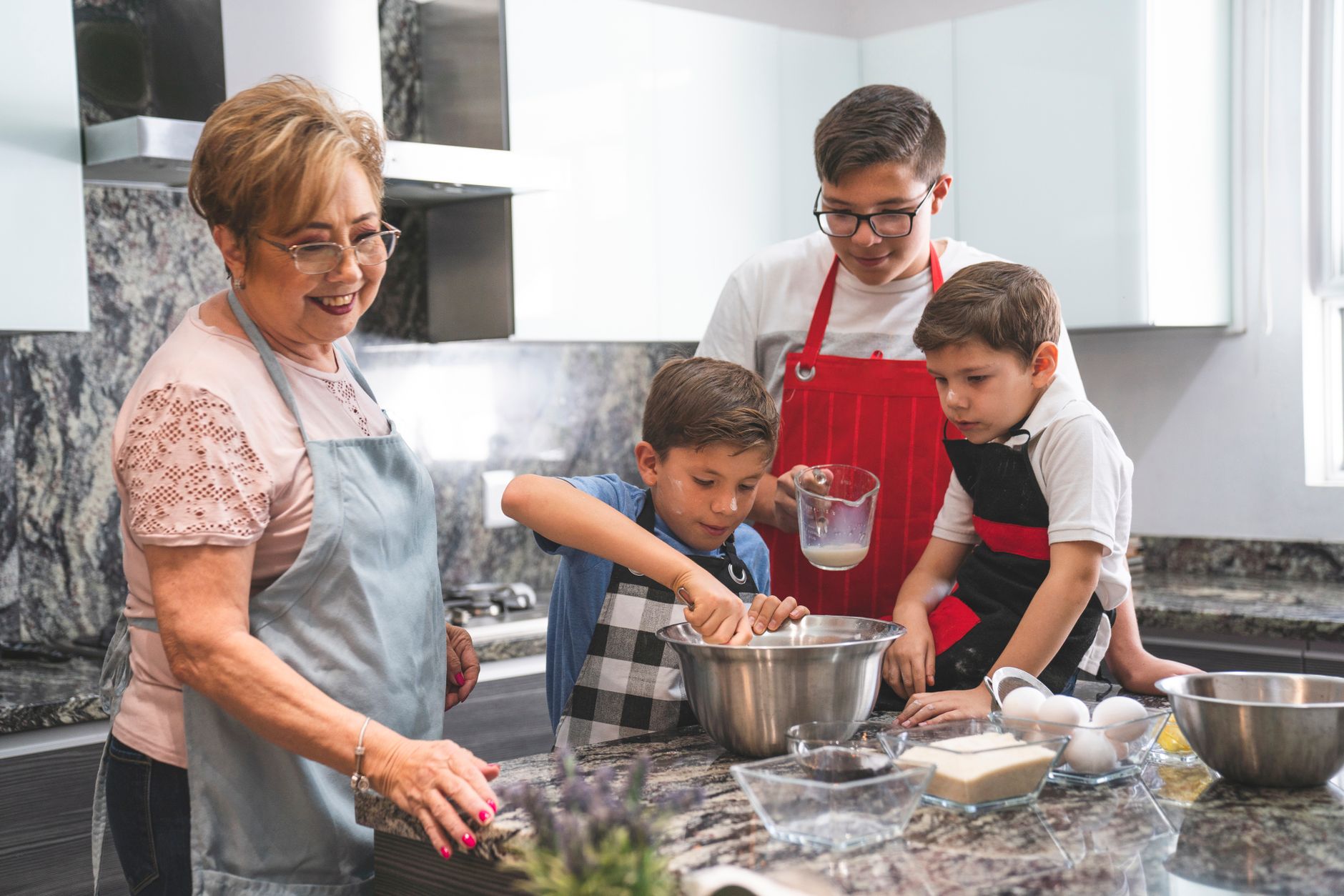
Cooking is the safest bridge between generations because it has no "wrong" outcome. A grandchild rolls spring rolls imperfectly; the grandparent shows a tighter fold; both laugh and eat the result. In a family kitchen in a lane off the old quarter, we start with tea and pastry. Grandparents often recognize techniques from their own childhood—different herbs, same logic. The grandchild learns their heritage isn't an artifact; it's a living thing the grandparent's hands remember. Young ones aged 6–7 chop soft greens with butter knives. Grandparents with arthritic hands sit on a stool and supervise, taste-testing, telling stories about their own mother's kitchen. By the final hour, everyone has made something real to eat together. No performance, no exhaustion—just three generations at one table, speaking the same language of salt and fish sauce.

What farm and countryside experiences work for mixed ages?
Farms and countryside days outside major cities suit families where someone moves slowly. We partner with family properties outside town where grandparents can sit under shade while grandchildren help water vegetables, feed goats, collect eggs. Sessions last 2–3 hours in early morning or late afternoon—never the heat. Grandparents rest on benches; kids run; both learn from the same farmer about seasonal crops, water sources, soil. A 78-year-old in a wheelchair can still be on the farm, under an awning, talking to the farmer while a grandchild picks tomatoes nearby. Farm experiences don't require climbing, long walking or standing. We bring chairs. We time around medications and naps. The goal is slowness—something vanishing from family life. By midday, you've all eaten fresh food you helped prepare, asked real questions, and no one feels left out.
Which workshops don't exhaust seniors but fascinate kids?
Flower arranging and tea workshops suit energy-limited grandparents because they're seated, low-pressure, and intrinsically quiet. Flower arranging workshops run 90 minutes, usually indoors. Grandchildren aged 8+ handle pruners and bundling; grandparents arrange stems into vessels, narrate the logic of balance and negative space. The grandchild learns patience watching a grandparent work. A senior with tremor hands still produces something beautiful. Nobody "finishes first." Tea experiences work similarly—small space, seated, one action at a time: heating water, naming leaves, listening to what each person tastes. Both suit hearing-impaired grandparents because the instruction is visual and hands-on, not lecture.
Comparison table: Which experience fits your group?
| Experience | Age range (child) | Grandparent fit | Duration | Why it works |
|---|---|---|---|---|
| Cooking class | 5–16 | Excellent (seated, can supervise) | 2–3 hrs | Heritage + sensory |
| Farm day | 4–14 | Very good (mostly seated, paced) | 2–3 hrs | Slow learning, no skill needed |
| Flower arranging | 7–16 | Excellent (seated, low-pressure) | 90 min | Meditation-like, visual success |
| Art classes | 5–16 | Good (but may require 2+ hrs standing) | 2–3 hrs | Creative play, no judgment |
| Coffee workshop | 8–16 | Good (seated, aromatic focus) | 90 min | Tasting, ritual, less physical |
| Street market tour | 5–12 | Fair (significant walking, noise) | 2–3 hrs | Sensory overload; not ideal for tired knees |
What do we adapt for hearing, mobility and attention span?
We've hosted grandparents with hearing aids, walkers, joint pain and grandchildren on ADHD medication. Real adaptation, not token changes. Hearing: We arrange seating so you face the host. Instructions are demonstrated, not just spoken. We repeat between actions. Grandchildren often translate for grandparents—another bonding moment. Mobility: We scout venues beforehand—is there a toilet? Can a walker fit through the kitchen door? Can you sit while working? For farm experiences, we choose properties with shaded seating steps from the main area. Attention: Kids aged 5–7 work in short bursts (chop, taste, chop). We build rest moments: tea break, story from the host, watching someone else work. Grandparents appreciate the pause; kids reset. Allergies and diet: We ask about nuts, shellfish, soy before you arrive. We substitute. A vegetarian grandparent and omnivorous grandchild work at the same table with different ingredients—the host accommodates both without fuss. Rain: Most sessions move indoors seamlessly. A cooking class is indoors anyway. Flower arranging is indoors. Farm days reschedule to next dry morning; we agree on dates via WhatsApp, not a rigid calendar.
How do we keep it real, not "tourist theatre"?
The difference: we don't perform for you, and you don't perform for us. A cooking class isn't a photo op where the host cooks and you watch. You chop. Your grandchild burns the first pancake. That's the session. We work in real spaces—a family kitchen, a working farm, a studio where artists actually make things, not a resort with a "cultural activity" theme. Hosts are practitioners, not actors: a woman who has cooked for her family for 40 years, a farmer who grows vegetables to sell at market, a florist who arranges for weddings. They speak English conversationally, not script. If a grandchild asks why fish sauce smells like that, the answer is honest and funny, not a tourism talking point. If the farm's goat is sick that day, you work around it. If a grandparent needs to sit longer than planned, we sit. You're guests in someone's working day, not customers in a show. That realness is what grandchildren remember and what grandparents—who've seen a lot of fakeness—trust.
What to check before you book
- Age and mobility: Tell us exact ages and any mobility limits (walking distance, sitting comfort, hearing). We'll say honestly whether a specific experience suits your group.
- Dietary needs: List allergies, vegetarian/vegan, religious restrictions, medications that affect appetite. We adapt, but we need to know.
- Language preference: We teach in English. If a grandparent prefers minimal English instruction, some craft workshops and farm days rely more on demonstration.
- Timing: Grandparents tire mid-morning or mid-afternoon? Tell us. We schedule accordingly. School holidays? We can often shift dates.
- Rain: Ask what the backup plan is for your chosen experience before confirming.
- Costs: Prices vary by group size (2 vs. 8 people), experience type, and location. Ask us for dates and a quote via WhatsApp—no hidden fees.
Why multi-generational travel matters now
Grandparents who retire and grandchildren in summer holidays rarely spend unhurried time together. Cooking class, farm day or flower arranging fills that gap. A grandchild learns their grandparent as a competent person, not just a relative who watches TV. A grandparent remembers why they came to Vietnam—not the hotel lobby, but a morning in a kitchen, side by side, making lunch from scratch. Family experiences in Vietnam aren't sightseeing add-ons. They're the point.
Ask about dates on WhatsApp | See how a session runs

FAQ
Can a 4-year-old join a cooking class?
Yes, with a clear role: tearing herbs, pouring from small jugs, taste-testing. A grandparent or parent sits beside them. Sessions are flexible. Younger children tire after 90 minutes; we plan accordingly and don't force full sessions.
What if my parents walk slowly or use a cane?
We choose venues with minimal walking. Farm days and indoor workshops suit canes well. Tell us before booking so we scout the space and guarantee accessibility. Rescheduling to a better-fitted experience is always an option.
Do we need to speak Vietnamese?
No. Instruction is in English. Grandchildren often translate for grandparents, which itself becomes a bonding moment. Hosts speak conversational English, not tourist English—if a word doesn't translate, they show instead.
How long are these sessions, and is there a break?
Most sessions run 2–3 hours with a natural break halfway through—tea and snacks during cooking class, rest and observation time on farms. We adapt if anyone needs more frequent breaks.
What if my grandchild has severe food allergies or my parent is vegetarian?
We ask about all dietary needs before you arrive and prepare substitutes. One child eats differently from their grandparent at the same table; the host manages both with no fuss.
What happens if it rains?
Most sessions move indoors or reschedule. Cooking classes are indoors already. Farm days and street markets may shift to the next dry morning; we arrange new dates via WhatsApp, not a rigid cancellation policy.
Can we do a private session with just our family, or do we join a group?
Both. We run small groups (4–8 people) where your family clusters together, and private sessions for your group alone. Ask us for dates and pricing via WhatsApp; we build schedules around your arrival.
Will my grandparent feel out of place or judged for being slow?
No. The pace is intentionally slow. There's no competition, no timer, no "finishing first." Grandparents often comment that the experience feels like meditation—permission to work at their own speed, surrounded by people doing the same.
Ask about dates
Tell us the city, your dates and what you would like to try. We reply on WhatsApp in English with options and availability.
FAQ
Can a 4-year-old join a cooking class?
Yes, with a clear role: tearing herbs, pouring from small jugs, taste-testing. A grandparent or parent sits beside them. Sessions are flexible. Younger children tire after 90 minutes; we plan accordingly and don't force full sessions.
What if my parents walk slowly or use a cane?
We choose venues with minimal walking. Farm days and indoor workshops suit canes well. Tell us before booking so we scout the space and guarantee accessibility. Rescheduling to a better-fitted experience is always an option.
Do we need to speak Vietnamese?
No. Instruction is in English. Grandchildren often translate for grandparents, which itself becomes a bonding moment. Hosts speak conversational English, not tourist English—if a word doesn't translate, they show instead.
How long are these sessions, and is there a break?
Most sessions run 2–3 hours with a natural break halfway through—tea and snacks during cooking class, rest and observation time on farms. We adapt if anyone needs more frequent breaks.
What if my grandchild has severe food allergies or my parent is vegetarian?
We ask about all dietary needs before you arrive and prepare substitutes. One child eats differently from their grandparent at the same table; the host manages both with no fuss.
What happens if it rains?
Most sessions move indoors or reschedule. Cooking classes are indoors already. Farm days and street markets may shift to the next dry morning; we arrange new dates via WhatsApp, not a rigid cancellation policy.
Can we do a private session with just our family, or do we join a group?
Both. We run small groups (4–8 people) where your family clusters together, and private sessions for your group alone. Ask us for dates and pricing via WhatsApp; we build schedules around your arrival.
Will my grandparent feel out of place or judged for being slow?
No. The pace is intentionally slow. There's no competition, no timer, no "finishing first." Grandparents often comment that the experience feels like meditation—permission to work at their own speed, surrounded by people doing the same.
More like this
Experiences for families and kids
Family workshop Vietnam vs Thailand: where to take kids in 2026
Vietnam and Thailand both offer immersive family workshops, but the pace, cost structure, and focus differ significantly. We run both types of sessions at Cáo Experiences and can help you choose.
Experiences for families and kids
Family Workshop Vietnam Gift Voucher: What Works Best
A family workshop gift voucher in Vietnam lets relatives experience cooking, craft, horse riding or tea together—no tickets, no queues, real hands-on time. We help you pick the right session type and duration for the ages and interests in your group.
Experiences for families and kids
Family workshops in Vietnam for Indian travelers: what to expect
Indian families visiting Vietnam often wonder how to keep children engaged and learn something authentic together. Cáo Experiences runs small-group and private workshops—cooking, coffee, flower arranging, craft, and farm days—designed for kids, parents, and grandparents, hosted in English with real