 Cáo Experiences
Home › Blog › Flower arranging workshops
Ikebana Class Vietnam for Australian Travellers
By the Cáo Experiences team · 2026-11-01
Ikebana is a meditative Japanese art where three stems or branches symbolize heaven, earth, and humanity in asymmetrical balance—very different from Western bunch-style floristry. In Hanoi, Cáo Experiences hosts small groups (and private sessions) in a calm garden workshop space where you'll learn the core philosophy, handle fresh seasonal stems, and arrange your own piece in one of the classical styles over 2–3 hours. No prior skill needed; beginners worry most about "getting it right," but ikebana values your personal interpretation. We adapt for arthritis, provide pruning tools suited to hand size, offer shorter sessions for jet lag, and run rain dates indoors. Australians typically book through WhatsApp coordination; ask us for available dates and a quote. Ask about dates on WhatsApp
Why do Australian travellers choose ikebana over other flower workshops?
Ikebana appeals to visitors seeking calm, skill-building, and a practice they'll continue at home. Unlike Instagram-style wrapping classes, ikebana teaches philosophy: every line has purpose, negative space matters more than volume, and the art reflects seasonal change and nature's asymmetry. Most Australians tell us they're overwhelmed by Hanoi's pace and noise; a two-hour ikebana session becomes a chance to slow down, focus on one stem at a time, and leave with a living arrangement that lasts weeks in water. The practice fits perfectly between a street food tour and café time—intellectually rich but not physically taxing.

What's the difference between ikebana styles you'll encounter?
The three main styles taught in beginner classes are Shoka (three-stem heaven-earth-human), Nageire (branches in a tall vase, appearing to flow naturally), and Moribana (low-bowl arrangement, wider and more grounded). Shoka is oldest and most formal; Moribana is approachable for new practitioners and suits small home spaces. In our sessions, we start with Shoka principles—learning to see proportion and balance—then often guide you toward whichever style matches your interest and the season's available stems. Australian guests frequently choose Moribana because it fits apartment life and requires less specialized equipment at home.
How do we adapt ikebana for arthritis, jet lag, and mixed skill levels?
Beginners worry: "My hands will shake," "I'll break the stems," "I'm too tired." We adapt by offering cushioned hand tools, pre-selecting softer woody stems (pussy willow, curly willow) for your first session, and shorter 90-minute classes for guests arriving the same day. If you have arthritis, tell us on WhatsApp; we'll use lighter pruners, raise the work table, and focus on positioning rather than cutting. For mixed groups—some arrangers, some first-timers—we pair each person with fresh material at their own pace; experienced people explore advanced Shoka variations while newcomers build confidence with Moribana's forgiving proportions. Rainy days mean we move indoors to a covered space with the same light and layout; humidity actually keeps stems fresher longer.
What do you take home, and how long does your arrangement last?
You leave with your own finished ikebana in a ceramic or bamboo vessel (provided; yours to keep), wrapped loosely in paper so it travels safely. The arrangement lasts 2–4 weeks with daily water changes (top up each morning, refresh fully every third day). Australians frequently tell us their arrangement becomes a daily ritual: changing the water mindfully, noticing how each stem ages differently, sometimes adding a single new leaf when one yellows. Some guests photograph their piece each week to watch it transform. This is the whole point of ikebana—impermanence is built in, teaching you to see beauty in change, not permanence.
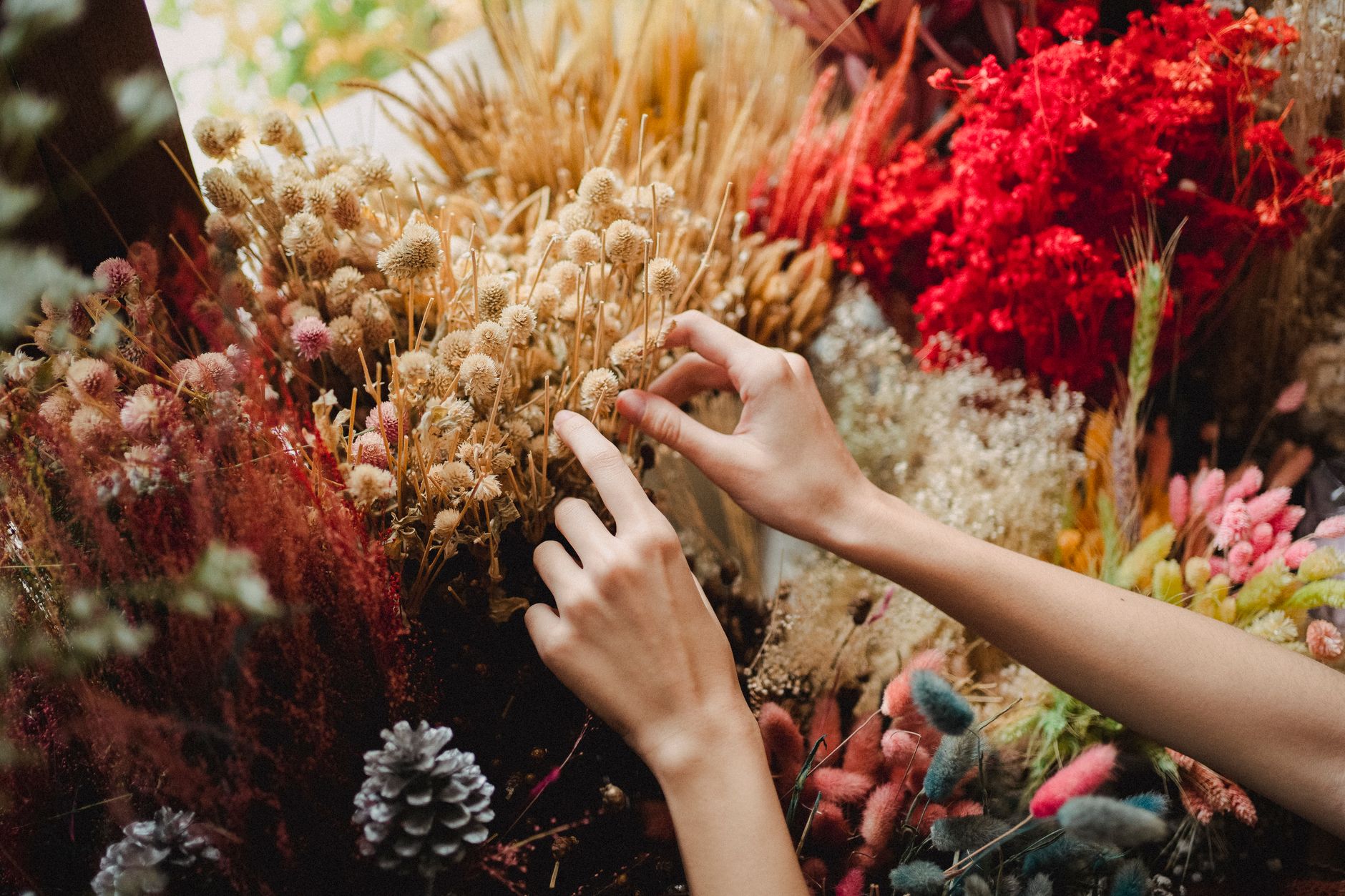
Which destinations in Vietnam offer ikebana, and what complements the experience?
We run flower arranging workshops in Hanoi, where the cool autumn light suits delicate arrangements and gardens have the best seasonal stems. If you're splitting time between cities, Hanoi is the hub for ikebana specifically; in Hoi An and Da Lat, we offer broader flower arranging classes with Western and hybrid styles. To deepen your trip, pair ikebana with our tea experience (traditional Vietnamese tea is also about presence and simplicity), a morning coffee workshop (same meditative ritual, different medium), or a farm experience to see where flowers and herbs grow. Many Australian groups combine art and culture classes with ikebana to build a full creative week.
What to check before you book
- Timing: Ask for dates that don't clash with major holiday weeks (Lunar New Year); small-group sessions fill quickly.
- Group size: Private sessions suit couples or solo travellers; group classes let you meet other visitors and share the cost.
- Vessel preference: Tell us if you prefer ceramic, bamboo, or a specific colour; we'll arrange it.
- Flower allergies: Rare, but mention pollen or latex sensitivities; we'll substitute stems.
- Travel to the workshop: We'll send a pin and WhatsApp directions; it's a short taxi or Grab from central Hanoi.
| Aspect | Solo Traveller | Couple | Small Group (3–6) | What we suggest |
|---|---|---|---|---|
| Cost | Higher per person | Split 50/50 | Lowest per head | Group = best value, couples = most intimate |
| Timing | Flexible; book 5–7 days ahead | Flexible; book 7–10 days ahead | Book 10–14 days ahead | Groups need kitchen/table prep time |
| Vessel | You choose one | You each take one | You each take one, or one shared | Each person gets their own (keepsake) |
| Skill focus | Personal pacing, longer guidance | Conversation + learning | Peer learning, less 1-on-1 time | Solos get most attention, groups build camaraderie |
| Best for | Self-reflection, skill-building | Memorable shared activity | Making friends, best cost | Couples & solos = fullest experience |
Most Australian guests arrive with this sequence: arrive in Hanoi, rest a day, book ikebana for day three (rested, excited), then explore the old quarter and markets. If you're visiting multiple cities, ask us about experiences in Da Lat (cooler climate, misty mornings, excellent for flower photography after your class) or other regions. Many people also want to know how their ikebana complements group and corporate team experiences—yes, it works brilliantly for small off-sites where the goal is creative thinking and calm focus rather than competition.
What makes this different from ikebana in Australia?
In Vietnam, you're working with seasonal stems unavailable in Australia: young bamboo shoots, local varieties of willow, tropical foliage that forces you to think differently about proportion and line. The workshop sits in a city where ikebana is less commercialized than in Japan or the West; there's no pressure to Instagram it or buy expensive tools. You'll often see gardeners pruning the same stems outside markets; you're learning a living practice, not a boutique hobby. Most Australian travellers say the experience sticks because it's tied to a place, a season, and a moment in their trip—not something they could replicate in a shopping-district studio at home.
How do we help you continue the practice at home?
Before you leave, we'll show you how to source similar stems in Australia (local florists, nurseries, native plants), recommend one or two affordable ikebana tools to buy online, and give you a simple printed guide to the principles you've learned—angles, negative space, water care. Some guests join online ikebana groups when they return; we're happy to recommend communities. The real continuation is in your routine: changing the water, noticing the stems' aging, and maybe arranging fresh material each week. That's ikebana—not perfection, but presence.
See how a session runs

FAQ
Do I need to know anything about Japanese culture beforehand?
No. We explain the philosophy (heaven-earth-human, seasonal respect, asymmetry) as you arrange. Many Australians find ikebana feels familiar because it's about observing nature, not decorating.
What if I'm left-handed?
Ikebana works equally well left-handed. We adjust the vase angle and your seat so you have clear access. Tools don't care which hand holds them.
Can I bring my partner and do separate arrangements, or must we share?
Each person arranges their own piece. Some couples choose to sit side-by-side; others prefer separate tables. We set it up however you're most comfortable.
What happens if I accidentally break a stem during the class?
We have extra stems on hand. Breaking is part of learning; it teaches you how stems bend and where they snap. No stress, no extra cost.
Is there a "right" finished arrangement, or is mine judged?
There's no judgment. Ikebana has principles (balance, proportion, line) but your interpretation is valid. We'll offer suggestions, but your arrangement is yours. That's the art.
How far in advance should I book from Australia?
7–14 days is ideal, depending on group size and season. Email or WhatsApp us with your dates; we'll confirm availability and send you a quote.
Ask about dates
Tell us the city, your dates and what you would like to try. We reply on WhatsApp in English with options and availability.
FAQ
Do I need to know anything about Japanese culture beforehand?
No. We explain the philosophy (heaven-earth-human, seasonal respect, asymmetry) as you arrange. Many Australians find ikebana feels familiar because it's about observing nature, not decorating.
What if I'm left-handed?
Ikebana works equally well left-handed. We adjust the vase angle and your seat so you have clear access. Tools don't care which hand holds them.
Can I bring my partner and do separate arrangements, or must we share?
Each person arranges their own piece. Some couples choose to sit side-by-side; others prefer separate tables. We set it up however you're most comfortable.
What happens if I accidentally break a stem during the class?
We have extra stems on hand. Breaking is part of learning; it teaches you how stems bend and where they snap. No stress, no extra cost.
Is there a "right" finished arrangement, or is mine judged?
There's no judgment. Ikebana has principles (balance, proportion, line) but your interpretation is valid. We'll offer suggestions, but your arrangement is yours. That's the art.
How far in advance should I book from Australia?
7–14 days is ideal, depending on group size and season. Email or WhatsApp us with your dates; we'll confirm availability and send you a quote.
More like this
Flower arranging workshops
Flower Arranging Workshop Ho Chi Minh City: How to Book
A flower arranging workshop in Ho Chi Minh City teaches you to design seasonal arrangements in a calm studio setting. We run small-group and private sessions with English-speaking hosts who walk you through technique, flower choice, and how to make arrangements last.
Flower arranging workshops
Flower arranging workshop in Ninh Binh for couples
A flower arranging workshop in Ninh Binh lets couples create an arrangement together in a calm setting, learning Vietnamese design principles while working with seasonal blooms.
Flower arranging workshops
Flower Arranging Workshop in Mekong Delta for Foreigners
We run intimate flower arranging workshops in family-owned gardens and workshops across the Mekong Delta, where you'll learn seasonal design by practicing alongside our hosts. Pick your own blooms, arrange three pieces, and take them home.