
Home › Blog › Experiences for families and kids
Kids cooking class Vietnam for Japanese travelers: what to expect
By the Cáo Experiences team · 2026-11-06
A kids cooking class in Vietnam through Cáo Experiences is a 2–3 hour hands-on session where children (ages 5–16) cook one or two complete Vietnamese dishes in a family kitchen, guided in English by a host. We keep groups small—usually 1–4 kids per session—so every child handles knives, grills, and stirring. Japanese families choose us because we adapt portions, explain ingredients, and pause for questions without rushing. Sessions run in Hanoi, Ho Chi Minh City, Hoi An, and Da Nang. Kids learn technique, taste the dish they made, and get a recipe sheet. We work around allergies, dietary restrictions, and skill levels. Ask us for dates and a quote on WhatsApp; cost depends on group size and location. Ask about dates on WhatsApp
Why do Japanese families choose a cooking class for kids?
Japanese parents often tell us they want their children to slow down, taste unfamiliar food, and build confidence in the kitchen—all at once. A cooking class does this better than a tour. Kids engage all senses: chopping lemongrass, frying fish cakes, tasting pho broth. They return home with a skill, not just a photo. In Vietnam, where food culture runs deep and ingredients are fresh and affordable, the class feels real, not staged. Children remember this differently than a museum visit.

What dishes do kids actually cook?
We offer a rotating menu depending on season and group preference. Typical choices include:
- Fresh spring rolls (gỏi cuốn): kids learn to soften rice paper, arrange herbs and shrimp, dip sauce-making.
- Stir-fried water spinach (rau muống xào tỏi): teaches heat control and timing on a wok.
- Vietnamese fish cakes (chả cá): mix, shape, and pan-fry—hands-on from start to finish.
- Simple pho broth: we prepare stock ahead; kids add noodles, herbs, and taste the layers.
- Coconut milk sticky rice: measuring, stirring, and understanding how heat transforms rice.
Younger children (5–8 years) do prep work: tearing herbs, measuring, mashing garlic. Older kids (9–16) handle knives (with our guidance), manage the stove, and plate independently. We never force a child to taste something; we explain each ingredient first. Japanese families appreciate that we don't assume all kids like spice—we offer mild versions and let them adjust.
How do we handle different ages and skill levels?
A single session often includes kids aged 6, 10, and 14. Here's our structure:
| Task | Ages 5–8 | Ages 9–12 | Ages 13–16 |
|---|---|---|---|
| Knife work | Plastic knife, teacher guidance | Small chef's knife, close supervision | Standard knife, independent with check-ins |
| Heating/stove | Watch closely, hold back | Shallow pan work, host nearby | Full control, host observes |
| Tasting and feedback | Encouraged, optional | Expected, can explain flavors | Leads discussion, compares to Japanese food |
| Plating | Help arrange | Mostly independent | Full responsibility |
We never separate kids by age; mixed groups are actually better. Older kids become helpers (which builds pride), and younger ones see what they're working toward. If a child is nervous about knives, we start with prep work and build confidence. If one child has zero kitchen experience and another helps at home regularly, we give the confident one slightly harder tasks—like managing two pans at once—while keeping the nervous child engaged with technique questions.
Japanese families sometimes worry their child won't understand English instructions. We use simple, repeated phrasing ("Heat the pan. Listen for sizzle. Add oil."), demo each step, and invite questions. Many children find it easier to learn cooking vocabulary in English than general conversation—because the words tie to action they're doing right now.
What should we prepare before the class?
Bring:
- Comfortable clothes (not silk; cooking splatters).
- An apron (we can provide one).
- A notebook if the child wants to sketch the recipe.
- Closed-toe shoes.
Tell us in advance:
- Allergies or dietary restrictions (peanuts, shellfish, soy, gluten).
- Any ingredient dislikes (some kids dislike cilantro; we work around it).
- Left-handed children (we arrange knife and cutting board differently).
- Whether the child has used a stove before.
Arrive early (5–10 minutes) so we can show the kitchen, answer questions, and let the child get comfortable. We'll have tasted everything beforehand and tested our pacing on a similar group size. A rainy day doesn't change the session—we work indoors. If a child feels unwell or overwhelmed, we pause without pressure; they can watch and rejoin when ready.
Check our family experiences page to see what other sessions work well alongside cooking—many families combine a class with a street food walk or farm visit on the same trip.
How does this compare to cooking at home or in a restaurant kitchen?
| Setting | Hands-on | Language | Taste/Enjoy | Cost |
|---|---|---|---|---|
| Home kitchen (Japan) | High (parent-led) | Native | Daily food, less novelty | Low |
| Restaurant kitchen tour | Low (observation only) | English/Vietnamese, rushed | Limited tasting | Varies |
| Cáo Experiences class | High (child-led, host guides) | English, patient, repeated | New dishes, fresh ingredients, sit down to eat | Ask for quote |
| Cooking school (formal) | High | Often English, structured | Yes, but larger groups | Higher |
The key difference: our sessions are small, in a real family kitchen, kid-paced, and stress-free. A restaurant kitchen is loud and hot; a formal school feels like a test. Here, mistakes are normal. If a child oversalts something, we taste it together, laugh, and explain. They own the mistake and the learning. Japanese parents tell us this attitude—"cooking is trying, not perfection"—stays with their kids for years.

Can we book a class for our group traveling together?
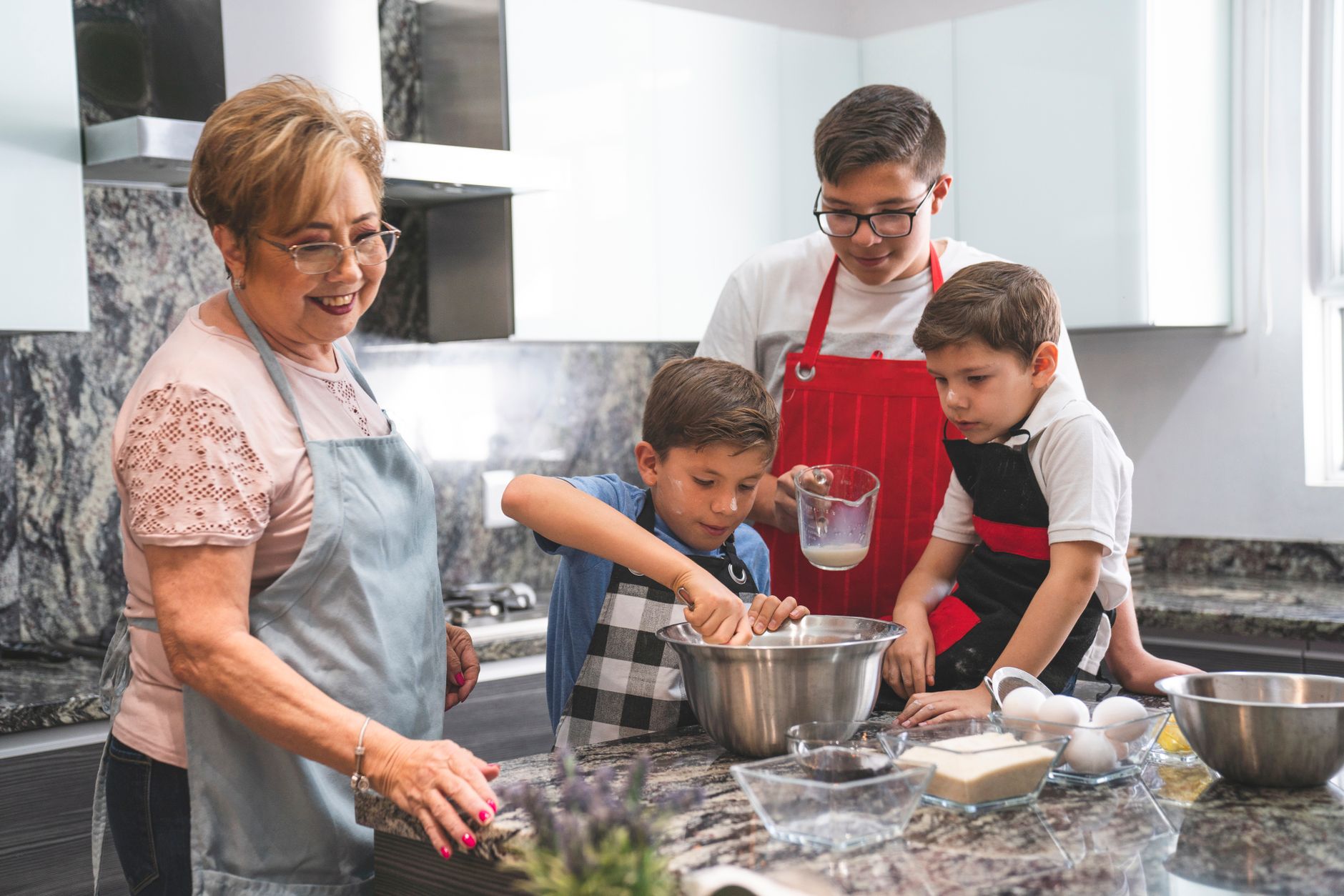
Yes. We arrange group and corporate experiences including families. A multi-generation trip (grandparents, parents, kids) works beautifully—the kitchen is casual enough that a 70-year-old and a 7-year-old can both participate without feeling out of place. Teenagers often lead, grandparents offer stories about similar dishes in their own childhood, and parents chop alongside everyone.
Availability depends on season and location. We host in Hanoi, Ho Chi Minh City, Hoi An, Da Nang, and Da Lat. If you're traveling a longer route, we can arrange classes in 2–3 cities so kids aren't cooking the same dishes twice.
What if my child has never cooked before?
Perfect. We don't expect any prior skill. We teach knife grip, heat control, and seasoning judgment as we go. A child who's never held a chef's knife will spend the first 10 minutes learning the grip and practicing on soft vegetables (garlic, onion). By the second ingredient, their hands remember it. By the end of the class, they've made something that tastes good—which is confidence they can carry home.
Japanese families sometimes say, "We thought he'd be bored if it wasn't hard enough." Honestly, the sweet spot is a child slightly out of their depth—not overwhelmed, but trying something new. That's when learning sticks. We read the room and adjust in real time.
What to check before you book
- Confirm group size and ages: We adapt differently for 2 kids versus 5 kids, and 6-year-olds need different knife work than 14-year-olds.
- Mention allergies clearly: Not just "no shellfish," but "no shrimp paste, fish sauce is okay" so we pick the right dish.
- Ask about the specific kitchen: A family kitchen in a lane off the old quarter feels different from a cooking school. Let us describe the space so you know what to expect.
- Check the date: We work around high-season tourism and school holidays. Off-peak classes are often easier to arrange and feel less rushed.
- Understand what's included: The class covers ingredients, utensils, teaching, and a sit-down meal together. We provide a recipe card in English. Drinks and any extras are separate.
How do we differ from other cooking experiences?
We run hands-on classes for small groups, not large tours. A typical cooking tour in Vietnam books 12–20 people, visits a market, and teaches one dish in a commercial kitchen. Our Vietnamese cooking class lets 1–4 people (or your family) cook 1–2 dishes in a real kitchen, with pauses to talk and taste. For families with kids, the difference is huge: your child isn't standing at the back of a crowded room; they're at the counter with their own cutting board, chopping real ingredients, and asking questions without feeling rushed.
We also combine cooking with other experiences. Many families book a street food tour in the morning (lighter, walking, tasting), then a class in the afternoon. Or a farm experience where kids pick vegetables, then cook them the same day. Check our blog for stories from families who've done this.
Ready to book? Here's the next step.
Send us a message on WhatsApp with:
- Your kids' ages.
- Any allergies or dislikes.
- Preferred location and rough dates.
- Whether you want to combine the class with other activities.
We'll suggest a menu, confirm availability, and send you details. Sessions often fill 2–4 weeks ahead during peak travel months.
See how a session runs
FAQ
What language is the class taught in?
English throughout. We use simple, repeated phrases and demo every step, so even children new to English—or very young—can follow. Parents can translate quietly if needed, but most kids pick up cooking vocabulary quickly because the words match the action they're doing.
Do kids have to taste what they cook?
We encourage tasting, but it's never forced. We talk through each ingredient first—"This is fish sauce; it smells strong but tastes salty and deep"—and kids decide. Some children taste everything; others prefer to watch. The goal is trying, not a clean plate.
What if my child is very picky about food?
Tell us in advance. We can adjust the recipe—milder spice, skip the herbs, add a different protein—so the child is still cooking the same dish, just adapted. Many picky eaters become less picky when they've made the food themselves and chosen what goes in.
Can both parents and kids cook, or is it kids-only?
Both. Most sessions have parents and kids cooking side by side. Teens often take the lead and teach their parents. Grandparents join too. It's truly multigenerational; we adapt tasks so everyone has something meaningful to do.
How much Vietnamese do we need to know?
None. We teach the dish names in English first, then the Vietnamese word—so kids learn both. The class is in English; Vietnamese is a bonus layer, not a requirement.
Ask about dates
Tell us the city, your dates and what you would like to try. We reply on WhatsApp in English with options and availability.
FAQ
What language is the class taught in?
English throughout. We use simple, repeated phrases and demo every step, so even children new to English—or very young—can follow. Parents can translate quietly if needed, but most kids pick up cooking vocabulary quickly because the words match the action they're doing.
Do kids have to taste what they cook?
We encourage tasting, but it's never forced. We talk through each ingredient first—"This is fish sauce; it smells strong but tastes salty and deep"—and kids decide. Some children taste everything; others prefer to watch. The goal is trying, not a clean plate.
What if my child is very picky about food?
Tell us in advance. We can adjust the recipe—milder spice, skip the herbs, add a different protein—so the child is still cooking the same dish, just adapted. Many picky eaters become less picky when they've made the food themselves and chosen what goes in.
Can both parents and kids cook, or is it kids-only?
Both. Most sessions have parents and kids cooking side by side. Teens often take the lead and teach their parents. Grandparents join too. It's truly multigenerational; we adapt tasks so everyone has something meaningful to do.
How much Vietnamese do we need to know?
None. We teach the dish names in English first, then the Vietnamese word—so kids learn both. The class is in English; Vietnamese is a bonus layer, not a requirement.
More like this
Experiences for families and kids
Family workshop Vietnam vs Thailand: where to take kids in 2026
Vietnam and Thailand both offer immersive family workshops, but the pace, cost structure, and focus differ significantly. We run both types of sessions at Cáo Experiences and can help you choose.
Experiences for families and kids
Family Workshop Vietnam Gift Voucher: What Works Best
A family workshop gift voucher in Vietnam lets relatives experience cooking, craft, horse riding or tea together—no tickets, no queues, real hands-on time. We help you pick the right session type and duration for the ages and interests in your group.
Experiences for families and kids
Family workshops in Vietnam for Indian travelers: what to expect
Indian families visiting Vietnam often wonder how to keep children engaged and learn something authentic together. Cáo Experiences runs small-group and private workshops—cooking, coffee, flower arranging, craft, and farm days—designed for kids, parents, and grandparents, hosted in English with real