
Home › Blog › Street food and market tours
Street Food Tour in Hanoi for Foreigners: What to Expect
By the Cáo Experiences team · 2026-11-06
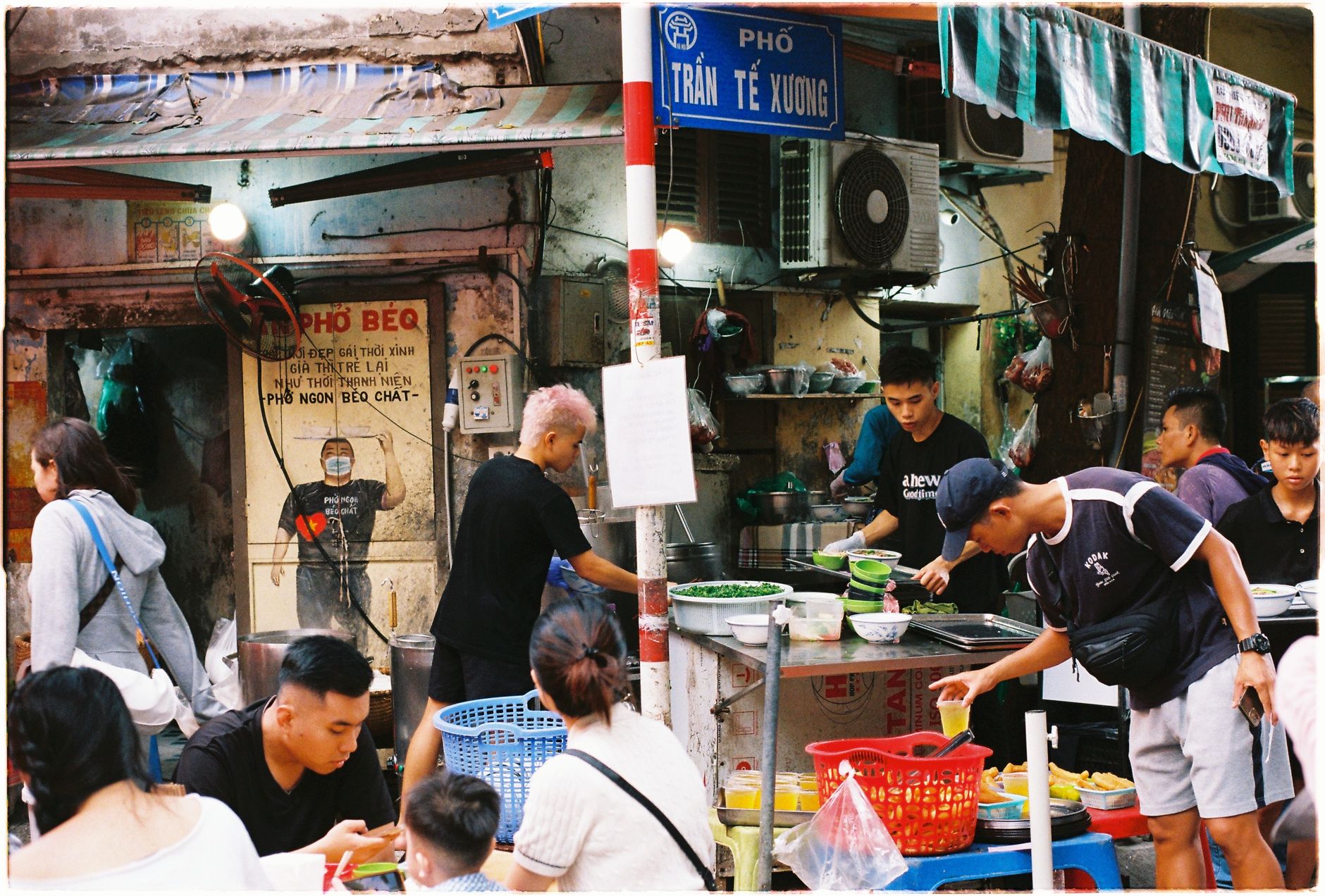
A street food tour in Hanoi for foreigners is a guided 3–4 hour walk through neighborhood lanes and markets where we stop at 5–7 working food stalls, eating what locals eat for breakfast, lunch, or dinner. Cáo Experiences runs these tours in English with a host who knows each vendor, handles language barriers, watches for food safety, and adapts portions for allergies, vegetarians, and nervous eaters. You'll taste banh mi, pho, che (sweet soups), banh cuon (steamed rolls), coffee, and seasonal items—all from independent family kitchens and pushcarts, not tourist restaurants. Tours run early morning (6–9am for breakfast stalls) or evening (5–8pm for dinner vendors). We avoid peak tourist hours and walk through actual neighborhoods in the old quarter and beyond. Cost varies by group size and dietary needs; ask us for dates and a quote on WhatsApp. Most guests find the real risk is wanting to eat at every stop—we teach you pacing. See how a session runs
Why do foreigners struggle on Hanoi street food tours?
Language gaps, food safety anxiety, and sensory overload are the big three. Most visitors can't read vendor signs, worry about water and hygiene, and get overwhelmed by noise, smells, and unfamiliar textures. A good tour solves this by placing a local English-speaking host between you and that gap. We've watched guests stand frozen at a cart because they don't know what the dish is, or decline food they'd actually love out of fear. Our role is naming each dish, explaining ingredients, vouching for vendors we know, and giving you permission to try things.
Food safety comes down to choosing stalls with high turnover—busy places where ingredients are fresh and constantly replenished. Avoid anything sitting under heat lamps for hours. We stick to cooked foods (pho, banh mi, fried items) and avoid raw vegetables and ice at casual stalls. Hanoi's tap water isn't safe for foreigners; we provide bottled or boiled options throughout.

What's the difference between a street food tour and a cooking class?
A street food and market tour is about eating and exploring—you taste, you ask questions, you watch vendors work, but you don't cook. A Vietnamese cooking class teaches you how to make dishes in a kitchen; you handle the ingredients, follow techniques, take notes, and eat what you've made. Tours suit travelers with limited time or those who want a barefoot cultural immersion. Classes suit learners who want skills to replicate at home. Many guests do both: tour one day to discover favorites, class another day to master technique.
Tours last 3–4 hours and cover one neighborhood deeply. Classes run 3–5 hours and teach 3–4 signature dishes. Tours cost less (fewer overheads). Classes cost more but give you recipes and technique. If you're choosing: pick a tour if you're curious about street culture and vendors; pick a class if you're serious about cooking.
How do we handle dietary needs on a Hanoi street food tour?
We ask every guest about allergies, vegetarian/vegan preferences, and foods they dislike before the tour via WhatsApp. We then scout alternative stops with the host, so a vegetarian guest isn't stuck watching others eat while they hold a napkin. Nut allergies mean we avoid peanut-heavy stalls or eat them earlier in the tour and wash hands carefully.
For vegans, Hanoi has banh mi with tofu and greens, che (coconut-based sweet soups), and vegetable bánh cuốn (steamed rolls). We'll locate these ahead. For gluten-free guests, we focus on pho (rice noodles) and grilled meats, and clarify soy sauce options. Lactose-intolerant? We avoid condensed milk in coffee and suggest alternatives.
We never force a dish on you. If a stall's vibe doesn't appeal, we move on. One host recently walked a pescatarian guest past a fish-heavy cart and found them egg rolls instead. Honesty: some dietary needs (severe celiac, rare allergies) are harder to guarantee in street stalls where cross-contamination happens. We'll tell you upfront if a tour isn't safe for your needs.
What should first-time Hanoi food tourists wear and bring?
Wear loose, breathable clothing—you'll be walking and eating in humid conditions. Closed-toe shoes grip wet market floors better than sandals. Bring a small backpack or crossbody bag (pickpocketing happens in crowds). A light scarf or shawl helps if you're sensitive to strong smells or sun.
Bring cash in small denominations; most stalls don't take cards. Bring a phone for photos and WhatsApp contact with your host if you get separated. Sunscreen, a hat, and a reusable water bottle (we refill it with bottled water). Hand sanitizer or wet wipes—you'll eat with your hands sometimes. A notepad to jot down vendor names or recipes you like.
Don't bring a large suitcase, expensive jewelry, or a camera bag that screams "tourist." Wear a respectful attitude: no loud talking, no pointing cameras at vendors without asking. Hanoi street food culture is intimate; vendors are generous if you're genuinely curious, reserved if you're treating them as photo props.
How do we adapt tours for kids, seniors, or mixed-ability groups?
For kids (8–15), we shorten the walk, focus on sweeter dishes (che, banh my with jam), and pick stalls with seating so little legs don't tire. We explain food in simpler terms and give kids a "mission" (taste five different colors, ask a vendor their name, try chopsticks) so they stay engaged. Parents often skip the most pungent stalls.
Seniors get slower pace, more seating, fewer steep lanes, and earlier morning times (cooler, fewer crowds). We pick flavorful but gentle dishes—soft noodles, mild broths—and watch for signs of fatigue. One recent tour included an 72-year-old who couldn't walk far; we did a shorter loop with longer sit-down meals and transportation between stalls.
Mixed groups (grandparents, young kids, adults) need a host who reads the room. We might do a base loop together, then split: adults try a street-beer stall, kids and grandparents sit with coffee and snacks. No one is bored or hurried. Rain shifts us indoors—we head to covered markets like Quang Ba flower market or Ben Thanh market where we can navigate stalls under shelter.
What real problems do we solve that other tours skip?
| Issue | Our approach | Why it matters |
|---|---|---|
| Language barrier | Host negotiates, translates menus, vouches for you | You eat confidently, not just safe food |
| Food poisoning fear | We choose busy stalls, avoid raw items, explain hygiene | You enjoy tours, not spend them anxious |
| Pacing | We set rhythm, let you sit, eat slowly | Digestion works, you taste flavors, not just swallow |
| Dietary needs | We scout alternatives before your tour starts | Vegans, allergic, gluten-free guests eat real food |
| Getting lost | Host knows every lane, stays with group | You explore, not navigate on a map |
| Vendor trust | We know owners by name, eat there ourselves | You're a guest, not a foreigner to hustle |
| Sensory overload | We explain smells, sounds, crowds beforehand | New experiences excite instead of paralyze |
Most competitors run large groups (15–20 people), rush stalls, and pocket commission from vendors who overcharge. We run 4–8 people max, sit longer at each stop, and have no financial ties to any vendor. The quality difference shows in conversations—you're talking to makers, not workers on a rotation.
Honest checklist before booking a street food tour
- Do I want to eat, or observe? Tours mean eating 5–7 items. Some visitors only want photos; they're better off hiring a guide.
- Can I walk for 3–4 hours? Tours aren't hikes, but they involve standing and slow walking. If stairs or crowds trigger you, tell us beforehand.
- Do I have allergies? Tell us via WhatsApp before we confirm. Severe nut or shellfish allergies are harder to guarantee on street stalls.
- Am I OK with crowds and smells? Early morning tours are quieter. Evening tours buzz with locals. Both are real; pick your vibe.
- Can I eat with my hands? Some stops require chopsticks or fingers. We'll teach you if you're nervous.
- Do I speak enough English? Tours run in English. Basic listening is enough; our host does the talking.
- What's my budget? Ask us for a quote via WhatsApp. Costs vary by group size, neighborhood, and dietary needs. No hidden fees.
Related experiences you might love
A Vietnamese cooking class teaches you to make street food dishes yourself—banh mi, pho spice blends, coffee. A tea experience pairs with a food tour for a full culinary day. A farm and countryside experience shows you where Hanoi's vegetables and herbs come from. If you're new to Hanoi, experiences designed for newcomers combine food tours with cultural walks. For groups, our group and team experiences can customize a tour around dietary, language, or ability needs. Read more stories from our hosts on how tours change people's relationships with food.

FAQ
Is street food in Hanoi actually safe for foreigners?
Yes, if you eat at busy stalls with high turnover and avoid raw vegetables, ice, and old heat-lamp food. We choose vendors we know and eat the same dishes. Hanoi's tap water isn't safe; we provide bottled or boiled options. Cooked foods (pho, banh mi, fried items) are lower-risk than raw or unrefrigerated items.
What's the best time of day for a Hanoi street food tour?
Early morning (6–9am) captures breakfast pho and banh cuon stalls and beats crowds and heat. Evening (5–8pm) is livelier, catches dinner vendors, but streets buzz. Lunchtime is hot and less atmospheric. Choose based on your energy and crowd tolerance.
Can I do a private tour just for my family?
Yes. Private tours run 2–6 people with one host; you set pace, dietary needs, and neighborhoods. We customize routes for kids, seniors, or food allergies. Pricing depends on group size and length. Ask us on WhatsApp for a private-tour quote.
What if I'm vegetarian or vegan?
Hanoi has vegetable banh mi, banh cuon (steamed rolls with greens), and che (sweet coconut soups). We'll plan stops specifically for you beforehand. Tell us your preferences via WhatsApp, and we'll confirm vendors before your tour date.
Do I need to tip vendors on a street food tour?
No obligation, but Hanoi vendors appreciate small tips (rounding up your bill or leaving 10% extra). Your host will model generosity without pressure. Tips aren't pooled or expected—they're genuine gestures of thanks.
What happens if it rains?
Tours move indoors—covered markets (Quang Ba flower market, Ben Thanh market) have stalls and street food vendors under roofs. The experience shifts but doesn't cancel. We'll update you via WhatsApp and reschedule if heavy flooding blocks access, no penalty.
Ask about dates
Tell us the city, your dates and what you would like to try. We reply on WhatsApp in English with options and availability.
FAQ
Is street food in Hanoi actually safe for foreigners?
Yes, if you eat at busy stalls with high turnover and avoid raw vegetables, ice, and old heat-lamp food. We choose vendors we know and eat the same dishes. Hanoi's tap water isn't safe; we provide bottled or boiled options. Cooked foods (pho, banh mi, fried items) are lower-risk than raw or unrefrigerated items.
What's the best time of day for a Hanoi street food tour?
Early morning (6–9am) captures breakfast pho and banh cuon stalls and beats crowds and heat. Evening (5–8pm) is livelier, catches dinner vendors, but streets buzz. Lunchtime is hot and less atmospheric. Choose based on your energy and crowd tolerance.
Can I do a private tour just for my family?
Yes. Private tours run 2–6 people with one host; you set pace, dietary needs, and neighborhoods. We customize routes for kids, seniors, or food allergies. Pricing depends on group size and length. Ask us on WhatsApp for a private-tour quote.
What if I'm vegetarian or vegan?
Hanoi has vegetable banh mi, banh cuon (steamed rolls with greens), and che (sweet coconut soups). We'll plan stops specifically for you beforehand. Tell us your preferences via WhatsApp, and we'll confirm vendors before your tour date.
Do I need to tip vendors on a street food tour?
No obligation, but Hanoi vendors appreciate small tips (rounding up your bill or leaving 10% extra). Your host will model generosity without pressure. Tips aren't pooled or expected—they're genuine gestures of thanks.
What happens if it rains?
Tours move indoors—covered markets (Quang Ba flower market, Ben Thanh market) have stalls and street food vendors under roofs. The experience shifts but doesn't cancel. We'll update you via WhatsApp and reschedule if heavy flooding blocks access, no penalty.
More like this
Street food and market tours
Best Street Food Tour in Sapa: What to Expect, How to Choose
Street food tours in Sapa connect you with hill-town cooks and night markets. We'll walk you through what these sessions offer, who they're for, and how to avoid common missteps.
Street food and market tours
Best Street Food Tour in Hue: What to Choose, Who It's For
A street food tour in Hue isn't one thing—it's a choice between styles, neighborhoods, and paces. We break down what actually happens on each type, and how to know which fits your group.
Street food and market tours
Best Food Walking Tour in Vietnam: Hanoi Street Food Guide
A food walking tour in Vietnam immerses you in bustling markets and street lanes where vendors have cooked the same dishes for decades. We show you what to taste, how to order, and the stories behind each bite.