
Home › Blog › Street food and market tours
Street Food Tour in Hoi An for Foreigners: What to Know
By the Cáo Experiences team · 2026-11-06
A street food and market tour in Hoi An runs 2–3 hours, usually starting in early evening when vendor stalls open in lanes around the ancient town and at the night market near the river. You'll walk with one of our hosts, taste 6–8 dishes (banh mi, cao lau, crab cakes, grilled skewers, pho variations, and whichever vendors are firing that night), and learn what families eat, where they buy, and why recipes differ street by street. We move at a slow pace, stopping to watch preparation, talk to vendors, and eat standing up or at low plastic stools—real street eating. The tour suits solo travelers, couples, groups, and families with teenagers; younger children may find the crowds or the timing (evening, busy lanes) tiring. No cooking; pure tasting and walking. Ask us for dates and a quote on WhatsApp—cost depends on group size and which vendors you want to feature. See how a session runs
What exactly happens on a street food tour?
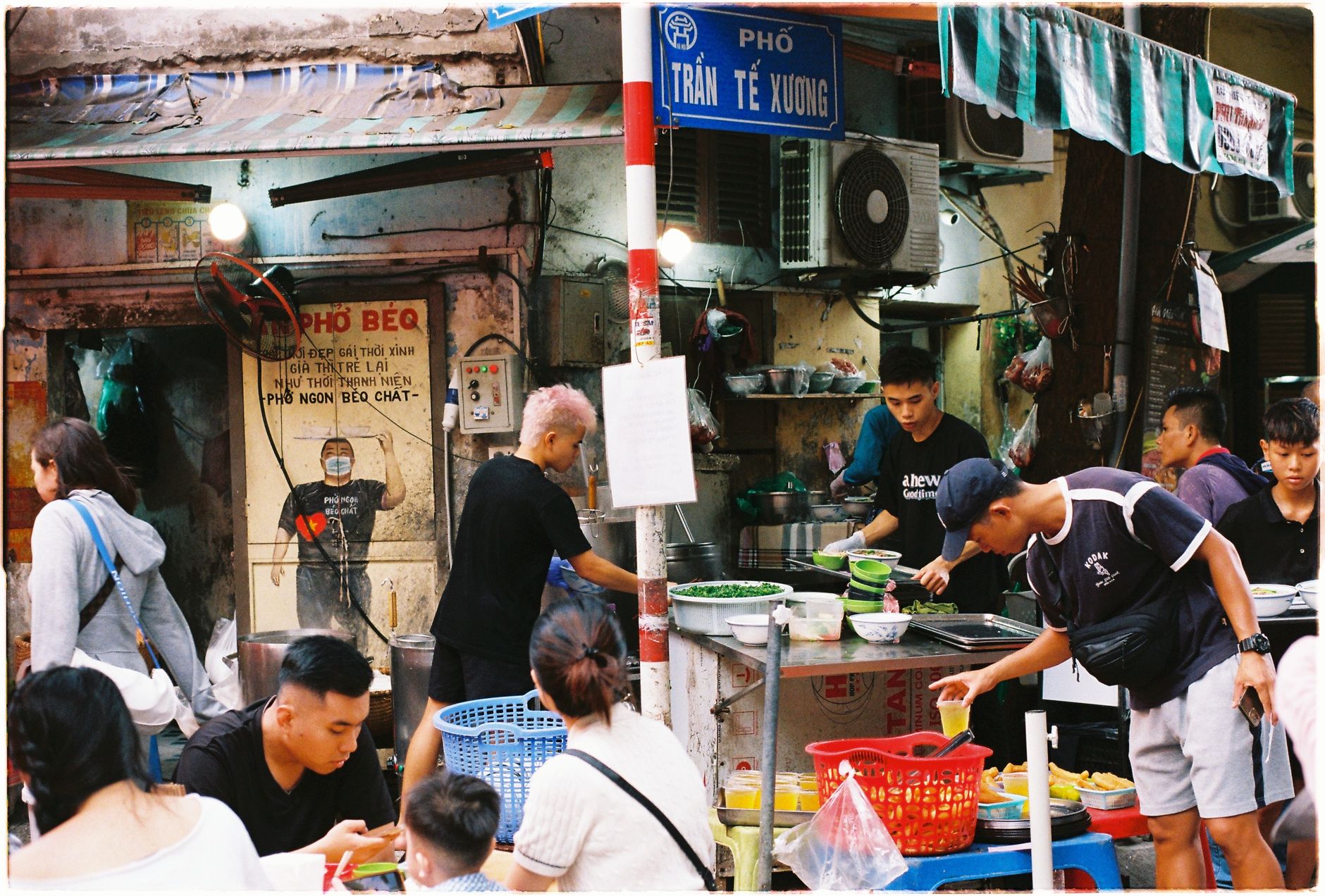
We meet you at your hotel or a landmark you know in the old quarter, usually around 5–6 p.m. when the air cools and vendors are setting up charcoal, oil, and steam pots. For the first 20 minutes we walk quietly, letting your eyes adjust to the lane life: bicycles weaving, shopfronts flipping open, the smell of caramelized onion and fish sauce layering over the street. Then we stop at our first stop—often a vendor making banh mi (Vietnamese sandwiches)—and our host introduces you to the person behind the counter, explains the bread (usually from a specific bakery in the next lane), the pâté, the pickled vegetables, and the sequence of building the sandwich. You eat half. We keep walking. Twenty minutes later we're at a cao lau stall, watching noodles lifted from a specific broth and topped with greens, pork, and crispy croutons. By the third stop you'll notice you're part of the rhythm—vendors nod, other locals make space, children watch you with curiosity. We taste soup, grilled fish, crab cakes or spring rolls (what's in season shapes the menu), and always end near water with a cold drink or dessert soup. The whole experience is about rhythm and observation, not rushing.

Why do street food tours matter for visitors?
Hoi An's tourist restaurants in the main pedestrian zone serve versions of traditional dishes, but the real kitchen happens in the lanes and at the night market, where families have cooked the same recipe for 20 or 30 years and eat what they sell. A tour with a local host opens doors—literally, vendors recognize us and invite you behind the counter—and lets you taste what costs a third of what you'd pay in a sit-down restaurant three blocks away. You also learn the unwritten rules: how to spot a busy stall (a line of locals eating means the food turns over fast), why some vendors close at 8 p.m. (they're done for the night), and which dishes are morning-only or evening-only. Tourists who skip this often eat well but surface-level, tasting only what's advertised on English menus. Street food tourists eat what locals eat, at the same price locals pay.
Who is this tour for, and who should skip it?
| Who it suits | Who might skip it | Why |
|---|---|---|
| Couples and solo travelers | People with severe food allergies | We can't fully guarantee ingredient sourcing at street stalls |
| Families with kids 12+ | Very young children (under 8) | Crowds, uneven pavement, evening timing can overwhelm them |
| Groups up to 10–12 | People with mobility issues | Lots of walking, narrow lanes, no seating for long periods |
| Food-curious travelers | Adventurous eaters seeking only familiar foods | Street vendors specialize in regional flavors, not international tastes |
| Budget travelers | Luxury travelers expecting sit-down meals | You eat standing, on plastic stools, at casual stalls |
The tour is NOT a cooking class—you taste and watch, you don't prep or cook. It IS a walking experience, so wear flat shoes and expect 1.5–2 miles of lane walking over 2.5–3 hours. Humidity and evening crowds are real; if you overheat easily or dislike packed spaces, a daytime market walk might suit you better.
What should you eat, and what should you avoid?
Eat with confidence:
- Banh mi: Bread, pâté, pickled vegetables, fresh herbs. Ask the vendor if they make the pâté in-house (most do).
- Cao lau: Rice noodles, pork, broth, greens—a Hoi An specialty found nowhere else in Vietnam.
- Grilled skewers: Pork, chicken, shrimp on sticks, charred and finished with lime and chili.
- Spring rolls: Fresh (summer rolls) or fried—ask which; fresh are lighter.
- Crab or shrimp cakes: Fried, served with sauce. Ask if they're made that morning.
- Pho variations: Broth-based noodle soup, usually beef or chicken, served with fresh herbs and lime.
What to be cautious about:
- Anything left sitting unheated for hours (stalls move stock fast, so this is rare, but ask if you're unsure).
- Street ice from unknown sources if you have a sensitive stomach (our host can guide you on which vendors use filtered water).
- Shellfish if you have any allergy (vendors handle multiple allergens; cross-contact happens at crowded stalls).
Most street vendors are scrupulous—they eat from the same pots, and their reputation is their livelihood. The real risk is eating too much too fast. Pace yourself; a bite or two per stop lets you taste more without stomach distress.
How do you prepare, and what shouldn't you bring?
Wear and bring:
- Flat, closed-toe shoes (lanes are uneven, vendors use oil and water on the ground).
- A light layer (evening cools down, but you'll warm up walking).
- A small backpack or crossbody bag (hands-free makes eating easier).
- Cash in Vietnamese dong (small vendors don't take cards, and our host tips them fairly).
- A small bottle of water (we'll stop for you to refill).
- Wet wipes or hand sanitizer (lanes are real; your hands will smell of fish sauce and char).
Don't bring:
- A large suitcase or rigid backpack (you'll bang into vendors and other walkers).
- Perfume or cologne (your nose needs to be clear, and street smells are complex and beautiful).
- A formal outfit or white clothing (oil splatters, and street food is casual).
- High expectations about ambiance (you're eating in a working neighborhood, not a restaurant).
If rain is forecast, we'll confirm with you—light rain doesn't stop the tour (vendors have awnings, and the smells intensify), but heavy rain or typhoon conditions mean rescheduling. We'll propose new dates on WhatsApp.
How do allergies, diets, and dietary restrictions work?
Before the tour, tell us your allergies and restrictions on WhatsApp—shellfish, peanut, gluten, vegetarian, vegan, whatever applies. We'll scout the route 1–2 days before and confirm which vendors have safe options for you. A few examples:
- Vegetarian: Banh mi can skip pâté and be made with cucumber and herbs; some vendors have fried tofu; spring rolls often come vegetable-filled.
- Gluten-free: Rice noodle dishes are naturally gluten-free, but sauces may contain fish sauce made with wheat. We'll ask vendors.
- Shellfish allergy: We'll avoid seafood stalls and mark which grilled skewers are pork/chicken only.
- Nut allergies: Street stalls rarely use peanuts in the dish itself, but cross-contact at shared preparation surfaces is possible; we'll identify the safest vendors for you.
We can't guarantee zero risk at street level—vendors prep in tight spaces, and ingredients mix. If your allergy is severe, a cooking class might suit you better, because our kitchen is controlled. Let's talk on WhatsApp about what's realistic for you.
What's the real difference between a street food tour and a restaurant meal?
A sit-down restaurant in Hoi An's main tourist zone offers consistency, English menus, and a private table. You eat well, prices are higher, and the experience is comfortable. A street food tour is the opposite: you eat standing or on a plastic stool, you don't know the menu in advance (we adapt to what's open that night), and you're in a crowded, unpredictable lane. You also taste things that might not appeal at first—organs, unusual textures, umami-heavy broths—and learning to appreciate them is the point. Street food is faster, cheaper, more real. A restaurant is easier and more polished. Both are valid; they're answering different questions. If you're asking "What do locals actually eat?" the street food tour is the answer.
What about combining a food tour with other experiences?
Many guests pair a street food tour with a Vietnamese cooking class the next day—taste the market foods, then learn to cook one of them in a kitchen. Others combine it with a coffee workshop (street vendors roast dark, strong coffee; a class shows you the full spectrum). A farm and countryside experience in the outskirts gives you the reverse view: where the herbs, meat, and vegetables come from. Families often add a craft workshop or flower arranging for variety. Ask us about linking experiences—we can often offer a package rate.
What to check before you book a street food tour
Before you commit:
- Confirm the start time and meeting point on WhatsApp—send us your hotel name, and we'll confirm a realistic pickup or meeting location.
- Tell us your dietary needs (allergies, vegetarian, vegan, low-spice) so we can plan the route.
- Ask which vendors will be open that night—we'll give you a rough menu, though street life is flexible.
- Clarify the pace—if you have mobility issues or tire easily, let us know; we can adjust.
- Check the weather forecast—rain doesn't cancel, but typhoons do; we'll reschedule.
- Bring cash in dong—card payment doesn't work on the street.
- Wear flat shoes and clothes you don't mind staining—oil, fish sauce, and charcoal are part of the experience.

FAQ
Do I need to speak Vietnamese to enjoy a street food tour?
No. Our host speaks English and will translate conversations with vendors, explain dishes, and handle ordering. Vendors appreciate the gesture if you learn two or three words (hello, thank you, delicious), but it's not required.
What if I don't like the food I taste?
You're tasting, not committing. A bite or two per stop means you can move on quickly. We'll warn you before anything unusual arrives. Most street dishes are approachable—banh mi, noodles, grilled meat—and if one doesn't appeal, the next stall will.
Can I bring my camera or phone to take photos?
Absolutely. Street vendors expect it, and photos are a natural part of travel. Just be respectful—ask before photographing someone directly, and don't block the lane while shooting.
How much should I tip vendors?
Tipping is not expected at street stalls. If you want to leave a small amount (rounding up, or a few thousand dong), vendors appreciate it, but it's not standard. Our host will model this for you.
What if the tour is cancelled due to weather or low bookings?
We'll contact you on WhatsApp 24–48 hours before to confirm. If we need to reschedule, we'll propose two new dates immediately and find one that works for you.
Is a street food tour suitable for kids under 10?
It depends on the child. Kids 10+ usually enjoy the walking and tasting. Younger children may struggle with crowds, evening timing, or unfamiliar flavors. A daytime market walk or a cooking class might suit them better. Let's discuss on WhatsApp.
Ask about dates
Tell us the city, your dates and what you would like to try. We reply on WhatsApp in English with options and availability.
FAQ
Do I need to speak Vietnamese to enjoy a street food tour?
No. Our host speaks English and will translate conversations with vendors, explain dishes, and handle ordering. Vendors appreciate the gesture if you learn two or three words (hello, thank you, delicious), but it's not required.
What if I don't like the food I taste?
You're tasting, not committing. A bite or two per stop means you can move on quickly. We'll warn you before anything unusual arrives. Most street dishes are approachable—banh mi, noodles, grilled meat—and if one doesn't appeal, the next stall will.
Can I bring my camera or phone to take photos?
Absolutely. Street vendors expect it, and photos are a natural part of travel. Just be respectful—ask before photographing someone directly, and don't block the lane while shooting.
How much should I tip vendors?
Tipping is not expected at street stalls. If you want to leave a small amount (rounding up, or a few thousand dong), vendors appreciate it, but it's not standard. Our host will model this for you.
What if the tour is cancelled due to weather or low bookings?
We'll contact you on WhatsApp 24–48 hours before to confirm. If we need to reschedule, we'll propose two new dates immediately and find one that works for you.
Is a street food tour suitable for kids under 10?
It depends on the child. Kids 10+ usually enjoy the walking and tasting. Younger children may struggle with crowds, evening timing, or unfamiliar flavors. A daytime market walk or a cooking class might suit them better. Let's discuss on WhatsApp.
More like this
Street food and market tours
Best Street Food Tour in Sapa: What to Expect, How to Choose
Street food tours in Sapa connect you with hill-town cooks and night markets. We'll walk you through what these sessions offer, who they're for, and how to avoid common missteps.
Street food and market tours
Best Street Food Tour in Hue: What to Choose, Who It's For
A street food tour in Hue isn't one thing—it's a choice between styles, neighborhoods, and paces. We break down what actually happens on each type, and how to know which fits your group.
Street food and market tours
Best Food Walking Tour in Vietnam: Hanoi Street Food Guide
A food walking tour in Vietnam immerses you in bustling markets and street lanes where vendors have cooked the same dishes for decades. We show you what to taste, how to order, and the stories behind each bite.