
Home › Blog › Street food and market tours
Street Food Tour in Phu Quoc: Local Flavours on the Beach Island
By the Cáo Experiences team · 2026-11-06
A street food tour in Phu Quoc with Cáo Experiences runs 3–4 hours, starting either at dawn in the main local market (not the tourist beach area) or at dusk when night vendors set up along quiet lanes. You walk with one of our hosts—someone who's eaten here for years—stopping at 6–10 stalls to taste fresh-caught squid, crab pancakes, grilled fish cakes, and fermented shrimp paste mixed into simple rice. We focus on spots where fishermen and families eat, not Instagram-friendly restaurants. No bus, no fixed itinerary: we adapt for allergies, vegetarians, and pace. Cost varies by group size; ask us for dates and a quote on WhatsApp. Most guests expect tourist menus; the real shock is how salty, spicy, and alive street food tastes when you're eating elbow-to-elbow with the people who've made it since dawn. Ask about dates on WhatsApp
Why do most food tours miss the real Phu Quoc street food?
Tourist food tours in Phu Quoc often start late morning, when the best stalls have already sold out or changed their day's menu. They rely on restaurant owners who run parallel tourist operations, mixing local food with safer, blander versions for foreign palates. Real street food in Phu Quoc peaks between 5–7 a.m. (market vendors) and 6–9 p.m. (night stalls on residential lanes), when locals queue and prices haven't inflated for tourists. We time our tour to match demand, not convenience. You eat what's hot and fresh that morning, not yesterday's prep. This is why many first-time visitors are surprised: the flavours are assertive—fermented, salty, sometimes fishy in ways supermarket versions aren't—because they're built for people who've spent the morning on boats and in market labour.

What's the difference between dawn market tours and evening street food walks?
Tour type | Best for | What you taste | Why choose it ---|---|---|--- Dawn market (4:30–7:30 a.m.) | Early risers, photographers, foodies | Raw fish at auction, hot rice cakes, fresh crab congee | Peak vendor energy; ingredients still on ice; smallest crowds Evening stalls (6–9 p.m.) | Night owls, families, casual eaters | Grilled fish cakes, salt-baked squid, noodle soups, beer with vendors | Relaxed pace; vendors chat; you eat sitting down; cooler weather Private morning + evening combo | Couples, small groups wanting depth | Both schedules in one day | Learn how ingredients flow market-to-stall; larger time and energy commitment
A dawn market walk captures the island's fishing economy—you see fish arriving in foam boxes, prices negotiated in dialect, vendors who've been there since 3 a.m. The food is hotter and the suppliers are still there. An evening walk suits people who prefer cooler air and slower pace; vendors aren't rushing to prep for lunch service, so they'll sit and talk, and you can eat at a low plastic stool with a cold beer. We've also run combined half-day experiences where you taste market breakfast around 5 a.m., rest through the hot afternoon, then return for evening stalls around 6 p.m.—the advantage is seeing how a single batch of fish moves from auction to dinner table.
What do beginners worry about, and how do we adapt?
New food tourists often fear contamination, unfamiliar ingredients, or being the only foreigner at a stall. Here's what we actually hear and how we handle it. "Will the food make me sick?" Our host stays with you the entire time, eats from the same stall, knows the vendors by name, and can spot which stalls turn over stock fastest (a sign of freshness and volume). You're not eating mystery meat from a poorly maintained cooler; you're eating whole squid that was swimming 12 hours ago. We've hosted dozens of guests with sensitive digestion; the issue is rarely safety but pace—eating 10 new stews in 3 hours causes bloat, not illness. We offer water, space between tastings, and can skip stalls if you're full. "I'm vegetarian—will there be anything?" Phu Quoc street food is seafood-dominated, but we route tours past vegetable rice-paper rolls (made fresh, not fried), simple rice with greens, and sweet potato and taro cakes. We brief vendors in advance so they're not scrambling. Most vegetarian guests say they expected nothing and were pleasantly surprised by texture and salt-play in the vegetable dishes. "What if I'm allergic to shellfish?" We communicate allergies before booking and plan a separate route avoiding communal grills where cross-contamination could occur. You'll eat things like grilled chicken, pork skewers, and noodle soups prepared on dedicated equipment. It means missing some iconic stalls, but it's better than risk.
Families with children benefit from modified portions—we can arrange for kids to taste smaller amounts, skip the spiciest items, and focus on familiar textures like grilled seafood and rice cakes. Seniors appreciate slower pacing and a rest stop midway; we're flexible on timing and can shorten the walk if energy drops. Our job is to interpret the food and crowd-manage, not force you through a checklist.
What specific dishes appear on Phu Quoc street food routes, and why do they matter?
Bánh canh cua (crab and tapioca cake) — A hand-rolled dumpling filled with fresh crab meat and wrapped in tapioca starch, boiled and served in a peppery broth. Vendors usually make these before dawn; by 9 a.m. they're gone. The crab is local, caught within hours of cooking. Why it matters: it's labour-intensive and requires fresh catch, so it's a window into how seafood-dependent Phu Quoc's food culture is.
Tôm nướng (grilled shrimp) — Large prawns split lengthwise, brushed with salt and tamarind, cooked on a charcoal grill until the shell chars and the meat stays tender. Vendors grill to order. Why it matters: you see the entire process and learn how Phu Quoc shrimp farms supply the street economy.
Cá nướng (grilled fish cakes) — Minced fish mixed with tapioca, salt, and fish sauce, formed into flat patties and grilled. Served with dipping salt and lime. Why it matters: it's a way of using catch that's too small to sell whole, representing zero-waste fishing practices.
Mam tom (fermented shrimp paste) — A pungent, umami-rich paste made from tiny shrimp left to ferment for weeks. Eaten on rice or rice paper with fresh herbs. Why it matters: it's the most polarizing dish—many Western visitors recoil, but understanding its role in Vietnamese cooking shows why fermentation is central to the cuisine.
Bánh hỏi (thin noodle cake) — Steamed rice vermicelli formed into a flat cake, served with grilled meat and herbs. Vendors slice it with a special tool. Why it matters: it's a cheap, efficient base for street meals and appears at almost every lunch stall.
All of these are cooked fresh to order or in small batches within 2–3 hours of service. None are prepared days in advance or frozen. Our host can point out which vendors have just restocked, which are slowing down, and where to expect the best version on that particular morning.
What should you wear and bring on a street food tour?
Wear breathable, loose clothing—you'll be walking and standing in humidity, often near grills and steam. Closed-toe shoes with grip (market floors are wet and slippery) are better than sandals; locals wear slip-on sneakers or clogs. Bring a small backpack with sunscreen (dawn tours still catch early rays) and a light scarf or cap. A reusable water bottle helps; we can refill at vendors. Avoid heavy jewellery—it catches on stall structures and you'll be moving fast. For dawn tours, bring a light jacket or sweater; 5 a.m. on the coast is cooler than you expect. Most stalls don't have napkins; a small pack of tissues or a washcloth is practical. A small notebook helps if you want to jot down stall locations or recipes your host mentions. Don't carry a large camera or phone tripod—you'll look like a tourist documentary crew, and vendors become self-conscious. A phone for photos is fine; we'll help you capture the food without disrupting the pace.
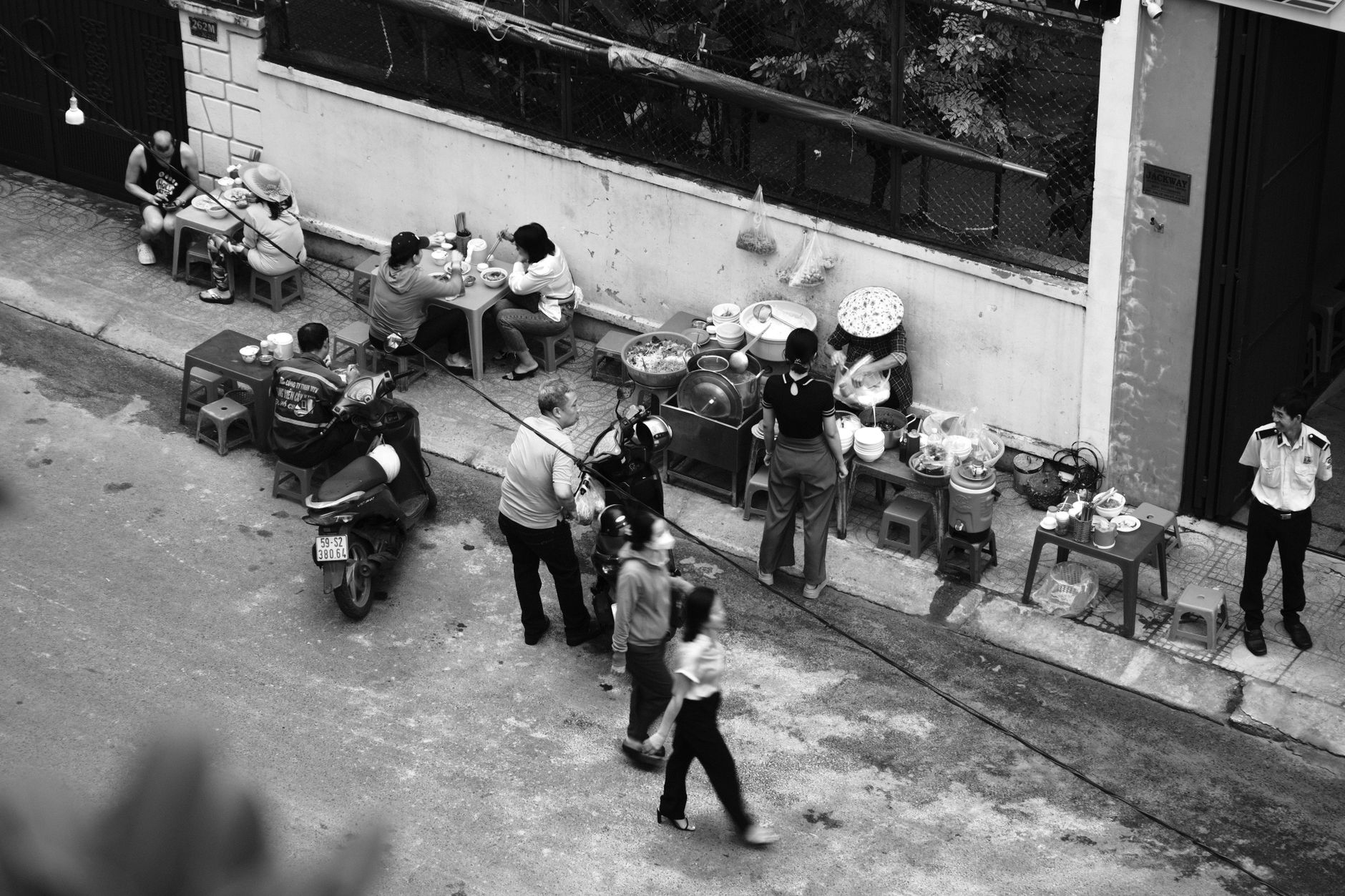
How do we adapt for rain, hot season, and seasonal ingredient changes?
Phu Quoc's wet season (May–October) brings afternoon downpours, but mornings are usually clear until 10 a.m., so dawn tours run as scheduled. If rain hits, we move to covered stalls (most markets have partial roofs) and shift the itinerary to indoor food courts. Evening tours can be postponed to the next day; we coordinate via WhatsApp. Hot season (March–May) means tours start even earlier—sometimes 4:30 a.m.—to finish before noon. We build in extra water and shade breaks. Cool season (November–February) is ideal: longer daylight, more comfortable walking, more vendors staying open late.
Seasonal ingredients shift the menu. Summer brings abundant squid and grouper; autumn brings crab season (October–November); dry season brings farm vegetables and preserved seafood specialties. We don't force a fixed menu; instead, we work with what's fresh and in supply that week. A tour in October eats different food than a tour in January, and we tell you that upfront so you're not expecting specific dishes that aren't in season.
What's the difference between a street food tour and other food experiences we offer?
Street food and market tours focus on casual eating, high volume, and the speed of market commerce—you're learning by tasting and observing. Vietnamese cooking classes are slower and hands-on; you buy raw ingredients with our host, then cook a full meal in a kitchen, learning technique and flavour-layering. A Vietnamese coffee workshop is a sit-down deep dive into a single product (coffee), its history, and brewing method. Street food suits people who want speed, variety, and immersion in local life; cooking classes suit people who want to reproduce a meal at home; coffee workshops suit people fascinated by one ingredient. All three exist because different travel goals need different formats. A street food tour is best if you have 3–4 hours in a new city and want to eat where locals eat. A cooking class is best if you want to spend a full day learning one meal. A coffee workshop is best if you want to spend 2–3 hours becoming fluent in one drink.
What to check before you book a street food tour.
Tour timing: Confirm whether the tour is dawn (early rising required) or evening (relaxed pace). Ask what time the host picks you up if you're not meeting at a central point.
Group size: Are you booking private (just you or a small party) or joining an open group? Private tours cost more but run on your schedule; group tours mean flexible dates and potentially lower per-person cost. Clarify group size cap—a group of 12 eats differently than a group of 4.
Allergies and diet: Tell the host about shellfish allergies, vegetarian preferences, or spice sensitivity when you inquire. They need time to plan a route and brief vendors. Don't withhold this information until the tour starts.
Duration and distance: Confirm the tour is 3–4 hours of walking, not sitting in a vehicle. Ask how far you'll walk; if mobility is limited, say so. Some guests expect a bus-based tour; we walk.
Inclusions: Ask whether tasting portions are included or if you pay vendors separately. (We usually coordinate group purchases with vendors in advance, so you're not handling cash at every stall—but confirm this.)
Weather plan: Ask what happens if it rains. Do we reschedule, move to covered markets, or cancel entirely?
Language: Our host speaks English. Check whether they can answer detailed questions about fish species, preparation methods, or Phu Quoc history. Some hosts are encyclopedic; others are more conversational. Both are good; just know what to expect.
Photos and privacy: Some vendors are camera-shy; ask your host to introduce you before pointing a phone. Respect boundaries, especially at small family stalls.
Booking and confirmation: Use WhatsApp to ask for dates and a quote. Once you agree, ask for a written itinerary with your guide's name, meeting location, start time, and contact details. Don't rely on email threads—WhatsApp confirmations are more reliable in Vietnam.
Pages from our team you may need

FAQ
Is street food safe to eat in Phu Quoc?
Yes, if you eat where locals eat and your host knows the vendors. Stalls with high turnover (long queues, fresh restocking) are safer than slow stalls with old prep. Our hosts eat from the same vendors, so contamination risk is low. Sensitive digestion sometimes reacts to new spices or salt volume, not unsafe food.
What if I don't like spicy food?
Phu Quoc street food isn't uniformly spicy. Fish cakes, shrimp paste, and noodles are salty and umami-rich but not hot. Chilli is a topping you control. Tell your host beforehand; they'll steer you toward less-spicy stalls and can ask vendors to hold chilli on your portion.
Can I do a street food tour if I don't speak Vietnamese?
Yes. Our host speaks English and translates. You don't need to order yourself; the host negotiates portions, prices, and preparation with vendors. You focus on eating and asking questions. Occasionally a vendor might not speak English, but your host bridges that.
How much should I budget beyond the tour cost for additional snacks or drinks?
Tour tastings are usually sizeable; most guests feel full by the end. If you want extra servings or a cold drink outside the planned route, budget another small amount. Ask your host what's included before you book so there are no surprises.
What's the best time of year to do a street food tour in Phu Quoc?
November–February (cool season) has the best weather and longest daylight. October–November is crab season, a highlight. May–October is wet, but morning tours are still possible. Avoid March–May heat unless you're an early riser. Seasonal ingredients shift the menu, so no single season is "best"—just different.
Can families with young children do this tour?
Yes. We modify portions, skip spicy items, and go at a slower pace. Young kids might find fermented paste or whole grilled squid strange; we manage expectations and focus on familiar textures like rice cakes and grilled seafood. Talk to your host about your kids' food preferences when you book.
Do I need to book a tour, or can I do this independently?
You can wander street stalls alone, but you'll miss context—which stalls are reliable, what dishes are in season, how to order politely. A tour with our host compresses knowledge and safety into a few hours and connects you to vendors who'll remember you. Independence works if you have time to experiment; a tour works if you want depth fast.
Ask about dates
Tell us the city, your dates and what you would like to try. We reply on WhatsApp in English with options and availability.
FAQ
Is street food safe to eat in Phu Quoc?
Yes, if you eat where locals eat and your host knows the vendors. Stalls with high turnover (long queues, fresh restocking) are safer than slow stalls with old prep. Our hosts eat from the same vendors, so contamination risk is low. Sensitive digestion sometimes reacts to new spices or salt volume, not unsafe food.
What if I don't like spicy food?
Phu Quoc street food isn't uniformly spicy. Fish cakes, shrimp paste, and noodles are salty and umami-rich but not hot. Chilli is a topping you control. Tell your host beforehand; they'll steer you toward less-spicy stalls and can ask vendors to hold chilli on your portion.
Can I do a street food tour if I don't speak Vietnamese?
Yes. Our host speaks English and translates. You don't need to order yourself; the host negotiates portions, prices, and preparation with vendors. You focus on eating and asking questions. Occasionally a vendor might not speak English, but your host bridges that.
How much should I budget beyond the tour cost for additional snacks or drinks?
Tour tastings are usually sizeable; most guests feel full by the end. If you want extra servings or a cold drink outside the planned route, budget another small amount. Ask your host what's included before you book so there are no surprises.
What's the best time of year to do a street food tour in Phu Quoc?
November–February (cool season) has the best weather and longest daylight. October–November is crab season, a highlight. May–October is wet, but morning tours are still possible. Avoid March–May heat unless you're an early riser. Seasonal ingredients shift the menu, so no single season is "best"—just different.
Can families with young children do this tour?
Yes. We modify portions, skip spicy items, and go at a slower pace. Young kids might find fermented paste or whole grilled squid strange; we manage expectations and focus on familiar textures like rice cakes and grilled seafood. Talk to your host about your kids' food preferences when you book.
Do I need to book a tour, or can I do this independently?
You can wander street stalls alone, but you'll miss context—which stalls are reliable, what dishes are in season, how to order politely. A tour with our host compresses knowledge and safety into a few hours and connects you to vendors who'll remember you. Independence works if you have time to experiment; a tour works if you want depth fast.
More like this
Street food and market tours
Best Street Food Tour in Sapa: What to Expect, How to Choose
Street food tours in Sapa connect you with hill-town cooks and night markets. We'll walk you through what these sessions offer, who they're for, and how to avoid common missteps.
Street food and market tours
Best Street Food Tour in Hue: What to Choose, Who It's For
A street food tour in Hue isn't one thing—it's a choice between styles, neighborhoods, and paces. We break down what actually happens on each type, and how to know which fits your group.
Street food and market tours
Best Food Walking Tour in Vietnam: Hanoi Street Food Guide
A food walking tour in Vietnam immerses you in bustling markets and street lanes where vendors have cooked the same dishes for decades. We show you what to taste, how to order, and the stories behind each bite.