
Home › Blog › Street food and market tours
Street Food Tour in Vietnam in English: Step-by-Step Guide
By the Cáo Experiences team · 2026-11-06
A street food tour in English is a 2.5–4 hour guided walk through a working food neighbourhood, usually in Hanoi's old quarter or Ho Chi Minh's District 1 or District 3. You visit 4–6 family-run stalls and street carts that locals queue for, tasting phở, bánh mì, grilled meat, fresh spring rolls, and regional specialities. A Cáo Experiences host walks alongside—no megaphone, no performance—explaining the history of each dish, how it's made, which spice does what, why the owner moved to this corner 20 years ago. You eat small portions at each stop so you taste variety without overload. We adapt for vegetarians, allergies, and heat tolerance; kids aged 8+ engage well because they help order, choose toppings, and ask the cooks questions. Cost basis varies by group size and location; ask us for dates and a quote on WhatsApp. This beats restaurant tours because you're eating what people are actually eating right now, not a curated menu. Ask about dates on WhatsApp
What happens in the first 30 minutes of a real street food walk?
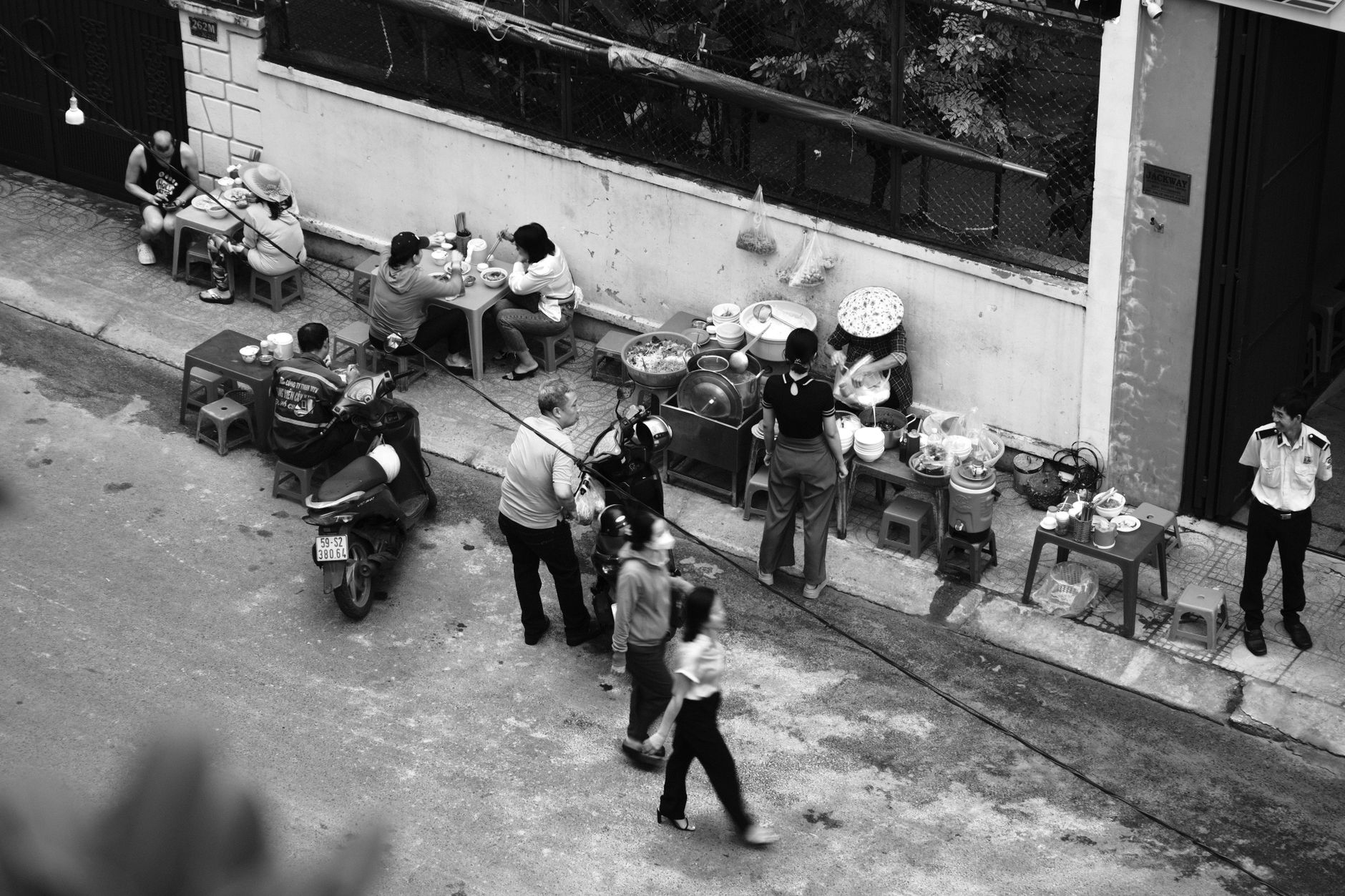
We meet you at a café or a lane entrance—somewhere easy to spot, away from traffic. You bring a bottle of water and comfortable shoes with grip (lanes get slippery if wet). We give a 10-minute overview: which stalls we're visiting, how much cash to carry (we accept no cards at family stalls), what to expect in terms of noise, crowds, and crowds. Many first-timers worry they'll look awkward eating standing up or sitting on a tiny plastic stool; we show you how locals do it—no performance, no photos required unless you want them. Then we walk 50–100 metres to the first stop: usually a phở stall that opens at 5 a.m. and closes by 10 a.m. because it sells out. You see the broth simmering since dawn, smell the anise and cinnamon, and watch the owner slice beef paper-thin. We order a small bowl for you, you taste the first spoonful, and the host explains the spice balance and why the owner refuses to use MSG despite pressure to speed things up. This is where many guests realise restaurant phở tastes different—not worse or better, just different, because the pace and the recipe are linked.

Why do street food tours work best in English if you're not a speaker?
You don't need to speak Vietnamese. The host speaks English fluently and does all the ordering; you just point and nod if you want more or less chilli. Cáo Experiences runs street food and market tours where the rhythm is: walk, stop, host orders, you taste, host explains the story in English, you ask questions, walk again. Beginners often ask: "Will the cook think I'm rude if I don't finish?" The answer is no—locals eat small portions here, it's the whole point. Another worry: "What if I hate the food?" We've built sessions to include at least one "safe" stop (often bánh mì or a familiar-tasting item) plus 3–4 adventurous ones. If you genuinely dislike something, the host suggests you skip to the next stall. We've never had a guest go hungry or feel excluded because the walk includes tea or fresh sugar cane juice, and we time it so you're not exhausted before the final stop.
Which neighbourhoods in Hanoi and Ho Chi Minh have the best street food, and how do you choose?
Hanoi's old quarter has narrow lanes where food stalls cluster by type—one lane is bánh mì and grilled meat, another is phở and noodle soups, another is grilled offal and bone marrow. The advantage is density: five stalls in a 100-metre walk, each with a distinct owner and recipe. The downside is crowds (especially 6–9 a.m. and 5–7 p.m.) and heat. Our hosts adjust timing to avoid peak crush if you prefer quieter eating. Ho Chi Minh's District 1 stalls are slightly more spread out but less intense; District 3 has a reputation for earlier-opening grilled-meat spots and a mix of North and Central Vietnamese food. We choose the neighbourhood based on what you want to taste and when you want to go. Morning tours hit breakfast stalls; evening tours catch grilled meat and bánh hoai (a street specialty). Ask us for dates and a quote on WhatsApp; we'll match the neighbourhood and time to your interests.
How do we adapt for vegetarians, kids, and people with allergies?
Vegetarians can do a street food tour, but it requires honest planning. Most iconic stalls (phở, bánh mì, grilled meat carts) centre on meat or fish sauce as a base flavour. We don't pretend we can make these fully vegan; instead, we design an alternative route: phở chay (vegetable broth), tofu bánh mì, stir-fried vegetables, fresh spring rolls (which can be made with tofu instead of shrimp), and sweet items like chè (bean soup). This is a real itinerary, not a retrofit. Kids aged 8+ enjoy the interactive side—they order, point at ingredients, watch cooking happen live. Kids under 8 may find the heat and noise overwhelming; we recommend our family-friendly experiences first, then revisiting a food tour at 8 or 9. Allergies: we tell the cook directly in Vietnamese; however, cross-contamination risk is real in busy stalls. If you have a severe nut, shellfish, or sesame allergy, tell us before booking. We'll either locate stalls with minimal risk or suggest a different experience. Gluten and soy: we can navigate these, but again, warn us first.
What's the honest difference between a street food tour and a cooking class if you want to understand Vietnamese food?
A Vietnamese cooking class teaches you how to make dishes from scratch: you shop at a market, return to a kitchen, and spend 2–3 hours chopping, frying, tasting, and plating. You learn technique, ratios, and substitutions; you leave with skills and recipes you can replicate at home. A street food tour teaches you where food comes from and why it tastes the way it does: you see the raw supply (a cart of greens delivered at dawn), meet the person who's been cooking the same dish for 15 years, taste the difference between two phở makers 50 metres apart, and understand the culture behind eating. Many guests do both: a cooking class to learn hands-on technique, a food tour to taste widely and meet makers. Neither is superior; they answer different questions. If you want to take food home in your skills, cook. If you want to take food home in your understanding and memories, tour.
| Experience | Who it's for | Time needed | What you gain | Best combined with |
|---|---|---|---|---|
| Street food tour | Curious eaters, foodies, limited time | 2.5–4 hours | Taste range, maker stories, eating culture | A cooking class in a different area |
| Cooking class | Hands-on learners, home cooks, longer stays | 3–4 hours | Technique, recipes, kitchen confidence | A market or farm visit beforehand |
| Food tour + class | Complete food explorers | 6–8 hours (split days) | Both taste and technique | A coffee or tea experience for contrast |
What do you actually need to know before you book?
Timing: Street food is a breakfast and dinner activity. Breakfast stalls (5–9 a.m.) offer phở, bánh mì, sticky rice, and fresh juice. Lunch (11 a.m.–1 p.m.) is quieter. Dinner (5–8 p.m.) brings grilled meat, bánh hoai, and soups. Ask which meals your neighbourhood stalls keep.
Money: Bring Vietnamese dong in small notes (10k, 20k, 50k denominations). No one accepts cards. Total spend per person is modest (we eat many small portions), but exact cost varies by neighbourhood and what you order.
Weather: Hanoi and Ho Chi Minh summers are hot and humid. Wear loose cotton, trainers with grip, and sunscreen. If rain is forecast, tell us—we have covered-lane routes and can reschedule. Rain doesn't cancel; it just changes which stalls we hit (some move indoors, some close).
Language: You need zero Vietnamese. Our host speaks English, orders, negotiates, and translates cook stories. Locals appreciate that you're there to eat, not photograph; eating respectfully (finishing small portions, not being loud) goes further than speaking their language.
Stomach preparedness: Street stalls are clean by local standards but different from restaurant hygiene. Eat at busy stalls where turnover is high; avoid standing food that's been sitting. Start with cooked items (phở, grilled meat), then move to raw or fermented (spring rolls, pickled vegetables) once your gut is settled. Drink boiled water or bottled water only. Most guests have no issues; a minority experience mild loose stools for a day. This is normal adjustment, not food poisoning.
Group size: Tours work best in groups of 2–8 people. Larger groups split attention and slow the host down. We can arrange private tours for families or groups; ask us for dates and a quote on WhatsApp.
Pages from our team you may need

FAQ
Can I do a street food tour in Hoi An or Da Nang, or only Hanoi and Ho Chi Minh?
Yes. Hoi An's old town (a UNESCO site) has a distinct food culture—bánh hoai (a local crispy pancake), miso-based soup, and Central Vietnamese grilled specialities. Da Nang's markets and seaside stalls reflect seafood-heavy traditions. Both are quieter than Hanoi but equally rich. We run Hoi An experiences and Da Nang experiences; ask which food tours are running when you're visiting.
What if I'm vegetarian and the tour feels limited?
We design a separate vegetarian route rather than retrofit. You'll taste vegetable phở, tofu bánh mì, and stir-fried items at different stalls than the main group. This is slower to arrange, so tell us at booking. Fully vegan is harder; ovo-lacto vegetarian works well.
How long do I have to stand or walk?
About 2–2.5 hours of walking (mostly slow, with frequent stops). The rest is eating, sitting, and talking. Seniors and people with mobility issues can do shortened routes; tell us when you book and we'll find flatter neighbourhoods with closer stall spacing.
Is this tour safe for tourists alone at night?
Yes. Evening tours happen in busy food areas where locals eat; you're never alone, and the host stays with you. Hanoi old quarter and Ho Chi Minh Districts 1 and 3 are well-lit and crowded. Carry minimal valuables, keep bags zipped, and follow your host's lead.
Can kids join a street food tour, or is it too intense?
Kids 8+ enjoy it. Younger kids find it overwhelming (heat, crowds, unfamiliar smells, long walking). For families, try our family-friendly experiences first, then revisit a food tour when the child is older. We've adapted tours for curious 8-year-olds; they often eat more adventurously than adults.
What's included in the cost, and are there hidden charges?
The host, English explanations, and route planning are included. Food and drink at stalls is your cost (modest, usually 30–50k dong per stop). Ask us for dates and a quote on WhatsApp for total pricing; there are no hidden charges. --- Ask about dates on WhatsApp
Ask about dates
Tell us the city, your dates and what you would like to try. We reply on WhatsApp in English with options and availability.
FAQ
Can I do a street food tour in Hoi An or Da Nang, or only Hanoi and Ho Chi Minh?
Yes. Hoi An's old town (a UNESCO site) has a distinct food culture—bánh hoai (a local crispy pancake), miso-based soup, and Central Vietnamese grilled specialities. Da Nang's markets and seaside stalls reflect seafood-heavy traditions. Both are quieter than Hanoi but equally rich. We run [Hoi An experiences](/destinations/hoi-an) and [Da Nang experiences](/destinations/da-nang); ask which food tours are running when you're visiting.
What if I'm vegetarian and the tour feels limited?
We design a separate vegetarian route rather than retrofit. You'll taste vegetable phở, tofu bánh mì, and stir-fried items at different stalls than the main group. This is slower to arrange, so tell us at booking. Fully vegan is harder; ovo-lacto vegetarian works well.
How long do I have to stand or walk?
About 2–2.5 hours of walking (mostly slow, with frequent stops). The rest is eating, sitting, and talking. Seniors and people with mobility issues can do shortened routes; tell us when you book and we'll find flatter neighbourhoods with closer stall spacing.
Is this tour safe for tourists alone at night?
Yes. Evening tours happen in busy food areas where locals eat; you're never alone, and the host stays with you. Hanoi old quarter and Ho Chi Minh Districts 1 and 3 are well-lit and crowded. Carry minimal valuables, keep bags zipped, and follow your host's lead.
Can kids join a street food tour, or is it too intense?
Kids 8+ enjoy it. Younger kids find it overwhelming (heat, crowds, unfamiliar smells, long walking). For families, try our [family-friendly experiences](/family-experiences) first, then revisit a food tour when the child is older. We've adapted tours for curious 8-year-olds; they often eat more adventurously than adults.
What's included in the cost, and are there hidden charges?
The host, English explanations, and route planning are included. Food and drink at stalls is your cost (modest, usually 30–50k dong per stop). Ask us for dates and a quote on WhatsApp for total pricing; there are no hidden charges. --- [💬 Ask about dates on WhatsApp](https://wa.me/84338762340)
More like this
Street food and market tours
Best Street Food Tour in Sapa: What to Expect, How to Choose
Street food tours in Sapa connect you with hill-town cooks and night markets. We'll walk you through what these sessions offer, who they're for, and how to avoid common missteps.
Street food and market tours
Best Street Food Tour in Hue: What to Choose, Who It's For
A street food tour in Hue isn't one thing—it's a choice between styles, neighborhoods, and paces. We break down what actually happens on each type, and how to know which fits your group.
Street food and market tours
Best Food Walking Tour in Vietnam: Hanoi Street Food Guide
A food walking tour in Vietnam immerses you in bustling markets and street lanes where vendors have cooked the same dishes for decades. We show you what to taste, how to order, and the stories behind each bite.