
Home › Blog › Street food and market tours
Street Food Tour in Vietnam on a Budget: Hanoi & HCMC
By the Cáo Experiences team · 2026-11-06
A street food tour in Vietnam on a budget means eating 4–6 dishes in morning or evening sessions—bánh mì, phở, bánh cuốn, chả cá—for the cost of one restaurant meal elsewhere. Most dishes at proper street stalls cost under 50 cents. Hanoi's Old Quarter and Ho Chi Minh City's District 1 and 4 have the best concentration. You'll walk 2–3 kilometers, stop at 4–6 vendors, and spend 90 minutes to 2 hours total. Cáo Experiences runs guided street food and market tours where a Vietnamese host orders for your group, explains what you're eating, and teaches you how to eat safely—which stalls stay cleanest, how to spot fresh ingredients, why certain times matter. Budget around our current quote–4 per person for all food; tours add coordination and local knowledge. Avoid midday heat; early morning (6–8 a.m.) and evening (5–7 p.m.) are best. Go with an open stomach and a willingness to eat standing up. Ask about dates on WhatsApp
What counts as "budget" for street food in Vietnam?
Street food in Vietnam isn't just cheap—it's the genuine way most people eat daily. A full phở bowl with broth, noodles, and meat costs 20–40 cents at a proper stall; bánh mì (Vietnamese sandwich) runs 30–60 cents; fresh spring rolls are 15–25 cents each. These are real numbers from what vendors charge locals, not tourist markups. A solo traveler eating three meals a day from street vendors might spend under our current quote total. When we run tours, guests often order more than they'd eat alone—trying 5–6 dishes to taste variety—and still spend less than a sit-down restaurant would cost. The real cost is time: learning which stalls are safe, which open at 5 a.m., which close by 9 a.m., which have lines because the food is genuinely good.

Where do locals actually eat: Hanoi versus Ho Chi Minh City?
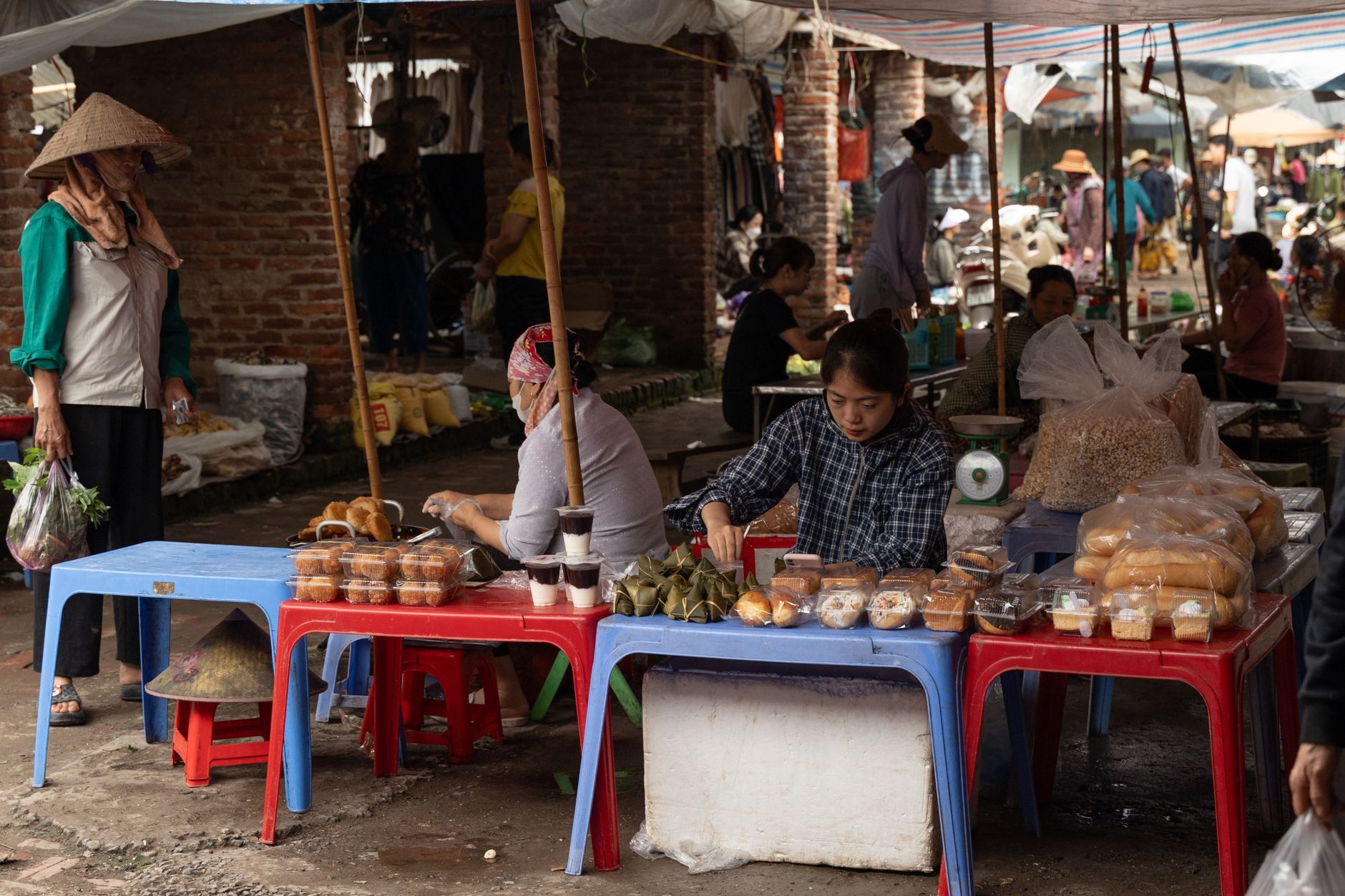
Hanoi's Old Quarter—the grid of lanes near Hoan Kiem Lake—has entire streets named after the single dish they serve: Phở Street, Bánh Cuốn Street. Vendors have run the same corner for decades; lines form at 6:30 a.m. with office workers grabbing breakfast. Ho Chi Minh City spreads differently: street food clusters near Ben Thanh Market and in the neighborhoods off District 1, with strong evening bánh mì and cơm tấm (broken-rice) scenes around dusk. Both cities have wet markets (chợ) where vendors fry, boil, and grill throughout morning hours. Our hosts know which stalls pass health checks, which owners speak enough English to explain ingredients, and—honestly—which ones keep their ice clean. Hanoi's food tends toward subtler broths and longer cooking times; HCMC's is spicier and faster-paced.
How do you eat safely at street stalls without getting sick?
The biggest worry guests mention is food safety. The real answer: busy stalls with high turnover are safer than quiet ones because ingredients are fresher. Watch where the vendor gets ice and water—a stall with a proper water tank and ice block is better than one using dubious ice. Avoid uncooked vegetables at unfamiliar stalls early on; stick to cooked items (phở, bánh cuốn, chả cá) where heat kills pathogens. Ask your host to order for you—vendors respect that, and you avoid miscommunication about ingredients. Don't eat from stalls sitting in direct sun for hours; morning vendors are fresher. Weak stomach? Start with mild broths (phở gà, chicken phở) rather than beef versions, and skip fresh herbs on your first tour. We've run hundreds of tours with zero incidents because we only stop at places we've eaten from ourselves, multiple times, in the same week.
What's the difference between morning and evening food tours?
Morning tours (5:30–7:30 a.m.) catch breakfast culture: phở makers stirring broth pots since 2 a.m., bánh cuốn vendors rolling rice sheets, cháo (congee) bubbling. Streets are quieter, vendors are fresher, and you eat alongside locals heading to work. Evening tours (5–7 p.m.) focus on different dishes: cơm tấm, bánh mì, grilled seafood, egg coffee in Hanoi. The vibe is more relaxed; you're eating dinner, not rushing. Morning gives you the backstory (how phở is made, why bánh cuốn dough matters); evening is about trying dishes you couldn't order at breakfast. Which is "better"? Morning if you want to see food being made and eat with locals; evening if you hate waking early and want a slower pace. Both cost the same—ask us about both timings when you inquire.
How does a real tour flow, hour by hour?
A typical tour starts at your hotel or a meeting point (often a café in the Old Quarter or a sidewalk corner). We brief you: no touching vendor equipment, ask before photos, let your host order so you don't accidentally request something not on the menu. Walk to the first stall—maybe a phở place—and order small bowls (or splits if you want to taste several dishes without overwhelming yourself). Eat there, standing or on a plastic stool, 10 minutes. Your host explains the broth, the cuts of meat, why this vendor's quality matters. Move on. Second stall might be bánh cuốn—we order, you eat, your host talks. By stall four, you're comfortable sitting, your palate is adjusted, and you're asking questions about spice levels or ingredients. Final stop is often something sweet: chè (sweet soup) or a drink. Whole tour is 90 minutes to 2 hours. Kids slow things down slightly but handle it well; we order smaller portions and pick stalls with seating. Seniors appreciate stops to rest between stalls; we build in 10-minute breaks. Rain reshuffles the route (covered markets instead of open-air stalls) but doesn't cancel it.
| Tour type | Best for | Duration | Why it works |
|---|---|---|---|
| Morning street food tour | Tourists, families, food photographers | 90 min, 5–6 am | See vendors prep, eat with locals, quieter |
| Evening tour | Groups, expats, slower pace | 2 hours, 5–7 pm | Relaxed atmosphere, dinner vibe, no early wake |
| Family session (adapted) | Kids, mixed ages, new to street food | 90 min, any time | Smaller portions, seating included, safety briefing |
| Cooking + tour combo | Deep divers, people who want to cook later | 4 hours total | Learn to order, then make similar dish at home |
See how a session runs
What should beginners worry about—and what shouldn't they?
Beginners ask: Will I get food poisoning? (Very unlikely if you follow your host's lead and eat at busy, recommended stalls.) Will vendors be annoyed if I don't finish everything? (No—street culture is casual; leftover soup is normal.) Do I need to speak Vietnamese? (No; your host speaks English and orders for you.) Will it be too spicy? (Tell your host your tolerance; they'll request mild versions, and you can always order more at a stall without spice.) Will I feel weird standing and eating on the street? (Entirely normal in Vietnam; most locals do exactly this.) What shouldn't you worry about: looking foolish (every foreigner navigates street food the same way), spending too much (the math is transparent—our current quote per dish), or missing a "must-eat" spot (your host chooses based on that day's quality, not a fixed list). Honest concern: if you have severe allergies (shellfish, peanuts, specific vegetables), tell us before booking. Street stalls can usually accommodate, but it requires your host checking in Vietnamese with the vendor, and some stalls use shared cutting boards or pans.
Can you do a street food tour if you're vegetarian, vegan, or have dietary restrictions?
Yes. Hanoi and Ho Chi Minh City have strong vegetarian street food scenes because Buddhism and regional traditions support them. Bánh cuốn (rice rolls) can be filled with just mushroom and onion; phở can be made with vegetable broth; bánh mì has a vegetarian version (egg, tofu, pickled vegetables). Many stalls understand "no meat" in English or your host can explain in Vietnamese. Vegan is trickier because fish sauce is common and sometimes dairy (like egg custard) hides in dishes—but many vendors have vegan options if asked ahead. Allergies are the real challenge: shellfish paste (mắm tôm), sesame, soy, or peanuts appear in unexpected places. Tell us your restrictions when you ask about dates, and we'll scout stalls beforehand or design a route that works. We've done fully vegan tours and nut-free tours multiple times; it just needs a heads-up.
What to check before booking a street food tour
- Your stomach and pace: Are you comfortable eating unfamiliar food? Can you walk 2+ kilometers? Do you get overwhelmed trying new flavors?
- Timing: Can you wake at 5:30 a.m. (morning tour), or do you prefer evening (5 p.m.)?
- Allergies and diet: Tell us now—we need time to check with vendors.
- Group size: Tours run small (2–6 people usually). Ask about private tours if you want a custom route.
- Rain plan: Tours still run; we just move to covered markets and indoor vendors.
- Realistic expectations: You'll eat standing, walk narrow lanes, and use cash. No air conditioning. It's the real thing, not a polished restaurant experience.
- Language confidence: You don't need to speak Vietnamese—your host does. But listening helps.
We also offer Vietnamese cooking classes if you want to prepare the same dishes yourself after tasting them on tour, and farm and countryside experiences if you'd rather see where ingredients grow instead of just eating them.
Pages from our team you may need
FAQ
How much does a street food tour actually cost?
Food itself isa quoted priceper person. Ask us for dates and a quote on WhatsApp for the full tour (tour fee + food). We'll be transparent about what's included.
What if I don't like the first dish—do I have to eat everything?
No. Street food culture is casual; you order, taste, and move on. Tell your host what flavors or textures you dislike, and we'll adjust the next stop.
Is it safe to drink water or use ice from street vendors?
We order only from vendors using proper water tanks or sealed bottles. Avoid ice unless your host confirms it's from a reliable source. Safest option: bring a reusable bottle and refill at your hotel.
Can I take photos of food and vendors?
Yes, but ask before photographing vendors or their stalls. Most are fine with it; some prefer not to be in pictures. Keep it respectful—you're a guest in their workspace.
What do I wear on a street food tour?
Comfortable walking shoes (narrow lanes, uneven ground), light clothes (you'll walk in heat), and a small backpack or crossbody bag. Avoid sandals; streets can be wet and slippery. Bring cash—many stalls don't take cards.
Can kids join a street food tour?
Yes. We adapt portions and pace for families; kids often love the hands-on, casual vibe. We pick stalls with seating and quieter early hours. Tell us their ages when you ask about dates. --- ← Back to street food tours
Ask about dates
Tell us the city, your dates and what you would like to try. We reply on WhatsApp in English with options and availability.
FAQ
How much does a street food tour actually cost?
Food itself is $2–4 per person. Ask us for dates and a quote on WhatsApp for the full tour (tour fee + food). We'll be transparent about what's included.
What if I don't like the first dish—do I have to eat everything?
No. Street food culture is casual; you order, taste, and move on. Tell your host what flavors or textures you dislike, and we'll adjust the next stop.
Is it safe to drink water or use ice from street vendors?
We order only from vendors using proper water tanks or sealed bottles. Avoid ice unless your host confirms it's from a reliable source. Safest option: bring a reusable bottle and refill at your hotel.
Can I take photos of food and vendors?
Yes, but ask before photographing vendors or their stalls. Most are fine with it; some prefer not to be in pictures. Keep it respectful—you're a guest in their workspace.
What do I wear on a street food tour?
Comfortable walking shoes (narrow lanes, uneven ground), light clothes (you'll walk in heat), and a small backpack or crossbody bag. Avoid sandals; streets can be wet and slippery. Bring cash—many stalls don't take cards.
Can kids join a street food tour?
Yes. We adapt portions and pace for families; kids often love the hands-on, casual vibe. We pick stalls with seating and quieter early hours. Tell us their ages when you ask about dates. --- [← Back to street food tours](/street-food-tour)
More like this
Street food and market tours
Best Street Food Tour in Sapa: What to Expect, How to Choose
Street food tours in Sapa connect you with hill-town cooks and night markets. We'll walk you through what these sessions offer, who they're for, and how to avoid common missteps.
Street food and market tours
Best Street Food Tour in Hue: What to Choose, Who It's For
A street food tour in Hue isn't one thing—it's a choice between styles, neighborhoods, and paces. We break down what actually happens on each type, and how to know which fits your group.
Street food and market tours
Best Food Walking Tour in Vietnam: Hanoi Street Food Guide
A food walking tour in Vietnam immerses you in bustling markets and street lanes where vendors have cooked the same dishes for decades. We show you what to taste, how to order, and the stories behind each bite.