
Home › Blog › Street food and market tours
Street Food Tour in Vietnam Reviews: What Actually Happens
By the Cáo Experiences team · 2026-11-06
A street food tour in Vietnam typically lasts 3–4 hours and covers a neighborhood market or laneway, with a guide explaining dishes, vendors, and ingredients; many include stops at 5–10 stalls for tasting. Reviews often praise authenticity and local access, but vary by operator—some rush through crowds, others focus on storytelling and comfort. Cáo Experiences runs street food and market tours in Hanoi, Saigon, Hoi An, and Da Nang, paired with cooking or coffee context, small groups (max 8–10 guests), WhatsApp coordination, and honest talk about what's safe, what's busy, and what weather or dietary needs mean. Cost varies by location and session type; ask us for dates and a quote on WhatsApp. The best tours balance eating with learning—vendor stories, ingredient sourcing, technique—and don't oversell "hidden" or "secret" spots (popular markets are popular for reason). Ask about dates on WhatsApp
What do honest street food tour reviews actually tell you?
Real reviews focus on pace, crowd management, and whether you eat safely or feel rushed. Reviewers mention guide knowledge, translator quality, and whether stops feel natural or orchestrated. Most cite the ratio of walking to eating, comfort level in busy markets, and whether dietary requests were respected. The gap between well-made and three-star reviews often hinges on one thing: did the guide pause long enough to let you taste, ask questions, and connect with the vendor? We've heard guests report that tours ending with an unrushed meal at a family kitchen in a lane off the old quarter feel more memorable than six-stall blitzes.
Honest feedback also flags what gets ignored: heat exhaustion in midday tours, slippery market floors after rain, and allergies not communicated at booking. Guests appreciate tours that name vendors by name, explain the regional origin of a dish, or teach you how to spot fresh herbs versus wilted. One pattern: reviews praising "authenticity" often come from tours that include a cook or local host alongside the guide—someone who eats the food daily, not just points at it.
How does a street food tour actually run, hour by hour?
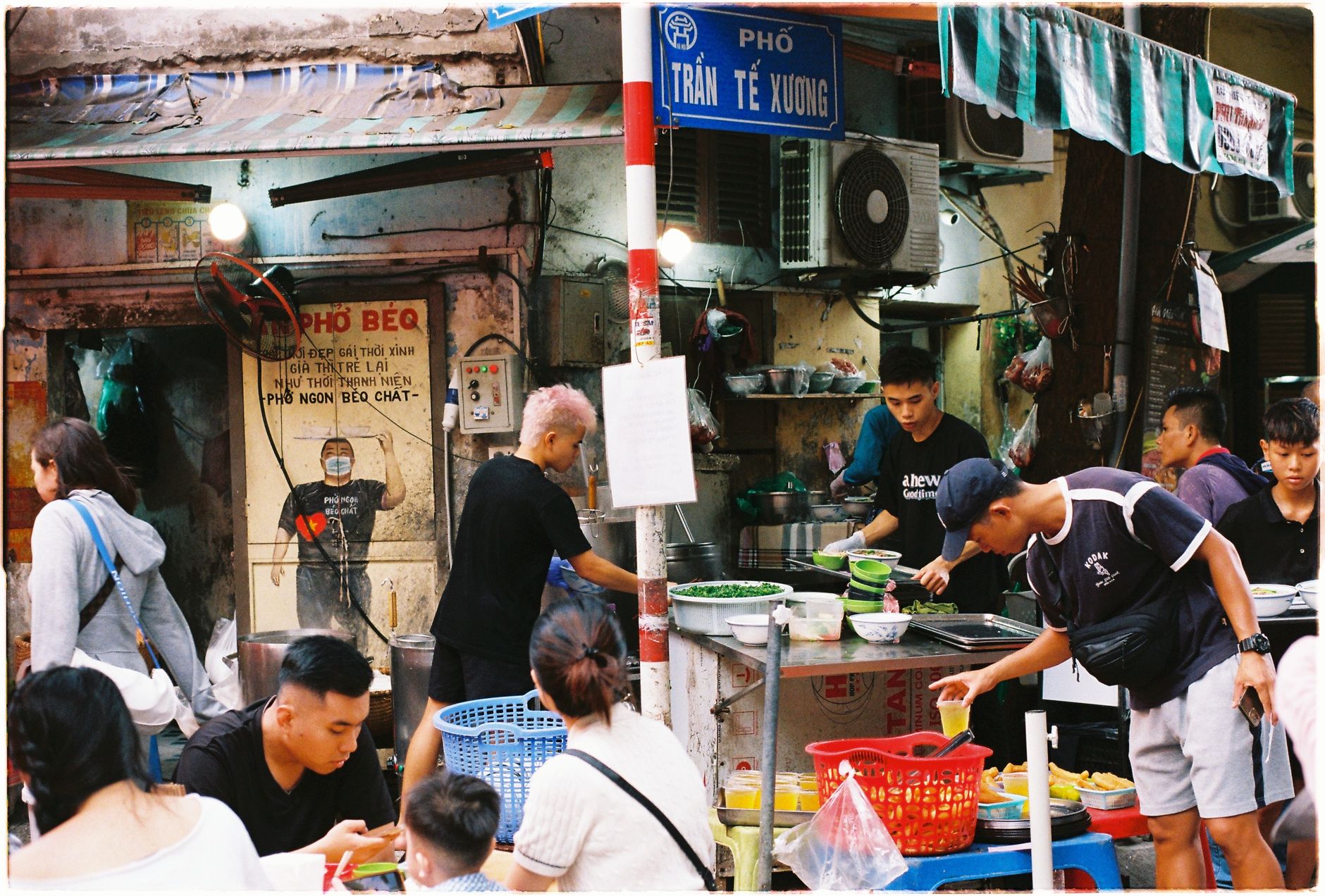
We meet guests at a central landmark—often a cafe or hotel in the neighborhood we're covering—at 7 a.m. for breakfast tours or 4 p.m. for evening ones. Timing matters: morning tours catch vendors setting up, lunch tours overlap meal rushes, and evening tours see the shift to dinner foods. We brief on what to wear (closed shoes with good grip, sunhat, small backpack), what we'll taste (a tasting sheet with dish names, ingredients, and notes), and dietary flags.
From there, we walk into the market—usually Quang Ba flower market in Hanoi, Ben Thanh market in Saigon, or a neighborhood wet market in Hoi An or Da Nang—and stop at 6–8 stalls. At each, we introduce the vendor, ask them how long they've been there (often 20+ years), what customers order most, and how they prepare the dish. Guests taste a small portion while still standing, or we move to a low plastic stool nearby. We explain what we're eating: the fish cake is from the northern lake, the herb mix changes by season, the broth simmered overnight.
Around mid-tour (90 minutes in), we move to a sit-down stop—a small restaurant, a family kitchen, or a covered stall with seating—for a fuller meal: rice paper rolls, a noodle soup, or grilled skewers. This is where the pace slows. Guests ask questions, the guide or cook answers, and you learn technique: how to fold a roll, why water temperature matters for broth, how vendors judge doneness on a grill. We finish with a beverage—usually a local coffee, a sugarcane juice, or a herbal tea—and walk back, often with vendor recommendations for the next day.
What do beginners worry about, and what actually happens?
Guests frequently ask: Will I get food poisoning? Will I be pressured to eat things I don't recognize? Will it be too crowded or too hot? Will I look foolish not knowing how to eat something?
Reality: Street food vendors in busy markets have high turnover—they cook constantly, so food is rarely sitting warm for hours. We advise eating only cooked items (noodles, grilled items, soups), avoiding unpeeled fruit or raw vegetables unless we're at a trusted stop, and drinking bottled or boiled water. Vendors don't pressure anyone; they're used to tourists trying one mouthful. Markets are crowded and hot, especially midday, which is why morning or evening tours work better for comfort. Beginners almost never look foolish—vendors and guides expect questions, and most guests bond over shared uncertainty.
Allergies and dietary needs are real. If you flag them at booking, we adjust: we steer toward vegetable-forward stalls, source noodle dishes without fish sauce, or find protein-heavy options for low-carb requests. We also warn if a tour won't work: a severe nut allergy in a market with many nut-based dishes, or a vegan diet in a tour heavily centered on seafood.
The honest fear nobody voices: "Am I being taken to a place that exists only for tourists?" We address this by walking public markets where locals eat, showing you how to read Vietnamese price boards, and introducing you to vendors who serve neighborhood regulars at breakfast or lunch, not tourists at dinner.

What makes a street food tour different from just eating at random stalls?
| Aspect | Random Stalls | Guided Tour | Why It Matters |
|---|---|---|---|
| Vendor intro | None; you point and hope | Named, 10–20 year history shared | Context beats novelty |
| Dish explanation | Menu board, maybe English | Origin, ingredients, technique detailed | Understanding deepens taste |
| Safety filtering | You guess freshness | Guide knows which vendors sanitize daily | Reduces illness risk |
| Language | Hand gestures, translation apps | Live translator or bilingual guide | You ask why, not just what |
| Pace | Rushed or aimless | Structured, small-group (max 8–10) | Memory and comfort improve |
| Follow-up | None | Recommendations for next meals, cooking class option | You cook what you ate |
A self-guided market wander is valid and free, but a guided tour compresses knowledge and confidence. You eat fewer things but understand more about each one. Guests often book a Vietnamese cooking class the next day, using what they learned to recreate a dish at home—that depth doesn't happen by accident.
Should you take a tour in Hanoi, Saigon, Hoi An, or Da Nang?
Each city has a distinct food identity and a different market rhythm. Hanoi markets (like the old quarter lanes) open early, close by 10 a.m., and serve breakfast-heavy crowds; tours here catch pho, egg coffee, and fish cakes best at dawn. Saigon's Ho Chi Minh City street food and market experiences reflect south Vietnamese flavors—more seafood, more tropical fruits, busier midday rush—and tours often pair market stops with a sit-down meal in a narrow alley kitchen. Hoi An's ancient-town market and laneway food is smaller and more walkable; vendors know tourists, but the town retains strong local character, and specialty dishes (cao lau, white rose dumplings) anchor every tour. Da Nang's seaside markets and central neighborhoods are younger and less overwhelming than Hanoi or Saigon, so it suits families or guests hesitant about crowds.
Pick based on your comfort with chaos and timing: early morning in Hanoi if you love hustle and energy; Hoi An or Da Nang if you prefer a slower pace; Saigon if you want the biggest flavor variety and longest eating window. We run tours in all four cities; ask which month you're traveling to match season and crowd level.
What should you check before booking a street food tour?
- Group size: Confirm max group size (we keep it ≤8–10). Larger groups split focus.
- Start time: Morning, afternoon, or evening? Morning captures breakfast vendors; evening suits dinner foods. Midday is hottest.
- Dietary needs: Declare allergies, vegetarian/vegan preference, or religious restrictions at booking, not day-of.
- Weather plan: What happens if it rains? We reschedule or move to covered markets. Confirm the policy.
- Pace and fitness: Will you walk 2–3 km at a slow stroll with frequent stops, or fast-paced sightseeing? Tours are leisurely, but say if you need a chair break.
- Language: Is the guide a native English speaker or a translator? Either works; know which.
- What's included: Does it end with a full meal or just tastes? Coffee, drinks, gratuity for vendors?
- No generic "hidden gems": Avoid tours that promise "secret spots tourists never find." Busy markets are where the food is.
See how a session runs

FAQ
Are street food tours in Vietnam safe for tourists with sensitive stomachs?
Yes, if you stick to freshly cooked items (soups, grilled food, noodles) and avoid raw vegetables unless at a trusted stop. We guide you on which vendors sanitize visibly and cook to order. Bottled water only. If you have IBS or a sensitive gut, flag it at booking; we'll adjust portions and choose lighter stops.
How much should I tip vendors or guides on a street food tour?
Tipping isn't expected in Vietnam, but vendors appreciate small coins (10,000–a quoted price) if you photograph them or sit long. Guides usually receive a tip as part of the tour experience. Ask us at booking what's customary for the city.
What if I'm vegetarian or vegan? Can I still do a street food tour?
Yes. Vietnam has abundant vegetable-based dishes, rice paper rolls with herbs, and plant-forward soups. Tell us at booking, and we steer toward markets and stalls with strong vegetable and tofu options. Some cities (Saigon, Hanoi) have better vegan street food variety than smaller towns.
Do street food tours in Vietnam include meals or just tastes?
Both. We usually taste 5–8 small portions at stalls (a mouthful of noodles, a spring roll half, a soup spoonful) and then sit for a full meal—a bowl of pho, a rice dish, or a platter of grilled items—around the midpoint. You're genuinely fed, not just snacking.
What's the difference between a street food tour and a cooking class?
A street food tour teaches you what Vietnam eats and why vendors cook it that way. A cooking class teaches you how to make a dish at home. Many guests do both: tour first, then cook the next day using what they learned.
Can kids go on a street food tour?
Yes. We scale portions and flavors for children (less spice, gentler dishes) and keep the pace slower so they don't get overwhelmed. Tours under 3 hours work best. If your child is a picky eater, mention it; we'll focus on mild, familiar-feeling foods and let them skip anything unappetizing. See our family and kids experiences for age-specific notes. --- Ask about dates on WhatsApp | See how a session runs
Ask about dates
Tell us the city, your dates and what you would like to try. We reply on WhatsApp in English with options and availability.
FAQ
Are street food tours in Vietnam safe for tourists with sensitive stomachs?
Yes, if you stick to freshly cooked items (soups, grilled food, noodles) and avoid raw vegetables unless at a trusted stop. We guide you on which vendors sanitize visibly and cook to order. Bottled water only. If you have IBS or a sensitive gut, flag it at booking; we'll adjust portions and choose lighter stops.
How much should I tip vendors or guides on a street food tour?
Tipping isn't expected in Vietnam, but vendors appreciate small coins (10,000–20,000 VND) if you photograph them or sit long. Guides usually receive a tip as part of the tour experience. Ask us at booking what's customary for the city.
What if I'm vegetarian or vegan? Can I still do a street food tour?
Yes. Vietnam has abundant vegetable-based dishes, rice paper rolls with herbs, and plant-forward soups. Tell us at booking, and we steer toward markets and stalls with strong vegetable and tofu options. Some cities (Saigon, Hanoi) have better vegan street food variety than smaller towns.
Do street food tours in Vietnam include meals or just tastes?
Both. We usually taste 5–8 small portions at stalls (a mouthful of noodles, a spring roll half, a soup spoonful) and then sit for a full meal—a bowl of pho, a rice dish, or a platter of grilled items—around the midpoint. You're genuinely fed, not just snacking.
What's the difference between a street food tour and a cooking class?
A street food tour teaches you *what* Vietnam eats and *why* vendors cook it that way. A cooking class teaches you *how* to make a dish at home. Many guests do both: tour first, then cook the next day using what they learned.
Can kids go on a street food tour?
Yes. We scale portions and flavors for children (less spice, gentler dishes) and keep the pace slower so they don't get overwhelmed. Tours under 3 hours work best. If your child is a picky eater, mention it; we'll focus on mild, familiar-feeling foods and let them skip anything unappetizing. See our [family and kids experiences](/family-experiences) for age-specific notes. --- [💬 Ask about dates on WhatsApp](https://wa.me/84338762340) | 🍜 See how a session runs
More like this
Street food and market tours
Best Street Food Tour in Sapa: What to Expect, How to Choose
Street food tours in Sapa connect you with hill-town cooks and night markets. We'll walk you through what these sessions offer, who they're for, and how to avoid common missteps.
Street food and market tours
Best Street Food Tour in Hue: What to Choose, Who It's For
A street food tour in Hue isn't one thing—it's a choice between styles, neighborhoods, and paces. We break down what actually happens on each type, and how to know which fits your group.
Street food and market tours
Best Food Walking Tour in Vietnam: Hanoi Street Food Guide
A food walking tour in Vietnam immerses you in bustling markets and street lanes where vendors have cooked the same dishes for decades. We show you what to taste, how to order, and the stories behind each bite.