
Home › Blog › Street food and market tours
Street Food Tour in Vietnam: What to Expect
By the Cáo Experiences team · 2026-11-06
A street food tour is a guided evening or dawn walk through Vietnam's markets and neighbourhood lanes where you stop at 5–8 family-run stalls to taste banh mi, pho, grilled seafood, fresh spring rolls and regional specialties. Tours typically run 2–3 hours in Hanoi's old quarter, Saigon's Binh Tay market area, or Hoi An's riverside lanes. We at Cáo Experiences host these in English with a local guide who introduces vendors by name, explains the history of each dish, and teaches you how to order and eat respectfully. No reservation or advance knowledge needed—beginners often worry about hygiene and spice levels, which we adapt on the spot. Most stalls take cash only. Tours suit solo travelers, couples, families with older kids, and groups. Ask us for dates and a quote on WhatsApp. Ask about dates on WhatsApp
What Time of Day Should You Go?
Evening tours (5–7 p.m.) are most popular because stalls open fresh and busy, with better energy and cooler air. Dawn tours (6–7 a.m.) show you market prep and are quieter—excellent for photos and one-on-one chat with vendors. We always start when stalls are in full swing, never when they're closing. Your guide will arrive at your hotel by foot or taxi depending on the neighbourhood; no large group transport means you move at a real pace, stopping when something smells good or a vendor waves you in. Expect to stand a lot; wear comfortable shoes with good grip on wet pavement. Rainy nights don't cancel tours—vendors stay open under awnings, and the rain often brings out more authentic crowds. We adjust walking speed and shelter time if weather is heavy.
How Much Food Will You Actually Eat?
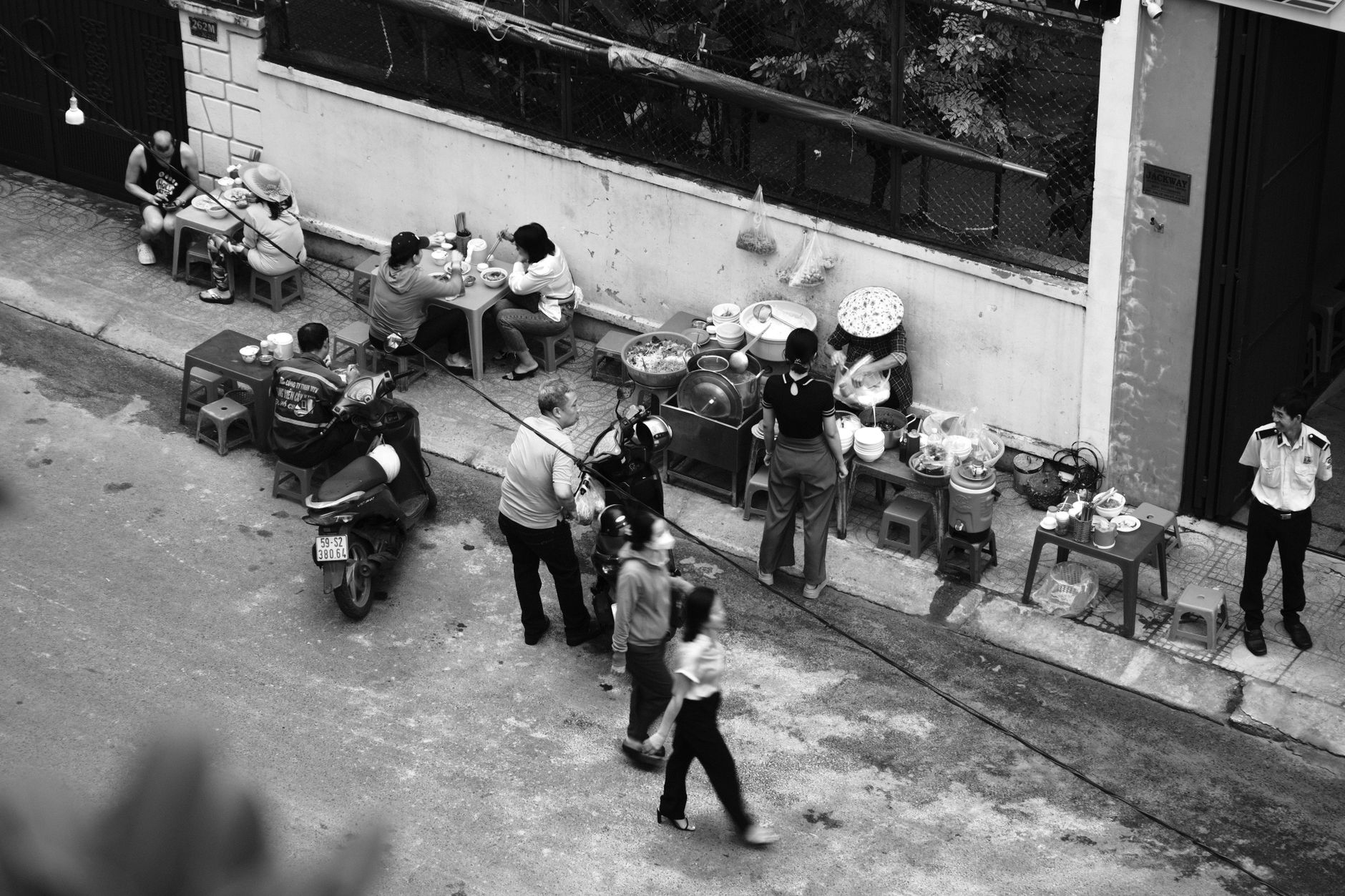
Most guests eat 4–6 small dishes over 2–3 hours—a banh mi here, a skewer there, a soup, fresh fruit or dessert. It's grazing, not a full meal. Stall portions are modest by design: vendors expect repeat customers from the neighbourhood, not tourists filling their bellies once. You'll feel satisfied but never stuffed. If you're vegetarian, vegan or have allergies, tell us before booking; we'll brief your guide so he can steer you to vendors who prepare separate portions and use clean utensils. Shellfish, peanuts and chilli are common—we can confirm ingredients or skip stalls. Kids under 8 often eat less or prefer milder dishes; we suggest they try one bite at each stop and eat a proper meal before or after. Seniors with weak stomachs can request gentler options: soft noodles, mild broths, no raw vegetables from street prep. Ask us to adjust the itinerary for any concern.
Will Street Food Make You Sick?
Busy stalls with high turnover are safer than quiet ones because ingredients are fresher. We only visit vendors we know personally or who have a loyal local customer base—that's the real badge of safety. Avoid stalls that sit idle or where you can't see food being prepared. Do not eat from food that's been sitting uncovered in heat for hours. Hygiene varies; most stalls use clean water and follow basic practice, but raw vegetables and unpasteurised dairy can carry bacteria unfamiliar to your gut. Start with cooked dishes. Drink only bottled or boiled water; ask your guide for this. Many tourists get mild digestive upset not from food safety but from new spices, chilli and rich broths. We recommend eating light the day before, staying hydrated, and carrying antacids if you're prone to sensitivity. Traveller's diarrhoea is common in Vietnam regardless of caution; it passes in 1–2 days. Bring toilet paper and hand sanitiser. If you have a serious allergy or immunocompromise, a crowded food tour may not be wise—consider a private cooking class instead, where you handle ingredients yourself.
What's the Unwritten Etiquette?
Always wait your turn in a queue, even if a vendor seems to ignore you—they'll serve everyone in order. Smile, say hello, and let your guide do most talking; vendors appreciate politeness over English attempts. Don't photograph food or vendors without asking first; it's rude and sometimes they refuse for superstition. Pay cash immediately after eating or when asked; no card machines at street stalls. Eat standing or sitting on a plastic stool—don't linger or chat for 30 minutes after you've finished; the stall needs the seat for the next customer. Try everything offered, even if it looks strange; refusing is insulting. Don't haggle over price; stall food is cheap (as listed in local price guides), and haggling is disrespectful. If your guide translates a vendor's story or joke, laugh genuinely—that's how relationships build and they remember you next time. Leave a small tip (rounding up or loose coins) if the service was warm; it's not expected but welcomed.

How Do You Prepare and What Should You Bring?
Wear comfortable, closed-toe walking shoes with grip—streets are wet, uneven and crowded. Bring a light sweater for air-conditioned transit between stops; otherwise dress for warm evening air. Carry a small backpack with hand sanitiser, wet wipes, toilet paper, any personal medication, and a portable phone charger. Cash in small notes (5,000–our current quote denominations) is essential; most stalls don't have change machines. Eat a light breakfast or lunch so you're hungry but not ravenous; you'll taste more thoughtfully. Skip heavy cream or dairy meals beforehand if you're sensitive. Tell your guide about any fear of spice, seafood or texture now—not at a stall when you're embarrassed. If you're a picky eater, street tours may frustrate you; ask yourself honestly if this is your style or if a Vietnamese cooking class would suit you better, where you choose recipes. Arrive hydrated and well-slept. The experience is as much about people and stories as food; curiosity helps more than a big appetite.
| Aspect | What to Expect | Pro Tip |
|---|---|---|
| Duration | 2–3 hours | Start early evening (5 p.m.) to avoid late crowds. |
| Cost basis | Each dish costs 10,000–our current quote (per local market lists). | Bring mixed small notes for ease. |
| Walking distance | 1–2 km, slow pace with stops. | Wear grip shoes; streets are wet and sloped. |
| Stalls visited | 5–8 family vendors | Your guide picks based on what's fresh that day. |
| Vegetarian options | Available at most stops; confirm in advance. | Tell your guide dietary needs before day one. |
| Language | English-guided; vendors speak Vietnamese. | Smile and point; no translation needed for ordering. |
| Photos | Allowed; ask vendors first. | Best light is sunset (6–7 p.m.) or dawn (6 a.m.). |
| Weather | Rain doesn't cancel; tours run under awnings. | Bring a compact umbrella; vendors stay open. |
Street food tours are best suited to travelers who are curious, flexible and hungry for stories as much as taste. If you prefer controlled environments or have severe food anxiety, a Vietnamese cooking class lets you learn recipes and handle ingredients yourself in a kitchen. If you want to explore markets more deeply—buying fish, choosing herbs, understanding supply chains—a street food and market tour with our hosts focuses on the why behind vendor choices, not just tasting. Families with kids aged 10+ enjoy tours; younger children find standing and slow eating tedious. Solo travelers and couples love the intimacy of a small group. Groups of 4–8 share the cost and energy well.
We run tours in Hanoi's old quarter, Saigon's bustling Binh Tay and Tan Dinh areas, Hoi An's riverside, and Da Nang's night markets. Each city has its own specialties and energy. Ask us for your preferred location and we'll match you with a date and guide.
See how a session runs
What to Check Before You Book
Ask yourself: Do I enjoy trying unfamiliar food without knowing exactly what it is? Can I handle mild to medium spice? Am I comfortable standing and walking for 2–3 hours on wet streets? Do I have any severe allergies or dietary restrictions we need to know about (tell us, not the stall)? Is evening or dawn better for my energy? Am I willing to eat street food despite hygiene worries—and have I researched the reality (hygiene is real, but risk is low at busy stalls)? If you answered no to most, consider a private cooking class or a daytime farm and countryside experience instead. Street food tours are not staged or sanitised; they are real neighbourhood meals in real settings, which is why they're special—and why honesty matters.
Pages from our team you may need
FAQ
Is street food in Vietnam safe for tourists?
Busy stalls with high turnover are safe; we visit vendors we know or whose customers are loyal locals. Hygiene varies. Cooked hot food is safer than raw vegetables. Mild digestive upset is common from spices and unfamiliar bacteria, not necessarily unsafe food. Bring hand sanitiser and drink only bottled water.
Can I do a street food tour if I'm vegetarian?
Yes. Many stalls serve vegetable spring rolls, tofu soup, noodle dishes and salads. Tell us in advance so we brief your guide; he'll steer you to vendors with clean prep areas for vegetarian portions and confirm no fish sauce or anchovy paste.
What happens if I don't like what I'm offered?
You don't have to eat it. Tell your guide; he'll ask the vendor for an alternative or you can skip and move to the next stall. No pressure. Being polite matters more than eating everything.
How much cash do I need?
Each dish costs 10,000–a quoted price based on local market pricing. Budget 100,000–a quoted price total (for the whole tour) as a rough estimate, plus tips. Bring small notes; stalls don't have change machines.
Can kids come on a street food tour?
Yes, ages 10+. Younger kids find standing, slow eating and unfamiliar flavours tedious. We adapt pace and portions for children; some skip stalls and eat a meal before or after the tour instead.
What if it rains?
Tours run as scheduled. Vendors stay open under awnings. Rain is normal; bring an umbrella and waterproof bag for your phone. Some guests enjoy the atmosphere; wet streets mean fewer tourists and more local energy.
Do I need to book in advance?
Yes, at least 2–3 days ahead so we can brief your guide and arrange a meeting point. Ask us for available dates on WhatsApp.
Can I do a private tour or must I join a group?
Both options are available. Private tours are flexible for diet, pace and photo time. Group tours (4–8 people) are social and share cost. Ask us which suits you.
Ask about dates
Tell us the city, your dates and what you would like to try. We reply on WhatsApp in English with options and availability.
FAQ
Is street food in Vietnam safe for tourists?
Busy stalls with high turnover are safe; we visit vendors we know or whose customers are loyal locals. Hygiene varies. Cooked hot food is safer than raw vegetables. Mild digestive upset is common from spices and unfamiliar bacteria, not necessarily unsafe food. Bring hand sanitiser and drink only bottled water.
Can I do a street food tour if I'm vegetarian?
Yes. Many stalls serve vegetable spring rolls, tofu soup, noodle dishes and salads. Tell us in advance so we brief your guide; he'll steer you to vendors with clean prep areas for vegetarian portions and confirm no fish sauce or anchovy paste.
What happens if I don't like what I'm offered?
You don't have to eat it. Tell your guide; he'll ask the vendor for an alternative or you can skip and move to the next stall. No pressure. Being polite matters more than eating everything.
How much cash do I need?
Each dish costs 10,000–50,000 VND based on local market pricing. Budget 100,000–250,000 VND total (for the whole tour) as a rough estimate, plus tips. Bring small notes; stalls don't have change machines.
Can kids come on a street food tour?
Yes, ages 10+. Younger kids find standing, slow eating and unfamiliar flavours tedious. We adapt pace and portions for children; some skip stalls and eat a meal before or after the tour instead.
What if it rains?
Tours run as scheduled. Vendors stay open under awnings. Rain is normal; bring an umbrella and waterproof bag for your phone. Some guests enjoy the atmosphere; wet streets mean fewer tourists and more local energy.
Do I need to book in advance?
Yes, at least 2–3 days ahead so we can brief your guide and arrange a meeting point. Ask us for available dates on WhatsApp.
Can I do a private tour or must I join a group?
Both options are available. Private tours are flexible for diet, pace and photo time. Group tours (4–8 people) are social and share cost. Ask us which suits you.
More like this
Street food and market tours
Best Street Food Tour in Sapa: What to Expect, How to Choose
Street food tours in Sapa connect you with hill-town cooks and night markets. We'll walk you through what these sessions offer, who they're for, and how to avoid common missteps.
Street food and market tours
Best Street Food Tour in Hue: What to Choose, Who It's For
A street food tour in Hue isn't one thing—it's a choice between styles, neighborhoods, and paces. We break down what actually happens on each type, and how to know which fits your group.
Street food and market tours
Best Food Walking Tour in Vietnam: Hanoi Street Food Guide
A food walking tour in Vietnam immerses you in bustling markets and street lanes where vendors have cooked the same dishes for decades. We show you what to taste, how to order, and the stories behind each bite.