
Home › Blog › Craft workshops
Best Bamboo Weaving Class in Vietnam: Learn From Master Weavers
By the Cáo Experiences team · 2026-11-06
A bamboo weaving class in Vietnam is a 3–4 hour hands-on session where you learn to prepare raw bamboo strips, understand traditional loom setup, and weave a finished piece—typically a small basket, tray, or wall hanging—that you take home. We host classes in Hanoi at a family-run workshop in a quiet lane, working directly with experienced weavers who teach in English. The session includes all materials, tools, and instruction; no prior craft experience is needed. Beginners learn to judge bamboo thickness, manage tension, and spot common mistakes before they ruin the weave. The real cost basis reflects raw materials, instructor time, and workshop space—ask us for dates and a quote on WhatsApp. Most people finish one complete piece; some join multiple sessions to build speed and try different designs. Rain doesn't stop us—the workshop has a covered work area. We adapt for kids (age 8+, shorter weaves), seniors (seated work, lighter bamboo), and groups up to 6 people per instructor.
How does a bamboo weaving session actually run, hour by hour?
We start with tea and a five-minute tour of the workshop—you'll see finished pieces and the bamboo storage area. Then the weaver demonstrates splitting green bamboo with a knife and mallet: you learn why angle and pressure matter, and why rushing cracks the culm (the outer layer). By 20 minutes in, your hands are splitting practice strips; it feels hard at first, then the rhythm clicks. Next comes the loom: a simple wooden frame with parallel threads. The weaver shows you how to thread the warp (lengthwise) and start your weft (across). For the next 90 minutes, you weave: over-under, keeping tension even, spotting loose rows before they set in place. Around the two-hour mark, most people reach the halfway point and start to relax—muscle memory is building. The final hour is finishing: tucking edges, securing the last rows, and trimming loose strands. You'll have a functional, uneven-in-the-best-way basket or tray. Every piece looks different because you made it.
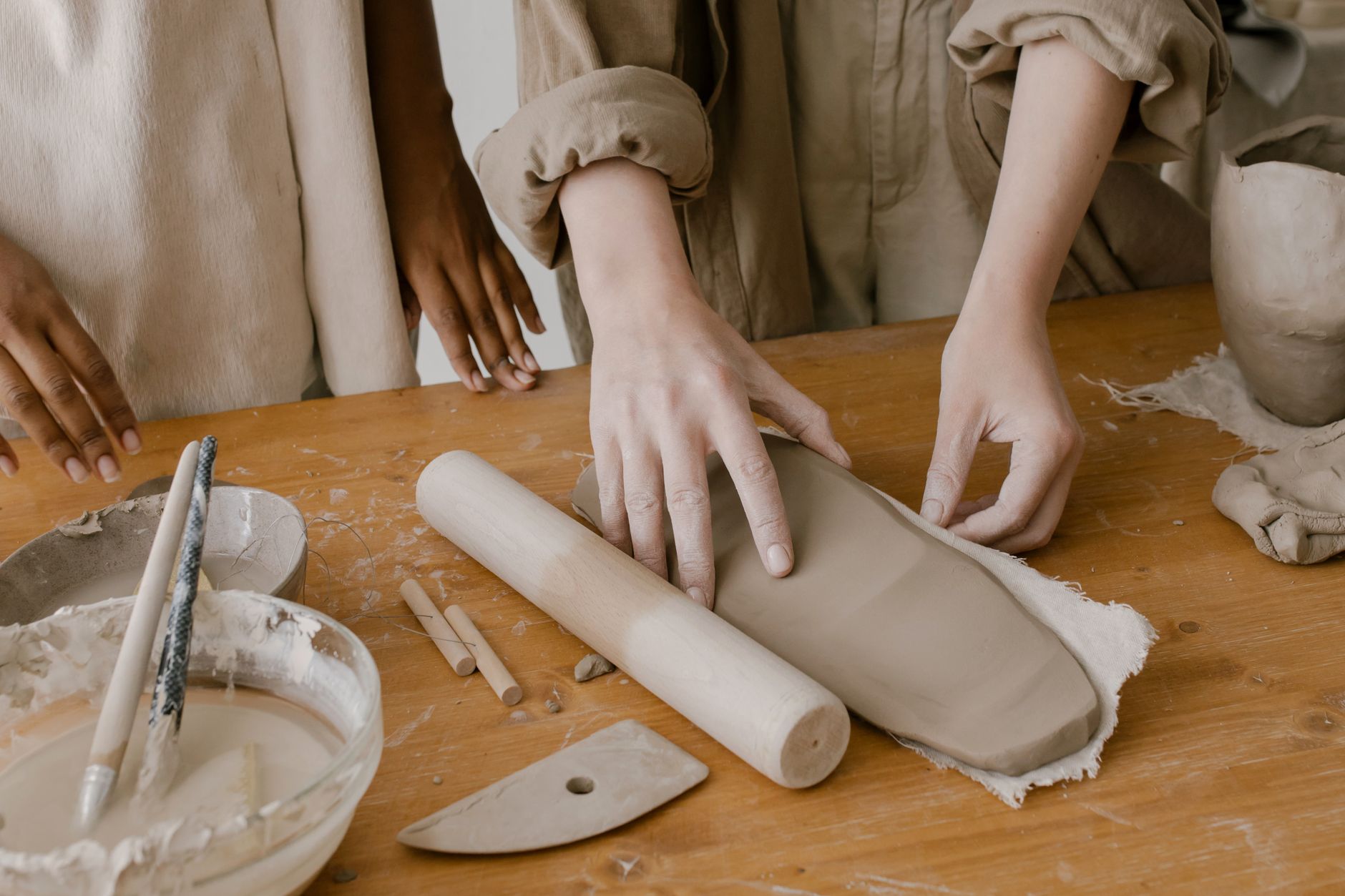
What type of bamboo weaves can you actually complete in one session?
Most guests finish a shallow tray (roughly 20 × 15 centimetres), a small open basket, or a square wall hanging. These use basic over-under weaves and take 2.5–3 hours. Some people ask about pattern weaves (diagonal, checkerboard, or colour blocking with dyed strips)—those need a longer session or multiple visits. A few guests ask about making gift items in advance; the weaver can show you what's realistic to gift in one go (a tray, a napkin holder) versus what needs time to master (a fitted lid, a patterned design). The weaver never pushes you to finish fast; if you're engaged and moving slow, you focus on clean technique instead of speed. Kids often make smaller, simpler pieces; seniors sometimes choose to weave just the decorative section of a larger frame the weaver starts.
Why do beginners worry about "ruining" their weave, and how do we help?
Tight weaving is the number-one fear. New weavers pull the weft too hard and think the piece is broken; actually, tension is learnable in the first 15 minutes. We teach you to weave one row loose, then tighten it by hand before adding the next row. The second worry is misaligned rows—they'll be crooked. Yes, they will be, and that's part of handmade charm; we point out that slight unevenness shows skill (you adjusted tension mid-weave) rather than lack of it. The third is "I dropped a thread"—easy to fix by working it back in or leaving a small gap that becomes a design feature. We show you how to spot errors as you go, undo only two rows if needed, and keep moving. In 20+ sessions, we've never seen someone produce something unusable; the worst-case is a loose basket that still holds things perfectly well. Your hands know bamboo after three hours. Trust the process.
How does bamboo weaving fit into a longer visit—what pairs well with it?
Bamboo weaving works beautifully as a half-day standalone experience, but many guests combine it with other craft workshops on different days. Some weave in the morning, then visit Hanoi's experiences in the afternoon—the Old Quarter is walkable from the workshop lane. A few guests ask about pairing it with Vietnamese cooking class the same day (cooking in early evening after weaving by noon); that's doable if you skip lunch and our hosts can arrange it. We've also hosted guests who visit the farm one day and weave the next—a nice rhythm of hands-on rural and urban craft. If you're staying a week, some people take two weaving sessions with a day gap, moving from basic tray to patterned design. The street food and market tour works too if you want to see where bamboo baskets are used in local food culture. There's no "best" pairing—it depends on your energy and curiosity.

What should you actually check before booking a bamboo weaving class?
Skill level: Bamboo weaving requires no prior craft experience. If you've done woodworking or textiles, you'll move faster, but we teach absolute beginners every week.
Physical comfort: Weaving is seated work at a low table. If you have wrist pain, arthritis, or can't sit 90 minutes with breaks, let us know—we adapt the setup or choose a shorter weave.
Group size: Private sessions work best for couples and families; small groups (2–3) learn faster because the weaver answers more questions per person. Groups of 4–6 mean sharing the weaver's attention, but the energy is social and fun.
Timing: Allow 3–4 hours. Sessions must run during daylight or workshop hours—ask us for available dates on WhatsApp. Bad weather doesn't cancel; heavy rain means we shift you to a covered corner, but humidity actually helps bamboo bend.
Travel + fit: Confirm you're in Hanoi during your visit. If you're only passing through and have <4 hours, ask about compressed versions (we can sketch the basics, but the real learning is in the full weave). Wear clothes you don't mind staining with bamboo dust and natural fiber debris. Closed-toe shoes help; bring an apron or wear dark colours.
Material allergies: Raw bamboo dust affects some people with respiratory sensitivity. Let us know if you have asthma or hay fever—we'll ensure good ventilation and may suggest a lighter session.
Comparison: What's different between a group weaving session and a private one?
| Aspect | Group (2–3 people) | Small group (4–6) | Private (1–2 people) |
|---|---|---|---|
| Instructor focus | High—more 1-on-1 feedback | Shared—less hands-on time per person | Exclusive—fully tailored to you |
| Learning pace | You go at your own speed | Slightly faster (peer energy) | Flexible—slow down or speed up |
| Cost basis | Most affordable per person | Mid-range efficiency | Higher per-person cost |
| Social feel | Intimate; you bond with peers | Energetic; you learn from others' mistakes too | Quiet; deep skill-building |
| Best for | Couples, friends, small families | Teams, friend groups, family reunions | Solo travellers, honeymooners, skill-focused |
What do you actually take home, and how do you care for the finished piece?
Your finished bamboo piece—tray, basket, or hanging—is fully functional. It's not varnished or sealed, so it shows wear like any handmade wooden object. A tray holds fruit, tea, or crafts; a basket stores scarves or books. To care for it: keep it dry (don't soak or dishwash it), wipe with a damp cloth, and store in a dry room. Bamboo darkens beautifully over time with use and sunlight. Some guests oil their pieces with food-safe oil once a year to maintain shine. Most just let the patina develop. You'll photograph it, gift it, and tell people "I made this in Vietnam"—that's the real value. We give you a small card naming the weaver and the workshop so you have that connection to carry home.
Where else in Vietnam can you learn bamboo weaving, and what makes our classes different?
Bamboo weaving is taught in a few places: some tourist craft centers in Hoi An Ancient Town run large group sessions with minimal instruction; a handful of homestays in the Red River Delta offer weaving with homestay stays; and a few NGO workshops in Da Lat teach it as part of skills training. Our classes at Cáo Experiences are built around hands-on learning with a single experienced weaver per small group, full English instruction, and a real working family workshop—not a tourist showroom. You're learning in a place where people actually weave for a living, and you get to talk with the artisan about technique, bamboo varieties, and why certain designs sell in local markets. We don't rush you through; we adapt to your pace and curiosity. If you want to explore other craft workshops in Vietnam—flower arranging in Hanoi, art and culture classes in Saigon, tea experiences in Da Lat—we can guide you to those too. But for bamboo weaving specifically, we believe the learning depth and authenticity here is hard to match.
See how a session runs
What happens if rain comes, and can you reschedule easily?
Rain in Vietnam is short and heavy, not all-day drizzle. If it pours during your weaving time, you simply move to a covered section of the workshop—you keep weaving. Your bamboo actually prefers humidity; it bends better in damp air. The only real concern is if flooding affects the lane (rare in central Hanoi), and in that case, we reschedule within a day or two. Rescheduling is free and straightforward—we coordinate on WhatsApp. Some guests prefer morning sessions to avoid afternoon storms; that's easy to arrange. Kids sometimes love the sound of rain while weaving; it adds atmosphere. Seniors appreciate that you're not standing in weather. Bring a light jacket if you're sensitive to temperature drops, but don't let rain stop you from booking. The workshop has been running for years; the space is built for this climate.

FAQ
Do I need any weaving experience to join a bamboo weaving class?
No. We teach absolute beginners every week. Experience in textiles or woodworking helps you progress faster, but the weaver expects to teach fundamentals to everyone. You'll finish a piece in your first session regardless of background.
How many people can join one session, and can I book a private session?
Groups run best with 2–3 people; we can accommodate up to 6 with one instructor. Private sessions (1–2 people) are available and fully tailored to your pace and design choice. Ask us for dates and a quote on WhatsApp.
What if I have wrist pain or physical limitations—can I still weave?
Yes, usually. Tell us about any wrist, hand, or back issues when you book. We can adjust table height, lighten the bamboo type, or design a shorter weave that focuses on the technique you want to learn. Seated work with breaks works well for most people.
Can I gift the piece I make, or will it look too rough?
Absolutely, it makes a wonderful gift. Yes, it's uneven and handmade—that's its charm. Many guests gift their first piece to family. It's functional (holds things) and a genuine conversation starter. Frame a photo of you making it to include with the gift.
How long do I need to allow, and can I combine it with other Cáo Experiences on the same day?
Allow 3–4 hours. You can pair it with Hanoi experiences in the afternoon, or a cooking class in the evening (we can coordinate). A morning weaving session + afternoon farm visit or street food tour is also popular.
What should I wear, and do I need to bring anything?
Wear comfortable, washable clothes (bamboo dust stains slightly). Closed-toe shoes help. Bring water and a phone for photos. We provide all weaving tools, materials, apron, and tea. No special equipment needed.
Can kids and seniors join the same session, or should they be separate?
Mixed ages work beautifully. Kids (8+) weave simpler, shorter pieces; seniors weave at their own pace with seated comfort. We adapt each person's weave, and the shared energy is great. Tell us ages when you book so we plan materials.
What happens after I finish—how do I care for my bamboo piece?
Your finished piece is functional and unfinished (no varnish). Keep it dry, wipe with a damp cloth, and store in a dry room. It darkens and patinas over time with use—that's beautiful. Many guests oil theirs once yearly. It will last years if treated gently.
Ask about dates
Tell us the city, your dates and what you would like to try. We reply on WhatsApp in English with options and availability.
FAQ
Do I need any weaving experience to join a bamboo weaving class?
No. We teach absolute beginners every week. Experience in textiles or woodworking helps you progress faster, but the weaver expects to teach fundamentals to everyone. You'll finish a piece in your first session regardless of background.
How many people can join one session, and can I book a private session?
Groups run best with 2–3 people; we can accommodate up to 6 with one instructor. Private sessions (1–2 people) are available and fully tailored to your pace and design choice. Ask us for dates and a quote on WhatsApp.
What if I have wrist pain or physical limitations—can I still weave?
Yes, usually. Tell us about any wrist, hand, or back issues when you book. We can adjust table height, lighten the bamboo type, or design a shorter weave that focuses on the technique you want to learn. Seated work with breaks works well for most people.
Can I gift the piece I make, or will it look too rough?
Absolutely, it makes a wonderful gift. Yes, it's uneven and handmade—that's its charm. Many guests gift their first piece to family. It's functional (holds things) and a genuine conversation starter. Frame a photo of you making it to include with the gift.
How long do I need to allow, and can I combine it with other Cáo Experiences on the same day?
Allow 3–4 hours. You can pair it with [Hanoi experiences](/destinations/hanoi) in the afternoon, or a [cooking class](/cooking-class) in the evening (we can coordinate). A morning weaving session + afternoon farm visit or street food tour is also popular.
What should I wear, and do I need to bring anything?
Wear comfortable, washable clothes (bamboo dust stains slightly). Closed-toe shoes help. Bring water and a phone for photos. We provide all weaving tools, materials, apron, and tea. No special equipment needed.
Can kids and seniors join the same session, or should they be separate?
Mixed ages work beautifully. Kids (8+) weave simpler, shorter pieces; seniors weave at their own pace with seated comfort. We adapt each person's weave, and the shared energy is great. Tell us ages when you book so we plan materials.
What happens after I finish—how do I care for my bamboo piece?
Your finished piece is functional and unfinished (no varnish). Keep it dry, wipe with a damp cloth, and store in a dry room. It darkens and patinas over time with use—that's beautiful. Many guests oil theirs once yearly. It will last years if treated gently.
More like this
Craft workshops
Craft Workshop in Saigon: Small Group Classes for Beginners
Cáo Experiences runs small-group craft workshops across Saigon where you learn traditional and contemporary making in intimate studio and community spaces. Sessions suit absolute beginners, families, and skill-builders.
Craft workshops
Craft workshop in Saigon for couples: what to choose
Couples in Saigon have three main craft paths: ceramics in a family studio, natural-dye silk painting, or bamboo weaving. Each teaches differently and suits different moods.
Craft workshops
Craft Workshop in Hoi An: What to Expect Step by Step
A craft workshop in Hoi An with Cáo Experiences is a half or full-day session where you learn a traditional Vietnamese skill—lantern-making, silk painting, woodblock printing, or lacquerware—in a working studio or family workshop. You leave with a finished piece you made yourself.