
Home › Blog › Farm and countryside days
Best Farm Experience in Vietnam: Hands-On Countryside Days
By the Cáo Experiences team · 2026-11-06
A real farm experience in Vietnam involves spending 4–6 hours in a working family kitchen or rice paddy, doing physical tasks alongside the people who live there. We offer farm and countryside experiences across regions: day trips planting or harvesting vegetables, feeding animals, learning to cook lunch from the harvest. Sessions run in English with WhatsApp coordination and typically cost less than a mid-range restaurant meal. Expect to get muddy, sweat, and eat better than you planned. Beginners worry they'll be in the way—we design every session so guests actively participate, not watch. Rain doesn't cancel; it's when vegetables grow. Cáo Experiences hosts adapt for kids (lighter tasks, shorter sessions), seniors (sitting work, hand-washing stations), and dietary needs (we note allergies in advance).
A farm experience in Vietnam isn't a photo stop—it's muddy hands, real fatigue, and food that tastes different because you picked it an hour ago.
Most farm tourism in Vietnam shows you paddies from a road or a staged "village lunch." We work differently. We partner with working families in countryside zones outside Hanoi, Saigon, Da Lat, and other regions. You arrive mid-morning, remove shoes, and start whatever the season demands: watering seedlings in spring, harvesting leafy greens before noon heat, digging root vegetables, preparing soil, feeding ducks or chickens. By lunch, you're in the family kitchen—open-sided, concrete floor, often with a wood stove—and you help cook what you just harvested. You sit at their table, eat without a server, and usually feel like you've been there for days instead of hours.
That's the honest picture. It's not luxury. It's not a wellness retreat with spa tea afterward. It's agricultural work with people who live this rhythm every week. If you came hoping for Instagram moments in a white linen shirt, this isn't it. If you came to know where food actually comes from and why farmers wake at 4 a.m., this is real.
What does a typical farm day actually include, hour by hour?
You meet us at a central point (usually a café or hotel we confirm on WhatsApp) between 7:30 and 8 a.m. We drive 20–45 minutes into farmland—the distance varies by region and season. You arrive at a working family's land, usually 1–2 hectares planted with vegetables, rice, herbs, or specialty crops. The first 90 minutes: hands-on agricultural work. Your host shows you how seedlings are spaced, how soil moisture is checked by feel, how weeds are cleared without harming young plants. You participate in real tasks, not demonstrations. Your hands get soil under the nails. By 10:30 a.m., you wash at an outdoor station and move to the kitchen. You help prepare lunch: washing vegetables, chopping, maybe starting a fire if it's a wood stove, learning one technique properly rather than watching ten. Cooking takes 1–1.5 hours. You eat together around 11:30 a.m.–12:30 p.m., usually a 4–6 course meal of vegetables, greens, herbs, rice, fish or meat from the farm or market that morning. Conversation happens here—questions about farming, family, Vietnam, climate, why certain crops fail, what changed in the past decade. We depart by 1:30–2 p.m., back to your hotel by 3–4 p.m. Total time: 5–6 hours on-site.

Which regions offer the best farm experiences right now?
Vietnam's farm calendar is uneven. Spring (February–April) is busiest: seedling beds, transplanting, early harvests of greens. Summer (May–July) is intense heat and weeding. Autumn (August–October) brings second plantings and specialty crops. Winter (November–January) is quieter but still has work—root vegetables, leafy greens, some regions' tea harvest.
Region comparison:
| Region | Season | What you do | Character |
|---|---|---|---|
| Hanoi countryside | Spring, autumn | Plant seedlings, harvest greens | Intensive vegetable farms, close to city |
| Da Lat highlands | Year-round | Harvest temperate crops, tend flower areas | Cool climate, specialty vegetables, terraced |
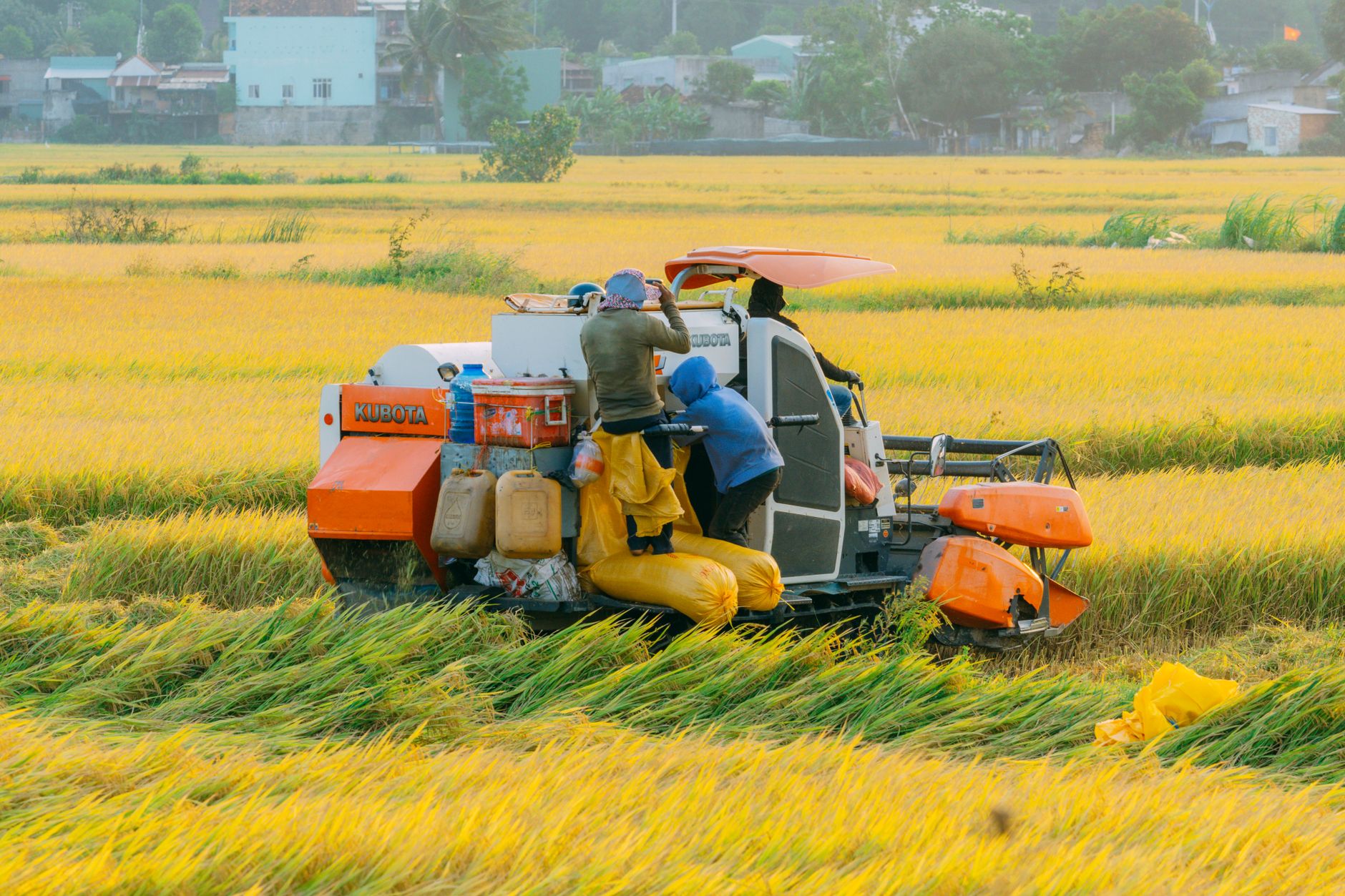
| Mekong Delta | Summer, autumn | Rice paddies, orchards, fish farms | Waterways, hot work, longer drives |
| Hoi An foothills | Spring, autumn | Mixed vegetables, herbs, cooking-focused | Shorter sessions, village connection |
Ask us which region suits your dates and fitness level—we match you to a family and season where the work is genuine and manageable.
Why do beginners hesitate, and what should you know first?
Most visitors worry: Will I actually be useful? What if I'm clumsy? Will they think I'm lazy?
Farming families in Vietnam expect beginners—many host international guests. They're patient and clear. The work isn't complex: you're not operating machinery. You're digging, carrying water, learning to feel soil, chopping vegetables. The hesitation often fades in the first 30 minutes once you're actually doing something instead of anticipating it.
Practical things to know:
- Wear old clothes. Mud doesn't wash out; it stains. Old jeans, an old t-shirt, a hat you don't mind sweat-soaking.
- Bring a second shirt (for the car home if you're cold, or to stay clean for the kitchen).
- Footwear matters. Old sneakers or sandals you can slip off easily. The farm is usually barefoot or in flip-flops after you wash.
- Bring a small towel for washing hands and face.
- Sunscreen (if you burn easily) and a hat.
- Tell us about allergies at booking—not negotiable. Food allergies, latex gloves, insect-sting concerns, anything. The host adjusts the menu or the work environment.
If you're over 60 or have knee or back issues, tell us in advance. We have family partners with sitting work: sorting vegetables, herb picking, light cooking prep. You're still part of the rhythm; the physical load is different.

How do farm experiences differ from other countryside activities?
If you're comparing a farm day with a horse riding experience, a tea experience, or a Vietnamese cooking class, here's the honest difference:
- Cooking class (kitchen only): You learn technique and recipes in a controlled space, often in or near a town. About 3 hours.
- Farm day (field + kitchen): You work the land first, then cook lunch from the harvest. Physical, slower, longer (5–6 hours).
- Tea experience: You visit a tea plantation or workshop, learn processing, taste tea. Lighter, educational, 3–4 hours.
- Horse riding (separate journey): You ride through countryside or trails; farming isn't part of it.
A farm day combines labor and food. You're not just tasting what's grown; you're touching the moment between seed and plate. That's the angle most people come for.
What happens if it rains?
Rain doesn't cancel a farm session. Farmers work in rain. Light rain actually makes the work easier—soil is softer, plants hydrated, less dust. We check the forecast and adjust tasks (indoor kitchen prep, covered areas, a shorter field time), but the session runs. We provide ponchos or umbrellas if needed.
If you're worried about being uncomfortable wet: you will be a bit wet. That's farm life. You wash, change, and by the time you're in the car home, you're warm and tired in a good way.
What should you check before booking a farm day?
Before you ask for dates on WhatsApp, think through these:
- Mobility and fitness. Can you squat, carry a watering can, walk uneven ground for 30 minutes? If no, tell us—we have lighter options.
- Dietary needs. Vegetarian, vegan, gluten-free, shellfish allergy, other: tell us. The farm kitchen adapts, but we need to know in advance.
- Season and region. Which months are you in Vietnam? Which regions are you visiting? Experiences in Hanoi, Da Lat, Hoi An, and Saigon each have different farm calendars.
- Group size. Solo, couple, family with kids? Family-focused sessions have lighter tasks and shorter on-site time for kids under 8. Group and team experiences run for 4–12 people and can be tailored (team-building, educational, casual).
- Budget. Ask us for a quote on WhatsApp—prices depend on region, group size, and season, but a half-day farm experience is typically affordable.
Farm tourism in Vietnam works best when you abandon the idea of "getting a feel for farm life" in a 2-hour tour. Real farm experience is a commitment to mud, sweat, and slow time. Cáo Experiences partners with working families who want to share what they do—not perform it. When you show up ready to work, eat, and ask questions, those families invite you into their rhythm. That's when the day becomes something you think about for years.
FAQ
Can kids do a farm day, or is it only for adults?
Kids aged 8+ can work on light tasks—watering, picking soft vegetables, helping in the kitchen. Younger kids (4–7) can come for a shorter session (3 hours) and help with kitchen prep and lunch. We adjust tasks by age and interest. Ask about family-focused experiences when you message.
Do I need farming experience, or can I be a complete beginner?
Complete beginners are the norm. The host teaches as you go. No experience needed—just be willing to get dirty and ask questions. Families prefer guests who show interest over those who know technique.
What if I'm vegetarian or have a food allergy?
Tell us at booking. The farm kitchen adapts the menu. Vegetarian: you cook and eat vegetables, rice, eggs, dairy from the farm. Allergies: we confirm with the host in advance and adjust entirely. No surprises at the table.
How far is the farm from the city, and how long is the drive?
20–45 minutes depending on region. Hanoi countryside farms are closer to the city than Da Lat or Mekong Delta options. We pick you up and drop you back; you sit in the car (not stand or work during transit).
Is the farm family's home visible, or is it just fields?
You work and eat in their space. Their kitchen is your kitchen; their well, your washing station. You might meet their children or elderly parents. It's their working home, not a private tourist resort. That's the point.
Can I book a farm day for a group (8–12 people), or is it individuals only?
We run group and team experiences at farms. Groups of 8–15 work with one or two family partners. Rates are usually better per person. Ask for a group quote.
What if it rains heavily the day before my session?
We proceed unless there's a typhoon or serious flooding. Light rain or overnight rain actually makes the work easier. Bring a poncho. Farms need weather; farmers work in weather.
Ask about dates
Tell us the city, your dates and what you would like to try. We reply on WhatsApp in English with options and availability.
FAQ
Can kids do a farm day, or is it only for adults?
Kids aged 8+ can work on light tasks—watering, picking soft vegetables, helping in the kitchen. Younger kids (4–7) can come for a shorter session (3 hours) and help with kitchen prep and lunch. We adjust tasks by age and interest. Ask about [family-focused experiences](/family-experiences) when you message.
Do I need farming experience, or can I be a complete beginner?
Complete beginners are the norm. The host teaches as you go. No experience needed—just be willing to get dirty and ask questions. Families prefer guests who show interest over those who know technique.
What if I'm vegetarian or have a food allergy?
Tell us at booking. The farm kitchen adapts the menu. Vegetarian: you cook and eat vegetables, rice, eggs, dairy from the farm. Allergies: we confirm with the host in advance and adjust entirely. No surprises at the table.
How far is the farm from the city, and how long is the drive?
20–45 minutes depending on region. Hanoi countryside farms are closer to the city than Da Lat or Mekong Delta options. We pick you up and drop you back; you sit in the car (not stand or work during transit).
Is the farm family's home visible, or is it just fields?
You work and eat in their space. Their kitchen is your kitchen; their well, your washing station. You might meet their children or elderly parents. It's their working home, not a private tourist resort. That's the point.
Can I book a farm day for a group (8–12 people), or is it individuals only?
We run [group and team experiences](/group-and-corporate) at farms. Groups of 8–15 work with one or two family partners. Rates are usually better per person. Ask for a group quote.
What if it rains heavily the day before my session?
We proceed unless there's a typhoon or serious flooding. Light rain or overnight rain actually makes the work easier. Bring a poncho. Farms need weather; farmers work in weather.
More like this
Farm and countryside days
Fishing Experience Vietnam for Japanese Travelers: Where to Go & What to Expect
Vietnam's waterways offer Japanese travelers a chance to learn traditional fishing methods directly from locals. Cáo Experiences runs half- and full-day sessions on rivers, lakes and the Mekong Delta where you cast nets, set traps, and cook your catch.
Farm and countryside days
Fishing Experience Vietnam for Foreigners: Hands-On Guide
Fishing in Vietnam isn't a spectator sport—you'll wade into rivers, cast nets, trap fish in baskets, and cook your catch for lunch. We run small-group and private fishing days in the countryside outside Hanoi, Ha Noi region, and the Mekong Delta.
Farm and countryside days
Fishing Experience in Vietnam: 8 Questions to Ask Before You Go
Fishing in Vietnam means wading through rice paddies, learning trap techniques, or casting in rivers with local guides. Here's what to ask before you book.