
Home › Blog › Craft workshops
Best pottery class in Vietnam: hands-on guide for 2026
By the Cáo Experiences team · 2026-11-06
The best pottery class in Vietnam depends on what you want to make and how much time you have. At Cáo Experiences, we host half-day craft workshops in English where 2–6 guests work on a wheel or hand-build a dish, vase, or sculptural piece in a family studio outside the city. Sessions include clay prep, a live demo of the technique you're learning, hands-on time (usually 60–90 minutes), and glazing guidance; we fire your piece and arrange pickup or shipping within 2–3 weeks. Beginners worry about centring the clay, but we teach a slow entry method that works for bodies of all ages and grip strength. Rain doesn't stop us—the studio is covered. Ask us for dates and a quote on WhatsApp. No pottery experience is required; what matters is showing up curious and willing to get your hands wet. Ask about dates on WhatsApp
What's the real difference between wheel-throwing and hand-building?
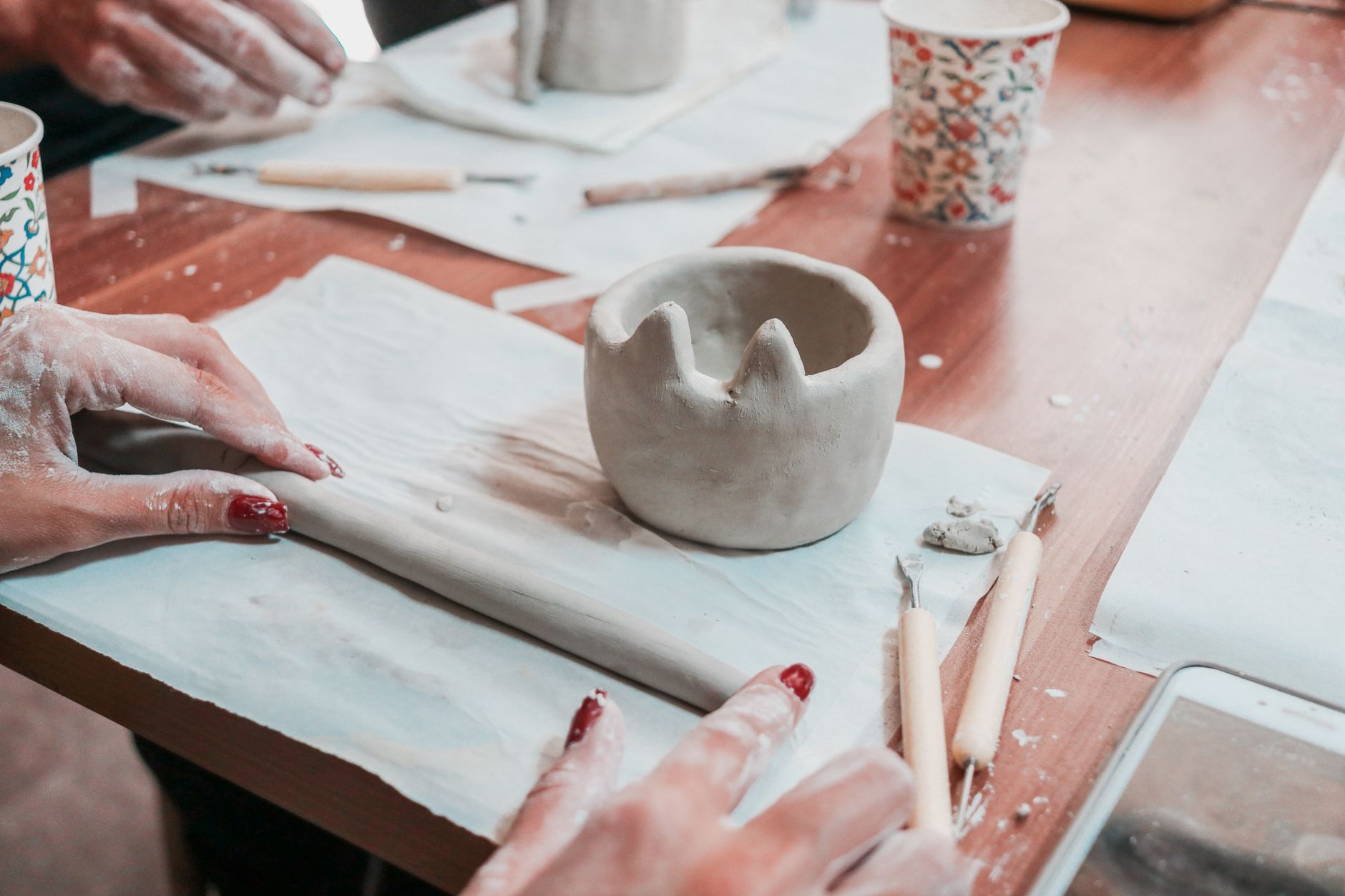
Wheel-throwing makes symmetrical pieces—bowls, cylinders, cups—and demands the most practice; hand-building (coil, slab, pinch) gives you freedom to make asymmetrical forms, vessels, and sculptural work. On the wheel, even a 2cm wobble becomes a visible ring; by hand, "imperfection" is often the point. Most of our guests who book a first session lean hand-building because the learning curve is shallower and you leave with a complete object, not a wobbly ring. If you want to try both in one session, we can do that—spend 45 minutes hand-building a base shape, then 45 minutes learning the wheel on something smaller. One conclusion: hand-building teaches you clay faster; the wheel teaches you patience.
How long does it actually take to make one piece from clay to fired pot?
Your hands-on time is 60–90 minutes. Drying takes 5–10 days depending on wall thickness and humidity. Bisque firing (the first kiln step, which makes clay porous enough to glaze) takes 8–12 hours in the kiln. Glaze firing takes another 6–12 hours. Total timeline from the studio to a finished, fired piece you can use: 2–3 weeks. We photograph your piece after each stage and send updates via WhatsApp. If you're shipping the piece abroad, we pack it carefully in bubble wrap and wooden crate; US shipping takes 5–10 days. You can't rush clay—that's part of the teaching. Plan to trust the process and stay in touch with us over WhatsApp while your piece cures.
Who's this right for—kids, couples, seniors, groups?
Pottery works for ages 8 to 80 because you adjust pressure, clay weight, and time spent on the wheel. Kids aged 8–12 often start hand-building small dishes or animals; they're usually done in 45 minutes and love the mess. Couples and friends often book private sessions and take photos of each other's hands on the clay—memorable, intimate. Seniors appreciate the meditative, sit-down nature of hand-building; we bring a stool, dim the lights, and let them work at their own pace (no standing required). Groups of 4–6 need a session of 2.5 hours so everyone gets real time on clay; we split time on the wheel or have simultaneous hand-building stations. Experiences for families and kids are our specialty—we adapt clay hardness, quiet down the studio, and celebrate small wins. One truth: the best session is the one where you're not rushed.
What if you have arthritis, weak wrists, or grip anxiety?
Hand-building is accessible; wheel-throwing requires grip strength and wrist mobility. If you have arthritis or tendonitis, we'll suggest coil-building (rolling clay into ropes, then spiralling them into a form) or slab-work (rolling clay flat, then constructing). For weak grip, we soften the clay slightly, use thinner walls, and let you work seated with your elbows braced on the table. On the wheel, you'll need to feel clay moving between your hands—if that sounds impossible, hand-building is your path. We've hosted guests with Parkinson's, hyper-mobility, and recovered injuries; the studio is warm, the clay is forgiving, and we adjust the demo to show what you can do, not what we do. Tell us about any concern before the session via WhatsApp, and we'll design your piece around your body, not the other way around.
What should you wear, bring, and avoid?
Wear: old clothes (clay stains don't wash out), a long-sleeved shirt (clay splashes), closed shoes (water and clay splatter). Leave rings, watches, and long nails at home—they catch clay. Bring a hair tie if your hair is below shoulder length. Avoid: coming hungry (bring a light snack and water bottle; we'll have tea); arriving stressed or in a rush (pottery demands 10 minutes to settle in); assuming you need expensive gear (we provide all clay, tools, glazes, and kiln access). Bring: a phone or camera if you want photos of your hands and piece (we take them too, and send them to you). One session habit: we always start 10 minutes before the official time with tea and a quiet walkthrough of the studio, so arrive 5–10 minutes early. Rainy days are ideal for pottery—the humid air keeps clay from drying too fast.

How do pottery classes compare across Vietnam's main cities?
| City | Studio type | Wheel access | Firing included | Group size | Best for |
|---|---|---|---|---|---|
| Hanoi | Family studios in old lanes | Yes, limited slots | Yes, 2–3 weeks | 2–6 | Serious beginners, couples |
| Saigon | Larger teaching studios | Yes, competitive booking | Yes, standard timeline | 4–8 | Groups, corporate retreats |
| Hoi An | Traditional pottery areas with live wheel | Yes, tourist-heavy | Yes, often faster | 6–12 | Photography, cultural immersion |
| Da Lat | Ceramic co-ops, cool-climate studios | Yes, less crowded | Yes, 2–3 weeks | 2–4 | Slow living, couples, artists |
Hanoi and Da Lat studios tend toward quiet, intentional sessions; Saigon is busier; Hoi An leans photogenic and cultural. Cáo Experiences operates in Hanoi and Saigon, hosting experiences in Hanoi and experiences in Saigon where you work in family kitchens, farmyards, and studios that aren't on Instagram yet. We book private sessions to avoid crowds, so you're not competing for kiln space.
Pottery or other crafts—how do you decide?
If you want something functional—a mug, bowl, or vase—pottery is the answer. If you want something wearable or decorative in a few hours, consider flower arranging workshop, which you take home the same day. If you're interested in textiles, wood, or lacquer, our craft workshops page lists options. Pottery teaches patience and material knowledge; flower arranging teaches composition and colour. Both quiet the mind. The honest difference: pottery requires trust in time and fire; flower arranging rewards you instantly. Choose pottery if you want to sit with clay for 90 minutes and then wait. Choose florals if you want a full piece of work to walk out with.
What to check before you book
- Studio location: Is it indoor, covered, on public transport? Ask via WhatsApp for address and access notes.
- Group size: Are you booking alone, as a pair, or with friends? Private sessions (2–4 people) differ from small-group sessions (5–6). Private costs more; small-group is more social.
- Your goal: Do you want to make one finished piece or learn the wheel basics? The first needs hand-building or slab-work; the second needs dedicated wheel time.
- Kiln timeline: Can you wait 2–3 weeks for your piece, or do you need it faster? We offer express glazing on request—ask us.
- Shipping or pickup: Will you collect your pot in Vietnam, or have us ship it? Shipping is reliable but slow; pickup is immediate and lets you inspect the piece.
- Dietary or mobility notes: Mention allergies (clay dust, glazes), mobility needs, or anxiety about messiness when you WhatsApp. We adapt everything.
A real session, hour by hour
0:00–0:10: Arrival. Tea. You meet your host in the studio. We show you the kilns, the clay bins, the glazes, and answer your immediate questions.
0:10–0:20: Demo. We centre a ball of clay on the wheel, or show you three hand-building techniques. You watch, ask, touch the clay. No mystery.
0:20–1:50: Your turn. You sit at the wheel or table. We stand beside you, adjusting your hands, your pressure, your pace. You make a bowl, a dish, a small sculpture. It takes the full time. You don't rush; you don't wait.
1:50–2:00: Finishing. We show you how to cut the piece off the wheel (if you used it), smooth the rim, carve your initials. We take a photo of your hands and your piece.
2:00 onward: We place your piece on the drying shelf. You leave. In 5–10 days, we glaze it. In 2–3 weeks, it's fired and waiting for you or headed to the post office.
Why pottery in Vietnam, and why Cáo Experiences?
Vietnam has a 1000-year pottery tradition. The clay here is warm, responsive, and forgiving for beginners. Cáo Experiences runs craft workshops in family studios—not tourist factories. You'll sit in the same space where locals have made pots for decades. You'll fire your work in a real kiln, not a takeaway oven. You'll leave with a usable piece and the muscle memory of centring clay. We coordinate everything via WhatsApp, so there's no language barrier, no hidden steps, no rush. Come curious. Come ready to get dirty. Come prepared to wait for your pot and be proud of it when it arrives.

FAQ
Can I make a mug that I can actually drink from on my first try?
Yes, if you hand-build a simple coil cup or slab-construct a pinch bowl. On the wheel, a functional mug usually takes 2–3 sessions because the handle attachment and interior finish require practice. We'll guide you toward what's realistic for your first day.
What if my piece cracks in the kiln?
Cracks happen when walls are too thick or uneven, or if the clay dries unevenly before firing. We inspect each piece before bisque and glaze firing, and we'll remake it at no charge if our studio's firing caused the break. If your technique caused the crack, we'll discuss what went wrong—it's a learning moment, not a loss.
Do I need to know anything about glazes?
No. We have 8–12 glazes in stock (matte, glossy, textured, coloured). You choose colours; we apply the glaze. If you want to hand-paint glazes or mix custom colours, that's an add-on—ask us for options when you book.
How much does the clay cost, or is it included?
Clay, tools, kiln firing, and glazing are all included in the session cost. There's no hidden charge. Ask us for dates and a quote on WhatsApp—we'll send a clear breakdown.
Can I do this as a group team-building day?
Yes. Groups of 4–8 work well in a 2.5-hour session. We've hosted corporate retreats, school outings, and friend groups. Everyone makes a piece; the session is quiet and meditative, not competitive. Group and team experiences are a specialty. WhatsApp us for group booking details.
What if I hate my piece when it comes back?
You still own it. It's yours to use, gift, or keep. Most guests are surprised—the firing and glazing often make a wobbly piece look intentional and beautiful. If you're genuinely unhappy, we'll discuss it on WhatsApp and find a solution, but we've never had someone truly regret a piece once it's been fired. --- Ask about dates on WhatsApp
Ask about dates
Tell us the city, your dates and what you would like to try. We reply on WhatsApp in English with options and availability.
FAQ
Can I make a mug that I can actually drink from on my first try?
Yes, if you hand-build a simple coil cup or slab-construct a pinch bowl. On the wheel, a functional mug usually takes 2–3 sessions because the handle attachment and interior finish require practice. We'll guide you toward what's realistic for your first day.
What if my piece cracks in the kiln?
Cracks happen when walls are too thick or uneven, or if the clay dries unevenly before firing. We inspect each piece before bisque and glaze firing, and we'll remake it at no charge if our studio's firing caused the break. If your technique caused the crack, we'll discuss what went wrong—it's a learning moment, not a loss.
Do I need to know anything about glazes?
No. We have 8–12 glazes in stock (matte, glossy, textured, coloured). You choose colours; we apply the glaze. If you want to hand-paint glazes or mix custom colours, that's an add-on—ask us for options when you book.
How much does the clay cost, or is it included?
Clay, tools, kiln firing, and glazing are all included in the session cost. There's no hidden charge. Ask us for dates and a quote on WhatsApp—we'll send a clear breakdown.
Can I do this as a group team-building day?
Yes. Groups of 4–8 work well in a 2.5-hour session. We've hosted corporate retreats, school outings, and friend groups. Everyone makes a piece; the session is quiet and meditative, not competitive. [Group and team experiences](/group-and-corporate) are a specialty. WhatsApp us for group booking details.
What if I hate my piece when it comes back?
You still own it. It's yours to use, gift, or keep. Most guests are surprised—the firing and glazing often make a wobbly piece look intentional and beautiful. If you're genuinely unhappy, we'll discuss it on WhatsApp and find a solution, but we've never had someone truly regret a piece once it's been fired. --- [💬 Ask about dates on WhatsApp](https://wa.me/84338762340)
More like this
Craft workshops
Craft Workshop in Saigon: Small Group Classes for Beginners
Cáo Experiences runs small-group craft workshops across Saigon where you learn traditional and contemporary making in intimate studio and community spaces. Sessions suit absolute beginners, families, and skill-builders.
Craft workshops
Craft workshop in Saigon for couples: what to choose
Couples in Saigon have three main craft paths: ceramics in a family studio, natural-dye silk painting, or bamboo weaving. Each teaches differently and suits different moods.
Craft workshops
Craft Workshop in Hoi An: What to Expect Step by Step
A craft workshop in Hoi An with Cáo Experiences is a half or full-day session where you learn a traditional Vietnamese skill—lantern-making, silk painting, woodblock printing, or lacquerware—in a working studio or family workshop. You leave with a finished piece you made yourself.