
Home › Blog › Farm and countryside days
Best Rice Farming Experience in Hoi An: What to Expect
By the Cáo Experiences team · 2026-11-06
A rice farming experience in Hoi An means a 3–5 hour morning or afternoon session in working paddies in the countryside outside the old quarter, where you join a farming family to plant, weed, harvest or thresh rice depending on the season. Cáo Experiences coordinates everything by WhatsApp—transport from your hotel, a bilingual host, all tools and a meal with the family. It's physical but not dangerous: we adapt pace for kids (age 6+), seniors and mixed fitness levels. Beginners worry about getting stuck in mud (you won't—we provide wellington boots) and looking foolish (everyone does at first; farmers laugh kindly). You'll wear old clothes, bring water and sunscreen, and leave with rice-stained hands and a real sense of how your food grows. Ask us for dates and a quote on WhatsApp—cost varies by group size and session length, but typically includes transport, guide, tools, lunch and a farm family's time. Ask about dates on WhatsApp
Why visit a rice farm instead of a market tour?
Markets show you the end product; farms show you the work. A street food and market tour in Hoi An teaches you Vietnamese ingredients and cooking shortcuts. But a rice farm teaches you why a farmer gets up at 5 a.m., why rice prices matter to families, why water and soil are sacred. The market tells you what; the farm tells you why. Standing waist-deep in a paddy, hands muddy, laughing with a farmer's daughter, you understand agriculture as labour and culture, not as a transaction. Most international visitors never see this side of Vietnam.

What actually happens hour by hour?
Morning session (typically 6–9 a.m., cooler):
- 5:45 a.m.: pickup from your hotel in Hoi An
- 6:15 a.m.: arrive at the paddies; meet the farming family and our host
- 6:30–7:30 a.m.: walk the fields, learn the crop stage and water system
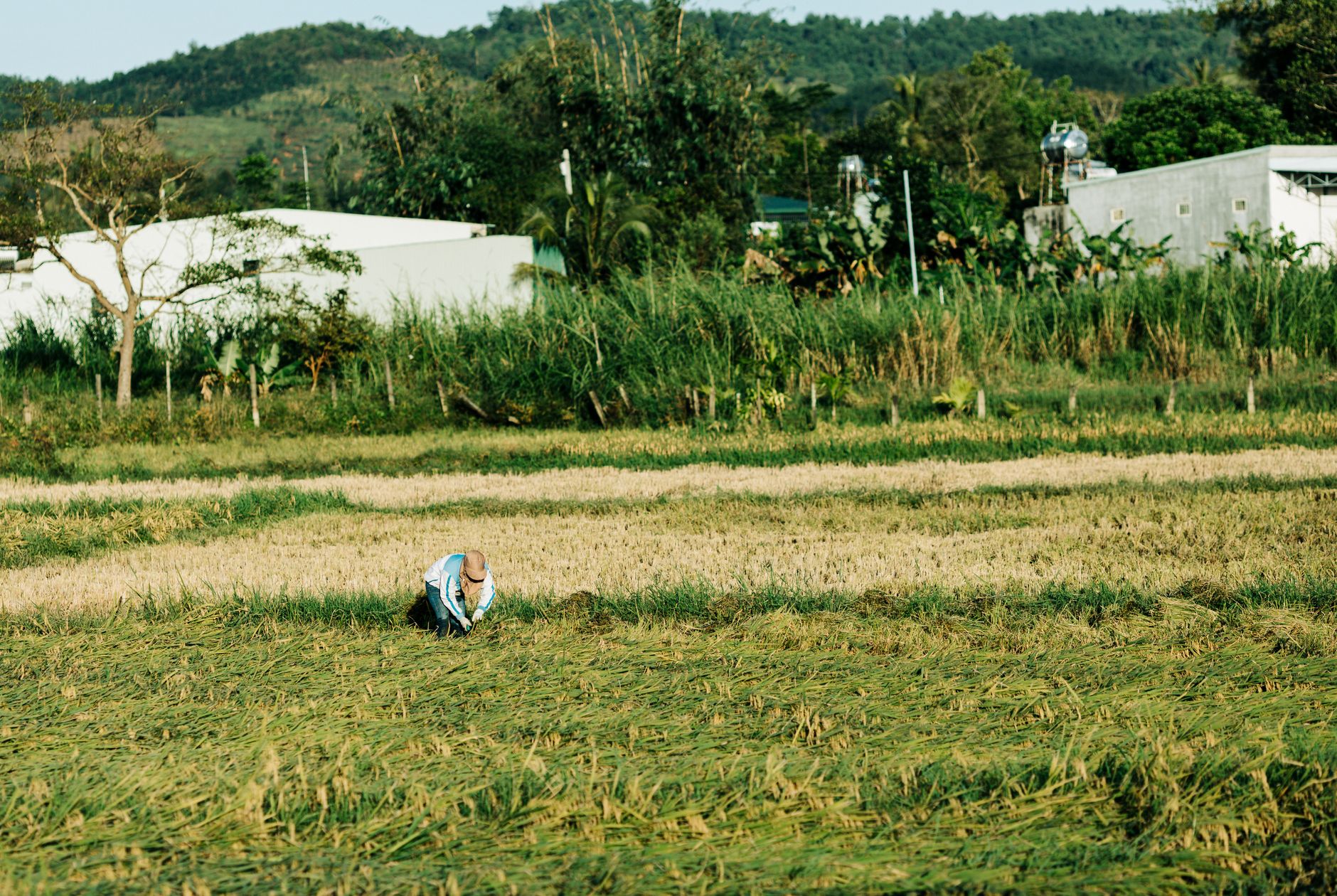
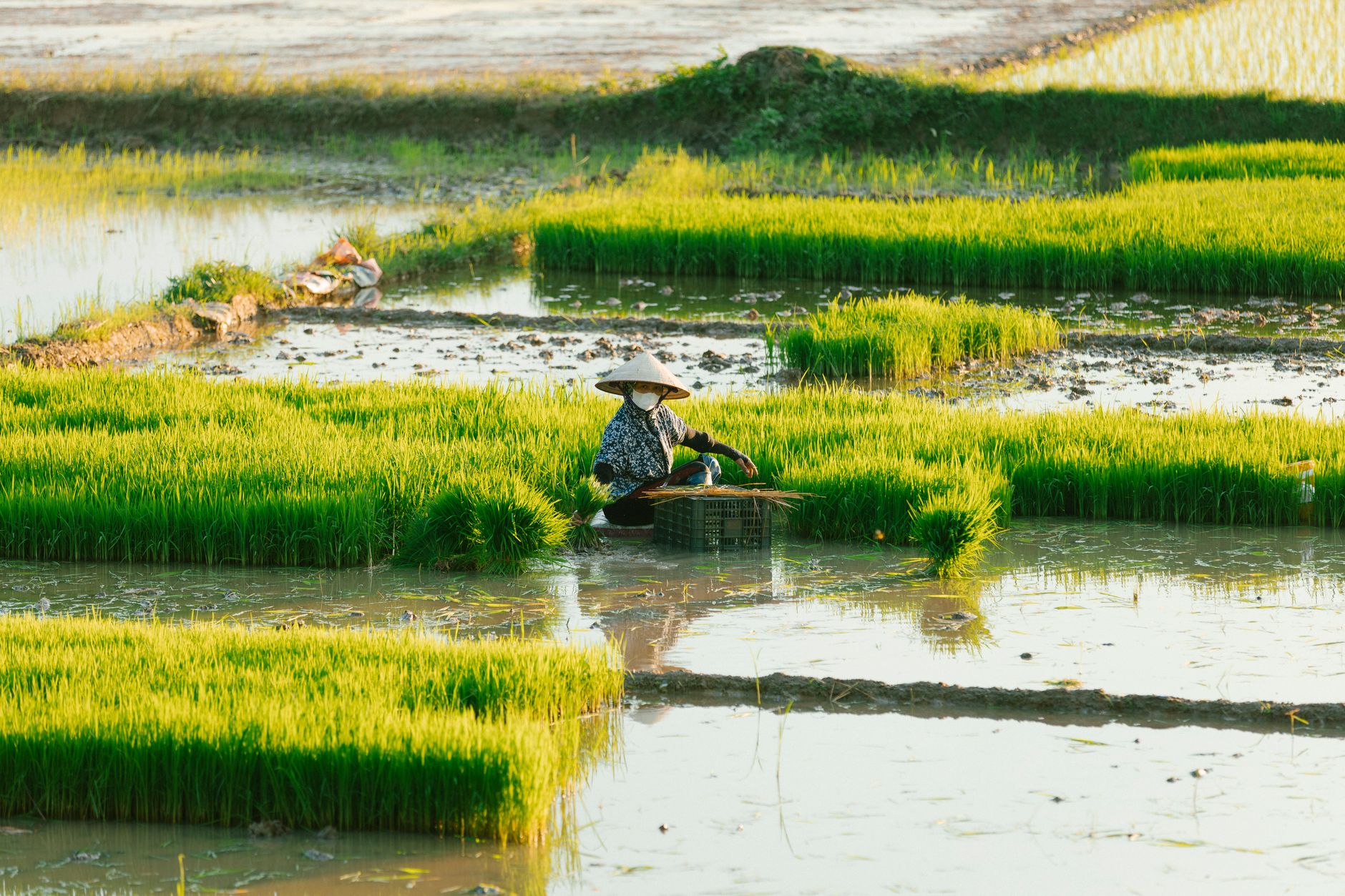
- 7:30–8:45 a.m.: work alongside farmers—planting seedlings (May–July), weeding (July–September), harvesting by hand (October–November), or threshing if rice is already cut
- 8:45–9:30 a.m.: wash at a hand pump, sit in the family kitchen, eat rice with fresh herbs, vegetables and salted fish
- 10 a.m.: return to town
Afternoon session (typically 1–5 p.m., hotter):
- 12:45 p.m.: pickup
- 1:15 p.m.: arrive and work (same tasks)
- 2:45–3:15 p.m.: rest, drink coconut water or iced tea in the shade
- 3:15–4:45 p.m.: second work stint or a walk to see the family's vegetable plot and fish pond
- 4:45–5:15 p.m.: meal and washing
- 5:30 p.m.: return to town
Full-day session (6 a.m.–5 p.m., with 90-minute mid-day meal break): Includes two shifts with longer lunch, time to meet extended family and see the farmer's home.
What beginners worry about: My hands aren't strong enough. Planting is gentle—the mud supports your hands. Will I get sick from the water? You don't drink paddy water. You work in clean boots. Is it too hot? Morning is cooler; we start early and provide hats, water, shade breaks. Kids will hate mud. They don't—they're muddy and laughing within minutes. Seniors can't stand that long. We carry a low stool for resting; you work 20 minutes, rest 5. Pace is yours.
How do you adapt for families with small kids?
Kids aged 6–10 work shorter intervals—15–20 minutes of planting or hand-threshing, then a break to hunt for frogs or play with the farmer's children. We teach them to read the water level and spot young rice shoots. By age 11+, kids can work 30–45 minute shifts like adults. The farmer's family often brings their own children; this becomes a playdate between generations.
For children under 6, we recommend you come for the meal and the walk instead—watching from the edge, learning about the farm without the physical work. We coordinate this in advance so the family knows.
Seniors often want full-day experiences more than younger visitors: they love the pace, the story, the meal and the farmer's wisdom. We position low stools for standing breaks and adjust work tasks to light planting or threshing (standing, not bending) if mobility is limited. Many seniors bring grandchildren; grandparents love the intergenerational aspect.
Families with dietary restrictions: tell us in advance. The farm meal is rice, herbs, vegetables and usually eggs or fish. If you're vegetarian, we ask the family to prepare egg or tofu instead. Allergies are communicated to the family; they take it seriously.
Rainy-day plan: Light rain doesn't cancel—rice farmers work in rain. Heavy rain (or flood-risk warnings) we reschedule. The season matters: monsoon (May–September) can mean morning downpours; we move to afternoon or defer. Bring a packable rain jacket, not an umbrella—your hands need to be free.
Seasonal choices: when does each task happen?
| Season | Months | Main Task | Physical Level | Best For |
|---|---|---|---|---|
| Monsoon rains | May–June | Transplanting seedlings into flooded paddies | Light–moderate; kneeling in mud | Kids, seniors, first-timers |
| Early growth | July–August | Weeding by hand; teaching kids to identify weeds | Moderate; standing, bending | Families; repeats seeking different work |
| Harvest | October–November | Cutting rice by hand or sickle; binding sheaves | Moderate–heavy; repetitive | Couples, energetic groups; most dramatic visually |
| Threshing | November–December | Beating dried rice to release grains; winnowing | Light–moderate; standing, rhythmic | All ages; less muddy; cultural learning |
Pick a season based on your fitness and what task calls you. Planting is meditative; harvesting is celebratory and faster-paced. Threshing feels like craft. No season is "wrong."
What to wear and bring (the checklist that saves discomfort)
- Clothes: Swimsuit or fast-dry shorts underneath old clothes. Wear lightweight long sleeves (sun and insects). Bring a change of shirt and socks for after.
- Footwear: Wear the wellington boots we provide. Don't bring your own sandals—mud will claim them.
- Sun protection: Wide-brimmed hat or cap. Sunscreen SPF 30+ (apply before you arrive). Sunglasses if bright.
- Personal gear: Reusable water bottle (we refill at the farm). Medications (antihistamine for mosquito bites). A small towel.
- Optional: Camera in a waterproof bag. A notebook to sketch the family or the paddies.
- Leave at the hotel: Jewelry, expensive watches, phones in deep pockets (muddy hands + electronics = regret). Perfume or insect repellent that's overly strong—some farmers are sensitive.
- If you have mobility concerns: Tell us your mobility level when you book. We can find a flatter farm or arrange lighter tasks.
How does a rice farm visit compare to other countryside experiences?
| Experience | What You Learn | Physical Work | Meal Included | Best For |
|---|---|---|---|---|
| Rice farming | Labour, crop cycles, soil, water systems | Hands-on; planting, weeding, harvesting | Yes; farm family meal | Hands-on learners; physical adventurers |
| Farm and countryside day (mixed) | Vegetables, livestock, daily farm rhythms | Light; gentle harvest, feeding animals | Yes; often farm-to-table lunch | Families; those wanting varied tasks |
| Cooking class | Ingredient selection, technique, flavour | Moderate; standing, chopping, stirring | Yes; you eat what you cook | Food lovers; skill-builders |
| Tea experience | Tea culture, leaf grades, brewing | Minimal; sitting and tasting | Yes; light snacks | Contemplative visitors; tea enthusiasts |
| Horse riding | Countryside landscape, horsemanship | Moderate–heavy; riding skill required | Often included | Riders or equestrian beginners |
A rice farm experience is the most labour-intensive and the most directly connected to feeding your own mouth. You do the work that produces rice you eat at lunch. That circularity is rare and moving.
What to check before you book
Group size: We run 2–12 people per session. Solo travellers are welcome; we pair you with others or charge a small group rate. Confirm this when you ask.
Age and fitness: Tell us the ages of children and any mobility concerns when you inquire. We've hosted families with kids aged 6–16, couples in their 70s and solo travellers recovering from injury. Be honest; we adapt.
Season and crop stage: Ask which farms have which tasks that week. Some farms may be in the off-season or preparing for transplant—the experience is still real but different. Confirm the task before you commit.
Weather and cancellation: We reschedule for dangerous weather (flash floods, typhoon warnings). A light rain doesn't cancel. Check the forecast and ask us about risk the week before.
Dietary needs and allergies: Share these when you book, not the morning of. The farm family needs time to plan lunch.
Transport and timing: Confirm your hotel pickup time and whether you need a morning or afternoon slot. Our host will WhatsApp you the night before with exact pickup details.
What's included: Confirm that your quote includes transport, boots, guide, tools and the farm meal. Some sessions may add a village walk or a visit to a local rice mill; ask what's on offer.
Since you're exploring Hoi An, also consider our horse riding experience in the countryside around the town, or a group and corporate team day combining rice farming with other activities. Families often pair the farm with a cooking class the next day: grow rice, then cook with it.
FAQ
How muddy do you actually get?
Mud coats your legs and arms to about mid-shin and mid-forearm. It's cool, not uncomfortable. We provide wellington boots and a water tap for washing; your hands are clean before you eat.
Is it safe for children under 8?
Yes, from age 6 onwards. Children under 6 can come for the meal and a short walk but shouldn't work in the paddies. We coordinate this beforehand so the family expects a young observer.
What if I'm vegan or allergic to fish?
Tell us when you book. The farm will prepare eggs, tofu or extra vegetables instead of their usual salted fish or meat. This is not a problem; they accommodate dietary needs regularly.
Can we do this in December or January?
Yes. December and early January are harvest and post-harvest (threshing); it's cooler and less muddy. By late January, farms are preparing for the new planting season. Confirm the crop stage when you ask for dates.
Do we need to speak Vietnamese?
No. Our bilingual host translates and explains. The farmer will speak some English or be comfortable with gestures and laughter. Most communication is non-verbal—showing, doing, eating together.
What if someone in our group is injured or can't walk far?
Tell us before you book. We can arrange a farm closer to the main road, lighter tasks (sitting work like threshing or winnowing), or shorter sessions. Don't assume it's impossible; we've hosted people with joint pain and mobility aids.
Can we bring our own camera or drone?
Still cameras are fine. Drones need advance permission from the farm—some farmers are uncomfortable with them. Ask us when you book. Always ask before photographing people.
How much does it cost?
Ask us for dates and a quote on WhatsApp. Cost depends on group size, session length (half-day or full-day) and season. We don't publish prices; every group is different.
Ask about dates
Tell us the city, your dates and what you would like to try. We reply on WhatsApp in English with options and availability.
FAQ
How muddy do you actually get?
Mud coats your legs and arms to about mid-shin and mid-forearm. It's cool, not uncomfortable. We provide wellington boots and a water tap for washing; your hands are clean before you eat.
Is it safe for children under 8?
Yes, from age 6 onwards. Children under 6 can come for the meal and a short walk but shouldn't work in the paddies. We coordinate this beforehand so the family expects a young observer.
What if I'm vegan or allergic to fish?
Tell us when you book. The farm will prepare eggs, tofu or extra vegetables instead of their usual salted fish or meat. This is not a problem; they accommodate dietary needs regularly.
Can we do this in December or January?
Yes. December and early January are harvest and post-harvest (threshing); it's cooler and less muddy. By late January, farms are preparing for the new planting season. Confirm the crop stage when you ask for dates.
Do we need to speak Vietnamese?
No. Our bilingual host translates and explains. The farmer will speak some English or be comfortable with gestures and laughter. Most communication is non-verbal—showing, doing, eating together.
What if someone in our group is injured or can't walk far?
Tell us before you book. We can arrange a farm closer to the main road, lighter tasks (sitting work like threshing or winnowing), or shorter sessions. Don't assume it's impossible; we've hosted people with joint pain and mobility aids.
Can we bring our own camera or drone?
Still cameras are fine. Drones need advance permission from the farm—some farmers are uncomfortable with them. Ask us when you book. Always ask before photographing people.
How much does it cost?
Ask us for dates and a quote on WhatsApp. Cost depends on group size, session length (half-day or full-day) and season. We don't publish prices; every group is different.
More like this
Farm and countryside days
Fishing Experience Vietnam for Japanese Travelers: Where to Go & What to Expect
Vietnam's waterways offer Japanese travelers a chance to learn traditional fishing methods directly from locals. Cáo Experiences runs half- and full-day sessions on rivers, lakes and the Mekong Delta where you cast nets, set traps, and cook your catch.
Farm and countryside days
Fishing Experience Vietnam for Foreigners: Hands-On Guide
Fishing in Vietnam isn't a spectator sport—you'll wade into rivers, cast nets, trap fish in baskets, and cook your catch for lunch. We run small-group and private fishing days in the countryside outside Hanoi, Ha Noi region, and the Mekong Delta.
Farm and countryside days
Fishing Experience in Vietnam: 8 Questions to Ask Before You Go
Fishing in Vietnam means wading through rice paddies, learning trap techniques, or casting in rivers with local guides. Here's what to ask before you book.