
Home › Blog › Farm and countryside days
Best rice farming experience in Saigon: hands-on, half-day
By the Cáo Experiences team · 2026-11-06
A rice farming experience with Cáo Experiences means a half-day or full-day session in the Mekong Delta near Saigon, about 90 minutes' drive from the city center. We work with family farms that grow rice seasonally—you'll wade into working paddies (wear old clothes and sandals), help plant seedlings or cut bundles at harvest depending on the season, use hand tools the way farmers do, and talk directly with the family who tends the land. A half-day runs roughly 4–5 hours; a full day includes an on-farm lunch you help prepare from vegetables and rice grown there. Beginners worry about mud, exhaustion, and "looking silly"—but paddies are soft, the work is rhythmic and manageable, and farmers are used to guests. We adapt for kids (lighter tasks, shorter time), seniors (sitting harvesting, no wading required), and allergies (we plan meals ahead). Families, couples, small groups, and solo travelers all join. Ask us for dates and a quote on WhatsApp—pricing varies by group size and season. Ask about dates on WhatsApp
Why choose a rice farm over a tourist village?
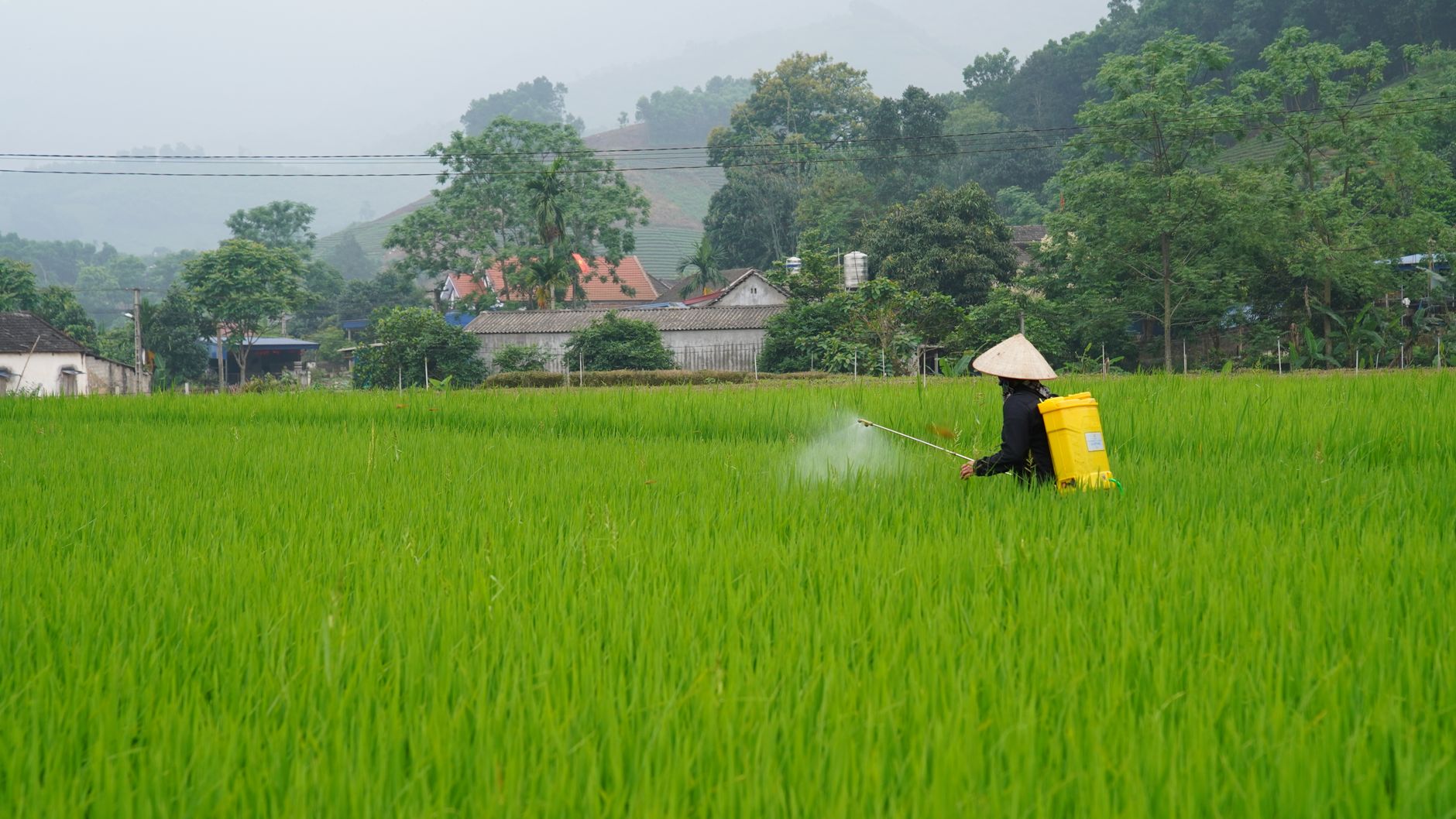
Most Saigon day trips take you to a "village" that's been tidied for visitors—gift shops, photo stops, no real work. Our farms are active workplaces where the family earns their living from rice. You're not observing; you're holding a tool, feeling mud, making mistakes, and being taught by someone who does this every single day. That difference—real vs. staged—changes everything about what you remember and understand.
When should you go: season, weather, and what you'll actually do?
Dry season (November–April): Harvest time. You'll cut mature rice bundles, tie them, carry them to a threshing area, and watch grain separate from chaff. The work is steady and visible—you see the product immediately.
Wet season (May–September): Planting and growing. You wade into flooded paddies, set out seedling rows by hand, and learn how farmers judge water depth and soil. It's messier, more sensory, slower-paced. Rain doesn't cancel sessions—it's part of the work.
What to expect in practice: You'll arrive mid-morning after a short van ride. The farmer greets you, hands you a hat and shows you the tool—usually a sickle for harvest or a dibber for planting. You work in the paddy for 1–2 hours in short stretches (not continuous). Mid-session, you'll sit under a shelter, drink water or tea, and the farmer talks about crop rotation, water management, or family history. Lunch follows—rice, fresh greens, maybe fish from a small pond on the property, all cooked on a low stove or over a fire. After eating, some guests help tidy up; others rest. A full day adds an afternoon walk through other fields or a bicycle ride to see how the farm connects to the wider landscape.
How physically demanding is it, really?
Harvest is harder on the back—repetitive cutting and bending. Planting is steadier but requires balance in soft, flooded ground. Neither is extreme; we've hosted people in their seventies and children as young as six.
What actually tires you: Unfamiliar muscle groups, sun exposure (bring sunscreen and a wide hat), and the mental focus of learning a new task. Most guests feel pleasantly tired, not exhausted. Seniors often do the sitting-based harvesting (cutting from a lower crouch or a chair); kids do lighter bundles or shorter time. If you have a knee, hip, or back issue, tell us—we can adapt the role or add breaks.
What helps: Wear lightweight, long-sleeved clothing (protects from sun and insect bites), bring water, and don't skip breakfast. We provide gloves. Sandals are fine for wading, but old shoes with grip work better if you're not confident on soft ground.
What's included, and what costs extra?
A half-day session includes transportation from a central Saigon meeting point, 4–5 hours on the farm, lunch prepared there, and water. A full day adds a second meal and more of the landscape (sometimes a bicycle ride, a visit to a neighboring farm, or time in a communal workspace where farmers dry or store rice).
We don't include alcohol, souvenirs, or tips (though tips are appreciated by the farm family). Ask us for dates and a quote on WhatsApp—pricing is quoted per group, not per person, and depends on group size (smaller groups cost more per head) and season (planting or harvest dictates availability and farm schedule).
What to check before you book:
- Mobility: Can you balance on soft, muddy ground? If not, we can arrange mostly-sitting roles.
- Sun tolerance: Are you heat-sensitive? A full day means 6+ hours outdoors.
- Dietary needs: Tell us about allergies or vegetarian/vegan diets so we can plan the meal.
- Group size: Single travelers sometimes join a scheduled group; private groups start at 2 people but work better at 4+.
- Season: Planting (May–September) and harvest (November–March) have different tasks and settings. Shoulder months (April, October) vary year to year.

How does a rice farm day compare to other countryside experiences?
| Experience | Best for | Session length | Hands-on work | Meal included | Skill level |
|---|---|---|---|---|---|
| Rice farming | Understanding food origins, physical engagement, families | 4–8 hours | Planting, harvesting, learning tool use | Yes, on-farm | All; no prior knowledge |
| Horse riding in countryside | Outdoor exploration, confidence-building, groups | 2–4 hours | Mounting, riding, handling an animal | No | Beginner to intermediate |
| Cooking class | Restaurant skills, taste education, couples | 3–4 hours | Knife work, recipe following, plating | Yes, you eat it | All; no prior cooking |
| Coffee workshop | Specialty coffee tasting, bean origins | 2–3 hours | Roasting, grinding, brewing | Drinks only | All; no coffee knowledge |
| Flower arranging | Aesthetic, calm, gift-worthy output | 2–3 hours | Design, cutting, arrangement | No | All; no floral knowledge |
| Wellness retreat | Slow living, reflection, rest | Half or full day | Movement, meditation, breathing | Yes, light meals | All; passive participation |
Rice farming stands out because the work is physical and immediate: you see soil, handle the crop, learn from the farmer's decisions in real time, and eat the result of your labor and their knowledge. It's the most grounded introduction to how food connects to place and season.
Saigon rice farm vs. the Mekong Delta: distance, roads, and what you actually see?
Most active rice paddies are 60–120 km south or southwest of central Saigon, in the Mekong Delta proper. A van ride takes 90 minutes to 2 hours depending on traffic and farm location. The road goes through smaller towns, past coconut groves, and eventually into open farmland where you see water, earth, and people working.
Closer to Saigon's urban edge, you'll find "demonstration farms" or hobby farms—usually smaller, sometimes more organized for tourists, sometimes less authentic. We work with family farms further out because that's where the real scale and rhythm of rice cultivation happens. The trade-off: longer travel time, but genuine work and deeper learning.
What to expect on the drive: You'll see motorbike taxis, street food stalls, small temples, and the landscape gradually flatten and open. Some guests use the time to rest or ask questions; we usually brief you about the farm, the family, and what work you'll do. On the way back, people are usually quiet, tired, processing what they've done.
Family trips: what to adjust for kids, and when they actually engage?
Children aged 6–12 often enjoy rice farming more than structured cooking classes because the work is simpler, the setting is novel, and there's no "failure"—you're learning alongside the farmer, not executing a recipe.
What changes: Younger kids (6–8) do lighter tasks—carrying small bundles, placing seedlings, playing in shallow water—and join for 2–3 hours rather than a full day. Teenagers (13+) often do the same work as adults and become genuinely focused on the technique. All kids eat better when they've helped grow or harvest the food.
Common worry: "Will they get bored or dirty?" Yes, they'll get dirty; that's the point. Boredom is rare because there's always something to see (birds, insects, other animals) and the farmer usually has stories. Bring a change of clothes and a plastic bag for muddy items.
Timing: Morning sessions (7–11 am) work better for kids than full days; they're fresher, the sun is gentler, and they're done before lunch tiredness sets in. Many families combine a rice farm morning with a Saigon street food and market tour the next day, or a cooking class the afternoon before—the experiences feed into each other (literally and conceptually).

FAQ
Do I need farming experience or fitness to join?
No. We've hosted desk workers, retirees, and people who've never touched soil. The farmer adapts the pace and task to your ability. Wear old clothes and be willing to move slowly for 1–2 hours at a stretch.
What if it rains?
Rain is normal during planting season (May–September). Light rain doesn't stop the session; we provide rain jackets and the work continues. Heavy rain sometimes shortens the day or shifts focus to an indoor task (tool maintenance, grain sorting). We'll communicate about weather 24 hours before.
Can I visit in shoulder seasons (April or October)?
Maybe. These are transition months when farms are preparing soil or waiting for the next season. Some farmers still welcome visitors; others are too busy. We'll check availability when you ask for dates.
What's the difference between a private group and a shared group session?
Private groups (your own van, dedicated farm time, flexible timing) cost more but suit families and friends who want to move at their own pace. Shared sessions pool small groups—cheaper, but you follow a fixed schedule and work alongside strangers. Both are real farming experiences.
Will I really eat food I helped harvest?
Yes. Lunch uses vegetables, herbs, and rice from the farm or nearby fields. You help prepare it—usually washing, chopping, or stirring. The farmer or a family member cooks on a traditional stove. It's simple, generous, and tastes different because you know where it came from.
How do I book, and when do I pay?
Message us on WhatsApp with your preferred dates, group size, and any dietary needs or mobility questions. We'll check the farm's availability, suggest a timing, and send you a quote. Payment details and terms are confirmed via WhatsApp. Ask us for dates and a quote on WhatsApp. --- Ask about dates on WhatsApp | See how a session runs For more farm and countryside experiences near Saigon and beyond, or to pair this with a Vietnamese cooking class back in the city, contact us. We also run family-friendly experiences and group outings across destinations in Ho Chi Minh City and the Mekong region.
Ask about dates
Tell us the city, your dates and what you would like to try. We reply on WhatsApp in English with options and availability.
FAQ
Do I need farming experience or fitness to join?
No. We've hosted desk workers, retirees, and people who've never touched soil. The farmer adapts the pace and task to your ability. Wear old clothes and be willing to move slowly for 1–2 hours at a stretch.
What if it rains?
Rain is normal during planting season (May–September). Light rain doesn't stop the session; we provide rain jackets and the work continues. Heavy rain sometimes shortens the day or shifts focus to an indoor task (tool maintenance, grain sorting). We'll communicate about weather 24 hours before.
Can I visit in shoulder seasons (April or October)?
Maybe. These are transition months when farms are preparing soil or waiting for the next season. Some farmers still welcome visitors; others are too busy. We'll check availability when you ask for dates.
What's the difference between a private group and a shared group session?
Private groups (your own van, dedicated farm time, flexible timing) cost more but suit families and friends who want to move at their own pace. Shared sessions pool small groups—cheaper, but you follow a fixed schedule and work alongside strangers. Both are real farming experiences.
Will I really eat food I helped harvest?
Yes. Lunch uses vegetables, herbs, and rice from the farm or nearby fields. You help prepare it—usually washing, chopping, or stirring. The farmer or a family member cooks on a traditional stove. It's simple, generous, and tastes different because you know where it came from.
How do I book, and when do I pay?
Message us on WhatsApp with your preferred dates, group size, and any dietary needs or mobility questions. We'll check the farm's availability, suggest a timing, and send you a quote. Payment details and terms are confirmed via WhatsApp. Ask us for dates and a quote on WhatsApp. --- [💬 Ask about dates on WhatsApp](https://wa.me/84338762340) | 🍜 See how a session runs For more [farm and countryside experiences](/farm-experience) near Saigon and beyond, or to pair this with a Vietnamese cooking class back in the city, contact us. We also run [family-friendly experiences](/family-experiences) and [group outings](/group-and-corporate) across [destinations in Ho Chi Minh City](/destinations/ho-chi-minh-city) and the Mekong region.
More like this
Farm and countryside days
Fishing Experience Vietnam for Japanese Travelers: Where to Go & What to Expect
Vietnam's waterways offer Japanese travelers a chance to learn traditional fishing methods directly from locals. Cáo Experiences runs half- and full-day sessions on rivers, lakes and the Mekong Delta where you cast nets, set traps, and cook your catch.
Farm and countryside days
Fishing Experience Vietnam for Foreigners: Hands-On Guide
Fishing in Vietnam isn't a spectator sport—you'll wade into rivers, cast nets, trap fish in baskets, and cook your catch for lunch. We run small-group and private fishing days in the countryside outside Hanoi, Ha Noi region, and the Mekong Delta.
Farm and countryside days
Fishing Experience in Vietnam: 8 Questions to Ask Before You Go
Fishing in Vietnam means wading through rice paddies, learning trap techniques, or casting in rivers with local guides. Here's what to ask before you book.