
Home › Blog › Farm and countryside days
Countryside day trip in Vietnam in July: what to expect
By the Cáo Experiences team · 2026-11-06
A countryside day trip in Vietnam in July means visiting rural hamlets, rice paddies, or hill-station gardens during the southwest monsoon season. Expect lush, wet landscapes; morning temperatures around 25–28°C; afternoon thunderstorms (usually brief, 30–90 minutes); and fewer tourists than dry-season months. Half-day or full-day farm and countryside experiences with Cáo Experiences typically run 4–8 hours from early morning (before peak heat) and include village walks, hands-on activities in family kitchens or gardens, and meals with local hosts. July suits couples, families with older kids, and groups willing to embrace rain as part of the season. Avoid peak afternoon (noon–3 p.m.) and bring lightweight waterproofs. Ask us for dates and a quote on WhatsApp for your group size and interests. Ask about dates on WhatsApp
Why July is actually a good month to visit the countryside
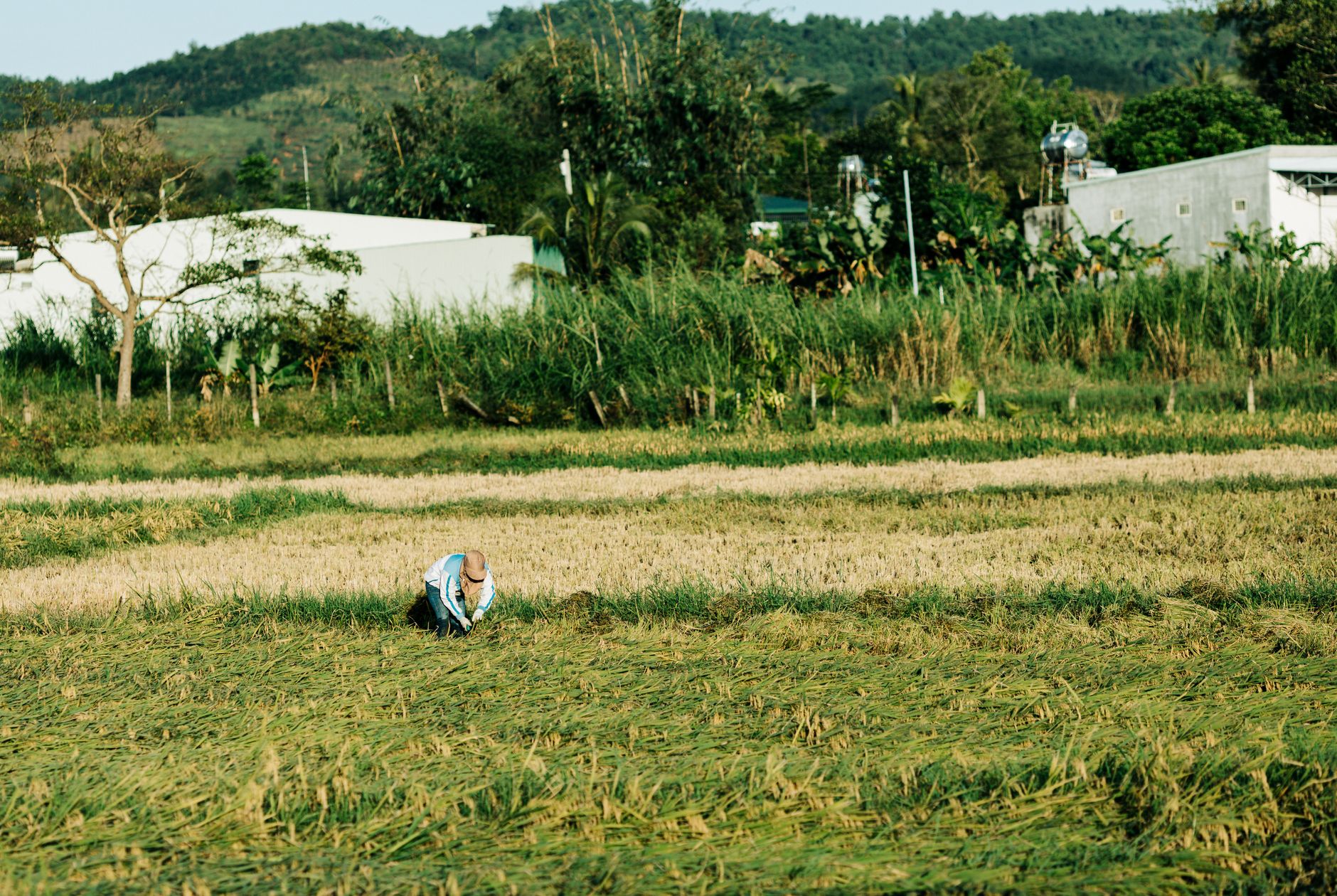
July feels counterintuitive: monsoon, humidity, afternoon storms. Yet it's when rice paddies flood vibrant green, fruit ripens fast, and village rhythms shift to water-based work—planting, watering, tending gardens. Fewer travelers means less crowded lanes and authentic interactions with farmers on their actual schedule, not a tourist one. Mornings are cool enough for walking. The landscape is genuinely beautiful in a way dry-season dust and brown fields simply aren't. We've found guests who embrace the "inconvenience" of rain often have the most honest conversations and see how rural life actually flows, not how it's staged.
The trade-off: you'll get wet, roads may be muddy, and some activities shift. If you're planning a countryside day and can't handle unpredictable weather, move to October–April. If you're flexible, July offers an entirely different Vietnam.

What to pack and wear for a wet countryside day
Bring lightweight, breathable clothes (cotton or quick-dry fabrics), a compact rain jacket or poncho (not a heavy umbrella—your hands stay free), sandals that dry fast, a small towel, and a waterproof bag for phones and valuables. Long sleeves and trousers protect against sun, insects, and mud splashes. A hat with a brim helps more than you'd think.
Many guests worry they'll be uncomfortable or ruin their clothes. In practice, we work around rain stops, and village hosts are used to wet visitors—they lend plastic sandals, hang jackets, and move activities indoors to their kitchens or covered pavilions. Wear what you don't mind getting muddy. Leave valuables behind if possible.
For activities like horse riding experience or walking through flooded fields, closed-toe shoes grip better than sandals, though we'll advise on the day based on conditions. Ask what we'll be doing when you message us.
How we structure a countryside day in July weather
We start early: pickup around 6–7 a.m., arrive at the village by 7:30–8 a.m., before heat peaks. Your host meets you with tea or coffee, and you walk through lanes while the air is still cool. By 10 a.m., we're usually indoors or under cover doing a hands-on activity—Vietnamese cooking class in a family kitchen, flower arranging in a garden shed, or learning about local coffee or tea in a small workshop space. Lunch happens around noon (before afternoon rain typically hits). If storms come, we're already sheltered eating or resting.
Second half: a quieter activity—sometimes a walk if rain clears, or sitting with the family, learning their story, drinking more tea. We finish by 2–3 p.m., back in town by 4 p.m., before evening traffic.
The rhythm respects both the weather and local rhythm. We don't fight July; we plan around it.
Activities that work well in July countryside conditions
| Activity | What happens | Best for | Why July works |
|---|---|---|---|
| Cooking class in village kitchen | Learn 3–4 dishes, shop at local market first, cook, eat together | Families, couples, food lovers | Indoors or covered; local veg is at peak ripeness |
| Rice field walk + village chat | Walk flooded paddies, meet farmers, see planting or weeding work | Photographers, anyone curious | Green is at its most vivid; farmers are actively working |
| Flower arranging workshop | Arrange seasonal flowers (often rain-loving blooms) in a garden space | Groups, gift-givers | Rainy-season flowers are lush and affordable |
| Coffee workshop in hill town | Learn roasting, brewing, taste local beans in a covered café space | Coffee fans | July is harvest in some regions; freshly roasted beans taste best |
| Garden or herb walk + tea | Tour a family's vegetable or medicinal herb garden, brew tea together indoors | Slower pace, wellness-focused | Rain feeds herbs; fragrance is intense after rain |
Each can pause or move indoors if a storm hits. We've never cancelled a day; we've adapted every one.

Real challenges and how to prepare honestly
Heat and humidity: Peak feels like 32–35°C with 85%+ humidity until afternoon rain. Drink water constantly (we provide). If you have heart or circulation issues, tell us—we'll do shorter walks, more rest time, and avoid peak afternoon.
Roads and mud: Side roads may be slippery. We wear appropriate footwear and move slowly. If mobility is a concern, choose activities in or near a settled area, not deep-field walks.
Animals and insects: Leeches are possible in very wet areas; we know where to avoid them. Mosquitoes are present; bring repellent or ask us where we're going first. No snakes in the activities we run, but ask if it worries you.
Allergy or diet needs: Tell us before you come. Village kitchens work with what's seasonal; if you're vegetarian, vegan, gluten-free, or allergic, we source ingredients or adjust dishes beforehand. No surprises.
Kids under 6: Countryside walks involve uneven ground, mud, and weather changes. We can run family experiences for younger kids in more controlled settings (home-based cooking, flower arranging). Ask what suits your child's age and comfort.
Where in Vietnam to find countryside day trips in July
Hanoi surrounds itself with rice villages, water buffalo farms, and craft hamlets within 45 minutes. Da Lat in the highlands has cooler temperatures, flower gardens, and coffee plantations—excellent for July. Hoi An nearby offers rice paddies, home gardens, and traditional villages. Da Nang region has rural day trips to farming communities and craft centers. Ho Chi Minh City reaches out to Mekong Delta villages and orchards, though these flood more heavily in July—more dramatic, messier, entirely real.
We run group and corporate countryside days too if you're traveling with a team or larger party—we tailor the length and focus.
What to check before booking your July countryside day
Ask yourself:
- Can I handle getting wet, muddy, or sweaty without frustration?
- Do I have any health conditions that heat or humidity might aggravate? (Tell us if yes.)
- Am I interested in an activity—cooking, arranging flowers, learning about farming—or mainly sightseeing? (We lean toward the former; that keeps you engaged if weather changes.)
- Are kids coming? If so, what ages? (Shapes our pace and focus.)
- How much Vietnamese do I speak? (We host in English; translation is built in.)
- Do I have dietary restrictions or allergies?
When you message us on WhatsApp, mention your group size, dates, and what draws you most. We'll tell you honestly whether July suits your expectations, suggest which region and activity fit, and walk you through what to bring and what a day actually looks like.
More stories and inspiration
Read how other hosts run their experiences to get a sense of the day-to-day reality beyond marketing language. Each host has different rhythms, and seeing a few helps you understand what matters to you.
FAQ
Will we definitely get rained on in July?
Not definitely—some days are dry. But afternoon thunderstorms hit 60–70% of days based on historical July weather. We work around them by starting early and planning sheltered activities. Rain is part of the season; treating it as part of the experience changes everything.
Is it too hot to walk outside in July?
Morning walks (6–10 a.m.) are fine at 25–28°C with good air movement. Midday heat can be intense (32°C+), so we don't schedule peak-hour outdoor walks. You'll be indoors or sheltered for the hot part of the day.
Can we do a countryside day if someone in our group has mobility issues?
Yes, with planning. Tell us when you book. We can choose activities near settled areas, minimize walking, and ensure plenty of rest time. Some guests do a half-day kitchen-based class instead of a full-day with field walks.
What if we're vegetarian or have food allergies?
Tell us before you book. We source ingredients and adapt the menu beforehand with the family kitchen or host. No last-minute scrambling—we confirm everything in our pre-visit WhatsApp chat.
Do kids enjoy countryside days, or is it too slow for them?
Depends on age and personality. Ages 8+ often love hands-on cooking, flower arranging, or helping water gardens. Younger kids (4–7) can join but do better with shorter activities and more breaks. We run family-focused sessions too. Ask us what suits your kids when you message.
How long is a countryside day, and when are we back?
Usually 4–8 hours total. We pick you up early morning (6–7 a.m.), work until 2–3 p.m., and return to your accommodation by 4 p.m. Ask about half-day or custom timing when you contact us.
Ask about dates
Tell us the city, your dates and what you would like to try. We reply on WhatsApp in English with options and availability.
FAQ
Will we definitely get rained on in July?
Not definitely—some days are dry. But afternoon thunderstorms hit 60–70% of days based on historical July weather. We work around them by starting early and planning sheltered activities. Rain is part of the season; treating it as part of the experience changes everything.
Is it too hot to walk outside in July?
Morning walks (6–10 a.m.) are fine at 25–28°C with good air movement. Midday heat can be intense (32°C+), so we don't schedule peak-hour outdoor walks. You'll be indoors or sheltered for the hot part of the day.
Can we do a countryside day if someone in our group has mobility issues?
Yes, with planning. Tell us when you book. We can choose activities near settled areas, minimize walking, and ensure plenty of rest time. Some guests do a half-day kitchen-based class instead of a full-day with field walks.
What if we're vegetarian or have food allergies?
Tell us before you book. We source ingredients and adapt the menu beforehand with the family kitchen or host. No last-minute scrambling—we confirm everything in our pre-visit WhatsApp chat.
Do kids enjoy countryside days, or is it too slow for them?
Depends on age and personality. Ages 8+ often love hands-on cooking, flower arranging, or helping water gardens. Younger kids (4–7) can join but do better with shorter activities and more breaks. We run [family-focused](/family-experiences) sessions too. Ask us what suits your kids when you message.
How long is a countryside day, and when are we back?
Usually 4–8 hours total. We pick you up early morning (6–7 a.m.), work until 2–3 p.m., and return to your accommodation by 4 p.m. Ask about half-day or custom timing when you contact us.
More like this
Farm and countryside days
Fishing Experience Vietnam for Japanese Travelers: Where to Go & What to Expect
Vietnam's waterways offer Japanese travelers a chance to learn traditional fishing methods directly from locals. Cáo Experiences runs half- and full-day sessions on rivers, lakes and the Mekong Delta where you cast nets, set traps, and cook your catch.
Farm and countryside days
Fishing Experience Vietnam for Foreigners: Hands-On Guide
Fishing in Vietnam isn't a spectator sport—you'll wade into rivers, cast nets, trap fish in baskets, and cook your catch for lunch. We run small-group and private fishing days in the countryside outside Hanoi, Ha Noi region, and the Mekong Delta.
Farm and countryside days
Fishing Experience in Vietnam: 8 Questions to Ask Before You Go
Fishing in Vietnam means wading through rice paddies, learning trap techniques, or casting in rivers with local guides. Here's what to ask before you book.