
Home › Blog › Farm and countryside days
Countryside day trip Vietnam for foreigners: what to expect
By the Cáo Experiences team · 2026-11-06
A countryside day trip for foreigners typically runs 5–8 hours, departing early from Hanoi, Ho Chi Minh City, Hoi An, or Da Lat. You'll travel by minibus or motorbike taxi to a family farm or village, walk through paddies or orchards, help with seasonal tasks (planting, harvesting, animal care), share a home-cooked lunch, and meet locals doing real work—not performances. Cáo Experiences runs farm and countryside experiences that include transport, guide, meals, and insurance; no tourist infrastructure, no restaurants. Most trips suit all ages and fitness levels; rain is common and we reschedule or adapt. Costs vary by location and group size—ask us for dates and a quote on WhatsApp.
A countryside day trip in Vietnam means leaving the city for a morning or full day in rice paddies, family farms, or mountain villages—riding local transport, eating with a host family, and learning how rural life actually works. We run these trips year-round from major cities.
What does a real countryside day start like?
Your day begins before sunrise in your city. We meet you at a familiar landmark—a café near your hotel, a train station, or a market—and travel together by minibus or shared van to the village, usually 45 minutes to two hours away. Nobody boards you onto a tourist bus with 40 strangers. On the way, your guide points out landmarks: a shrine, a fruit stand, a school where their own children went. You notice the air change—from exhaust to wet earth and manure. You pass family workshops (a noodle maker, a blacksmith, a tailor) alongside paddies. The light is golden. You arrive at a small homestead with a fence, ducks, maybe a vegetable garden or fishpond. The host family is waiting.
Who actually lives and works on these farms?
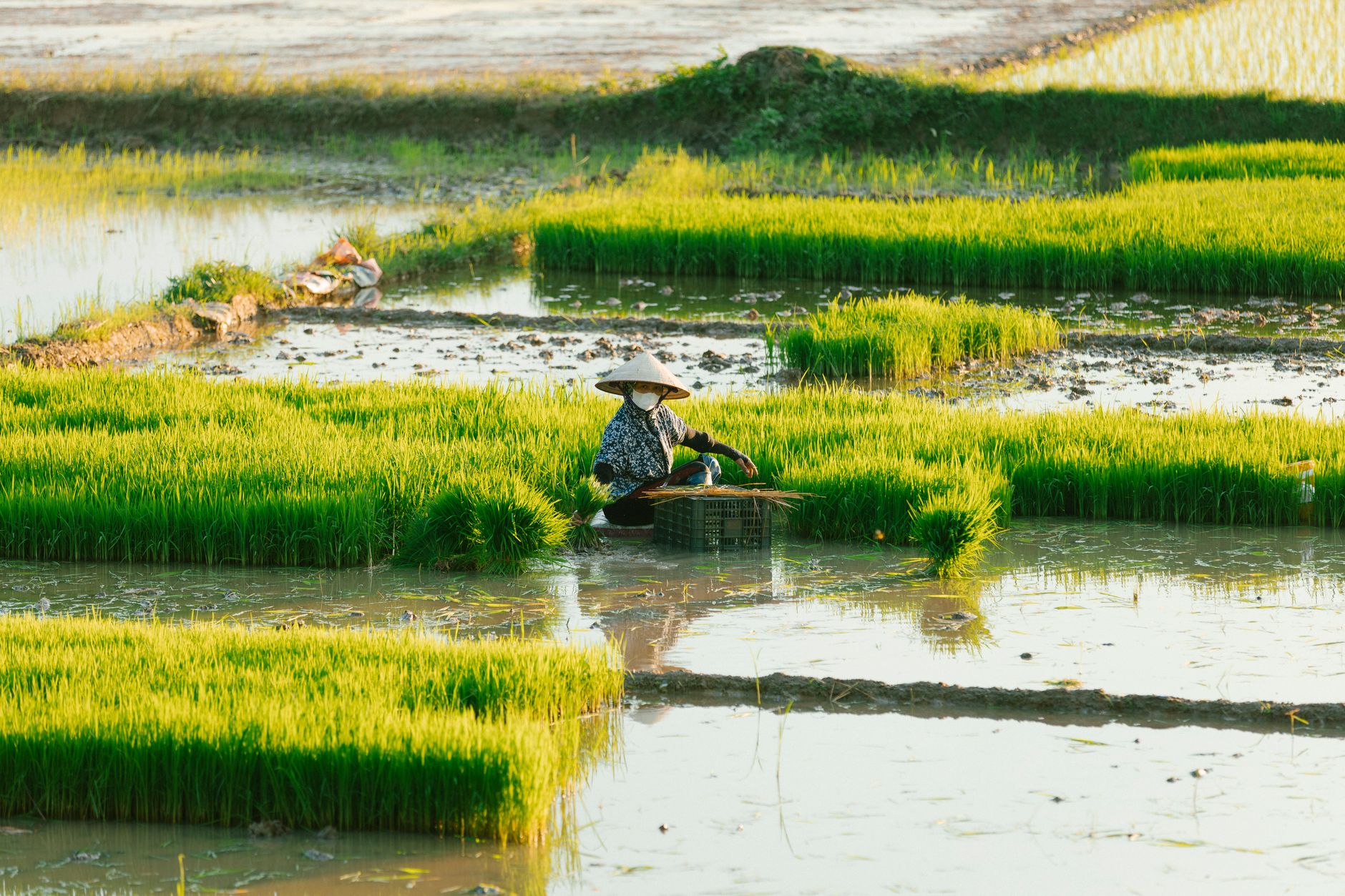
Families who farm for real—growing rice, vegetables, fruit, or raising livestock to sell at local markets and feed themselves. Not people hired to smile at tourists. Your host is a mother or grandmother who works the land daily; their children may have moved to the city, or some still help at weekends. They speak Vietnamese (our guide translates). They're curious about you but not performing. You might work alongside them—bending to transplant rice seedlings, collecting eggs, cutting vegetables for lunch—not as a game but as a real pair of hands. Mistakes and slowness don't matter; they're used to kids and beginners. If someone is elderly or has a bad knee, we tell the family in advance and they assign lighter tasks: sitting while shelling beans, teaching you to weave, showing you their photos. Work stops around midday when it gets hot.
What will you actually eat and cook?
Lunch is what the family eats: rice, a soup or stir-fry of vegetables from their garden, maybe a small fish or egg dish, sometimes a homemade dessert (sticky rice with fruit, a simple custard tart). It's cooked in their kitchen on a gas or wood stove. Before eating, you may help prepare it—chopping vegetables, stirring a pot, rolling spring rolls—or you may just watch and ask questions. Water is boiled and filtered; food is safe. Portions are generous. Seconds are normal. Coffee or tea after, often served in a small room with a TV, where the family watches you eat and asks questions through your guide. You leave hungry only if you dislike the dishes—vegetarian breakfasts and allergy info matter, so tell us before you book. Leftovers go to animals or compost; nothing is wasted.
How do countryside trips differ by region and season?
| Region | Typical work | Season best | Why it matters |
|---|---|---|---|
| Red River Delta (Hanoi area) | Rice planting/harvest, vegetable gardens, fish ponds | Apr–May (planting), Oct–Nov (harvest) | Paddies are flooded; landscape is dramatic. Dry season (Nov–Feb) is cooler. |
| Mekong Delta (Ho Chi Minh City area) | Fruit orchards, coconut, shrimp ponds, river transport | Jul–Sep (flood season) or Dec–Feb | Landscape changes: waterways widen in flood; canals are navigable. Orchards fruit in dry season. |
| Central uplands (Da Lat, Hoi An area) | Vegetable farms, flower gardens, tea patches, dairy | Oct–Mar (cool, dry) | Highland climate suits crops that lowlands can't grow. Fog in early morning. |
| Northern mountains | Terraced rice, cassava, ethnic minority villages | May–Jun (planting), Oct–Nov (harvest) | Steeper, harder walking. Communities speak local languages; guides help bridge gaps. |
A trip in rainy season (May–Sep) sees muddy work, leeches in some areas, and more insects. Some families prefer harvest season because the work is faster and the mood is celebratory. We adapt: lighter rain means we go; heavy rain, we reschedule or move to indoor tasks (cooking, craft, storytelling). Cold season (Nov–Feb) in the north can mean early mornings are chilly (bring a layer); heat (Apr–May) in the delta is intense by mid-morning.
Why do foreigners say countryside trips change how they see Vietnam?
Because you see how food, money, and family actually work outside the city. You realize rice paddies aren't scenic backgrounds—they're someone's workplace and livelihood. A farmer's daily income, education choices for their kids, or reasons they don't leave the village become real, not abstract. You eat food that cost almost nothing because it grew steps away. You notice the family's phone—a smartphone, a good one—and learn that rural doesn't mean poor or backward. You hear local language, local jokes, local radio. You see a child studying at a wooden desk under a bare bulb, or a teenager with no plan to farm despite the family's land. You return to your city hotel with mud on your shoes and a sense that you've seen something true. Many guests book additional experiences afterward—cooking classes, tea workshops, craft days—because they want to keep learning the details.

What should you actually bring and wear?
Closed-toe shoes (canvas trainers, hiking boots, or water shoes if muddy/wet). Long trousers or an elastic-waist skirt that lets you bend. A hat or cap. A light rain jacket (plastic ponchos are cheap and work). Sunscreen and a water bottle (we refill it). A small backpack or crossbody bag. Don't bring valuables—your phone is fine, but leave expensive watches or jewelry at your hotel. Wear clothes you don't mind getting wet or stained. Flip-flops and open sandals don't work in paddies (leeches, sharp stubble). Jeans are stiff when wet; linen or quick-dry fabric is better. Bring a small towel or bandana to wipe your face. Socks keep insects off your ankles in long grass. If you burn easily, long sleeves help even in heat. Children wear the same—small wellington boots are ideal if provided locally, or we help you rent them for a few thousand dong from a village shop.
How does Cáo Experiences run these trips differently?
We send one guide per 4–6 guests (not 15–20 people with a megaphone). Your guide has worked in that village for years and knows the host family by name, not from a roster. We stay 5–8 hours in one place, not hit five villages in a day. We don't pay families per tourist visit; they work their land as normal and we pay a fair fee for your lunch, guide time, and their time to teach. You're not on a schedule that ignores slow work or your questions. If you move slowly, the group adjusts. If it rains, we don't pretend to enjoy being soaked; we reschedule. Allergies and dietary needs matter: we tell the family in advance what you can't eat, and they plan lunch accordingly (no sneaking peanuts into a peanut-allergy dish). Families and kids come on these trips; we make sure the pace and tasks suit them. Group and corporate teams book private days to bond in real work, not team games.
See how a session runs
What to check before you book
- Fitness level: Is there walking on uneven ground or water? Can you bend, squat, kneel? Tell us your limits; we'll place you with a task that works.
- Allergies and diet: Peanuts, shellfish, dairy, gluten? Tell us before booking; the family will adjust lunch.
- Weather and season: Ask which season suits your interests (planting, harvest, cool vs. hot) and check the forecast a week ahead. Rain is normal; heavy flood risk closes some routes in Sep–Oct.
- Transport comfort: Minibus for 6–10 people is bumpy on rural roads; motion sickness pills help if needed.
- Physical demands: Rice planting is repetitive and your back will ache. Harvest is faster. Sitting work (weaving, cooking prep) is lighter. We assign tasks based on what you say.
- Language: Guides speak English; the family does not. Expect silences, lots of gestures, laughter at miscommunication.
- Shoes and mud: Bring old clothes. Wet shoes smell; keep a plastic bag for them in your backpack. Some families have an outdoor tap to rinse.
Pages from our team you may need
FAQ
Can kids do countryside days, and what age is good?
Yes. Kids aged 5+ enjoy feeding animals and collecting vegetables; teens learn real farm work. Under 5 get bored without constant activity. We adapt tasks and pacing. Tell us your child's age and we'll match them to a family and workload that fits.
What if it rains heavily?
Light rain means we go—it's part of farm life. Heavy rain, flooded paths, or storm warnings, we reschedule for a date within a week. You keep your deposit and we find a new slot. Bring a rain jacket and expect mud.
Do we cook together, or just help prep?
Mostly prep—chopping, stirring, assembling. The family cooks on their stove. You eat what they make. If you'd prefer a full cooking class, we run those separately in kitchens in the city or village.
Is it safe for solo travellers, especially women?
Yes. You travel in a group with a guide and meet a family at home. Homestay meals are public (not isolated). Women travel alone on these trips regularly. Tell us your concerns and we'll address them directly.
How much does a countryside day cost?
Costs depend on the region, group size, and season. Ask us for a quote on WhatsApp—we'll tell you exactly what's included (transport, guide, meals, insurance) and help you compare options. No hidden fees.
Ask about dates
Tell us the city, your dates and what you would like to try. We reply on WhatsApp in English with options and availability.
FAQ
Can kids do countryside days, and what age is good?
Yes. Kids aged 5+ enjoy feeding animals and collecting vegetables; teens learn real farm work. Under 5 get bored without constant activity. We adapt tasks and pacing. Tell us your child's age and we'll match them to a family and workload that fits.
What if it rains heavily?
Light rain means we go—it's part of farm life. Heavy rain, flooded paths, or storm warnings, we reschedule for a date within a week. You keep your deposit and we find a new slot. Bring a rain jacket and expect mud.
Do we cook together, or just help prep?
Mostly prep—chopping, stirring, assembling. The family cooks on their stove. You eat what they make. If you'd prefer a [full cooking class](/cooking-class), we run those separately in kitchens in the city or village.
Is it safe for solo travellers, especially women?
Yes. You travel in a group with a guide and meet a family at home. Homestay meals are public (not isolated). Women travel alone on these trips regularly. Tell us your concerns and we'll address them directly.
How much does a countryside day cost?
Costs depend on the region, group size, and season. [Ask us for a quote on WhatsApp](https://wa.me/84338762340)—we'll tell you exactly what's included (transport, guide, meals, insurance) and help you compare options. No hidden fees.
More like this
Farm and countryside days
Fishing Experience Vietnam for Japanese Travelers: Where to Go & What to Expect
Vietnam's waterways offer Japanese travelers a chance to learn traditional fishing methods directly from locals. Cáo Experiences runs half- and full-day sessions on rivers, lakes and the Mekong Delta where you cast nets, set traps, and cook your catch.
Farm and countryside days
Fishing Experience Vietnam for Foreigners: Hands-On Guide
Fishing in Vietnam isn't a spectator sport—you'll wade into rivers, cast nets, trap fish in baskets, and cook your catch for lunch. We run small-group and private fishing days in the countryside outside Hanoi, Ha Noi region, and the Mekong Delta.
Farm and countryside days
Fishing Experience in Vietnam: 8 Questions to Ask Before You Go
Fishing in Vietnam means wading through rice paddies, learning trap techniques, or casting in rivers with local guides. Here's what to ask before you book.