
Home › Blog › Craft workshops
Craft Village Tour Hanoi: Day Trips to Artisan Communities
By the Cáo Experiences team · 2026-11-06
A craft village tour from Hanoi takes you 30–60 minutes outside the city to family workshops where artisans practice trades inherited across generations. Villages around Hanoi specialize in distinct crafts: silk weaving, lacquerware, woodcarving, ceramics, bronze casting, and lantern-making. With Cáo Experiences, a half- or full-day tour includes transport, a guide who translates and contextualizes, time in 2–4 active workshops (not just viewing—you'll try techniques yourself), and typically lunch in a family kitchen. No fixed pricing list applies universally; ask us for dates and a quote on WhatsApp. Avoid peak tourist hours (11 a.m.–2 p.m.) and book ahead so we can arrange artisan access and adapt the pace to your group's interests and energy. Ask about dates on WhatsApp
What makes a craft village different from a city craft workshop?
Villages are where trades still anchor daily life. Families have worked the same craft in the same buildings for decades; tools, techniques, and economics evolved locally, not for tourism. City workshops often cater to visitors and commerce alone. When you visit a village, you're in someone's actual workspace—dusty, loud, real—not a staged studio. The artisan has no script. You see production deadlines, mistakes corrected, materials sourced nearby. This authenticity cannot be recreated, and it's worth the travel.

Which craft villages are closest and easiest to reach?
Several villages lie within 45 minutes of central Hanoi. Silk weaving, ceramic, and wood-carving villages are accessible by motorbike or car via roads we know well. Each has different access—some workshops welcome drop-ins; others require introduction. We coordinate ahead so you're not turned away or kept standing in the sun. A morning departure from your Hanoi accommodation means you're working by 9 a.m. and back by late afternoon. Rain doesn't cancel tours, but it affects which workshops we prioritize (covered spaces first) and how long you stay in each one.
How do you actually spend time in the workshop—watching or doing?
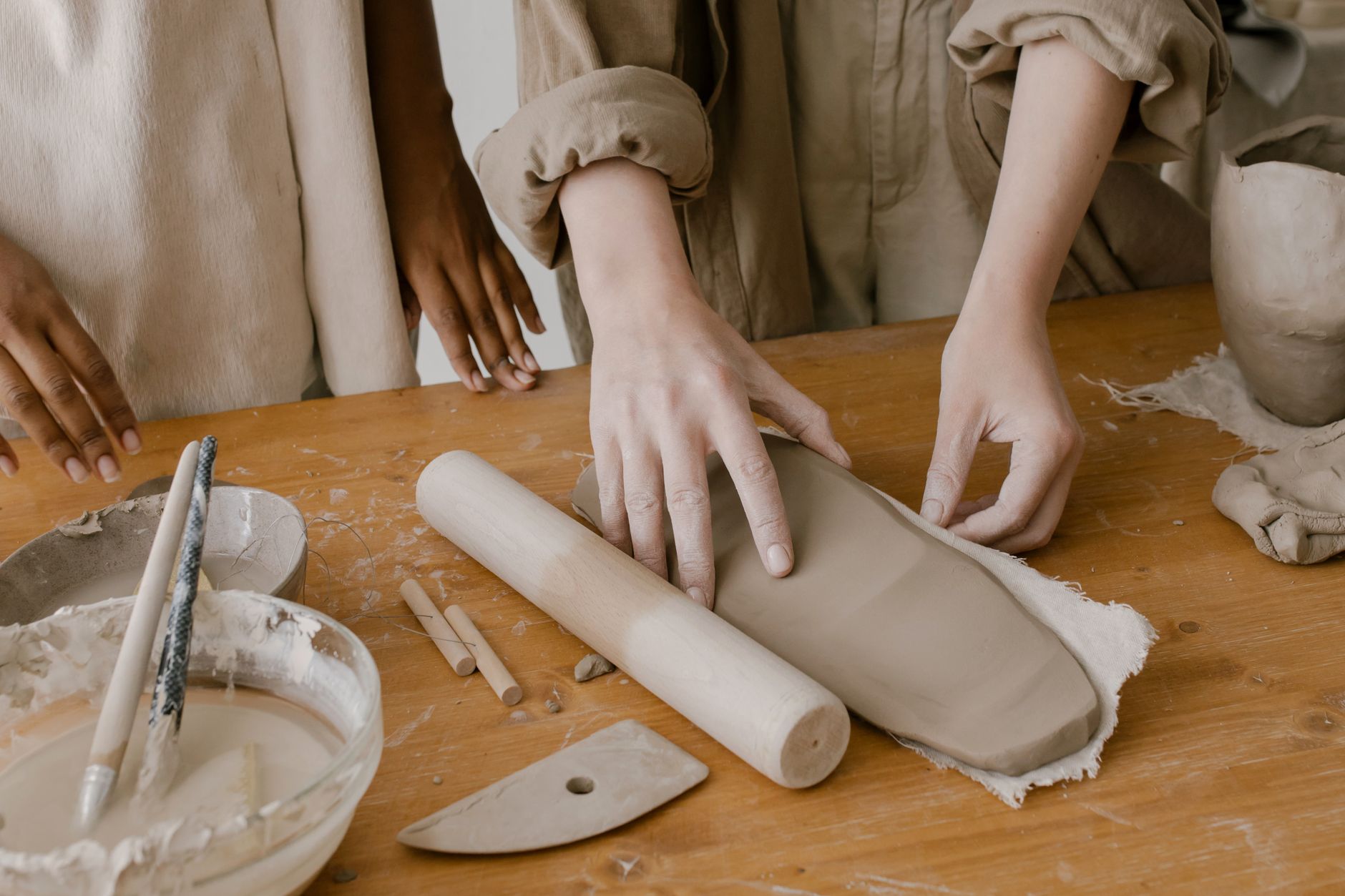
You do both, and the doing part is what sticks. Here's how a typical stop unfolds: the artisan demonstrates their core technique—say, throwing clay or applying lacquer layers—for 10–15 minutes while we explain the skill, the time it takes to master, the economics. Then you try. Your hands are clumsy; theirs are fluid. They correct your grip, laugh, adjust. You understand why experience matters. You won't produce something sellable in 20 minutes, but you'll produce something real—a small bowl you threw, a lacquer plate you helped finish. These go home with you or are packed and mailed later (ask about our shipping timeline when you book). No two visits are identical because each artisan works at their own pace and the day's commissions come first.
What's the difference between half-day and full-day tours?
A half-day tour (typically 4–5 hours) visits 2–3 workshops in one village or closely neighboring villages, usually in the morning. You have depth in fewer places: longer time with each artisan, a meal break, unhurried hands-on time. A full-day tour (7–8 hours) covers 3–4 workshops across 1–2 villages, includes lunch with a family, and often adds a market or historical context stop (a pagoda, a communal house). Full-day suits explorers and groups wanting a broader picture. Half-day suits busy schedules, families with young children, and those who want mastery-level depth in one or two trades. Both leave time for questions and photos.
Who should—and shouldn't—book a craft village tour?
Great fit: Couples wanting a shared experience away from the city. Families with kids aged 7+. Solo travelers seeking connection. Groups of friends. Anyone curious about how things are actually made.
Less ideal: Mobility-limited guests (workshops have steps, dusty floors, no lifts). Guests with severe textile or dust allergies (especially silk and ceramic villages). Those expecting a mall-like shopping experience (villages sell, but stock is limited and prices reflect artisan wages, not tourist markups). Anyone on a strict 2-hour schedule.
We adapt for: Young kids (3–6): shorter visits, simpler techniques (painting, hand-building clay), more breaks. Seniors (70+): we arrange seating, slower pacing, fewer villages per day, transport with rests. Dietary needs: we coordinate lunch in advance with the family kitchen. Rain: we prioritize covered workshops, extend indoor time, reschedule outdoor activities.
How does a day actually unfold, hour by hour?
| Time | What happens | Where | What you bring |
|---|---|---|---|
| 7:30–8:00 a.m. | Pick-up from your hotel | Your accommodation | Small bag, water, sunscreen |
| 8:00–8:45 a.m. | Ride to village; we explain history & logistics | En route | Open ears |
| 8:45–9:30 a.m. | 1st workshop demo & hands-on (e.g., silk loom) | Artisan's space | Closed shoes, tied hair |
| 9:30–10:30 a.m. | 2nd workshop (e.g., wood-carving) | Another family workshop | Patience |
| 10:30–11:00 a.m. | Tea, snack, chat with artisans | Workshop or courtyard | Questions |
| 11:00–12:30 p.m. | 3rd workshop or deeper exploration of 2nd | Depends on group pace | Camera (phone OK) |
| 12:30–1:30 p.m. | Lunch with a family | Local kitchen | Appetite |
| 1:30–3:00 p.m. | 4th workshop or market walk (full-day only) | Village center or family shop | Cash (VND) for souvenirs |
| 3:00–4:00 p.m. | Return to Hanoi | En route | Doze if tired |
This rhythm shifts if someone needs a break, the artisan is in a flow state we don't want to interrupt, or weather demands flexibility. We watch the group and adjust.
What should you realistically expect to take home?
Most guests leave with a small handmade item: a clay vessel, a painted tile, a woven sample. These are real, imperfect, and valuable because you made them. Many workshops also sell finished pieces at prices that feel fair once you've seen the time and skill involved. Quality varies; what you make in 30 minutes cannot rival what an artisan makes in a week. But your piece carries memory. We don't push sales; many guests just buy a small notebook or tea to support the family and carry the memory instead. Some visitors arrange to commission a larger piece after the visit (we can facilitate, though timelines are measured in weeks, not days).
How do craft village tours connect to other Cáo experiences?
Visiting a craft village often inspires deeper dives. A flower arranging workshop in Hanoi shows you how artisans approach composition and color—skills reflected in traditional crafts too. A Vietnamese cooking class in a family kitchen teaches you the same patience and technique you see in a pottery wheel. Tea experiences often happen in homes near craft villages. Many travelers combine a street food and market tour with a craft village day to understand local economy and life holistically. Some join a farm and countryside experience to see where materials—bamboo, clay, silk cocoons—originate. We can chain these into a multi-day itinerary.
What to check before you book
- Mobility: Do you have stairs, uneven floors, or long standing periods? Ask which villages are easiest-access.
- Allergies: Silk dust, wood shavings, lacquer fumes, clay powder—tell us in advance so we choose appropriate workshops.
- Weather: Rain doesn't cancel, but ask how we'll adapt (covered spaces, timing shifts).
- Language: We speak English; artisans may not. We translate, but expect silences and gesture-based communication.
- Pace: Are you rushed or leisurely? Full-day vs. half-day affects depth, not just duration.
- Kids: Ages matter. Under 6 means shorter time, simpler tasks. Over 10 can handle most adult workshops.
- Souvenirs: Decide if you want to buy or just observe. Budget a small amount if you do; prices are low but not negligible.
- Transport: We arrange it; confirm your exact hotel location so pickup is smooth.
For craft workshops in Hanoi itself—shorter, urban-based sessions on specific trades—or deeper dives into heritage, ask us. We can also suggest experiences in Hanoi that pair well with a village day. Every group's interests differ; there's no fixed menu.

FAQ
Do I need prior craft experience?
No. Workshops welcome absolute beginners. The artisan will adjust the difficulty; you'll learn basics and understand the craft's complexity.
What if I'm afraid I'll break something or do it wrong?
Mistakes are how learning happens. Artisans expect it. Clay can be re-wedged, paint can be reapplied, wood can be re-carved. Your fear is normal; it dissolves fast once you start.
Can I bring my kids (age 4)?
Yes, but expect a shorter attention span. We'd recommend a 2–3 workshop half-day instead of 4. Loud, dusty spaces tire small kids quickly.
How much should I budget for souvenirs?
Not mandatory. If you want a finished piece, artisan prices range widely depending on size and complexity; ask us what typical ranges are for the villages you'll visit. We never pressure sales.
Is a craft village tour different from visiting Hoan Kiem Lake or the Old Quarter?
Completely. Lakes and heritage sites are tourist focal points with crowds and photo stops. Villages are working spaces where artisans' livelihoods happen. You're in the real activity, not observing from a distance.
What if it rains?
Tours run in light rain. We shift to covered workshops first and adjust timing. Heavy rain may prompt a reschedule; we'll offer alternatives on the spot.
Ask about dates
Tell us the city, your dates and what you would like to try. We reply on WhatsApp in English with options and availability.
FAQ
Do I need prior craft experience?
No. Workshops welcome absolute beginners. The artisan will adjust the difficulty; you'll learn basics and understand the craft's complexity.
What if I'm afraid I'll break something or do it wrong?
Mistakes are how learning happens. Artisans expect it. Clay can be re-wedged, paint can be reapplied, wood can be re-carved. Your fear is normal; it dissolves fast once you start.
Can I bring my kids (age 4)?
Yes, but expect a shorter attention span. We'd recommend a 2–3 workshop half-day instead of 4. Loud, dusty spaces tire small kids quickly.
How much should I budget for souvenirs?
Not mandatory. If you want a finished piece, artisan prices range widely depending on size and complexity; ask us what typical ranges are for the villages you'll visit. We never pressure sales.
Is a craft village tour different from visiting Hoan Kiem Lake or the Old Quarter?
Completely. Lakes and heritage sites are tourist focal points with crowds and photo stops. Villages are working spaces where artisans' livelihoods happen. You're in the real activity, not observing from a distance.
What if it rains?
Tours run in light rain. We shift to covered workshops first and adjust timing. Heavy rain may prompt a reschedule; we'll offer alternatives on the spot.
More like this
Craft workshops
Craft Workshop in Saigon: Small Group Classes for Beginners
Cáo Experiences runs small-group craft workshops across Saigon where you learn traditional and contemporary making in intimate studio and community spaces. Sessions suit absolute beginners, families, and skill-builders.
Craft workshops
Craft workshop in Saigon for couples: what to choose
Couples in Saigon have three main craft paths: ceramics in a family studio, natural-dye silk painting, or bamboo weaving. Each teaches differently and suits different moods.
Craft workshops
Craft Workshop in Hoi An: What to Expect Step by Step
A craft workshop in Hoi An with Cáo Experiences is a half or full-day session where you learn a traditional Vietnamese skill—lantern-making, silk painting, woodblock printing, or lacquerware—in a working studio or family workshop. You leave with a finished piece you made yourself.