
Home › Blog › Craft workshops
Craft Workshop in Mekong Delta: What We Offer & How to Choose
By the Cáo Experiences team · 2026-11-06
Cáo Experiences hosts small-group craft workshops in a family studio near the Mekong Delta waterways. Sessions run 3–4 hours (half-day) or 6–7 hours (full-day with lunch), led by a local maker who speaks English. You'll learn one core skill—hand weaving on a traditional loom, hand-thrown pottery, or water hyacinth basketry—and leave with a piece you've made. No prior skill needed; we adapt pace and complexity for kids, seniors, and mixed-ability groups. Rainy days shift to covered studio spaces. Ask us for dates and a quote on WhatsApp.
A craft workshop in the Mekong Delta isn't a souvenir shop or a rushed demonstration. We host you in a working studio where a maker teaches you one technique in depth. You spend three to four hours with clay on your hands, thread on a loom, or fibers around your fingers—not watching from a stool. By the end, you take home something you shaped yourself, usually still damp or unglazed, because authenticity matters more than polish.
The Mekong Delta is ideal for this work. The region has centuries of craft traditions—wetland weaving, ceramic firing using river clay, basketry from water hyacinth. Transport is straightforward, and the pace of life slows down the moment you arrive. Our studio sits on a quiet lane; you can hear the river, roosters, and the maker's voice, not traffic.
What type of craft workshop suits your group?
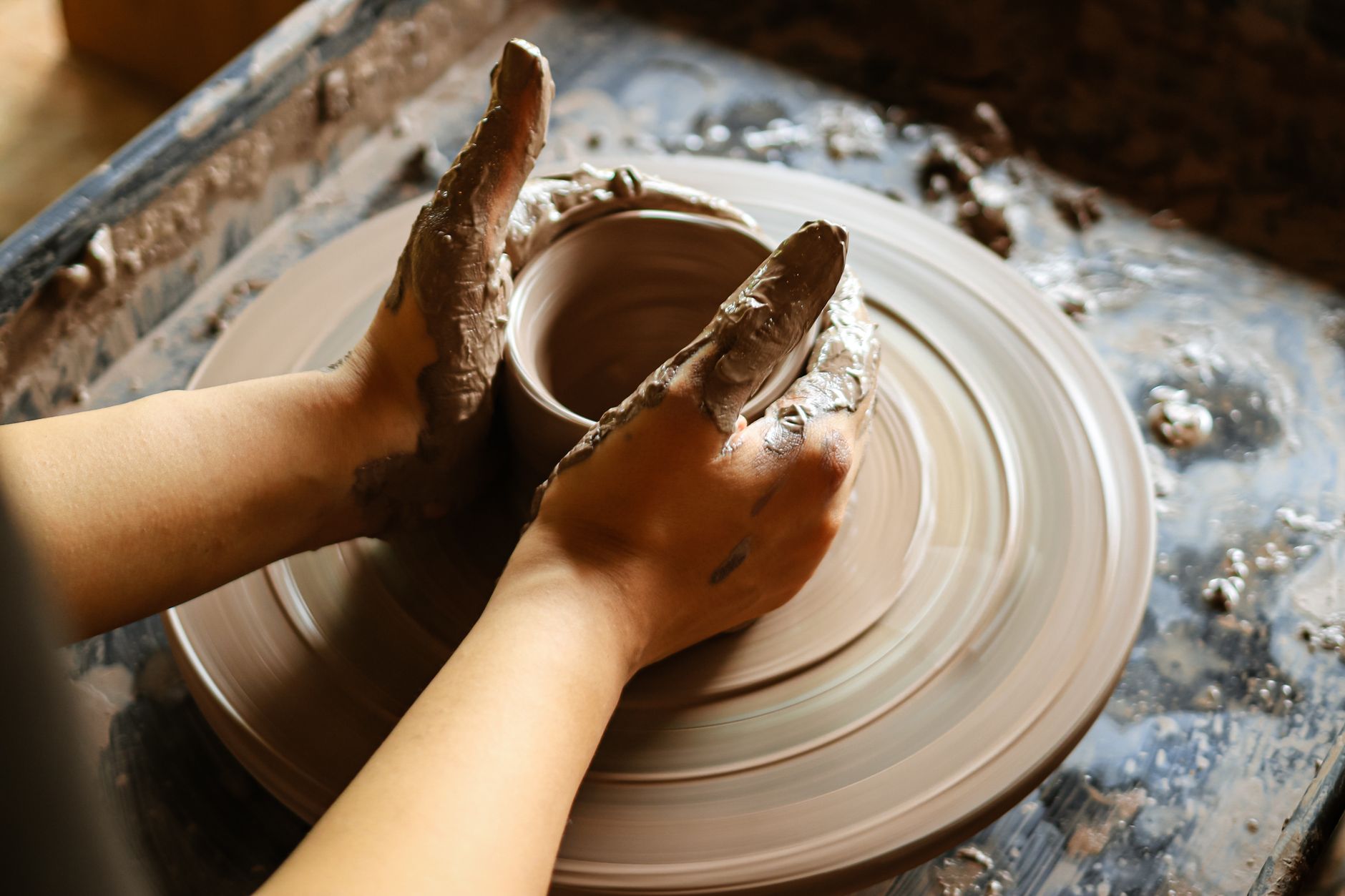
We offer three core craft types, each different in pace, outcome, and physical demand. Hand weaving uses a wooden floor loom; you learn basic warp setup and pass the shuttle back and forth, building a small blanket or scarf over hours. It's rhythmic, meditative, and low-stress for beginners and seniors. Hand-thrown pottery requires more upper-body strength and coordination; you center clay on a wheel, hollow it, and shape a bowl or cup. It's tactile and sometimes messy—clothes that can get wet or clay-stained are essential. Water hyacinth basketry involves no tools or wheel; you soak dried fibers, braid, weave, and coil them into a small basket or placemat. It's the gentlest on joints and works well for children and mixed-age families. Ask which craft suits your group's interests and physical needs.
How does a half-day workshop actually run?
You arrive mid-morning at the studio. The maker greets you with water and tea, shows you the space, and explains the day's rhythm. The first 20–30 minutes covers technique: hand position, how to feel the material respond, common mistakes, what to aim for. Then you work—with the maker circulating, adjusting your grip, slowing you down if you rush, encouraging when frustration creeps in. Beginners often grip too tight; we remind you to let the material do some of the work.
Around midway, we pause for a short break—water, snacks, time to step back and see what you've made so far. The final stretch is refinement: smoothing a rim, evening a weave's tension, adding detail. By hour three or four, you're tired and ready to stop, which is perfect—you've learned muscle memory without overworking. You photograph your piece, we discuss care if it's wet clay (how to dry it slowly so it doesn't crack), and you pack it carefully.
The whole arc—arrival to departure—takes 3.5 to 4 hours. No lecture, no PowerPoint. Just hands and material and a maker's quiet guidance.
What's the difference between half-day and full-day sessions?
| Duration | What You Make | Food | Best For | When to Choose |
|---|---|---|---|---|
| Half-day (3–4 hrs) | One complete piece (scarf, small bowl, basket) | Tea & snacks only | Solo travelers, tight schedules, first-timers | You want a taste without fatigue |
| Full-day (6–7 hrs) | One main piece + a second smaller item, or deeper refinement | Lunch at studio or nearby family kitchen; tea all day | Couples, groups, families, those wanting immersion | You have time, want two pieces, crave full immersion |
Full-day sessions include a lunch break midday—usually a simple Vietnamese meal prepared at the studio or brought from a family kitchen nearby. You'll eat with the maker and other guests, which often leads to conversations about how craft sustains rural life. The afternoon session revisits the technique at a slightly deeper level: you might throw a second pot, more refined, or weave a more complex pattern. Fatigue by hour six is real—it's good fatigue, the kind where your hands know what to do but your brain is quiet.
Who should attend, and who might find it hard?
This workshop suits beginners, families with kids aged 8+, couples on a slow trip, and older adults looking for a tactile, meditative morning. We've hosted groups of three to eight comfortably. The studio has good light, simple seating, and we adjust height and reach for people with mobility concerns—ask us what your group needs.
Children (ages 8–14) work well in hand weaving and basketry; pottery wheel requires more strength and spatial awareness, though younger kids can hand-model clay instead. Parents should expect kids to lose focus after 90 minutes—that's fine; we have quiet tasks for them, or they can sketch the studio while you continue.
Seniors (65+) thrive here. The rhythm is slow, the maker is patient, and no standing for hours is required. Arthritis in the hands can make weaving or basketry challenging; we adapt grip or choose hand-modeling clay instead. If someone has a recent shoulder injury, pottery isn't suitable—tell us beforehand and we'll suggest weaving.
Allergies are rare in craft work, but clay dust bothers some respiratory systems. We can wet-work the clay (keeping it moist) to eliminate dust, or we pivot to weaving or basketry instead. Tell us in advance.
Rainy days don't stop the workshop. The studio has a covered main space and a smaller covered annex; we shift there. Rain actually deepens the atmosphere—you're more focused without the distraction of a sunny outdoors, and the maker's stories about how rain affects clay and fiber drying become more relevant.

What should you check before booking a craft session?
Before you confirm a date, clarify these points:
- Your physical needs: Recent surgery, chronic pain, or mobility limits? Tell us. We'll adapt the craft or suggest an alternative from our full experiences menu.
- Dietary restrictions: Full-day sessions include lunch. Let us know allergies, vegetarian, vegan, or religious needs in advance.
- Weather plan: It rains in the Delta; confirm whether a wet day is still on or rescheduled.
- Group size: We host 2–8 guests per session. Larger groups split into two sessions or one teaching assistant joins. Confirm the exact headcount so the maker prepares clay, thread, or fiber in the right amount.
- Transport: Can you reach the studio by motorbike or car? We can arrange a pickup from your hotel in the nearby town for an extra fee—ask.
- What you take home: A fresh pot will be leather-hard (not quite dry); you'll wrap it carefully for the flight home or mail it later. A woven scarf is ready to wear. A basket is finished. Understand the piece's fragility before you leave.
How does the Mekong Delta setting shape what you learn?
The Delta isn't a backdrop; it's the source. The clay comes from the riverbed—the maker collects it or knows the source well. Water hyacinth grows in the wetlands you see from the studio lane. The weaving techniques are unchanged from what Delta makers practiced decades ago. When you weave or shape clay, you're learning a place's skill, not an imported one.
The soundscape—water lapping, birds calling, voices in Vietnamese in the distance—is part of why guests find it meditative. You're not in a city's sensory overload. The maker will mention how monsoon season affects clay, why the river level matters for fiber harvest, stories about family members who also made things. This context is invisible in a tourist-zone workshop. It's why we choose this location and stay small.
If you want to deepen the craft experience further, consider pairing it with other hands-on workshops nearby—a morning on a small farm followed by afternoon weaving, for example—or explore our Hoi An craft and culture classes, where you can visit a lacquer studio and try your hand there too.
Pages from our team you may need

FAQ
Do I need any experience to join a craft workshop?
No. Beginners are the norm. The maker teaches from zero, assuming you've never touched a loom or clay. They expect mistakes and use them as teaching moments. We've taught children, seniors, and travelers with no craft background.
What happens if I don't like my finished piece?
It's yours to take home or leave behind—your choice. Most guests feel proud of their work even if it's uneven or awkward. The imperfection is proof you made it. Aesthetic perfection isn't the goal; the learning and the doing are.
Can I book a private session just for my group?
Yes. Private sessions run for 2–8 people; ask us for dates and availability on WhatsApp. A private session costs more than joining an open group, but you set the exact time and adjust the pace.
How much space should I expect in the studio?
Each person has a loom, a pottery wheel, or a basketry station roughly 1.5 meters apart. It's cozy but not cramped. The maker moves between you. It feels like a working studio, not a classroom.
What should I wear to avoid ruining my clothes?
Wear something you don't mind getting wet, stained, or dusty. An apron is provided. Closed-toe shoes are best (clay and water splashes). Don't wear loose sleeves that might catch the loom or wheel. Leave jewelry at home unless it's a simple wedding band.
Can I mail my finished pottery home instead of carrying it on the plane?
If your piece is unfired clay, it won't survive mailing; it will crack as it dries unevenly. Fired ceramic can be mailed, but that requires the maker to fire it after you leave (2–3 weeks). Ask about this option when you book; there may be a postage fee.
Is the workshop private or mixed with other guests?
Both options exist. Scheduled open workshops host 3–6 guests; private sessions are just your group. Ask which is available for your dates.
Ask about dates
Tell us the city, your dates and what you would like to try. We reply on WhatsApp in English with options and availability.
FAQ
Do I need any experience to join a craft workshop?
No. Beginners are the norm. The maker teaches from zero, assuming you've never touched a loom or clay. They expect mistakes and use them as teaching moments. We've taught children, seniors, and travelers with no craft background.
What happens if I don't like my finished piece?
It's yours to take home or leave behind—your choice. Most guests feel proud of their work even if it's uneven or awkward. The imperfection is proof you made it. Aesthetic perfection isn't the goal; the learning and the doing are.
Can I book a private session just for my group?
Yes. Private sessions run for 2–8 people; ask us for dates and availability on WhatsApp. A private session costs more than joining an open group, but you set the exact time and adjust the pace.
How much space should I expect in the studio?
Each person has a loom, a pottery wheel, or a basketry station roughly 1.5 meters apart. It's cozy but not cramped. The maker moves between you. It feels like a working studio, not a classroom.
What should I wear to avoid ruining my clothes?
Wear something you don't mind getting wet, stained, or dusty. An apron is provided. Closed-toe shoes are best (clay and water splashes). Don't wear loose sleeves that might catch the loom or wheel. Leave jewelry at home unless it's a simple wedding band.
Can I mail my finished pottery home instead of carrying it on the plane?
If your piece is unfired clay, it won't survive mailing; it will crack as it dries unevenly. Fired ceramic can be mailed, but that requires the maker to fire it after you leave (2–3 weeks). Ask about this option when you book; there may be a postage fee.
Is the workshop private or mixed with other guests?
Both options exist. Scheduled open workshops host 3–6 guests; private sessions are just your group. Ask which is available for your dates.
More like this
Craft workshops
Craft Workshop in Saigon: Small Group Classes for Beginners
Cáo Experiences runs small-group craft workshops across Saigon where you learn traditional and contemporary making in intimate studio and community spaces. Sessions suit absolute beginners, families, and skill-builders.
Craft workshops
Craft workshop in Saigon for couples: what to choose
Couples in Saigon have three main craft paths: ceramics in a family studio, natural-dye silk painting, or bamboo weaving. Each teaches differently and suits different moods.
Craft workshops
Craft Workshop in Hoi An: What to Expect Step by Step
A craft workshop in Hoi An with Cáo Experiences is a half or full-day session where you learn a traditional Vietnamese skill—lantern-making, silk painting, woodblock printing, or lacquerware—in a working studio or family workshop. You leave with a finished piece you made yourself.