
Home › Blog › Craft workshops
Craft Workshop in Saigon for Foreigners: Find Your Experience
By the Cáo Experiences team · 2026-11-06
Craft workshops in Saigon for foreigners are small-group or private sessions where you learn a traditional Vietnamese skill—ceramics, silk painting, wood carving, indigo dyeing, or embroidery—in a working studio. Sessions typically run 2–4 hours, hosted by Cáo Experiences in English, in lanes off the old quarter or in artisan neighbourhoods. You arrive, get a materials briefing, work hands-on (beginners get simpler projects; experienced makers push further), and leave with something you made. No prior skill needed. We adapt pace for kids, seniors, or allergies. Rain doesn't stop us indoors. Ask us for dates and a quote on WhatsApp to match your interests and group size—cost depends on craft type, group size, and whether you want a meal included.
What exactly happens in a craft workshop session?
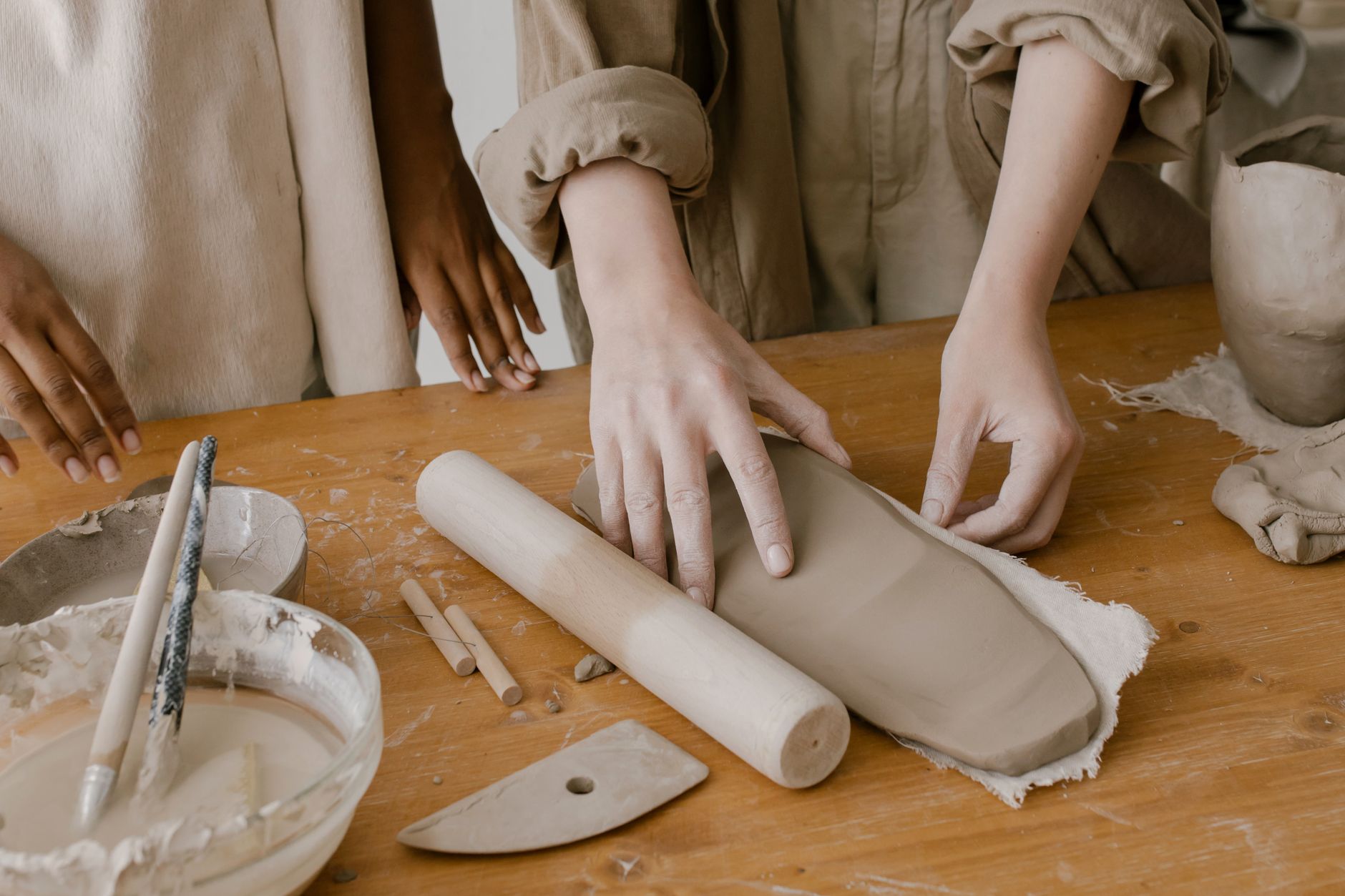
You'll arrive at a family studio or shared maker space in a quiet lane, usually in the inner Saigon neighbourhoods where artisans still work. We start with tea and a 10–15-minute walk-through of the craft: where it comes from, why locals use it, how the material behaves. Then you sit—at a pottery wheel, a silk-stretching frame, a lacquer table, or an embroidery hoop—and your host guides your hands through the first steps. You'll make mistakes. That's the point. By hour two, muscle memory starts. By the end, you have a finished piece: a hand-built bowl, a silk scrap you can frame, a wooden spoon, or a textile square. We photograph it, pack it (or you carry it home), and debrief over water. Total: 2.5 to 3.5 hours, depending on drying time or complexity.
How do I choose between different craft types?
Your choice depends on speed, mess tolerance, and what you want to take home. Silk painting feels clean and fast (you see finished colour within the session). Ceramics is slower and muddier but deeply satisfying—though your piece must dry and fire, so we post it to you or you collect it later. Embroidery demands patience and fine motor control; it's meditative, quiet, best for couples or small groups. Lacquer work is labour-intensive and involves toxic fumes, so it's rarer and suited to serious craft lovers. Wood carving gives you a keepsake immediately. If you have two hours and want instant gratification, silk or painting. If you have a full afternoon and enjoy getting your hands wet, ceramics. Here's a quick frame:
| Craft | Best for | Time to finish | Mess level | Take home when? |
|---|---|---|---|---|
| Silk painting | Quick learners, couples | 90 mins | Low | Same day |
| Ceramics | Patient types, families | 2.5 hrs (firing later) | High | 5–7 days after |
| Embroidery | Slow workers, groups | 2–3 hrs | Minimal | Same day (partial) |
| Wood carving | Detail lovers | 2 hrs | Medium | Same day |
| Indigo dyeing | Texture seekers | 2 hrs | Medium | Same day |
What if I'm a complete beginner—will I feel lost?
No. We design every session for zero prior knowledge. Your host will show you a finished example, then break the skill into four or five micro-steps. On hour one, your focus is just "how does the clay feel?" or "what happens when I pull the thread?" We don't expect gallery-quality output. We expect curiosity. Children as young as six have made usable ceramics; grandparents have learned indigo; people with no artistic confidence have surprised themselves. What beginners worry about most is "I'll break it" or "mine will look ugly." Here's the truth: broken pieces teach you how the material moves. Ugly by your standard often looks beautiful to someone else—and it's yours, made by your hands. If anxiety builds, your host slows down, takes a break, or switches to a simpler project. Bring no expectations except openness.
How do we handle kids, seniors, dietary needs, and bad weather?
We run family and kids experiences regularly, with shorter time windows (1.5–2 hours), simpler motions, and snack breaks. Seniors join often; we ensure chairs are comfortable, steps are gentle, and the pace never feels rushed. If you have arthritis or limited grip, we adapt the tool or the material—a softer clay, a thicker needle, or a brush instead of your fingers. If you're vegetarian or have allergies, tell us when you book. Many sessions include a light meal (tea and small bites) or happen near food stalls in the old quarter; we'll find something safe. Rain? We're indoors or under deep cover. Humidity and heat affect some drying times, so your host may adjust the schedule—that's part of learning how materials behave in a tropical climate. Wheelchair access varies by studio; ask when you get in touch.

How do I compare Saigon workshops with craft classes elsewhere in Vietnam?
Saigon workshops tend to be faster-paced and urban—centred on traditional techniques in working artisan spaces, often near markets or old lanes. Hoi An craft experiences lean slower and more tourist-oriented, with workshops in heritage-heavy settings. Da Lat offers craft tied to agritourism (silk, indigo, weaving), often on farm outskirts. Hanoi has dense craft guild neighbourhoods and more formal atelier setups. If you want immersion in a living trade within a city, Saigon delivers fast. If you want a multi-day deep dive or countryside context, other regions suit better. Most visitors pair a Saigon craft workshop with a Vietnamese cooking class, a street food and market tour, or a flower arranging workshop on the same trip—they complement each other. The rhythm of making something by hand sharpens how you taste and see afterward.
What should I check before booking a craft workshop?
Before you book, clarify five things with your host on WhatsApp:
- Exact duration: Is it 2 hours or 3? Does setup and breakdown time count?
- What you make and keep: Do you take it home same-day, or does it need firing/drying? Who covers postage if it's mailed later?
- Group size and booking style: Private (just you) or will strangers join? If it's a group, how many?
- What's included and what's not: Are materials provided? Tea? A light meal? Are photos included?
- Cancellation and weather policy: Can you reschedule if it rains? What's the notice window?
Cáo Experiences always confirms dates via WhatsApp and sends a simple one-page brief: start time, location (with a map pin), what to wear (usually old clothes—clay stains), and what to bring (just yourself and a camera). If you're booking a multi-day trip, pair your craft workshop with other group and team experiences or wellness and slow experiences to round out your itinerary. And always ask—our hosts enjoy unexpected questions.
Combining crafts with other Saigon experiences
Many guests pair a craft workshop with another session the same week. A Vietnamese coffee workshop teaches you to brew like a local; a craft class teaches you to make like one. Together they're a full sensory loop. If you're in Saigon for a week, stagger craft (afternoon) with art and culture classes (morning), and a tea experience (evening)—each builds a different skill and rhythm. Families sometimes book farm and countryside experiences outside the city first, then come into Saigon for a craft session as a close-loop moment. The blend keeps travel fresh and stops single-activity fatigue.
For full details on all session types, themes, and availability across Vietnam, see our craft workshops pillar page or contact us directly via WhatsApp.

FAQ
Do I need any artistic skill to join a craft workshop?
No. Every workshop is designed for beginners. Your host teaches step-by-step. Mistakes are how you learn. Experience makers are welcome too—we scale the challenge.
What if my piece breaks or I don't like it?
Broken clay or thread can be reshaped or re-dyed. If your piece isn't how you imagined, your host helps troubleshoot. In the end, you made it—that's what matters. Keep it.
Can I book a private workshop, or do I have to join a group?
Both options exist. Private workshops are longer and more tailored; group sessions are livelier and cheaper. Tell us which you prefer when you book.
How much does a craft workshop cost, and is there a minimum group size?
Cost depends on craft type, group size, and whether a meal is included. Ask us for dates and a quote on WhatsApp—we customise per request.
What should I wear to a craft workshop?
Wear old clothes you don't mind staining (clay, indigo, or paint splatter happens). Bring flip-flops or shoes you can slip off easily. Aprons are provided.
Can I gift a craft workshop voucher to a friend?
Yes. Book through contact us and we'll arrange a flexible date code. Your friend books a date that suits them on WhatsApp.
Ask about dates
Tell us the city, your dates and what you would like to try. We reply on WhatsApp in English with options and availability.
FAQ
Do I need any artistic skill to join a craft workshop?
No. Every workshop is designed for beginners. Your host teaches step-by-step. Mistakes are how you learn. Experience makers are welcome too—we scale the challenge.
What if my piece breaks or I don't like it?
Broken clay or thread can be reshaped or re-dyed. If your piece isn't how you imagined, your host helps troubleshoot. In the end, you made it—that's what matters. Keep it.
Can I book a private workshop, or do I have to join a group?
Both options exist. Private workshops are longer and more tailored; group sessions are livelier and cheaper. Tell us which you prefer when you book.
How much does a craft workshop cost, and is there a minimum group size?
Cost depends on craft type, group size, and whether a meal is included. Ask us for dates and a quote on WhatsApp—we customise per request.
What should I wear to a craft workshop?
Wear old clothes you don't mind staining (clay, indigo, or paint splatter happens). Bring flip-flops or shoes you can slip off easily. Aprons are provided.
Can I gift a craft workshop voucher to a friend?
Yes. Book through [contact us](/contact) and we'll arrange a flexible date code. Your friend books a date that suits them on WhatsApp.
More like this
Craft workshops
Craft Workshop in Saigon: Small Group Classes for Beginners
Cáo Experiences runs small-group craft workshops across Saigon where you learn traditional and contemporary making in intimate studio and community spaces. Sessions suit absolute beginners, families, and skill-builders.
Craft workshops
Craft workshop in Saigon for couples: what to choose
Couples in Saigon have three main craft paths: ceramics in a family studio, natural-dye silk painting, or bamboo weaving. Each teaches differently and suits different moods.
Craft workshops
Craft Workshop in Hoi An: What to Expect Step by Step
A craft workshop in Hoi An with Cáo Experiences is a half or full-day session where you learn a traditional Vietnamese skill—lantern-making, silk painting, woodblock printing, or lacquerware—in a working studio or family workshop. You leave with a finished piece you made yourself.