
Home › Blog › Craft workshops
Craft Workshop in Vietnam for Kids: What to Expect
By the Cáo Experiences team · 2026-11-06
A craft workshop for kids in Vietnam through Cáo Experiences is a 2–3 hour hands-on session where children (ages 5–16) learn to make something tangible—ceramics, weaving, embroidery, painting, paper crafts, or mixed media—in a relaxed studio or creative space, guided in English with real materials and no pressure to be "perfect." We adapt every session to the child's age, fine-motor ability, attention span, and cultural interests: younger kids (5–8) enjoy sensory and messy exploration; older kids (9–16) dive into technique and storytelling behind their craft. Sessions run in Hanoi, Da Nang, Hoi An, Saigon and Da Lat year-round; ask us for dates and a quote on WhatsApp to confirm availability and group size. No prior experience needed—we meet beginners where they are, celebrate mistakes as learning, and send kids home with their finished work wrapped safely.
What craft skills can children actually learn in one session?
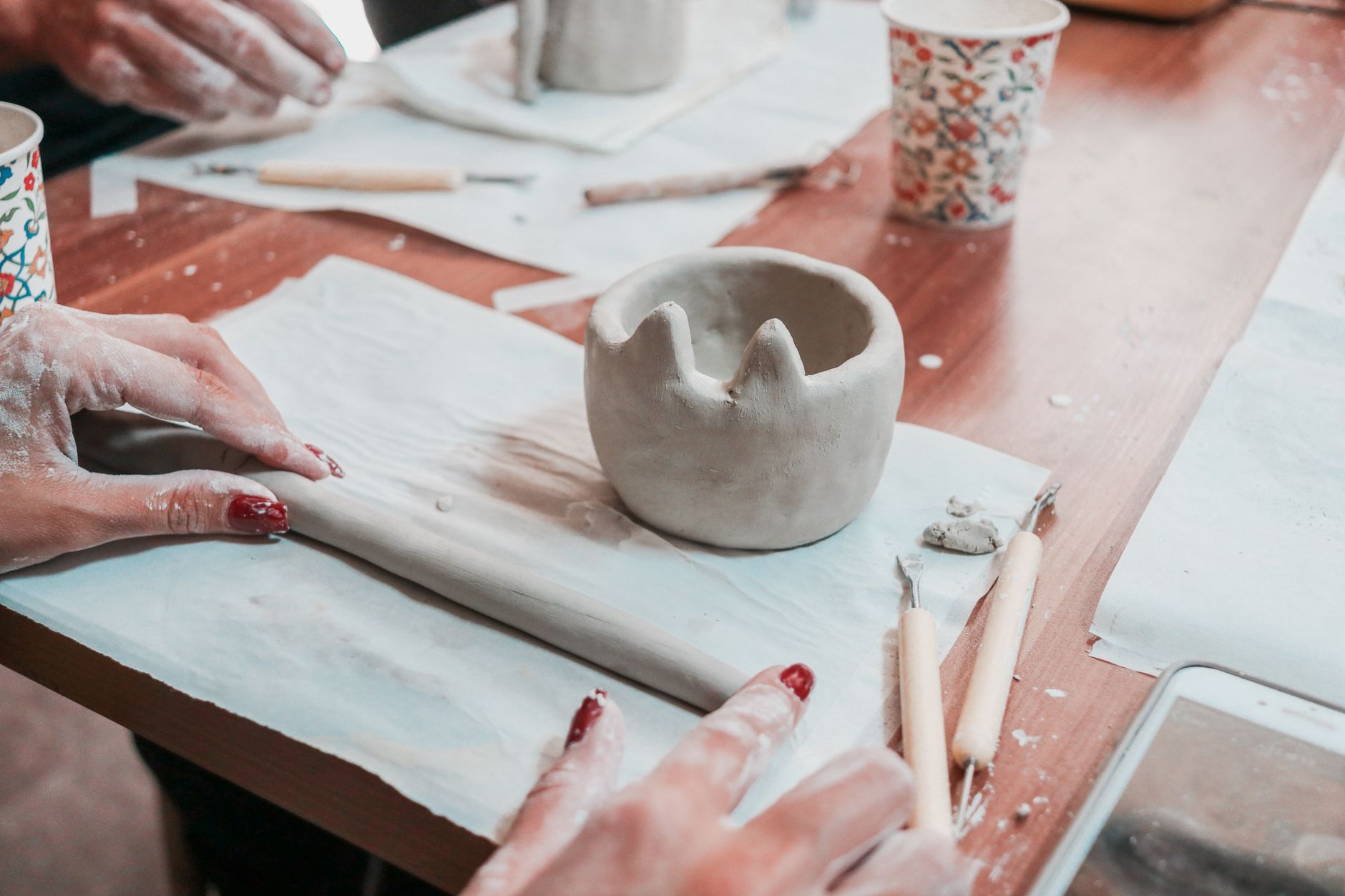
Children learn one or two core skills per session depending on the craft. In a weaving workshop, a 7-year-old learns to thread a simple loom and understand warp and weft; by the end, they've woven a small wall hanging or scarf. In a ceramics session, kids hand-build using coil or slab techniques—pinching bowls, sculpting small figures—and understand clay shrinkage and glazing basics. Paper crafts teach folding precision, collage composition, or traditional Vietnamese paper-cutting motifs. A painting or mixed-media session focuses on color mixing, composition, and confidence with brushes and unconventional materials. Embroidery introduces needle control, simple stitches, and how textiles carry cultural meaning in Vietnam. The goal is not production-line output: it's learning one skill deeply enough to feel competent, asking "why do we do it this way?", and leaving proud of the object in their hands. Older kids often want to know the history—who did this work, when, why—and we weave that in naturally as we work.
How do you adapt a craft workshop if a child has never made anything before?
We assume zero prior experience and design each session around that. A beginner's mindset is actually an advantage: they're curious, not self-conscious. In the first 10–15 minutes, we show, not tell. If it's ceramics, we sit beside the child, hold the clay, let them feel weight and plasticity, then place their hand under ours as we shape together. We use simple, honest language: "The clay wants to crack here—let's keep it thicker," not "You're doing it wrong." For fine-motor anxieties (a 6-year-old worried about holding a brush steadily), we offer tools that give confidence: thicker brushes, wrist rests, or pre-drawn outlines if they want them. If a child freezes, we shift to sensory play—mixing colors, making patterns, no "final" outcome—until the joy returns. Older beginners sometimes carry perfectionism from school; we name it directly: "This isn't a test. Wonky lines are real." By the second half, most children relax and start experimenting. We photograph their work so they remember what they made, and we always discuss what surprised them.
Which age range gets the most from a craft workshop?
Children aged 7–12 are the sweet spot: fine-motor skills are solid, attention spans hold 2–3 hours with a short break, and they're curious about process. A 7-year-old will focus intently on mastering one stitch; a 10-year-old will ask "Can I combine two techniques?" and a 12-year-old will want to know the cultural or historical angle. Kids under 5 can join if a parent stays and co-makes—they learn by watching and playing alongside, not independent output. Teens (13–16) thrive if the craft has conceptual depth: we've run embroidery sessions where older kids explore how symbols tell family stories, or ceramics where they throw questions about function and form. Attention, not age, matters most. A focused 5-year-old will outpace a distracted 9-year-old. We always ask about interests and personality when you book, so we pitch the session and pacing right.
What happens if weather turns bad or a child gets frustrated mid-session?
Rain is normal in Vietnam, and our studios are indoors or covered, so wet weather never cancels a session. If it's stinking-hot, we adjust: more water breaks, slower pacing, and lighter activities (painting or embroidery rather than wheel work in a stuffy space). If a child hits frustration—a glaze crack, a tangled thread, a smudged line—we pause, acknowledge it ("That's annoying, and it happens to every maker"), offer a practical fix or restart, and shift perspective: "What did you learn from trying?" We never force a child to finish or hide a "mistake" into the final object. Sometimes the learning is the frustration and how to move through it. If a child genuinely needs to stop, we wrap gracefully, let them take home what they've made, and there's no judgment. Sessions are for joy first.

How does a typical 2-hour craft session actually unfold?
We run it like this: 0:00–0:10 — Arrival, introductions, we show finished examples (real work by previous participants and local makers) so kids see what's possible without pressure. 0:10–0:25 — Hands-on exploration: we demo the technique slowly once, then kids try immediately, with us circulating to adjust grip, encourage, answer questions. No lecturing. 0:25–1:40 — Making time. Kids develop their own piece while we guide and problem-solve. We play gentle music, keep the atmosphere calm. 1:40–1:55 — Finishing: glaze, stitch a final seam, add details, step back and look. 1:55–2:00 — Wrap-up: we photograph each piece, talk about what worked, what they'd do next time, and pack their work safely. Total hands-on time: ~100 minutes. For younger kids (5–7), we shorten the intro and extend play time. For older kids, we spend more time on technique refinement or history mid-session.
| Craft Type | Best for Ages | Motor Skill Level | "I might get messy" factor | Takes home |
|---|---|---|---|---|
| Hand-building ceramics | 6–16 | Medium–high | High | Unfired or fired piece (1–2 weeks) |
| Weaving | 5–16 | Medium | Low | Finished small textile |
| Embroidery / stitching | 7–16 | High | Low | Finished stitched piece |
| Painting / mixed media | 4–16 | Low–medium | High | Framed or rolled artwork |
| Paper crafts / cutting | 5–14 | Medium | Low | 2–3 finished pieces |
| Textile dyeing | 6–16 | Low–medium | Very high | Dyed fabric or garment |
How do allergies, dietary needs, or physical differences get handled?
We ask when you book: allergies (clay dust, plant-based dyes, glues), physical access (wheelchair width through our space, one-handed techniques, sensory sensitivities to texture or sound). None of these are barriers—they shape how we adapt. A child with a shellfish allergy doesn't touch traditional fish-paste dyes; we substitute plant-based indigo instead. A child with low fine-motor strength gets thicker tools, wrist support, or a partner to co-make. A neurodivergent child who needs quiet or a visual schedule gets it built into our session plan. We always have aprons, hand-wipes, and a sink. If a child has a mobility aid, we confirm studio layout in advance and arrange seating so they're part of the circle, not isolated. No child should feel "the craft is not for me"—we adjust the craft to fit the child.
What to check before you book:
- Confirm your child's age and what they've made before (or nothing—that's fine).
- Tell us any allergies, sensory preferences, or physical needs so we prep the right tools and materials.
- Ask about clothing: messy crafts warrant old clothes or an apron we provide.
- Check the session runs in a city near you (we host in Hanoi, Ho Chi Minh City, Hoi An, Da Nang, and Da Lat).
- Confirm how your child gets their finished work home if it's wet clay (we wrap it; you carry it gently).
For a more immersive experience combining craft-making with Vietnamese culture, family experiences often pair a workshop with a market visit or tea session. Or explore art and culture classes if your child wants deeper context around Vietnamese traditions. If you're planning a group trip, group and corporate experiences can scale a workshop to any size.
What about sessions for mixed ages (one 5-year-old, one 12-year-old) in the same family?
We run them. The craft has to suit both. Ceramics works well: a younger child builds a simple pinch pot while an older sibling throws more ambitious forms or decorates theirs with carved detail. Painting/mixed media is perfect—everyone uses the same materials but pursues their own composition. Weaving is tricky: the loom setup is the same, but a 12-year-old finishes first, so we have a second phase ready (pattern variations, learning a new stitch, working on a bigger piece). We separate them slightly in the studio—not split off, but positioned so you can each focus—and the older child often becomes a quiet mentor to the younger one, which deepens their own learning. Parents are welcome to sit, make alongside, or step back and watch.
Pages from our team you may need

FAQ
Can parents join in the craft workshop or do they have to sit separately?
Parents are welcome to make alongside their child, sit nearby and observe, or step outside—whatever serves the child's focus. We see parents join in for family bonding; we also see kids thrive independently for 2 hours if the parent steps back. You know your child's style. We recommend staying if your child is under 6 or anxious; if they're 8+ and confident, stepping back often helps them feel grown-up and self-directed.
What happens to the finished pieces—do kids glaze/fire them, and when?
For ceramics, we fire pieces 1–2 weeks after the session; you collect them glazed and ready. For textile crafts (embroidery, weaving), the piece goes home finished that day. Painted or paper work is either taken home damp (safe to transport, dries at home) or we keep it if you prefer to avoid travel mess. Always ask on booking.
Do you teach traditional Vietnamese crafts, or contemporary techniques?
Both. We teach traditional skills (hand-embroidery patterns rooted in Vietnamese textile history, indigo dyeing, paper-cutting motifs) and how they're made and why. We also run contemporary mixed-media sessions. The context always matters—a child learns the "what" and the "why."
What if my child is very shy or has social anxiety?
Private or semi-private sessions work best. We also run small group sessions (3–4 kids) where the pace is gentler and there's less performance pressure. Shyness usually dissolves once hands are in clay or thread; the focus shifts from "people are watching" to "I'm making something." Tell us so we can match your child with a calm energy and give them the lead.
Can we do a craft workshop combined with another activity, like a cooking class or market visit?
Yes. Many families pair a half-day craft session with a Vietnamese cooking class, a street food tour, or a visit to a local market. We can sequence them back-to-back if it fits your schedule. Family experiences often bundle complementary activities; ask us to design a custom itinerary.
How much space and what materials are included?
We provide a clean, well-lit studio with individual workspaces, all materials (clay, thread, dyes, paints, brushes, tools), aprons, and hand-washing stations. You bring curiosity and old clothes. We send home the finished work wrapped safely; materials and firing (if ceramic) are included in the session price.
Ask about dates
Tell us the city, your dates and what you would like to try. We reply on WhatsApp in English with options and availability.
FAQ
Can parents join in the craft workshop or do they have to sit separately?
Parents are welcome to make alongside their child, sit nearby and observe, or step outside—whatever serves the child's focus. We see parents join in for family bonding; we also see kids thrive independently for 2 hours if the parent steps back. You know your child's style. We recommend staying if your child is under 6 or anxious; if they're 8+ and confident, stepping back often helps them feel grown-up and self-directed.
What happens to the finished pieces—do kids glaze/fire them, and when?
For ceramics, we fire pieces 1–2 weeks after the session; you collect them glazed and ready. For textile crafts (embroidery, weaving), the piece goes home finished that day. Painted or paper work is either taken home damp (safe to transport, dries at home) or we keep it if you prefer to avoid travel mess. Always ask on booking.
Do you teach traditional Vietnamese crafts, or contemporary techniques?
Both. We teach traditional skills (hand-embroidery patterns rooted in Vietnamese textile history, indigo dyeing, paper-cutting motifs) and how they're made and why. We also run contemporary mixed-media sessions. The context always matters—a child learns the "what" and the "why."
What if my child is very shy or has social anxiety?
Private or semi-private sessions work best. We also run small group sessions (3–4 kids) where the pace is gentler and there's less performance pressure. Shyness usually dissolves once hands are in clay or thread; the focus shifts from "people are watching" to "I'm making something." Tell us so we can match your child with a calm energy and give them the lead.
Can we do a craft workshop combined with another activity, like a cooking class or market visit?
Yes. Many families pair a half-day craft session with a [Vietnamese cooking class](/cooking-class), a [street food tour](/street-food-tour), or a visit to a local market. We can sequence them back-to-back if it fits your schedule. [Family experiences](/family-experiences) often bundle complementary activities; ask us to design a custom itinerary.
How much space and what materials are included?
We provide a clean, well-lit studio with individual workspaces, all materials (clay, thread, dyes, paints, brushes, tools), aprons, and hand-washing stations. You bring curiosity and old clothes. We send home the finished work wrapped safely; materials and firing (if ceramic) are included in the session price.
More like this
Craft workshops
Craft Workshop in Saigon: Small Group Classes for Beginners
Cáo Experiences runs small-group craft workshops across Saigon where you learn traditional and contemporary making in intimate studio and community spaces. Sessions suit absolute beginners, families, and skill-builders.
Craft workshops
Craft workshop in Saigon for couples: what to choose
Couples in Saigon have three main craft paths: ceramics in a family studio, natural-dye silk painting, or bamboo weaving. Each teaches differently and suits different moods.
Craft workshops
Craft Workshop in Hoi An: What to Expect Step by Step
A craft workshop in Hoi An with Cáo Experiences is a half or full-day session where you learn a traditional Vietnamese skill—lantern-making, silk painting, woodblock printing, or lacquerware—in a working studio or family workshop. You leave with a finished piece you made yourself.