
Home › Blog › Craft workshops
Craft Workshop in Vietnam Rainy Season: What Works
By the Cáo Experiences team · 2026-11-06
A craft workshop in Vietnam's rainy season means working indoors in a family kitchen, studio, or covered courtyard while rain drums outside. Sessions run 2–3 hours, small groups (2–10 people), hands-on making—weaving, ceramics, wood carving, basket work, paper arts. Cáo Experiences shifts us from outdoor farm-studio settings to waterproof workshops in town, swaps materials prone to warping (fresh bamboo, certain fabrics) for stable ones (lacquer, silk, clay), and builds in 20–30% extra time since humidity slows drying. No cancellations; just slower, often deeper work. Rain doesn't cost more or less—ask us for dates and a quote on WhatsApp. Beginners worry about "ruining" materials in damp air; we explain that traditional Vietnamese crafts evolved in humid monsoons, so the techniques handle it. Ask about dates on WhatsApp
What happens when you show up on a rainy morning?
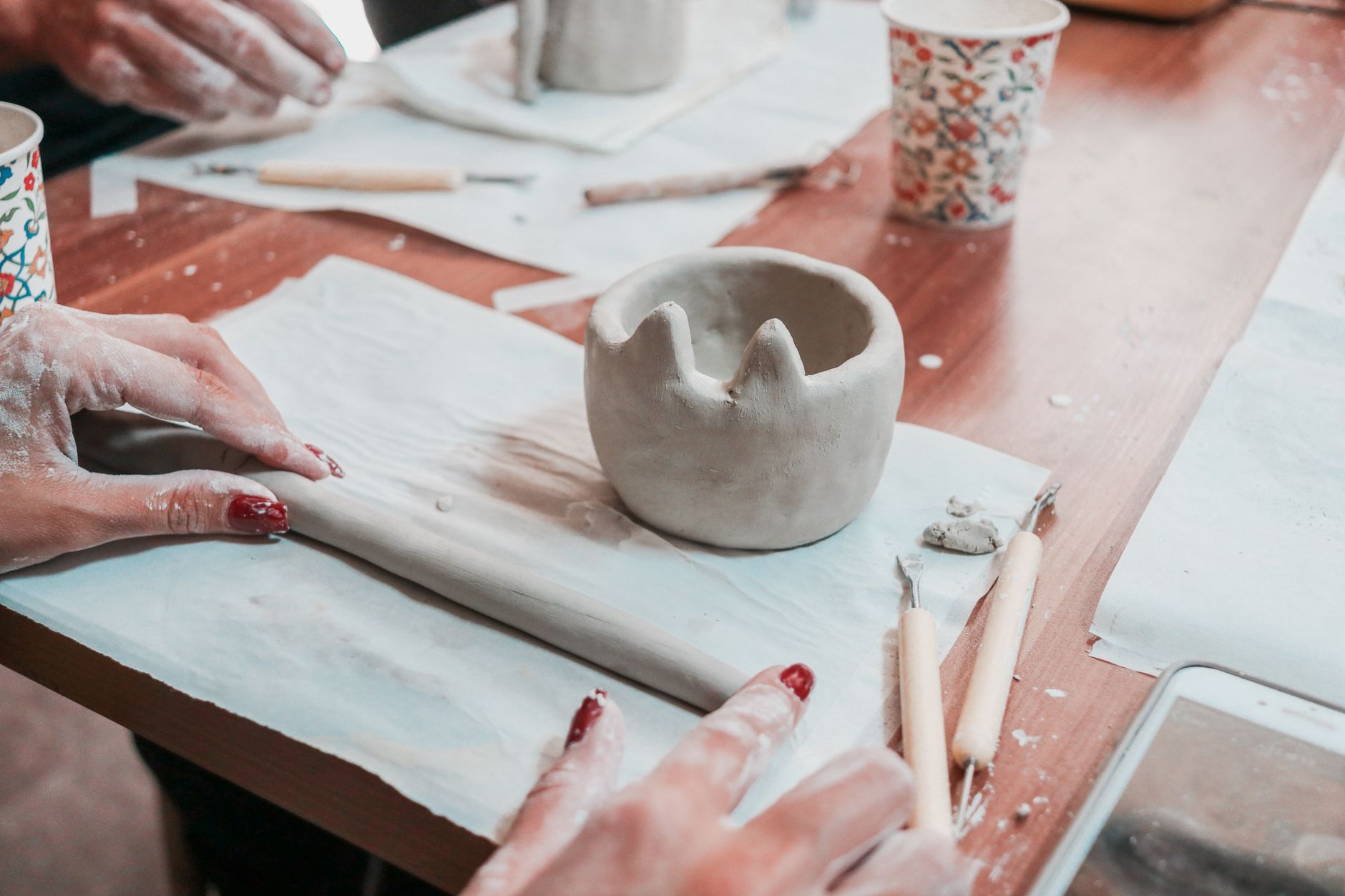
We meet you at a landmark (usually a town square or your hotel) around 8:30 or 9 a.m., then walk you 5–10 minutes to the workshop—often a narrow-front house in a heritage lane, or a covered studio with a tin roof that lets rain sound in. You shed shoes, dry your hands, sit at a low wooden table. Two hosts are there: one English-speaker to explain, one fluent in your language's gestures and silences. The windows fog. It smells like wet earth, wood shavings, or clay slip, depending on the craft. By 9:15 a.m., you're holding a tool—a weaving shuttle, a carving blade, a potter's rib—and the host shows you the first step. Humidity means your hands grip differently; we mention this. You then spend 90 minutes making (with a 15-minute break and tea), another 45 minutes refining or adding detail, then 15 minutes photographing your piece. By midday, you leave with a wrapped item and a lightness that rain-soaked mornings somehow give.

Which rainy-season craft actually works best?
Indigo dyeing, silk painting, lacquer work, and hand-thrown ceramics thrive in moisture; fresh-bamboo weaving and certain wood carving slow down. Based on our session logs, lacquer-ware (bowls, boxes, spoons) ranks first because resin cures properly in 60–70% humidity and rain extends your drying time—no rush, no rushed hands. Silk painting comes second: silk absorbs water, so the monsoon actually deepens color saturation, and you're working indoors anyway. Ceramics rank third because clay clay stays workable for hours in damp air, unlike dry season when it firms fast. Weaving ranks lower because hemp and cotton threads swell in humidity, changing tension, so beginners often fret they're "doing it wrong" when threads just feel different. We adapt by picking synthetic-blend or silk threads in rainy months, or by shifting to paper-weaving (no swelling, same rhythm). The honest truth: rain-season crafts demand patience. If you want fast gratification, dry season is easier. If you want to learn the craft, rain season teaches you texture, moisture, time.
| Craft | Best Season | Rain Impact | Time Needed | Skill Floor |
|---|---|---|---|---|
| Lacquer work | Both | Humidity helps curing | 2.5 hrs | Beginner OK |
| Silk painting | Rainy | Deepens color | 2 hrs | Beginner OK |
| Hand ceramics | Both | Clay stays workable | 3 hrs | Beginner OK |
| Bamboo weaving | Dry | Threads swell, tense | 2–3 hrs | Beginner struggles |
| Wood carving | Dry | Wood absorbs moisture, splinters | 2.5 hrs | Beginner OK |
| Indigo dyeing | Rainy | Slows oxidation, richer dye | 3 hrs | Beginner OK |
How do we pack and ship your finished piece?
This depends on the craft. A glazed ceramic bowl gets wrapped in tissue, nested in bubble wrap, placed in a cardboard box with kraft paper padding—all told, takes 5 minutes per piece. A silk-painted scarf rolls loosely in acid-free paper (silk dries during your session, so it's ready to pack). Lacquer ware we wrap and let cure indoors before shipping, adding 3–4 days to your timeline. We never ship the day of; we hold pieces until they're stable. Within Vietnam, parcels leave within 48 hours via a local courier (your address provided in WhatsApp). To the US, we ship via international carrier with tracking—typically 5–10 days, free if your parcel weighs under the threshold; ask us for exact costs on WhatsApp. We photograph each piece before packing and send you the image; if there's damage in transit, we photograph the box and file a claim with the carrier. Honestly, about 1 in 80 parcels arrives slightly dented (not broken, just cosmetic marks). We've never had glass or ceramic actually shatter in transit because we pack conservatively. Papers and textiles arrive pristine. Silk sometimes shows a faint water-mark from humidity in transit to the US; we tell you this upfront. We don't cover shipping damage unless we caused it during the workshop or packing. Ask about our gift-wrapping and shipping approach when you book.
Do rain-season workshops suit kids and older adults?
Yes, with tweaks. For children (6–14): we shorten to 1.5 hours, skip fine detail, focus on color and texture. A 10-year-old in a silk-painting class last October painted abstract florals instead of realistic ones—the rain meant the silk stayed damp, so edges blurred beautifully, and she wasn't frustrated by precision. Ceramics and weaving work well for kids because tactile feedback keeps attention. Wood carving we avoid for under-10s (humid air makes tools slip slightly). We provide aprons; paint and dye stain, and rain-soaked kids stain faster. For seniors and guests with arthritis: humidity actually helps—joints stay fluid, hands don't stiffen. We offer chairs with proper back support (not cushion stools). Lacquer work suits them best because brush strokes are broad, not fiddly. We've hosted guests in their 70s and 80s who've made bowls or scarves with zero frustration. The fear is usually "I can't draw" or "I'm clumsy"—we explain that these crafts aren't about perfection, they're about presence. A wobbling line in indigo is a wobble in nature; it's Vietnamese. Rain outside reinforces that; nothing here is meant to be pristine.

What to bring and what to wear in monsoon monsoon weather
Wear loose cotton clothes (not linen—it wrinkles in humidity and you'll fidget). Closed-toe shoes because workshops are on uneven tile or concrete. Bring a small towel; your hands will sweat slightly from the warmth of the kiln or dyeing vat, and damp hands slip on tools. Phone or camera—we encourage photos of your process (guests love this). A light rain jacket or umbrella for the walk to the studio; we're covered inside, but the lane is narrow. Don't bring expensive watches or jewelry—dye and clay stain metals, and moisture accelerates tarnish. Glasses or contacts if you normally wear them; humidity can fog lenses for 30 seconds on arrival, but it clears. We provide all tools, aprons, and materials. You don't need to bring sketchbooks or reference images unless you're anxious; if you are, bring one image on your phone and we'll scale it down or simplify it together. That's it. Most guests arrive worried they're underprepared and leave amazed at how little you actually need.
What goes wrong in rainy-season workshops—and how we prevent it
Mold on dried pieces. If a ceramic or lacquer item isn't fully cured before rain humidity sticks to it, surface mold can grow. We prevent this by storing finished pieces in a dry cabinet (climate-controlled room) for at least 48 hours post-workshop before wrapping. Cost: included in your session. Dye bleeding on hands and clothes. Indigo and silk dyes are permanent. We give you latex gloves and an old apron; some guests ignore the gloves and dye their palms green. Funny during the session, annoying for three days afterward. We now ask twice. Thread or bamboo rot if stored wet. Happens rarely, only if a piece isn't dried properly after a water-based dyeing session. We lay items flat on a screen in a ventilated room; we don't bunch them. Takes overnight. Humidity swelling wood or paper. A carved wooden spoon or a paper art piece can warp if packed before it acclimates. We wait 24–48 hours and include a small silica packet in shipments to the US. Cost: included. Guest frustration with "slowness." Rain and humidity slow curing, drying, and detail work by 20–40%. Some guests expect dry-season speed. We manage this by saying upfront: "Rainy season is slow season—that's the gift." Once framed that way, guests settle in and actually enjoy the pace.
Real check-list: before you book a rainy-season craft workshop
- [ ] Do you have 2.5–3 hours free (not rushed)?
- [ ] Are you okay with humidity (60–75%)—will it bother your asthma, joints, or comfort?
- [ ] Can you walk 5–10 minutes in warm, damp air without strain?
- [ ] Do you want to receive the finished piece at home (shipping delay), or take it with you (kiln pieces must cool 48 hrs)?
- [ ] Are you a perfectionist or a process-person? (Rainy season favors process.)
- [ ] Will you commit to NOT opening your packaged piece for 3 days (curing time)?
If you ticked five boxes, book. If you hesitated on three, ask us on WhatsApp—we'll discuss fit.
For an overview of craft workshops across seasons and a deeper dive into how we adapt for kids and groups, see our family experiences page. We also run wellness and slow experiences (of which rainy-season crafting is one) year-round.
See how a session runs
Pages from our team you may need
FAQ
Will my finished piece ship safely to the US from Vietnam if it's still curing?
Not the day you make it. We hold pieces in a dry, ventilated space for 48–72 hours post-workshop, then pack them with stabilizing materials (silica, kraft paper). International shipping to the US takes 5–10 days. We photograph before packing and provide tracking. Ceramic and lacquer arrive intact; silk and paper are delicate but arrive pristine. Ask us for packing photos and shipping details on WhatsApp.
Can I do a craft workshop in the rainy season if I have never made anything before?
Yes. All our workshops assume zero prior experience. We teach technique in the first 15 minutes, then guide you hand-over-hand if needed. Rainy season actually helps beginners because the slow pace means no pressure—you can repeat steps, ask questions, change direction. Kids, seniors, and anxious first-timers thrive in monsoon workshops.
Do you offer craft workshops in Hanoi, Hoi An, Saigon, and Da Lat, or just in one city?
We run craft workshops in multiple destinations—Hanoi, Ho Chi Minh City, Hoi An, and Da Lat. Rainy-season logistics and indoor spaces vary by city. Ask us which workshops are best in your chosen city during your travel month.
Why does rainy season craft work *better* than dry season if it's slower?
Because humidity and moisture are part of the craft's DNA in Vietnam. Indigo, silk, lacquer, and ceramics all evolved in monsoon climates—the techniques account for water and slowness. In dry season, you fight the air; in rainy season, you work with it. That's where the depth comes from. Plus, there's something about rain and focus: fewer tourists, quieter lanes, deeper presence.
Ask about dates
Tell us the city, your dates and what you would like to try. We reply on WhatsApp in English with options and availability.
FAQ
Will my finished piece ship safely to the US from Vietnam if it's still curing?
Not the day you make it. We hold pieces in a dry, ventilated space for 48–72 hours post-workshop, then pack them with stabilizing materials (silica, kraft paper). International shipping to the US takes 5–10 days. We photograph before packing and provide tracking. Ceramic and lacquer arrive intact; silk and paper are delicate but arrive pristine. Ask us for packing photos and shipping details on WhatsApp.
Can I do a craft workshop in the rainy season if I have never made anything before?
Yes. All our workshops assume zero prior experience. We teach technique in the first 15 minutes, then guide you hand-over-hand if needed. Rainy season actually helps beginners because the slow pace means no pressure—you can repeat steps, ask questions, change direction. Kids, seniors, and anxious first-timers thrive in monsoon workshops.
Do you offer craft workshops in Hanoi, Hoi An, Saigon, and Da Lat, or just in one city?
We run [craft workshops](/craft-workshops) in multiple destinations—[Hanoi](/destinations/hanoi), [Ho Chi Minh City](/destinations/ho-chi-minh-city), [Hoi An](/destinations/hoi-an), and [Da Lat](/destinations/da-lat). Rainy-season logistics and indoor spaces vary by city. Ask us which workshops are best in your chosen city during your travel month.
Why does rainy season craft work *better* than dry season if it's slower?
Because humidity and moisture are part of the craft's DNA in Vietnam. Indigo, silk, lacquer, and ceramics all evolved in monsoon climates—the techniques account for water and slowness. In dry season, you fight the air; in rainy season, you work *with* it. That's where the depth comes from. Plus, there's something about rain and focus: fewer tourists, quieter lanes, deeper presence.
More like this
Craft workshops
Craft Workshop in Saigon: Small Group Classes for Beginners
Cáo Experiences runs small-group craft workshops across Saigon where you learn traditional and contemporary making in intimate studio and community spaces. Sessions suit absolute beginners, families, and skill-builders.
Craft workshops
Craft workshop in Saigon for couples: what to choose
Couples in Saigon have three main craft paths: ceramics in a family studio, natural-dye silk painting, or bamboo weaving. Each teaches differently and suits different moods.
Craft workshops
Craft Workshop in Hoi An: What to Expect Step by Step
A craft workshop in Hoi An with Cáo Experiences is a half or full-day session where you learn a traditional Vietnamese skill—lantern-making, silk painting, woodblock printing, or lacquerware—in a working studio or family workshop. You leave with a finished piece you made yourself.