
Home › Blog › Craft workshops
Craft Workshop in Vietnam: What to Expect Step by Step
By the Cáo Experiences team · 2026-11-06
A craft workshop with us is a 2–4 hour hands-on class where you learn one specific technique from a maker or artisan, guided step by step in English. We work in real studios, family workshops, or open-air spaces—not tourist showrooms. You'll prepare materials, practice under instruction, make mistakes, adjust, and finish a usable piece: a dyed textile, painted ceramic, woven small item, or carved object. No experience needed; we adapt for complete beginners, kids, seniors, and mixed groups. The pace depends on your skill level and the technique—some sessions move faster because you're learning alongside the process itself. We coordinate dates and quotes on WhatsApp and handle transport logistics. Rain doesn't stop us; we've covered spaces. What to avoid: expecting gallery-quality output on day one, or treating it like a museum—you'll get soil under your nails and probably laugh at your first attempt. Cáo Experiences matches you with the right workshop, time, and group size so you're neither rushed nor left waiting. Ask about dates on WhatsApp
How does a typical session actually start?
You arrive 5–10 minutes early. We greet you in the working space: maybe a lane-side family kitchen, a covered courtyard, a studio with large tables, or a shaded outdoor area. The host—the maker or artisan—is already there with materials laid out. You meet other guests (if it's a group class), wash your hands, and the host talks you through the day in simple English: what you're making, why this matters in the craft, what tools you'll touch, and how long each step takes. No lecturing; it's conversational. We've noticed beginners worry they'll mess up the first attempt, or take too long, or feel watched. Everyone's nervous at the start, and the host knows this. The first 10 minutes are always slower: understanding hand position, material feel, tool grip. That's normal and fine.
What materials will you actually handle?
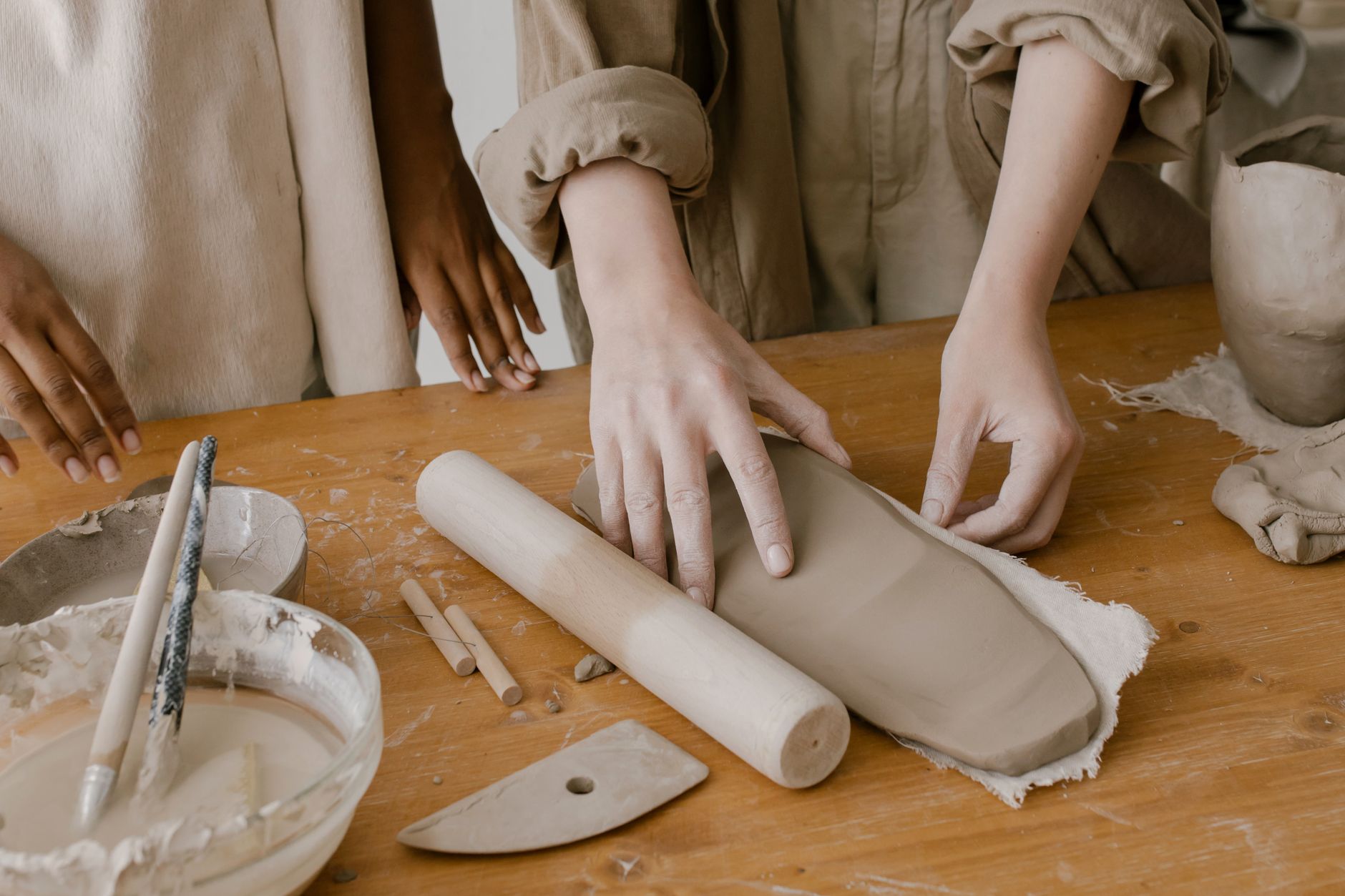
This depends on the craft. In a flower arranging workshop, you handle fresh stems, scissors, floral foam, and water—and your hands get wet and sticky. In an indigo dyeing session, you work with pre-soaked cotton or silk, a vat of dye, and cold water; bring old clothes or an apron because indigo stains (we advise this before you book). For hand-weaving, you'll thread, pull yarn, adjust tension—repetitive and meditative, but your fingers might ache after an hour. Ceramic painting or simple hand-building uses clay that's either pre-fired (you paint) or soft (you shape and texture), plus glazes, brushes, water. In woodcarving or lacquer work, you use hand tools—chisels, burins, brushes—and learn basic safety immediately. Materials are always prepared and safe for beginners. If you have a latex allergy or sensitivity to specific dyes, tell us on WhatsApp before booking; we can advise or suggest an alternative workshop.
Why does this feel different from a class you'd take at home?
Two reasons. First, you're in the place where this craft actually happens—not a tourist center, but a working space where the host or artisan makes things for daily life or local customers. You see the real context: how light falls on their work, how they organize tools, what mistakes they make themselves. Second, the pace and depth are yours to own. A 2-hour indigo dyeing session means you dye one piece thoroughly, testing color, timing, and finish—not a "dip and go" demo. A 3-hour ceramic hand-building class means you make a small bowl or vessel, shape it, feel the clay dry slightly, adjust walls, and leave with something real. You're not performing for an audience or filling a checklist. The host watches what you're doing and adapts: if you're getting it fast, they show you a second technique; if you need more time on one step, you take it. Weather matters—rain in Vietnam is heavy sometimes—but we have covered workshops or can reschedule. Cold and humidity affect some materials (clay dries slower, indigo vats are finicky), so the host adjusts timing.
What should you wear and bring?
Wear clothes you don't mind getting marked or stained. Cotton trousers, a t-shirt, sandals or shoes with good grip on potentially wet floors. Avoid long flowing sleeves that'll drag through dye or clay—tie them back. Bring a small towel (we have some, but yours is cleaner for your face), a reusable water bottle, and your phone if you want to photograph your piece at the end. Don't wear jewelry that can snag yarn or get covered in materials. Sunscreen if it's an outdoor session. For indigo dyeing, an old shirt or apron is essential; we provide them, but bring your own if you're particular. Most workshops are in the morning or early afternoon, starting around 9 a.m. or 2 p.m., so you'll finish before the heat peaks. If you have back or knee issues (seniors and families often do), let us know—the host can show you a standing or sitting variation of the same technique. Kids under 10 usually work best in shorter sessions (90 minutes to 2 hours) and with a parent or caregiver nearby; we run family and kids workshops with adapted techniques and pacing.
What happens if you're stuck or unsure?
The host is watching. They're not looking for perfection; they're waiting for the moment you pause or frown, and then they step in with a quiet correction or a demo of the next micro-step. If your indigo dye isn't taking evenly, they show you how to agitate the vat. If your ceramic is collapsing, they show you hand position or water level. If your weaving tension is uneven, they adjust the loom or guide your hands. There's no shame in this—it's craft. Beginners often think they've failed when they haven't; they've just learned what not to do next time. We've seen people come in convinced they "can't do crafts" and leave with a finished, wearable, or display-worthy piece. Confidence isn't the point; doing it is. If you're working in a group, you might also help each other—comparing notes on indigo timing, or laughing at ceramic attempts. Groups of friends often bond tighter over a shared craft disaster. If you're working alone (private sessions), the host's attention is entirely on you, so you move at your own pace and can ask as many questions as you want.

Real Workshop Comparison: Which Craft Suits Your Time and Skill?
| Craft | Session length | Skill barrier | What you take home | Best for |
|---|---|---|---|---|
| Indigo dyeing (textile) | 2–3 hours | None; learning the vat timing is the craft | A dyed scarf, shirt, or small textile | Slow learners, meditative souls, couples |
| Hand-weaving (small loom) | 2–4 hours | Low; repetitive once tension is set | A woven napkin, coaster, or wall hanging | Patient people, those liking rhythm, families |
| Ceramic hand-building | 2–3 hours | Low; clay forgives mistakes | A pinch pot, small bowl, or textured piece | Kids, first-timers, anyone who likes getting messy |
| Flower arranging | 1.5–2 hours | None; taught in real-time | A finished arrangement you keep several days | Couples, office groups, people who like color |
| Lacquer or woodcarving | 2–4 hours | Moderate; tool handling is taught carefully | A small carved or lacquered object or coaster | Detail lovers, those comfortable with hand tools, teens+ |
| Paint-on-ceramic (pre-fired) | 1–2 hours | None; it's drawing on a surface | A painted dish, mug, or tile for your kitchen | Groups wanting fast results, kids, quick visitors |
Each workshop here is available in Hanoi, Saigon, Hoi An, or Da Lat depending on the craft and artisan base; ask us which locations and dates suit you.
What to check before you ask for a date
Skill level: You don't need any. Be honest if you're very young, elderly, pregnant, or have mobility limits—we'll match you with the right session.
Group size: Private (just you or your partner) runs differently from small group (3–6 people); both are richer for different reasons. Private is slower and more personalized; group brings energy and shared laughs.
Material sensitivities: Indigo dye, clay dust, latex in some tools, shellac fumes—tell us, and we'll advise or suggest alternatives.
Rain: Vietnam's wet season is June–September; our covered workshops still run, but outdoor sessions may shift to a covered backup space or reschedule.
Dietary or mobility needs: Not food-related (this is craft, not cooking), but if you need to sit, stand, or move slowly, we adapt the setup.
What to expect in terms of outcomes: Your first indigo piece might be uneven in color—that's how indigo works; it teaches you. Your ceramic might be lopsided—clay is honest. This is the point: you learn why. Gallery perfection isn't the goal; genuine skill and a story are.
Cost: Ask us for dates and a quote on WhatsApp. Pricing depends on the craft, location, group size, and whether materials are included in the final piece (most are).
Beyond a single workshop: what next?
If you fall in love with the craft, many artisans we work with offer follow-up sessions or longer apprenticeships. Some guests return for a second indigo session (to dye more pieces and see how their technique improves) or take a different craft the next day. Others combine a morning craft workshop with an afternoon tea experience or a farm visit, especially if they're staying several days. Families often book a family workshop first to see if the kids enjoy it, then come back for a solo adult session. Groups planning a team day sometimes choose a craft workshop as the core activity—it builds trust differently than an outdoor game, because everyone's working toward a tangible output rather than competing.
If you're curious about other hands-on skills while in Vietnam, we also host Vietnamese cooking classes, coffee workshops, horse riding, and art and culture classes—all with the same ethos: real places, real makers, real learning. A craft workshop is often the gateway to deeper engagement with a place and its people.
How to book and what happens next
Ask us for dates and a quote on WhatsApp, with the craft you're interested in, your availability, group size, and any allergies or mobility notes. We'll suggest two or three options, confirm with the artisan, and send you the details: exact time, location (a description so you can find it or we'll arrange pickup), what to wear, and what to bring. Payment is arranged before the session—we accept major methods, and you get a receipt. A few days before, we'll send a reminder and confirm you're still coming (life happens; just let us know if plans change). On the day, arrive a few minutes early, and the host will take it from there.

FAQ
Do I need to know anything about the craft beforehand?
No. We teach from the beginning. Many guests have never dyed, woven, or shaped clay. What helps is a willingness to get your hands dirty and laugh at your first attempt. Some people watch a 2-minute YouTube video on indigo timing beforehand—that's fine, but not necessary.
Can I do a craft workshop if I'm visiting for just one day?
Yes. Most sessions are 2–3 hours, so you can fit one into a morning or afternoon and still explore the city. We coordinate times around your schedule. If you're very pressed, some workshops (like paint-on-ceramic) are 90 minutes.
What if the weather is really bad on the day?
We'll reschedule or move to a covered space. Heavy rain in Vietnam is unpredictable; we have backup locations. Indigo dyeing and ceramics work indoors. Flower arranging is always covered. We'll confirm the plan with you the evening before if weather looks uncertain.
Can kids and seniors do the same workshop together?
Often, yes—especially indigo dyeing, flower arranging, and hand-weaving. Kids might finish faster or tire sooner, so we adapt: a child might dye a smaller piece while a grandparent works longer. Some workshops (like carving) are better for teens+. We discuss this when you book.
How long can I keep what I make?
It's yours permanently. Dyed textiles fade over years with washing (indigo is natural and matures beautifully). Ceramics last unless dropped. Woven pieces and carvings are keepsakes. Many guests frame or gift them.
Is the artisan or host the person teaching, or is there a translator?
The host or artisan teaches in English (learned over years of hosting guests). We don't use translators because the hands-on nature of craft is clearer than words. Occasionally, a family member or colleague sits nearby if language is tricky, but it's rare.
Ask about dates
Tell us the city, your dates and what you would like to try. We reply on WhatsApp in English with options and availability.
FAQ
Do I need to know anything about the craft beforehand?
No. We teach from the beginning. Many guests have never dyed, woven, or shaped clay. What helps is a willingness to get your hands dirty and laugh at your first attempt. Some people watch a 2-minute YouTube video on indigo timing beforehand—that's fine, but not necessary.
Can I do a craft workshop if I'm visiting for just one day?
Yes. Most sessions are 2–3 hours, so you can fit one into a morning or afternoon and still explore the city. We coordinate times around your schedule. If you're very pressed, some workshops (like paint-on-ceramic) are 90 minutes.
What if the weather is really bad on the day?
We'll reschedule or move to a covered space. Heavy rain in Vietnam is unpredictable; we have backup locations. Indigo dyeing and ceramics work indoors. Flower arranging is always covered. We'll confirm the plan with you the evening before if weather looks uncertain.
Can kids and seniors do the same workshop together?
Often, yes—especially indigo dyeing, flower arranging, and hand-weaving. Kids might finish faster or tire sooner, so we adapt: a child might dye a smaller piece while a grandparent works longer. Some workshops (like carving) are better for teens+. We discuss this when you book.
How long can I keep what I make?
It's yours permanently. Dyed textiles fade over years with washing (indigo is natural and matures beautifully). Ceramics last unless dropped. Woven pieces and carvings are keepsakes. Many guests frame or gift them.
Is the artisan or host the person teaching, or is there a translator?
The host or artisan teaches in English (learned over years of hosting guests). We don't use translators because the hands-on nature of craft is clearer than words. Occasionally, a family member or colleague sits nearby if language is tricky, but it's rare.
More like this
Craft workshops
Craft Workshop in Saigon: Small Group Classes for Beginners
Cáo Experiences runs small-group craft workshops across Saigon where you learn traditional and contemporary making in intimate studio and community spaces. Sessions suit absolute beginners, families, and skill-builders.
Craft workshops
Craft workshop in Saigon for couples: what to choose
Couples in Saigon have three main craft paths: ceramics in a family studio, natural-dye silk painting, or bamboo weaving. Each teaches differently and suits different moods.
Craft workshops
Craft Workshop in Hoi An: What to Expect Step by Step
A craft workshop in Hoi An with Cáo Experiences is a half or full-day session where you learn a traditional Vietnamese skill—lantern-making, silk painting, woodblock printing, or lacquerware—in a working studio or family workshop. You leave with a finished piece you made yourself.