
Home › Blog › Craft workshops
Craft Workshop Vietnam for American Travelers: Hands-On Classes in Hanoi, Hoi An & Beyond
By the Cáo Experiences team · 2026-11-06
A craft workshop in Vietnam for American travelers is a guided, hands-on session—usually 2–4 hours—where you learn one traditional technique (lacquer painting, silk dyeing, pottery throwing, water-puppet carving, conical hat weaving, or lantern making) directly from a local maker in their studio or workshop space. Cáo Experiences runs these in English across five cities, with sessions for individuals, couples, families and small groups. You'll typically make a finished piece to take home. No prior skill is needed; we adapt the technique and pace to suit beginners, kids, seniors and dietary or mobility needs. Sessions include materials, instruction, tea or coffee, and a finished keepsake. Ask us for dates and a quote on WhatsApp—costs depend on group size, location, and craft chosen.
What makes Vietnamese craft workshops different from craft classes back home?
Vietnamese crafts carry centuries of family technique and regional identity—not hobby-kit versions. When you learn lacquer in Hanoi, you're working with the same pigments, brushes and layering process that masters have refined over generations. The key difference: your teacher learned this as a child, often in the same room where you're sitting now. American craft classes tend toward self-expression; here, you learn respect for the material first—how rice paper tears, how indigo stains, why silence matters when the glue is setting. You're not decorating; you're entering a workflow that existed before Instagram. That slowness, that precision, that connection to place—that's what changes how you see making when you go home.

Which craft should you choose—and how do you decide?
Your choice depends on patience, space in your luggage, and what you want to feel while learning. Lacquer painting demands steady hands and layering time—rewarding if you like meditative repetition, challenging if you fidget. Silk dyeing is messier, faster, and more forgiving; you'll leave with dyed scarves or fabric that photographs beautifully. Pottery (wheel or hand-building) is physical and fails visibly—perfect if you want to laugh and try again. Water-puppet carving suits puzzle-lovers; lantern making is rhythmic and sculptural. Conical hat weaving is hypnotic but requires patience; most first-timers finish a small version.
Decision framework: If you want a frame-able keepsake, choose lacquer or painting. If you want wearable or giftable, choose silk or hat-weaving. If you want to play and not fret about mistakes, choose pottery or lantern assembly. Kids under 8 do better with silk, lantern, or hand-building pottery. Seniors prefer sitting crafts like lacquer or weaving. Couples enjoy pottery or silk together—there's room to help each other. Ask us to match your style when you reach out.
Where do craft workshops happen—and what's the studio like?
We host sessions in three studio types: family workshops in the old quarter (often multi-generational, narrow lanes, minimal AC), artisan studios in new craft districts (slightly more climate control, professional setup), and farm-based workshops outside the city (open air, countryside views, quieter). No two are identical. A lacquer workshop might be a lean-to with one window and a hundred pigment jars stacked floor-to-ceiling; a pottery studio might have kilns, wheels, and a clay-dust haze; a silk dyeing space might be open-sided with vats the size of bathtubs and the smell of indigo and rain.
You'll sit or stand at a shared workbench. Lighting is often natural (overhead fans if electric). Floors are concrete or wood. Bathrooms are basic but clean. We always scout ahead and tell you exactly what to expect—no surprises. If you have mobility concerns, joint pain, or heat sensitivity, we find a studio suited to you or arrange it with fans and breaks. Rain doesn't cancel sessions; it changes the feel (more intimate, damp clay is easier to work, indigo vats steam up beautifully). Bring water, a scarf or apron (we provide one but yours is better), closed-toe shoes, and clothes you don't mind staining.
How does a typical 3-hour workshop actually flow hour by hour?
Hour 1: Arrival & introduction. You arrive, tea or coffee appears, your teacher shows you finished pieces and explains the history in simple English. They demonstrate the technique once, slowly, narrating what their hands are doing. No rushing. You watch. You ask questions. They answer while working.
Hour 2: Your first attempts. You begin. Your teacher adjusts your grip, shows you again, lets you fail, shows you again. Beginners' pieces are rough—that's the point. You're learning muscle memory, not making art. You might finish a small version or get halfway through. Pace varies; we adapt to you.
Hour 3: Refinement or completion. You refine what you've started or move toward a finish. Your teacher might help you with the hardest final step (sealing lacquer, centering clay, final dyeing). You photograph your work. You're told how to care for it at home. You leave with your piece wrapped and a memory that includes someone's patient hands teaching yours.
The whole rhythm honors slowness. No one checks their phone. No music. No pressure. That's what surprises American travelers most—how okay it feels to just make with someone, without talking much.
What should you pack and wear—and what goes wrong most often?
Wear: Clothes you don't mind staining permanently (indigo, clay dust, lacquer don't wash out easily). Closed-toe shoes (not sandals—clay and hot tools). An apron or old shirt over your clothes. Tie back long hair. Leave jewelry at home unless it's metal (clay and stone jewelry snag on clay wheels).
Bring: Water bottle (sweating is normal), a small notebook if you're a note-taker, phone for photos (after your piece is finished), sunscreen if the studio is outdoor-facing.
What goes wrong:
- Unrealistic speed expectations. You won't finish a perfect lacquer bowl in 3 hours; you'll understand the first three layers. Same with pottery—a mug takes days to dry and fire. Tell us if you want a finished, fire-hardened piece; we'll arrange a follow-up or use pre-fired clay you shape in one session.
- Moisture & humidity. Lacquer hates moisture; we don't run sessions on flood-humidity days, or we move indoors. Pottery clay dries too fast in 40°C heat; we keep it moist and wrapped.
- Comparing your hands to the teacher's. Their hands have done this 10,000 times. Yours have done it once. That's not a failure; it's the point. We tell you this upfront.
- Forgetting to wrap wet pieces. Finished clay work will crack if it dries unevenly. We wrap it, give you wrapping tips, and offer to fire it later and ship it (ask about this separately).
- Not asking for breaks. Heat, focus, and unfamiliar positions tire you faster. We pause every 45 minutes without you asking. Tell us if you need more.
How do we adapt workshops for kids, seniors, and dietary or mobility needs?
Kids (ages 5–12): We shorten focus time (sessions become 2 hours instead of 3), simplify the technique (hand-building instead of wheel pottery, painting instead of multi-layer lacquer), and emphasize play over perfection. A 7-year-old making a wonky lantern learns more from joy than from exactness. We've had kids fall in love with pottery here and ask their parents to arrange more lessons.
Teens (13–17): Full-length sessions, real technique, higher standards. They're often more perfectionist than adults and sometimes frustrated by imperfection—we frame that as "your hands are learning a new language." Pottery and lacquer appeal most.
Seniors (65+): We book morning sessions when it's cooler, choose sitting crafts (lacquer, weaving, hand-building pottery—not wheel work, which strains wrists), offer footrests and armrests, and pause more often. Repetitive, meditative work suits seniors beautifully; many tell us it's meditative in a way their usual life isn't.
Mobility issues: Tell us upfront. We can arrange studios with wheelchair access (fewer exist, but they do), offer chairs with arms, eliminate standing-and-reaching work, and adapt the technique so you work at table height.
Dietary needs: Studios don't serve meals, only tea/coffee and water. If you need a snack (blood sugar, medication), bring it. Tell us about allergies to pigments or materials (rare, but we check).
Rain & heat: Sessions run in rain unless it's a flood alert. Wet hands are actually easier for some crafts. In extreme heat (>38°C), we move indoors, offer more water breaks, and keep sessions to 2 hours instead of 3.
| Craft | Best for | Physical demand | Mess factor | Keepsake quality | Time to completion |
|---|---|---|---|---|---|
| Lacquer painting | Meditative learners, detail-oriented people | Sitting, fine motor control | Low (pigment stains clothes) | High (museum-quality) | 1 session (layers dry over weeks) |
| Silk dyeing | Quick gratification, color lovers, wearables | Standing/walking between vats, light arm work | High (indigo stains permanently) | High (scarves/fabric last years) | 1 session (complete) |
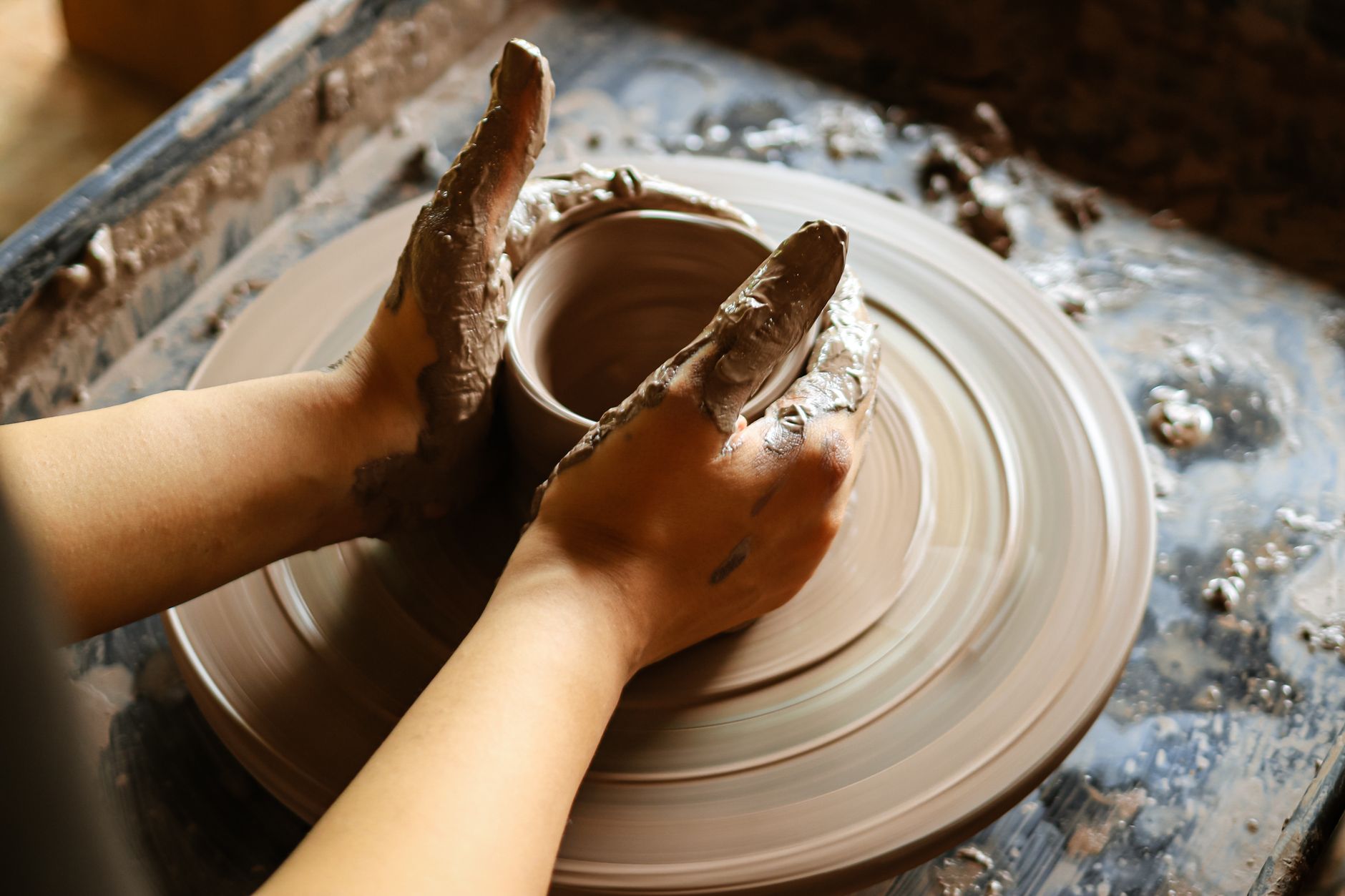
| Wheel pottery | Physical learners, play-oriented, couples | Upper body, core strength, wrist flexibility | High (clay dust) | Medium (needs firing; we arrange it) | 1 session (kiln-firing adds 2–4 weeks) |
| Hand-building pottery | Kids, seniors, anxious learners | Sitting, gentle hand/finger work | Moderate (clay dust) | Medium (same) | 1 session (same) |
| Lantern making | Group energy, visual learners, tactile people | Standing/sitting, fine assembly | Low (paper/bamboo) | High (lit lanterns are beautiful gifts) | 1 session (complete) |
| Conical hat weaving | Rhythm-lovers, patience-builders | Sitting, repetitive hand motion | Low | Medium (functional hats wear; decorative ones last) | 1 session (partial or full hat, depending) |
| Water-puppet carving | Puzzle-solvers, sculptors, detail freaks | Sitting, carving tools (knife skills matter) | Low | High (carved figures are collectible) | 1 session (takes 2–3 hours) |
Which Vietnamese cities offer the best craft workshops, and what's unique to each?
Craft workshops in Hanoi center on the Old Quarter, where guilds still cluster by trade (lantern makers on one lane, water-puppet carvers on another). You'll learn in narrow workshops that smell of history. Lacquer, water-puppet carving, and silk painting thrive here.
Hoi An craft workshops are quieter, more tourist-friendly, often with riverside studios. Lantern making and silk tailoring are Hoi An signatures. The town itself is a living craft heritage site, so learning here feels embedded in place.
Da Nang workshops tend toward pottery and textile work—the city has a growing artisan community. Coastal light is beautiful. Sessions are less crowded than Hanoi.
Da Lat has farm-based and ceramic workshops in the cool highlands. If you want mountain air and rural studio space, Da Lat suits you.
Ho Chi Minh City workshops offer contemporary craft spaces—more sleek, air-conditioned, sometimes fusion (Vietnamese technique meets modern design). Good if you prefer urban comfort.
Each city's craft reflects its history and trade routes. We'll recommend based on what you want to learn and where you're traveling.
Can you combine a craft workshop with other experiences, and does that change how we run it?
Yes. Many travelers pair a Vietnamese cooking class with a lacquer workshop (morning cooking, afternoon craft). Some combine flower arranging with silk dyeing or lantern making—all color and texture work. Others book a farm experience in the morning, then a pottery session in a rural studio in the afternoon.
Combining experiences deepens your immersion—you're not jumping from museum to market to shop, but anchoring yourself in one or two practices and living them for a day. We adjust timing, manage transport, and pair studios with nearby restaurants for breaks.
Mixed days are more rewarding but require more coordination. We handle it via WhatsApp—mapping the day, confirming studio access, building in buffer time. A typical combined day runs 7 hours (with breaks and lunch).
What to check before you book a craft workshop.
- Studio accessibility: Tell us about stairs, heat sensitivity, mobility needs. We scout and confirm.
- Luggage space: Finished pieces take room. Lacquer is light; pottery is heavier. Ask about shipping if you're concerned.
- Staining & laundry: Indigo and lacquer don't wash out. Wear old clothes, period.
- Duration expectations: 3 hours gives you skill-building, not mastery. If you want deeper learning, book a 2-day or return sessions.
- Teacher's English level: Most teachers speak enough English to teach technique. If you need detailed storytelling or philosophy, request it upfront.
- Group size: Private (1–2 people) = personalized, quieter, higher cost. Small group (3–6) = energy, faster learning, shared cost. Ask which suits you.
- Photos: Ask permission before photographing the teacher's hands or studio. Most are fine; some aren't.
- Finished piece care: Lacquer needs dry storage; pottery can chip; silk can fade. We give care notes.

FAQ
Do I need any craft experience to join a workshop?
No. We design every workshop for beginners. Your teacher assumes you've never held a brush, clay, or weaving tool before. Experienced crafters are welcome too—we challenge them with advanced technique or precision goals.
What happens to the piece I make—can I really take it home?
For lacquer, painting, silk, lantern, and carved pieces: yes, same day or within a week. For pottery: it needs to dry (3–5 days), then fire in a kiln (1–3 weeks). We wrap it, store it, and ship it to you, or you collect it on a return visit. We discuss this before you book and quote shipping separately.
What if the weather is bad—rain, extreme heat, flood warnings?
Rain rarely cancels; we move indoors if needed, or reschedule if flooding blocks access. Extreme heat (>38°C) shortens sessions to 2 hours and adds water breaks. Flood warnings trigger cancellation and rescheduling. We stay in touch via WhatsApp.
Are workshops good for couples or large groups?
Yes to both. Couples often book private sessions and work side by side—pottery and silk dyeing are especially romantic. Groups of 4–8 work well in most crafts; larger groups (8+) need two teachers or split sessions. We arrange it.
Can I book a workshop in a specific city if I'm traveling to multiple places?
Absolutely. Tell us your dates and cities. We coordinate craft workshops across Hanoi, Hoi An, Da Nang, Da Lat, and Ho Chi Minh City. We'll find availability that fits your itinerary.
How do I book, and what's the next step?
Reach out on WhatsApp with your dates, city, group size, and craft interest. We'll confirm availability, send you a quote, and arrange a studio visit. No deposit until you confirm; flexible rescheduling up to 72 hours before.
Ask about dates
Tell us the city, your dates and what you would like to try. We reply on WhatsApp in English with options and availability.
FAQ
Do I need any craft experience to join a workshop?
No. We design every workshop for beginners. Your teacher assumes you've never held a brush, clay, or weaving tool before. Experienced crafters are welcome too—we challenge them with advanced technique or precision goals.
What happens to the piece I make—can I really take it home?
For lacquer, painting, silk, lantern, and carved pieces: yes, same day or within a week. For pottery: it needs to dry (3–5 days), then fire in a kiln (1–3 weeks). We wrap it, store it, and ship it to you, or you collect it on a return visit. We discuss this before you book and quote shipping separately.
What if the weather is bad—rain, extreme heat, flood warnings?
Rain rarely cancels; we move indoors if needed, or reschedule if flooding blocks access. Extreme heat (>38°C) shortens sessions to 2 hours and adds water breaks. Flood warnings trigger cancellation and rescheduling. We stay in touch via WhatsApp.
Are workshops good for couples or large groups?
Yes to both. Couples often book private sessions and work side by side—pottery and silk dyeing are especially romantic. Groups of 4–8 work well in most crafts; larger groups (8+) need two teachers or split sessions. We arrange it.
Can I book a workshop in a specific city if I'm traveling to multiple places?
Absolutely. Tell us your dates and cities. We coordinate [craft workshops across Hanoi, Hoi An, Da Nang, Da Lat, and Ho Chi Minh City](/craft-workshops). We'll find availability that fits your itinerary.
How do I book, and what's the next step?
Reach out on WhatsApp with your dates, city, group size, and craft interest. We'll confirm availability, send you a quote, and arrange a studio visit. No deposit until you confirm; flexible rescheduling up to 72 hours before.
More like this
Craft workshops
Craft Workshop in Saigon: Small Group Classes for Beginners
Cáo Experiences runs small-group craft workshops across Saigon where you learn traditional and contemporary making in intimate studio and community spaces. Sessions suit absolute beginners, families, and skill-builders.
Craft workshops
Craft workshop in Saigon for couples: what to choose
Couples in Saigon have three main craft paths: ceramics in a family studio, natural-dye silk painting, or bamboo weaving. Each teaches differently and suits different moods.
Craft workshops
Craft Workshop in Hoi An: What to Expect Step by Step
A craft workshop in Hoi An with Cáo Experiences is a half or full-day session where you learn a traditional Vietnamese skill—lantern-making, silk painting, woodblock printing, or lacquerware—in a working studio or family workshop. You leave with a finished piece you made yourself.