
Home › Blog › Craft workshops
Craft Workshops Vietnam for Korean Travelers: What to Expect
By the Cáo Experiences team · 2026-11-06
Craft workshops in Vietnam for Korean travelers typically run 2–4 hours in a working artisan space or family studio, where you learn a traditional skill (lacquerware, silk painting, woodblock printing, ceramics, weaving, or embroidery) from a local craftsperson with English coordination. We host these at craft workshops through Cáo Experiences in Hanoi, Hoi An, and Da Lat—groups of 2–10 people, or private sessions. You make a small finished piece to take home. No art background needed; we adapt for all ages and skill levels, and rain just moves us indoors. Korean visitors often worry the workshop will feel rushed or inauthentic—we design each one so you spend real time with the maker, ask questions, and understand the technique before you leave. Ask us for dates and a quote on WhatsApp to match your schedule and interests. Ask about dates on WhatsApp
What does a typical craft workshop session actually look like?
We arrive at the studio or workshop space—usually a family home, a lane-side studio, or a dedicated teaching room in a working craft quarter—between 9 a.m. or 2 p.m., depending on what suits you. The maker greets us with tea or water. We sit down, and they show us their own work first: finished pieces, tools, materials. This takes 10–15 minutes and is the part most tourists skip.
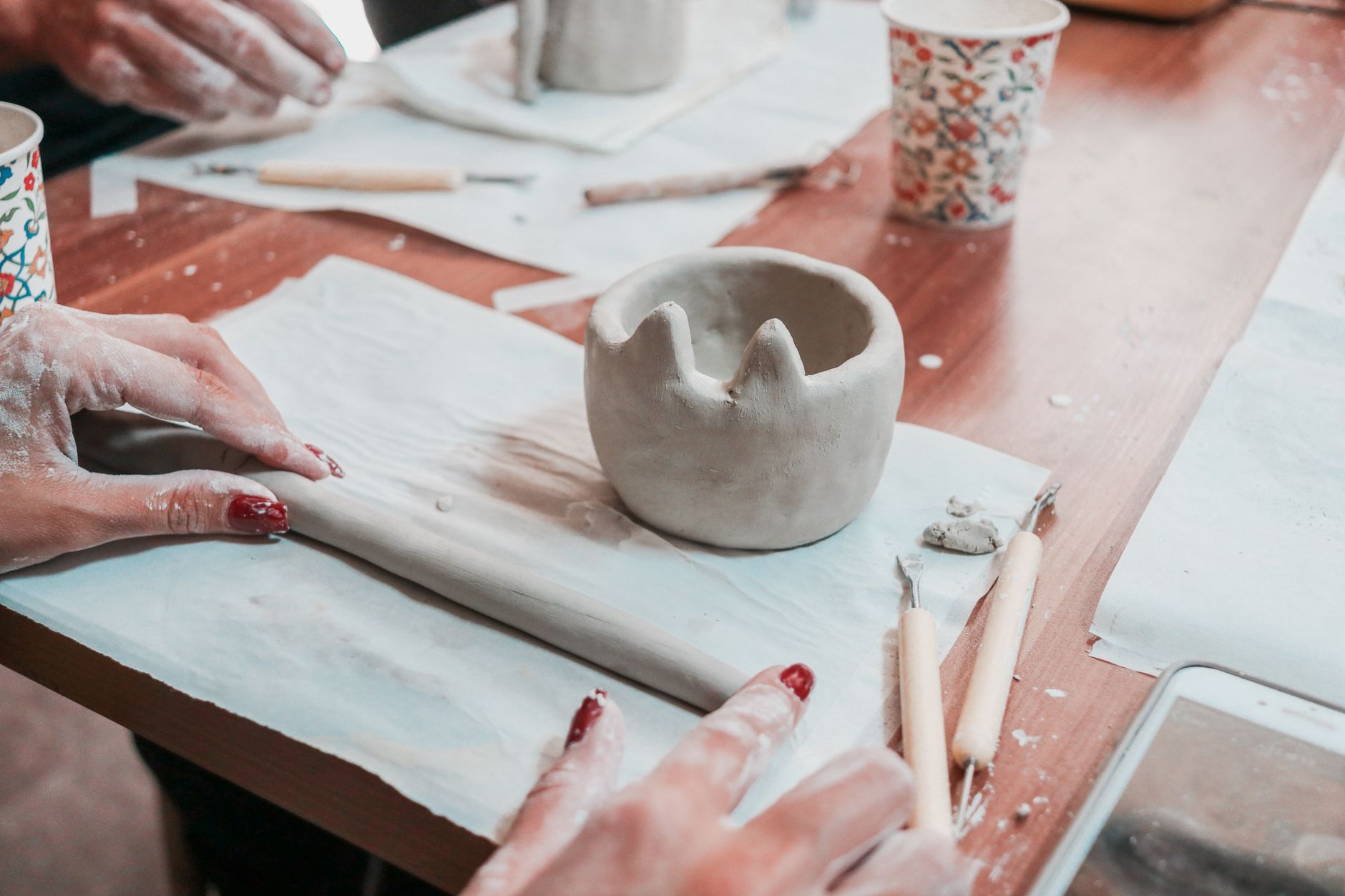
Then we start. You learn the technique hands-on: mixing pigment, painting a pattern, carving, weaving a base, or shaping clay. The maker demonstrates slowly, then guides your hands or corrects your grip. This is not a lecture. Korean visitors often feel calmer here because the pace is quiet and individual—the maker cares whether you get it right, not whether you finish fast.
By hour two you're in a rhythm. Some people chat; some work in silence. We break for snacks or lunch depending on the session length. By the end, you have a piece—a small lacquered box, a painted silk square, a ceramic bowl, a woven coaster, a woodblock print. It's imperfect and that's the point. You made it, not a factory.
We wrap up, ask questions, take photos, and the maker often gifts a small sample or tells you where to buy their work if you want more. The whole experience feels less like a class and more like spending an afternoon in someone's actual workplace.

Why do Korean travelers choose craft workshops over other activities?
Korean travelers often tell us they want to avoid large group tours and overly polished experiences—they're looking for something real. A craft workshop delivers exactly that. Unlike a cooking class (which we also run—see our Vietnamese cooking class for comparison) or a street food and market tour, a craft session gives you a slow, meditative skill you can practice at home. You sit across from a person who has spent years, sometimes decades, perfecting one thing. That focus and quietness appeals to visitors who already live in high-speed cities.
Craft also works well for couples, solo travelers, and small groups of friends. It's low-pressure: nobody judges your hand-painting as "bad," and the output (your finished piece) is a real souvenir that tells a story. Korean visitors appreciate handmade quality and value the maker's time, so they often ask follow-up questions and respect the process in a way that energizes the artisan.
Logistically, craft workshops fit into a longer trip. They suit people who are in Hanoi for 3+ days, or who combine them with other experiences in Hanoi or experiences in Hoi An where craft traditions run deep. And they work in any weather—rain simply means we stay inside and the lighting changes, but the work continues.
Which craft traditions are most authentic for Korean visitors to learn?
Vietnam has several living craft traditions worth learning:
| Craft | What You Make | Learn From | Best For |
|---|---|---|---|
| Lacquerware | A small box or coaster | Artisan in traditional workshop | Patience, precision, take-home gift |
| Silk painting | A framed square using natural dyes | Painter in family studio | Color theory, cultural symbolism |
| Woodblock printing | A folded card or small print | Carver-printer | Hand-eye coordination, design |
| Ceramics | A bowl or cup on the wheel | Potter at working kiln | Tactile learning, meditative |
| Weaving | A woven mat, coaster, or small textile | Weaver on traditional loom | Rhythm, repetition, textural awareness |
| Embroidery | A small patch or bookmark | Embroiderer (often elderly) | Fine motor control, storytelling through thread |
Korean visitors often pick lacquerware or woodblock printing because the technique is visible and the result feels like a "real" craft—not just clay smoothed on a wheel. Silk painting appeals to those interested in natural dyes and botanical knowledge. Weaving suits people who want a rhythm-based, almost meditative experience. We match you to the right tradition based on what you want to learn and how much time you have.
How do we adapt craft workshops for different skill levels and ages?
No artist experience needed. We've hosted people who've never held a brush or carved anything. The maker's job is to scale the technique to your speed. A beginner might paint one layer; an experienced artist might do three and add detail. Both go home happy.
For kids (ages 6+), we choose crafts with faster results: woodblock printing (you carve a simple shape, roll ink, press), or weaving on small frame looms. We shorten the session to 90 minutes and give them a simpler design. Parents often join in, which we encourage.
For seniors, we pick seated crafts (ceramics, painting, embroidery) and book longer sessions so there's no rush. Arthritis or hand tremor isn't a barrier—the maker adapts tools and techniques. We've had people in their 80s paint silk and feel prouder of it than anything in years.
Allergies or dietary needs: craft sessions don't involve eating (unlike our Vietnamese cooking class), so allergies to food are not an issue. If someone has a respiratory allergy to dust, we discuss it in advance and pick indoor studios with good air flow.
Rain or heat: we're always indoors in a studio, so weather is not a blocker. Summer heat means we start earlier or offer cold drinks; we just continue.
How do we prepare you to get the most from a workshop?
Before the session, we send a WhatsApp with details: what to wear (nothing you mind staining), what to bring (a phone for photos, a small bag for your finished piece), which studio you're going to (with directions or pickup), and what the maker's background is. We ask about any injuries or concerns with hand use. We also tell you if the workshop involves standing, sitting, or both.
We ask Korean visitors specifically: What interests you more—learning a technique you can teach others, or making one beautiful thing? Are you comfortable with silence, or do you prefer chatting? This helps us match you with the right maker and prepare them for your learning style.
On the day, we arrive 10 minutes early so you're not rushed. The maker will show you their work first—this is not filler, it builds respect and context. If you feel lost during the technique demo, raise your hand immediately. The maker would rather repeat once than watch you struggle silently.
After the session, we ask: Did you feel respected? Did the maker explain? Would you come back? This feedback helps us improve and, if something didn't work, we fix it.

What to check before you book a craft workshop with us
Before you contact us: Ask yourself whether you want to learn a replicable skill or make one special thing. Both are valid; they just shape which craft and which maker we suggest.
When we send you details: Check the location. Is it in a neighborhood you want to visit? Ask if there's parking, or if pickup from your hotel is easier. Confirm the session length—2, 3, or 4 hours changes what you can finish.
Before you show up: Wear clothes you don't mind staining (dyes, clay dust, ink). Bring a small bag for your finished piece and a phone if you want to photograph it or the maker's work. If you take medication or have a hand injury, tell us in advance.
Red flags to avoid: If a "workshop" is in a tourist-heavy shopping area and the result looks mass-produced, it's not us. We work in actual working studios and with real artisans, not tourist factories. If the price feels too cheap, the session is probably rushed. Ask us—we're honest about what you're paying for.
After the session: Your finished piece is genuine and fragile in some cases (fresh lacquer, wet paint). We'll wrap it carefully and advise on care. If you want to order more from the maker, we can connect you.
Which of our craft workshops suit Korean travelers best?
We run craft sessions across our main destinations. Craft workshops in Hanoi focus on traditional silk, lacquerware, and woodblock printing in the old quarter studios. Craft workshops in Hoi An highlight lantern-making, fabric dyeing, and weaving—Hoi An is a living craft town, so makers work openly in front of you. Experiences in Da Lat include ceramics and flower-related crafts at cooler altitude.
If you're combining crafts with other interests, we also offer tea experiences (often held near craft studios), flower arranging (a craft itself), and art and culture classes that go deeper into Vietnamese aesthetics. Many Korean visitors book a craft workshop one day and a coffee workshop the next, or pair a workshop with farm and countryside experiences outside the city for balance.
For families, we have family-friendly craft sessions where kids and adults make separate projects or collaborate. For corporate groups or retreats, team craft experiences build focus and conversation in a non-business setting.
How do we handle language and communication?
We coordinate everything on WhatsApp in English. When you arrive at the studio, our host (or the maker if they speak basic English) is there to start. We provide a brief translation if needed, but most craft teaching is hands-on—the maker shows, you watch and copy, and gestures say most of what words can't. Korean visitors often find this clearer than lectures.
If there are complex questions about technique history or symbolism, we stay nearby to translate. If you prefer a fully bilingual session (English-Korean), tell us early and we'll arrange it—this adds time and cost, so ask us for a quote.
Why handmade matters: the Korean connection
Korean travelers bring a deep appreciation for handmade goods and maker cultures—this is clear in your interest in Korean pottery, textile arts, and tea ceremony. Vietnamese crafts operate on similar values: respect for the maker's time, understanding materials, and finding beauty in imperfection. When you sit with a Vietnamese lacquer artisan or weaver, you're participating in the same philosophy you already value at home. That alignment makes the experience feel less like tourism and more like meeting a peer.
See how a session runs
FAQ
Do I need any art experience to join a craft workshop?
No. We've taught people who've never painted or carved. The maker scales the technique to your pace. Mistakes and imperfections are part of learning and add character to your finished piece.
What size group do you run craft workshops for?
2–10 people in a shared session, or fully private (1–6) if you prefer. Smaller groups get more personalized attention from the maker. Ask us for dates and availability on WhatsApp.
Can I take my finished craft piece through airport security back to Korea?
Most items (painted silk, woodblock prints, woven goods) travel easily in carry-on luggage. Fresh lacquerware or wet paint needs careful wrapping and may take a day or two to cure. We advise on care before you leave. Ceramics survive well if bubble-wrapped. Check with your airline for specific rules.
How long does a typical craft workshop last?
2–4 hours depending on the craft. Woodblock printing is often 2 hours; lacquerware or ceramics can be 3–4. We customize based on your schedule and what you want to achieve.
What if it rains or the weather is too hot?
All our craft sessions are indoors in working studios, so rain is not a problem. Heat in summer means we offer cold drinks and often start earlier. Weather does not cancel or delay the workshop.
Can I combine a craft workshop with other experiences, like a cooking class or coffee workshop?
Yes. Many visitors book a craft session one morning and a coffee workshop the next afternoon, or pair a craft with a farm visit. We can help you build a multi-day itinerary. Ask us on WhatsApp.
How much does a craft workshop cost?
Ask us for dates and a quote on WhatsApp. Price depends on group size, which craft, and session length. We price by experience design, not by per-person minimums.
Ask about dates
Tell us the city, your dates and what you would like to try. We reply on WhatsApp in English with options and availability.
FAQ
Do I need any art experience to join a craft workshop?
No. We've taught people who've never painted or carved. The maker scales the technique to your pace. Mistakes and imperfections are part of learning and add character to your finished piece.
What size group do you run craft workshops for?
2–10 people in a shared session, or fully private (1–6) if you prefer. Smaller groups get more personalized attention from the maker. Ask us for dates and availability on WhatsApp.
Can I take my finished craft piece through airport security back to Korea?
Most items (painted silk, woodblock prints, woven goods) travel easily in carry-on luggage. Fresh lacquerware or wet paint needs careful wrapping and may take a day or two to cure. We advise on care before you leave. Ceramics survive well if bubble-wrapped. Check with your airline for specific rules.
How long does a typical craft workshop last?
2–4 hours depending on the craft. Woodblock printing is often 2 hours; lacquerware or ceramics can be 3–4. We customize based on your schedule and what you want to achieve.
What if it rains or the weather is too hot?
All our craft sessions are indoors in working studios, so rain is not a problem. Heat in summer means we offer cold drinks and often start earlier. Weather does not cancel or delay the workshop.
Can I combine a craft workshop with other experiences, like a cooking class or coffee workshop?
Yes. Many visitors book a craft session one morning and a coffee workshop the next afternoon, or pair a craft with a farm visit. We can help you build a multi-day itinerary. Ask us on WhatsApp.
How much does a craft workshop cost?
Ask us for dates and a quote on WhatsApp. Price depends on group size, which craft, and session length. We price by experience design, not by per-person minimums.
More like this
Craft workshops
Craft Workshop in Saigon: Small Group Classes for Beginners
Cáo Experiences runs small-group craft workshops across Saigon where you learn traditional and contemporary making in intimate studio and community spaces. Sessions suit absolute beginners, families, and skill-builders.
Craft workshops
Craft workshop in Saigon for couples: what to choose
Couples in Saigon have three main craft paths: ceramics in a family studio, natural-dye silk painting, or bamboo weaving. Each teaches differently and suits different moods.
Craft workshops
Craft Workshop in Hoi An: What to Expect Step by Step
A craft workshop in Hoi An with Cáo Experiences is a half or full-day session where you learn a traditional Vietnamese skill—lantern-making, silk painting, woodblock printing, or lacquerware—in a working studio or family workshop. You leave with a finished piece you made yourself.