
Home › Blog › Farm and countryside days
Farm Experience in Vietnam for Families: What to Expect
By the Cáo Experiences team · 2026-11-06
A farm experience in Vietnam is a half-day or full-day hands-on session where families visit a working family farm, garden or smallholding in the countryside outside a city, learn seasonal tasks (planting, watering, harvesting), interact with animals, and share a meal prepared from fresh ingredients grown or raised on-site. Most sessions run 3–5 hours, suit children ages 4+, accommodate beginners and mobility limits, and work rain or shine with covered spaces. Cáo Experiences coordinates transportation, translates, and adapts activities to your family's fitness level and interests—no farming experience needed. Sessions include hands-on work, a guided walk, and lunch or snacks. Ask us for dates and a quote on WhatsApp to confirm availability and any dietary needs.
What actually happens on a farm morning?
We arrive around 8 a.m., before the heat peaks. A family farm host meets us at the gate, usually smiling—they've been awake since 5 a.m. We start with a short walk through the grounds: kitchen garden near the house, vegetable rows, fruit trees (mango, papaya, banana), a small livestock area. Kids immediately spot chickens, ducks, or pigs; adults notice the water system, compost pile, and crop rotation. Then work begins: if it's planting season (May–June in many areas), we help sow seeds or transplant seedlings into beds, learning soil depth and spacing. In harvest months (October–February), we pick leafy greens, tomatoes, herbs, squash. We collect eggs if there are layers. A host family member explains why they grow what they do—market demand, season, soil—in simple English or through our translator. By 10:30 a.m., we've been outdoors for 90 minutes and have dirt under our fingernails. Children tire at different rates; we adjust pace without fuss. One parent took their 5-year-old last month: he spent 40 minutes digging in a patch and found a beetle, which became the highlight of his morning. Seniors often ask to sit and watch, then participate in gentler tasks like harvesting herbs or sorting produce—we always say yes.

How do we keep kids engaged without it feeling like chores?
Children under 8 don't reason about food systems yet; they care about sensory play and animals. We let them touch soil, water plants with a hose, collect eggs into baskets, and sit with goats or chickens if present. Older children (8–13) respond to small responsibility: "You're in charge of this row" or "Count how many ripe tomatoes you find." We never force work. If a kid prefers to draw under a tree or chase butterflies, that's fine—farms are never silent or boring. Parents worry their children won't "do" enough; in reality, kids get bored when treated like tourists, not when given real tasks. The farm host's own children sometimes join, which breaks any awkwardness. One family with three kids (ages 6, 9, 11) reported their youngest asked to wake up early the next morning to "check the crops"—that's the goal. We document the visit with photos you can keep; many families print and frame them.
What should families with allergies or dietary needs know?
Meals at the farm are cooked fresh in the host family's kitchen from ingredients you've just harvested or that are stored in their garden. This is a major advantage: the kitchen staff (usually the host's wife or family member) knows every ingredient, source, and preparation method. Before the session, tell us about allergies, vegetarian or vegan diets, or foods to avoid. We relay this to the host 2–3 days ahead. Common allergies (peanuts, shellfish, dairy) are easy to work around on a vegetable-focused farm. The meal is never fancy—think stir-fried greens, fresh soup, sticky rice, fresh fruit—but it tastes like what it is: food grown in soil you helped tend. Kids often eat more vegetables at a farm meal than at home, partly because they're warm and partly because they grew it. Elderly guests appreciate gentle flavors and softer textures; we brief the host if chewing is a concern. Meals take 45 minutes, eaten at a family table, not a restaurant setup.
How do rain and weather change the plan?
Vietnam's countryside is wet from May to September in most regions; the north can be rainy year-round. Farm work happens in rain—vegetables don't wait. We adjust, not cancel. Heavy downpour (hard enough to flood paths) is rare enough that we'd reschedule; light or medium rain goes ahead. Families wear plastic ponchos or rain jackets we can provide; kids think muddy boots are a bonus. Hosts have covered spaces—a lean-to or porch—where we sort vegetables, process herbs, or rest during heavy showers. One family with a 7-year-old and a 70-year-old grandparent did a session in drizzle in October and reported it felt peaceful, not gloomy. The farm is actually quieter and cooler in rain. We bring hand towels and dry socks in the van in case boots get waterlogged. If your family strongly dislikes wet conditions, pick the dry season for your region—November to April in the north, September to November in the south—though rain is never guaranteed off.
Which farm types suit different family compositions?
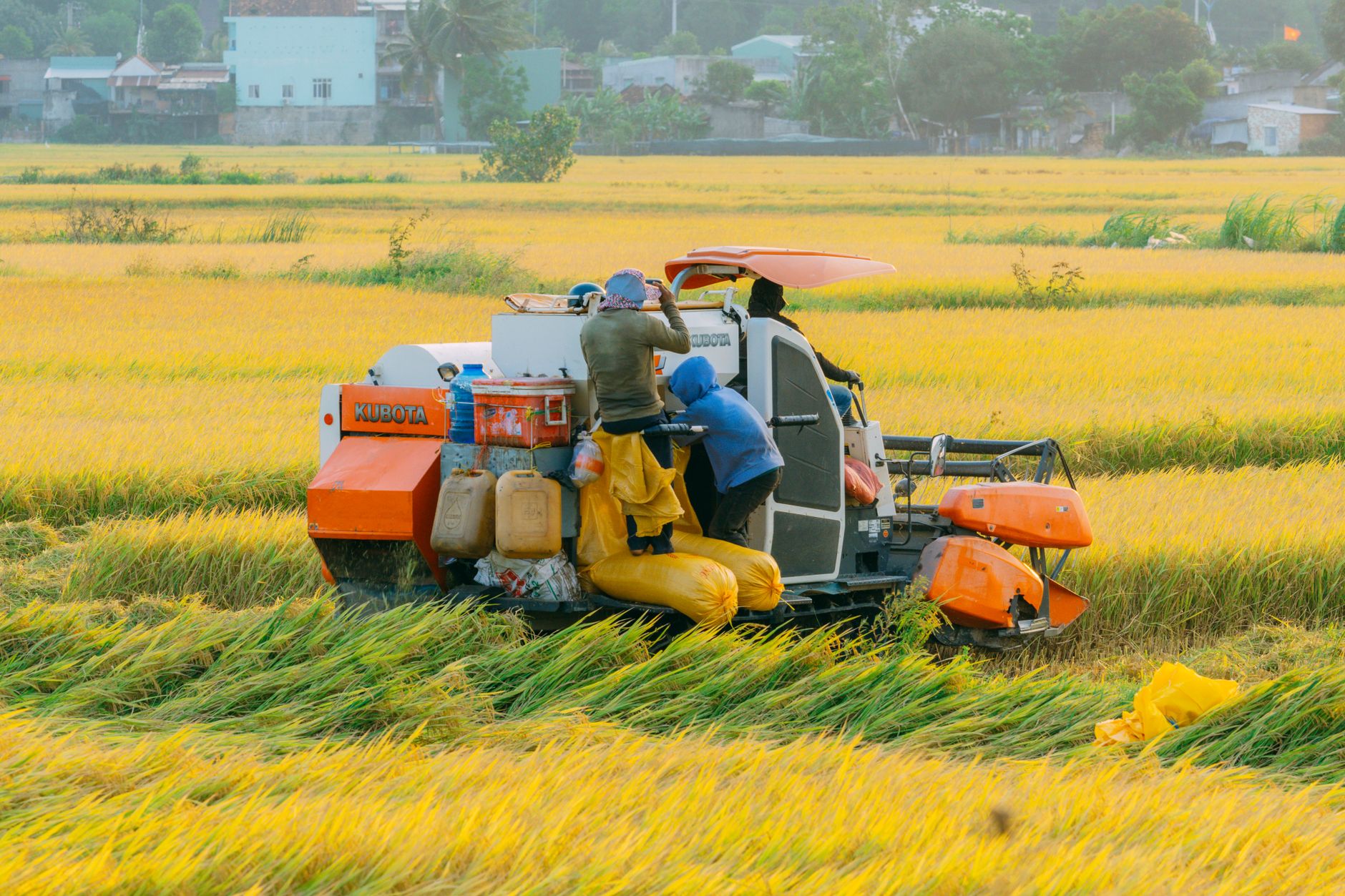
Not all farms are the same, and your family shape affects fit. A vegetable-heavy farm (leafy greens, tomatoes, herbs, squash) suits all ages and nearly all diets; work is gentle and the meal is vegetable-focused. A fruit orchard (mango, citrus, dragon fruit, banana) appeals to families with older kids (10+) who can climb or pick from height; shorter or younger children can still collect fallen fruit. A mixed livestock farm (chickens, ducks, goats, sometimes pigs) is great for families who want animal interaction; children under 5 sometimes fear large animals, so we always ask and match carefully. A rice paddy farm (in the Mekong Delta or Red River Delta) is heavier work—wading, bending—better for fit families with kids 8+; it's also more specialized and fewer hosts offer it. A flower or herb farm suits seniors and families who prefer lighter physical activity. We ask your family's age range, fitness level, dietary needs, and interests when you contact us, then suggest the farm that fits.
| Farm Type | Age Fit | Fitness | Best Months | Signature Activity |
|---|---|---|---|---|
| Vegetable garden | 4–85 | All | Year-round | Plant, weed, harvest greens |
| Fruit orchard | 6–75 | Moderate | Sep–Dec (harvest) | Pick fruit, learn storage |
| Mixed livestock | 5–70 | Moderate | Year-round | Collect eggs, feed, interact |
| Rice paddy | 8–65 | Moderate–high | May–Sep (transplant), Oct–Nov (harvest) | Wade, plant, harvest by hand |
| Herb or flower farm | 4–80 | Light | Year-round | Harvest, learn uses, arrange |
What to pack and how to prepare your family
What to wear: Light, long-sleeved shirt (sun and mosquitoes), long pants or leggings, sturdy shoes or boots (not sandals—sharp stubble and uneven ground). Bring a spare pair of socks; we provide rain gear and hats. Sunscreen and insect repellent are essential.
What to bring: A water bottle (we refill), a small towel, any medications (asthma inhalers, blood pressure meds), phone for photos. Leave jewelry and valuables at your hotel.
How to prepare kids: Show them pictures of farms and animals. Explain that it won't be a theme park—you'll work, get dirty, rest. Answer their questions ("Will the chicken bite?" "Do I have to get muddy?") honestly. Kids who know what to expect are less fearful and more engaged.
Physical limits: Farms have uneven ground, low benches, and some squatting. If your parent or partner has knee or back trouble, tell us in advance; the host can provide a chair, shorter tools, or lighter tasks. We've adapted sessions for guests with walkers and for wheelchair users on flat, cleared farms.
Timing: Morning sessions (7:30–11 a.m.) suit families with young kids and beat the midday heat. Afternoon sessions (2–6 p.m.) work if your family sleeps late. Ask about duration when you contact us; a 3-hour session is standard for families with kids under 8.
Before you book: an honest checklist
- Is your family okay with dirt? Farm work is muddy. If your child or partner is strongly averse to dirt, this may frustrate rather than delight.
- Do you have the fitness? Farm ground is uneven; some tasks require squatting or light lifting. Guests with severe mobility limits should ask us about the specific farm before committing.
- Can your family be unplugged for 3–5 hours? Mobile signal is often weak in rural areas. This is sometimes the whole point; sometimes it stresses people.
- Are you flexible about timing? Farms run on harvest schedules and weather, not clock time. If you arrive at 8:30 a.m. and the host is still in a field, you wait. Patience is the currency here.
- Do dietary needs align with a farm meal? Farms cook what they have. If you need a vegan meal, the host can do it—but tell us early. If you need gluten-free specialty items, bring them yourself.
See how a session runs
Our family experiences program is built on the idea that children remember doing, not visiting. A farm day is doing. If your family is curious about food, land, or rural life—or if you simply want to see your kids eat lettuce they grew themselves—this is worth trying. We coordinate everything, from van pickup to translation to dietary swaps. You show up ready to get muddy.
Ready to book? Ask us about dates on WhatsApp—we'll match your family to a farm and give you a quote.
Pages from our team you may need
- Vietnamese cooking class
- street food and market tour
- Vietnamese coffee workshop
- flower arranging workshop

FAQ
What age is too young for a farm experience?
We accept children from age 4 upward. Younger than 4, the farm is mostly sensory chaos for a child and stressful for parents; older than 4, kids can follow simple instructions and engage in work. Toddlers often do fine if a parent is hands-on throughout.
Do we need to speak Vietnamese?
No. Cáo Experiences provides a host or guide who translates. Farm hosts are used to language gaps and communicate through gesture and demonstration anyway.
What if it rains on our booked day?
Light rain proceeds as planned. Heavy rain (flooding, lightning) may be rescheduled, but we decide together on the morning of. Bring rain gear and expect mud; many families find rain sessions quieter and more atmospheric.
Can we buy produce to take home?
Some farms sell surplus to visitors at cost; ask the host directly during the session. We can't guarantee this—it depends on the farm's surplus and policies. Bring a bag if interested.
How long is the farm meal and is it sit-down or casual?
Meals last 45 minutes to an hour. You eat at the family's table in or near the kitchen, seated on stools or chairs, sharing communal bowls and a pot of rice. It's communal and informal, not restaurant-style service.
Can we bring grandparents or very elderly family members?
Yes, if they can walk on uneven ground and tolerate heat. We seat them often, assign lighter tasks, and arrange transport from the van to the farm. Ask us about mobility when you contact us so we can find a suitable farm.
Ask about dates
Tell us the city, your dates and what you would like to try. We reply on WhatsApp in English with options and availability.
FAQ
What age is too young for a farm experience?
We accept children from age 4 upward. Younger than 4, the farm is mostly sensory chaos for a child and stressful for parents; older than 4, kids can follow simple instructions and engage in work. Toddlers often do fine if a parent is hands-on throughout.
Do we need to speak Vietnamese?
No. Cáo Experiences provides a host or guide who translates. Farm hosts are used to language gaps and communicate through gesture and demonstration anyway.
What if it rains on our booked day?
Light rain proceeds as planned. Heavy rain (flooding, lightning) may be rescheduled, but we decide together on the morning of. Bring rain gear and expect mud; many families find rain sessions quieter and more atmospheric.
Can we buy produce to take home?
Some farms sell surplus to visitors at cost; ask the host directly during the session. We can't guarantee this—it depends on the farm's surplus and policies. Bring a bag if interested.
How long is the farm meal and is it sit-down or casual?
Meals last 45 minutes to an hour. You eat at the family's table in or near the kitchen, seated on stools or chairs, sharing communal bowls and a pot of rice. It's communal and informal, not restaurant-style service.
Can we bring grandparents or very elderly family members?
Yes, if they can walk on uneven ground and tolerate heat. We seat them often, assign lighter tasks, and arrange transport from the van to the farm. Ask us about mobility when you contact us so we can find a suitable farm.
More like this
Farm and countryside days
Fishing Experience Vietnam for Japanese Travelers: Where to Go & What to Expect
Vietnam's waterways offer Japanese travelers a chance to learn traditional fishing methods directly from locals. Cáo Experiences runs half- and full-day sessions on rivers, lakes and the Mekong Delta where you cast nets, set traps, and cook your catch.
Farm and countryside days
Fishing Experience Vietnam for Foreigners: Hands-On Guide
Fishing in Vietnam isn't a spectator sport—you'll wade into rivers, cast nets, trap fish in baskets, and cook your catch for lunch. We run small-group and private fishing days in the countryside outside Hanoi, Ha Noi region, and the Mekong Delta.
Farm and countryside days
Fishing Experience in Vietnam: 8 Questions to Ask Before You Go
Fishing in Vietnam means wading through rice paddies, learning trap techniques, or casting in rivers with local guides. Here's what to ask before you book.