
Home › Blog › Farm and countryside days
Farm Experience Vietnam for American Travelers: What to Expect
By the Cáo Experiences team · 2026-11-06
A farm experience in Vietnam through Cáo Experiences is a full-day or half-day countryside visit where you work and learn alongside farming families in their kitchens, fields, and workshops—not a museum visit. Sessions run in English with WhatsApp coordination and typically include a meal, hands-on tasks (harvesting, cooking, processing), and transportation from your city. We host small groups or private parties; most guests are American travelers seeking real contact with rural Vietnam, not curated spectacle. Beginners and seniors adapt easily because we move at your pace and handle the heavy lifting. Rain doesn't cancel us—we have covered spaces and adjust activities. We never charge hidden fees; ask us for dates and a quote on WhatsApp so you know the full picture before deciding.
Why American travelers choose farm experiences over city tours
Many American visitors arrive with a list: Old Quarter, Hoi An Ancient Town, markets. But after two days of crowded streets, the appeal flattens. A farm day flips the script because you're not watching—you're doing. You chop vegetables in a family kitchen in a lane off the main road. You learn why the rice here tastes different from the supermarket version. You sit with farmers over breakfast and hear their lives in their own words, not a scripted monologue.
American guests often worry they'll be "in the way" or too clumsy for farm work. That's not how it runs. We pair you with people who actually do this work every day; they're used to teaching. Your job is to ask questions and try. Some of our best moments happen when someone's hands-churning butter the wrong way and the grandmother laughs and shows them twice. That's the real exchange.
The farm experience also solves the "where does my food come from?" question that haunts many Americans. You taste coffee beans still on the plant. You see the compost cycle. You understand salt, sugar, and smoke in a working kitchen. That knowledge sticks with you for years.
How a typical farm day unfolds, hour by hour
We collect you from your hotel or a central point in the early morning—usually 7 or 8 a.m., when rural work is already underway. The drive is 45 minutes to two hours depending on which region. We explain the day on the way: what you'll taste, what you'll handle, and where the bathrooms are. No surprises.
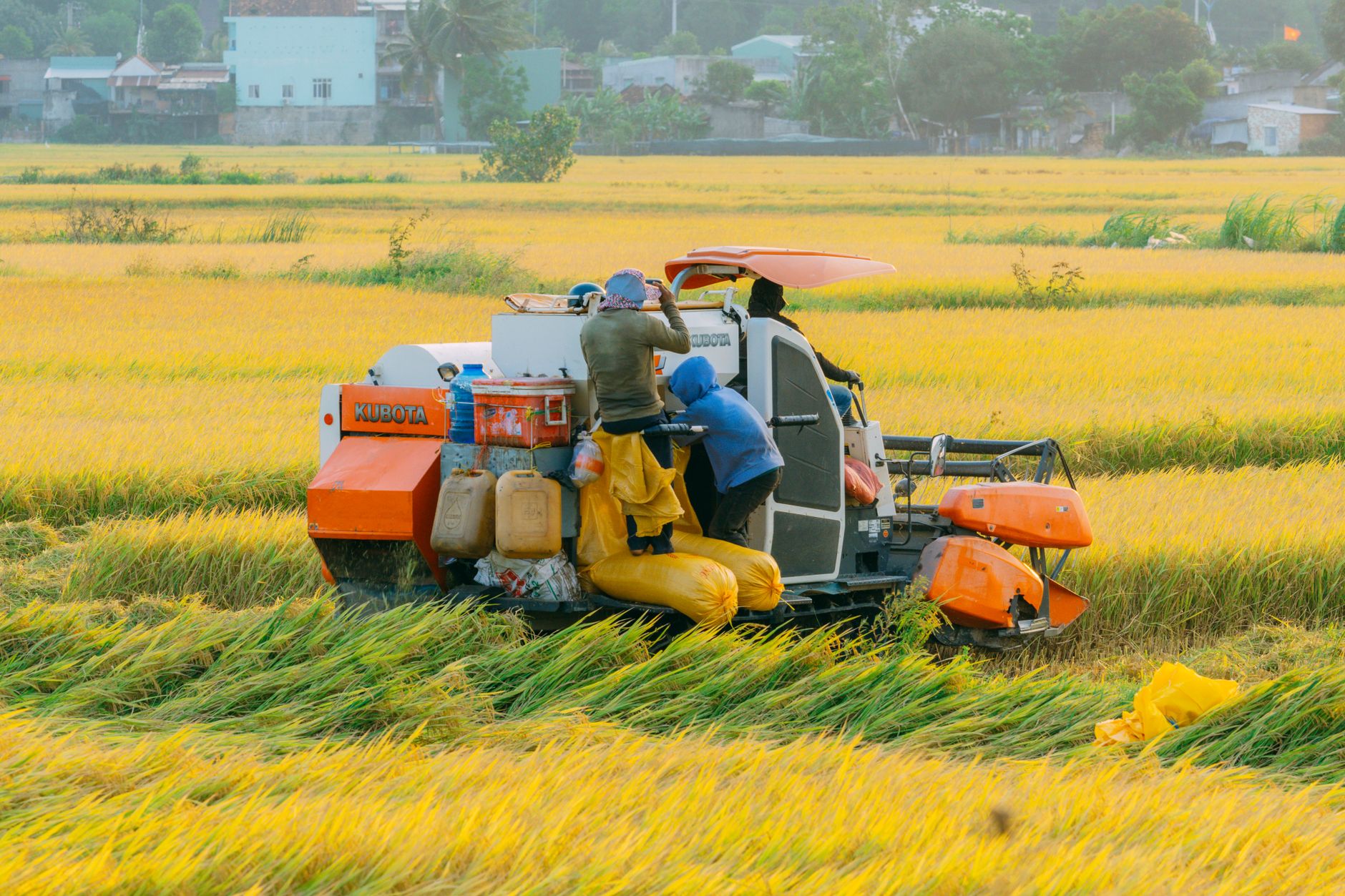
You arrive at a working family homestead. The kitchen might be outdoor, under a roof with open sides. The garden is right there—herbs, peppers, leafy greens. You start by helping chop or prepare ingredients; a family member shows you the proper technique for each. If it's rice season, you might walk to the field and see the stage of growth; if it's coffee season, you taste beans at different roasting levels.
Lunch is what you've been prepping or what the family eats that day—real food, not a prepared tourist meal. You sit together. Someone asks you questions. You ask them.
The afternoon might include a craft (weaving, pottery, herbal pressing), a walk through a nearby workshop, or work in the kitchen again for a second dish. By 3 or 4 p.m., we head back to town. You're tired in a good way, dirty, and full of details.
Adapting the farm experience for your group: families, seniors, rain
Kids aged 6–14 thrive on farm days because there's no sitting still. They dig, they taste, they help carry things. Younger children (under 6) need a parent's constant attention; the work isn't always fenced or smooth. We've hosted families with toddlers; the parent tends the child while the older kids help harvest. No judgment, but set expectations honestly.
Seniors often find farm days less stressful than city walking tours. You're in one place most of the time, moving at a conversational pace. If you have mobility issues, tell us in advance—we'll choose a flatter plot and adjust tasks. One 68-year-old guest from Texas spent the morning chopping herbs while sitting on a bench, then supervised the cooking. She said it was the best day of her trip.
Rain is part of farm life; we don't cancel. If it's heavy, we work under covered spaces and adjust—more kitchen time, more storytelling, less field time. If it's drizzle, you work as planned. Wear closed shoes and clothes you don't mind getting stained.
Allergies and diets: tell us before booking. We coordinate with the family kitchen. Vegetarians, vegans, gluten-free, tree-nut allergies—these are manageable. We adapt, but we need notice.
Regional differences: what changes if you're in Hanoi, Hoi An, or Da Lat
The farm experience looks different depending on Vietnam's geography and season. In Hanoi, farms are often in villages an hour north—vegetable-focused, with family orchards and herbal gardens. You're likely to prep fresh rolls, steam banh chung (sticky rice cake), or press medicinal herbs. The pace is brisk; families here sell to markets daily.
In Hoi An, countryside days often include rice fields and coconut palms. A session might involve coconut-water extraction, rice-washing in the old way, or learning to make turmeric-stained crackers. The landscape is flatter and more lush; you can see the ancient town's supply chain stretching across paddies.
In Da Lat, the "city of eternal spring," farms are hillside vegetable plots in cool air. You might pick strawberries, dig potatoes, or learn about the coffee and tea that grow here alongside temperate crops. It's the highest-altitude farm day we offer; the work is lighter because the terrain is steeper.
Ask us which region suits your interests: vegetable focus, rice traditions, herbal knowledge, or coffee origins.

Comparing farm days with other hands-on experiences
| Experience | What You Do | Best For | Why It Matters |
|---|---|---|---|
| Farm & countryside day | Chop, harvest, cook, sit with family | Learning food origins, rural life, family groups | You touch the entire chain: seed to plate |
| Vietnamese cooking class | Prepare 3–4 dishes in a city kitchen | City-based, skill-focused, dietary control | Structured learning; easier for those with limited time |
| Coffee workshop | Taste, roast, brew; understand sourcing | Coffee enthusiasts, morning people | Deep dive into one ingredient; shorter session |
| Street food & market tour | Walk, taste, ask vendors, shop | Urban explorers, foodies, quick visits | Energy, variety, no hands-on cooking |
| Horse riding experience | Ride through countryside; visit a stable | Adventure seekers, outdoor lovers | Physical activity; less about food culture |
A farm day combines elements: you cook, you taste, you meet producers, you work. It's slower and deeper than a market tour but more varied than a single-ingredient workshop. For American travelers seeking immersion, it's the closest to "living like locals for a day."
Real concerns American guests raise—and how we handle them
"Will I be lost or uncomfortable?" You're with us the whole time. We handle transport, translation, and the "what do I do now?" moments. The family expects you; there's no performance pressure. One couple from California said they were nervous until the grandmother handed them a knife and said, "Not like that—like this." After that, they relaxed.
"What if I don't like the food?" You don't have to eat anything you don't want. But most American guests are surprised by how fresh and light rural food tastes. Meat is optional; vegetables are abundant. If you have a genuine aversion, eat a snack before and focus on the work and the people.
"Is it safe? Clean?" Families here have hosted international visitors for years. Kitchens follow food-safety basics: water is safe, hands are washed, utensils are clean. It's not sterile—it's a real working kitchen—but it's not reckless. If you have serious immune concerns, tell us, and we'll help you judge.
"What if I'm too weak/old/unfit?" Farming work scales. You don't have to lift 50-pound sacks. You peel garlic, stir a pot, walk a field at your own pace. We've hosted guests in their 70s who felt stronger after the day because the work was purposeful and the rest periods were natural.
"How much time do I need?" A full day is best (6–8 hours including transport). A half day works for people with tight schedules, but you'll taste the beginning and miss the rhythm. Full day is richer.
What to check before you book a farm experience
- Your actual schedule: Can you commit to a full day, or do you need flexibility? Let us know upfront.
- Group size: Are you coming with friends, or solo? We host both; different families suit different groups.
- Dietary needs: List allergies, vegetarian/vegan status, or dislikes now. Not after you arrive.
- Fitness and mobility: Be honest. If stairs are hard, certain farms won't work. We'll guide you to a match.
- Rainy-day willingness: You okay with mud and covered-work plans? Or do you need guaranteed sunshine? Tell us; we'll choose the date and location accordingly.
- Camera etiquette: Ask the family before photographing food, children, or intimate moments. Most are fine; some prefer quiet.
- Transport needs: Do you have your own, or do you need us to arrange pickup? We coordinate; confirm it clearly.
How we source and coordinate farm experiences
Each farm we work with is a real, working family homestead—not a "agritourism resort." We've built relationships over time. They know what to expect from international guests. They know how to adapt. When you book, we confirm dates with them directly and send you their WhatsApp number so there are no surprises.
We handle the logistics because you shouldn't have to. Transport, translation, any dietary coordination, rain contingencies—that's our job. You show up ready to work and curious.
Learn more about how our farm sessions run, or check out how family experiences adapt to different ages. For group bookings, see group and corporate experiences.

FAQ
How much does a farm experience cost?
Pricing depends on group size, location, and whether it's a half or full day. Ask us for dates and a quote on WhatsApp—we'll give you a clear, upfront number with no hidden fees.
Can I combine a farm day with a cooking class?
Absolutely. Many guests pair a farm morning with an afternoon cooking class in the city, or vice versa. We can coordinate both.
Do I need farming experience?
No. Beginners are the norm. We teach as we go. If you've never harvested anything, that's exactly who should come.
What's the best season for a farm experience?
Every season offers something different: rice harvest in autumn, vegetables in winter, coffee in early spring, fruit in summer. Tell us what interests you; we'll suggest the right season and region.
Can I bring my kids?
Yes. Ages 6+ are ideal; younger children need close parental attention. We've hosted family groups from toddlers to grandparents. Let us know the ages, and we'll adapt the day.
What if I'm vegetarian or vegan?
We coordinate with the family kitchen in advance. Vegetarian food is abundant on farms; vegan requires notice but is totally doable. Tell us when you ask for dates. --- Ask about dates on WhatsApp
Ask about dates
Tell us the city, your dates and what you would like to try. We reply on WhatsApp in English with options and availability.
FAQ
How much does a farm experience cost?
Pricing depends on group size, location, and whether it's a half or full day. Ask us for dates and a quote on WhatsApp—we'll give you a clear, upfront number with no hidden fees.
Can I combine a farm day with a cooking class?
Absolutely. Many guests pair a farm morning with an afternoon cooking class in the city, or vice versa. We can coordinate both.
Do I need farming experience?
No. Beginners are the norm. We teach as we go. If you've never harvested anything, that's exactly who should come.
What's the best season for a farm experience?
Every season offers something different: rice harvest in autumn, vegetables in winter, coffee in early spring, fruit in summer. Tell us what interests you; we'll suggest the right season and region.
Can I bring my kids?
Yes. Ages 6+ are ideal; younger children need close parental attention. We've hosted family groups from toddlers to grandparents. Let us know the ages, and we'll adapt the day.
What if I'm vegetarian or vegan?
We coordinate with the family kitchen in advance. Vegetarian food is abundant on farms; vegan requires notice but is totally doable. Tell us when you ask for dates. --- [💬 Ask about dates on WhatsApp](https://wa.me/84338762340)
More like this
Farm and countryside days
Fishing Experience Vietnam for Japanese Travelers: Where to Go & What to Expect
Vietnam's waterways offer Japanese travelers a chance to learn traditional fishing methods directly from locals. Cáo Experiences runs half- and full-day sessions on rivers, lakes and the Mekong Delta where you cast nets, set traps, and cook your catch.
Farm and countryside days
Fishing Experience Vietnam for Foreigners: Hands-On Guide
Fishing in Vietnam isn't a spectator sport—you'll wade into rivers, cast nets, trap fish in baskets, and cook your catch for lunch. We run small-group and private fishing days in the countryside outside Hanoi, Ha Noi region, and the Mekong Delta.
Farm and countryside days
Fishing Experience in Vietnam: 8 Questions to Ask Before You Go
Fishing in Vietnam means wading through rice paddies, learning trap techniques, or casting in rivers with local guides. Here's what to ask before you book.