
Home › Blog › Farm and countryside days
Fishing with locals in Hoi An: what to expect
By the Cáo Experiences team · 2026-11-06
Fishing with locals in Hoi An happens in shallow tidal waterways and rice-paddy channels outside the town center, usually between 5–6 a.m. or 4–5 p.m., depending on the tides. You work alongside a family who have fished these waters for decades, learning how to throw cast nets by hand, set bamboo fish traps, and read the water for where fish shelter. Most sessions last 2–3 hours including a boat ride back and a simple breakfast or late lunch cooked on-site from the catch. Cáo Experiences coordinates everything by WhatsApp; you bring old clothes, water shoes, and sun protection—this is real work in muddy, knee-deep conditions, not a packaged photo moment. Ask us for dates and a quote on WhatsApp to check seasonal availability and tide times for your travel dates. Ask about dates on WhatsApp
Why fishing in Hoi An feels different from other Vietnam experiences
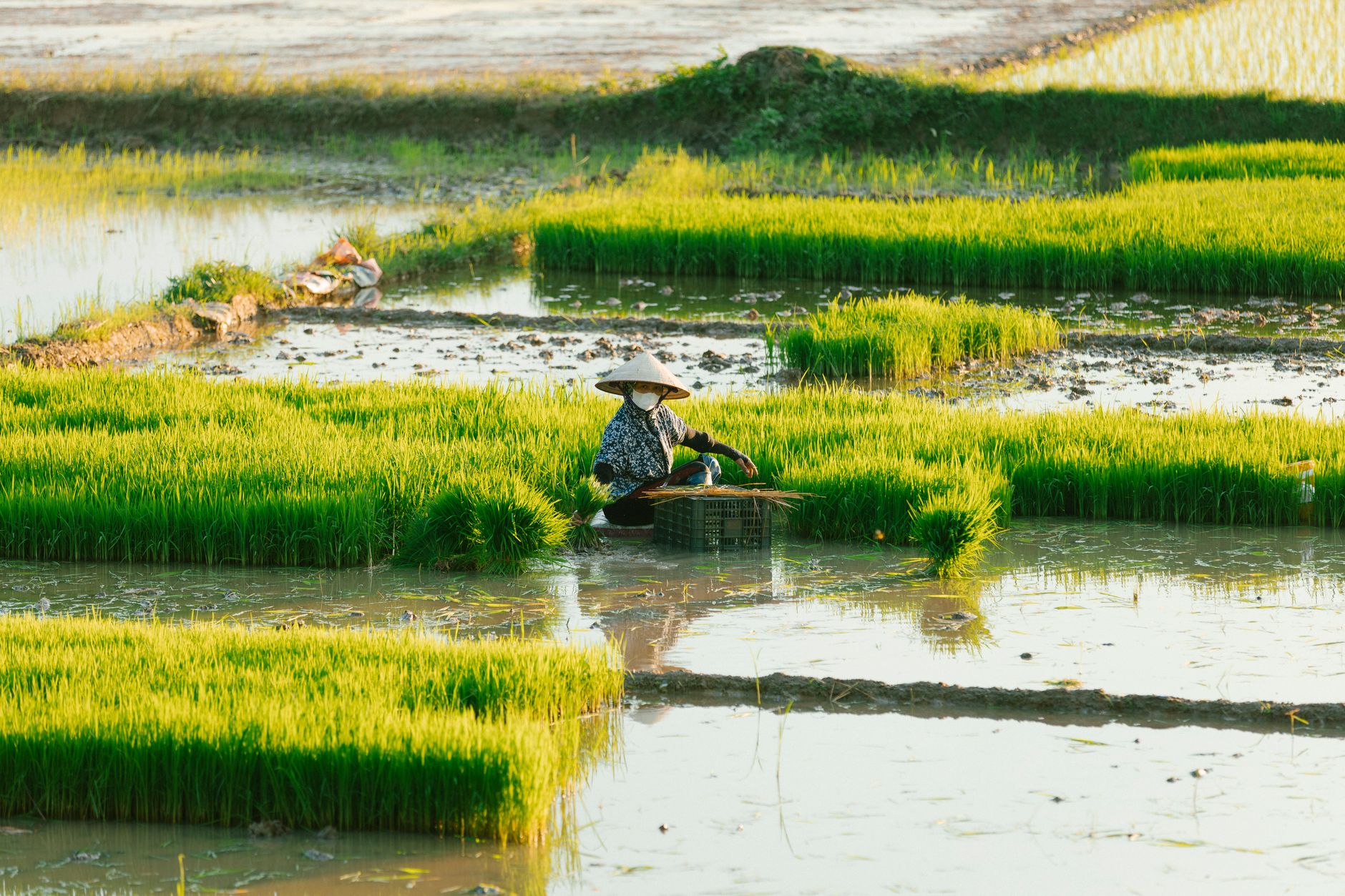
Most travelers see Hoi An as a lantern-lit evening stroll or a cooking class in town. Fishing flips that: you leave before sunrise, your hands get wet and muddy, and you sit with people who know the water as home, not a backdrop. The canals wind past coconut palms and mangrove roots; you hear frogs and kingfishers, not tour-group chatter. Local families don't perform fishing—they do it because breakfast depends on it. That authenticity is what we're careful to protect: we keep groups small, we never interrupt the work rhythm with photo stops, and we ask you to follow the family's pace, not ours. If you've done a street food and market tour in Hoi An before, fishing is the upstream version of the same economy—you see where breakfast begins, not just where it's sold.
What skills will you actually learn on the water?
Cast nets take about ten minutes to learn, thirty to feel steady, and a lifetime to master. You'll hold the rope loop in your throwing hand, flip the weighted net open across the water, and watch it sink. The family will show you how to read ripples—fish moving below break the surface differently depending on species and depth. You'll also check bamboo fish traps that sit overnight; these funnel fish in but let them escape only hard. Some sessions include a hand-line or small net for catching shrimp in shallower channels. Don't expect to "catch dinner"—locals often return with five to ten fish in a three-hour session. The point is learning the rhythm: patience, observation, repetition. Beginners and seniors both do well because the work is low-impact; you wade or sit in a small boat, and the family adjusts to your pace. Rain rarely stops a session; it changes nothing for the fisher, and wet clothes dry fast in tropical heat.
How does a typical fishing morning break down, hour by hour?
5:00 a.m.: Meet at a family's home or boat landing in a village lane outside town. Coffee and a light snack (rice paper or bánh, often). Gear check: water shoes, quick wrap for valuables, sun cream.
5:30 a.m.: Boat or walk to the fishing grounds—usually fifteen to thirty minutes depending on tide and where fish are moving. The fisher explains the day's plan: which channels, which traps to check, water depth, expected catch.
6:00–8:30 a.m.: The work. You cast nets, pull traps, sort fish. The family teaches by doing; translation happens naturally through gesture and WhatsApp if your host speaks limited English. Breaks happen when they happen—some families chat and rest, others work steadily.
8:30 a.m.: Return to the home or a shelter nearby. Catch is cleaned and sorted. You help if you want.
9:00–9:30 a.m.: Breakfast cooked from the morning's catch—often grilled fish, fresh herbs, rice, and soup. You eat together at a wooden table or mat on the ground.
10:00 a.m.: Session ends. Return to Hoi An town by motorbike or car.
Evening sessions follow the same shape but shift two hours later, finishing with dinner instead of breakfast.
Who is fishing in Hoi An actually right for?
| Traveler type | Suit for this? | Why or why not | Better fit? |
|---|---|---|---|
| Couples, 25–50 | Yes | Intimate, shared physical challenge, sunset option | Pair with flower arranging workshop for variety |
| Families with kids (8+) | Yes | Kids love boats and hands-on work; tide/schedule matters | Check experiences for families for rainy backup |
| Seniors or limited mobility | Partial | Wading and muddy ground; shorter sessions available; discuss with us | Tea experiences or coffee workshop less physical |
| Large groups (8+) | No | Locals work best with 2–4 visitors; groups disturb fish and rhythm | See group and team experiences for alternatives |
| Solo travelers | Yes | Fishers are generous; you won't feel alone; genuine exchange | Combine with art and culture classes in town after |
The clearest dividing line: if you want a curated photo moment, fishing isn't it. If you want to stand in cold water at dawn and focus on what a family is teaching you, it's perfect.

How weather, tides, and seasons change what you'll actually do
Tides rule fishing in Hoi An. High water lets boats reach channels that are muddy flats at low tide. Low tide is better for wading and trap-checking but means longer walks. We plan sessions around tides—your dates matter more than you'd expect. You can't book "next Thursday" without checking tide tables first; we do that for you.
Rain in early morning is normal; it rarely cancels a session because fishers work through it. You'll be wet anyway. Pack a waterproof bag for phone and valuables; everything else becomes part of the experience.
Dry season (November–April) has calm water and cool mornings. Wet season (May–September) brings swollen canals, stronger currents, and more fish moving inland. Water is warmer; mosquitoes are bolder. Both seasons work; conditions just differ.
If heavy rain or unexpected high water makes wading dangerous, we pivot to a boat-based session focused on trap checks and net casting from the boat instead. You still learn; the depth just changes.
Practical checklist: what to bring and what to avoid
Bring:
- Water shoes or old sneakers (will get wet and muddy; plan to discard or soak them after)
- Lightweight long-sleeve shirt (sun and insect protection without heat)
- Hat or cap
- Sunscreen (reapply after water work)
- Small towel or quick-dry cloth
- Phone in a waterproof pouch if you must
- 1–2 litres of water
- Any medications or inhalers (no first aid on-site beyond basic)
Avoid:
- Expensive watches, glasses, or jewelry (boats are moving; lose things easily)
- Camera on a regular neck strap (water splash, boat handling)
- Insect repellent heavy in DEET (fishers don't use it; respect their choice)
- Expectations of high catch or perfect Instagram light
- Arriving hungry—breakfast is usually 8:30 a.m., and work is real
Why Hoi An fishing pairs well with other hands-on sessions
If you're staying three days or more, layering experiences makes sense. A morning fishing session leaves your afternoon free. Many guests add a Vietnamese cooking class the same day—you'll cook fish you understand now, from a fisher you met. Or pair fishing with a farm and countryside experience to see rice paddies and understand irrigation and tides together. Coffee workshop sessions run afternoon or evening and combine well. Families and children often do fishing one morning, then family-focused activities that don't require waking before dawn another day.
We've hosted back-to-back sessions (fishing 5–9 a.m., cooking 10 a.m.–1 p.m.) when guests wanted density. It works but feels rushed. Three days with one session per day lets you absorb each skill. Ask us about building an itinerary that suits your schedule.
What happens after the session—how memories actually land
You'll smell like river mud and fish. Your hands and clothes will stain slightly from handling nets (use cold water, not hot, to rinse). The breakfast will taste sharper than restaurant food because you know the hands that caught and cooked it. For two or three days after, you'll notice Hoi An's canals differently—you'll recognize the channels, spot traps, understand the landscape as workable.
Some guests photograph nothing because they're focused. Others take a few boat-ride photos. Either way, the real souvenir is the ache in your throwing arm, the family's laughter when you tangle the net, and a conversation over rice soup at 9 a.m. that you couldn't have scripted. Cáo Experiences doesn't sell that in advance; we just make sure it happens by keeping groups small and fishers unhurried. We'll send you home with a simple bag of salt-dried fish if the catch was good—a gift from the family, not a purchase.
If you want to return year after year or dive deeper into Hoi An's food and agriculture, we can arrange farm and countryside experiences with the same families in their rice paddies, or Vietnamese cooking classes specifically focused on river cuisine. One experience rarely feels like "enough."
Ask about dates and build your Hoi An itinerary
FAQ
Is fishing in Hoi An safe for non-swimmers?
You won't swim. Most work happens in knee-deep water or from a boat. Fishers know the canals completely and avoid hazards. If you can't wade due to mobility limits, boat-based sessions work just as well. Let us know in advance; we adjust everything on WhatsApp.
Do I have to speak Vietnamese to understand what the fisher is teaching?
No. Fishing is mostly demonstration—watching hands, copying movement, reading the water together. One family member often speaks basic English or French. Gaps in language rarely matter; frustration is rarer than you'd expect. We brief you on key words beforehand.
What if the fish catch is bad or zero?
That's real fishing. Bad days happen. The value isn't in tonnage; it's in understanding why—low tide, wrong season, too warm. Breakfast still cooks from frozen backup or from the family's stored dry fish. You learn just as much on a slow day.
Can I book a private session just for my family, or does it have to be a group?
Both work. Private sessions (2–4 people) are common and feel more intimate. Shared sessions (4–6 people) lower cost per person and add the social dynamic of other learners. Ask us for dates and a quote to compare options for your group size.
What's the best season to fish in Hoi An?
Dry season (November–April) has calmer water and cooler mornings—easier for most people. Wet season (May–September) has higher water and more fish but is hot and humid. Both are good. Your comfort and schedule matter more than "best." We'll recommend based on your dates.
Ask about dates
Tell us the city, your dates and what you would like to try. We reply on WhatsApp in English with options and availability.
FAQ
Is fishing in Hoi An safe for non-swimmers?
You won't swim. Most work happens in knee-deep water or from a boat. Fishers know the canals completely and avoid hazards. If you can't wade due to mobility limits, boat-based sessions work just as well. Let us know in advance; we adjust everything on WhatsApp.
Do I have to speak Vietnamese to understand what the fisher is teaching?
No. Fishing is mostly demonstration—watching hands, copying movement, reading the water together. One family member often speaks basic English or French. Gaps in language rarely matter; frustration is rarer than you'd expect. We brief you on key words beforehand.
What if the fish catch is bad or zero?
That's real fishing. Bad days happen. The value isn't in tonnage; it's in understanding why—low tide, wrong season, too warm. Breakfast still cooks from frozen backup or from the family's stored dry fish. You learn just as much on a slow day.
Can I book a private session just for my family, or does it have to be a group?
Both work. Private sessions (2–4 people) are common and feel more intimate. Shared sessions (4–6 people) lower cost per person and add the social dynamic of other learners. Ask us for dates and a quote to compare options for your group size.
What's the best season to fish in Hoi An?
Dry season (November–April) has calmer water and cooler mornings—easier for most people. Wet season (May–September) has higher water and more fish but is hot and humid. Both are good. Your comfort and schedule matter more than "best." We'll recommend based on your dates.
More like this
Farm and countryside days
Fishing Experience Vietnam for Japanese Travelers: Where to Go & What to Expect
Vietnam's waterways offer Japanese travelers a chance to learn traditional fishing methods directly from locals. Cáo Experiences runs half- and full-day sessions on rivers, lakes and the Mekong Delta where you cast nets, set traps, and cook your catch.
Farm and countryside days
Fishing Experience Vietnam for Foreigners: Hands-On Guide
Fishing in Vietnam isn't a spectator sport—you'll wade into rivers, cast nets, trap fish in baskets, and cook your catch for lunch. We run small-group and private fishing days in the countryside outside Hanoi, Ha Noi region, and the Mekong Delta.
Farm and countryside days
Fishing Experience in Vietnam: 8 Questions to Ask Before You Go
Fishing in Vietnam means wading through rice paddies, learning trap techniques, or casting in rivers with local guides. Here's what to ask before you book.