
Home › Blog › Farm and countryside days
Luxury Farm Experience Vietnam: What to Expect & How to Plan
By the Cáo Experiences team · 2026-11-06
A luxury farm experience in Vietnam combines comfort with genuine rural work. At Cáo Experiences, we host small groups and private guests on family farms outside major cities—typically 2–4 hours from Hanoi, Ho Chi Minh City, or Da Nang. Sessions run 6–8 hours for day visits or 18+ hours for overnight stays. You'll plant or harvest crops (rice, vegetables, fruit), prepare meals using farm produce, learn from family farmers, and often stay in a bedroom within a working farm compound or a simple countryside lodge. Luxury here means hot water, mosquito nets, good bedding, and English-speaking coordination—not air-con resorts. Cost varies by location, group size, and season; ask us for a date-specific quote on WhatsApp. Avoid booking through middleman agencies or sites that promise standardised experiences; each farm and family is different, and prices balloon through markup layers. Ask about dates on WhatsApp
What does "luxury" actually mean on a Vietnamese farm?
Luxury on a farm isn't a well-made hotel standard—it's intentional comfort in a real working setting. You get reliable electricity, clean bathrooms with hot water, bug screens, and a soft bed. Internet is patchy by design. Meals are abundant, cooked by the farm family or us, using whatever's in season. The luxury is knowing you can trust the hygiene, won't get lost in translation, and can opt out gracefully if you're uncomfortable. We've adapted dozens of farmhouses to this standard: screened windows, sealed doors, a backup generator, a kitchen stocked for allergies and diets. Single travelers and older guests often say the best part is the quiet—no motorbikes, no neon. A family with young kids might find it liberating that there's nowhere to "go"; everyone sleeps, works, and eats in one place.

How does a typical day unfold from arrival to sunset?
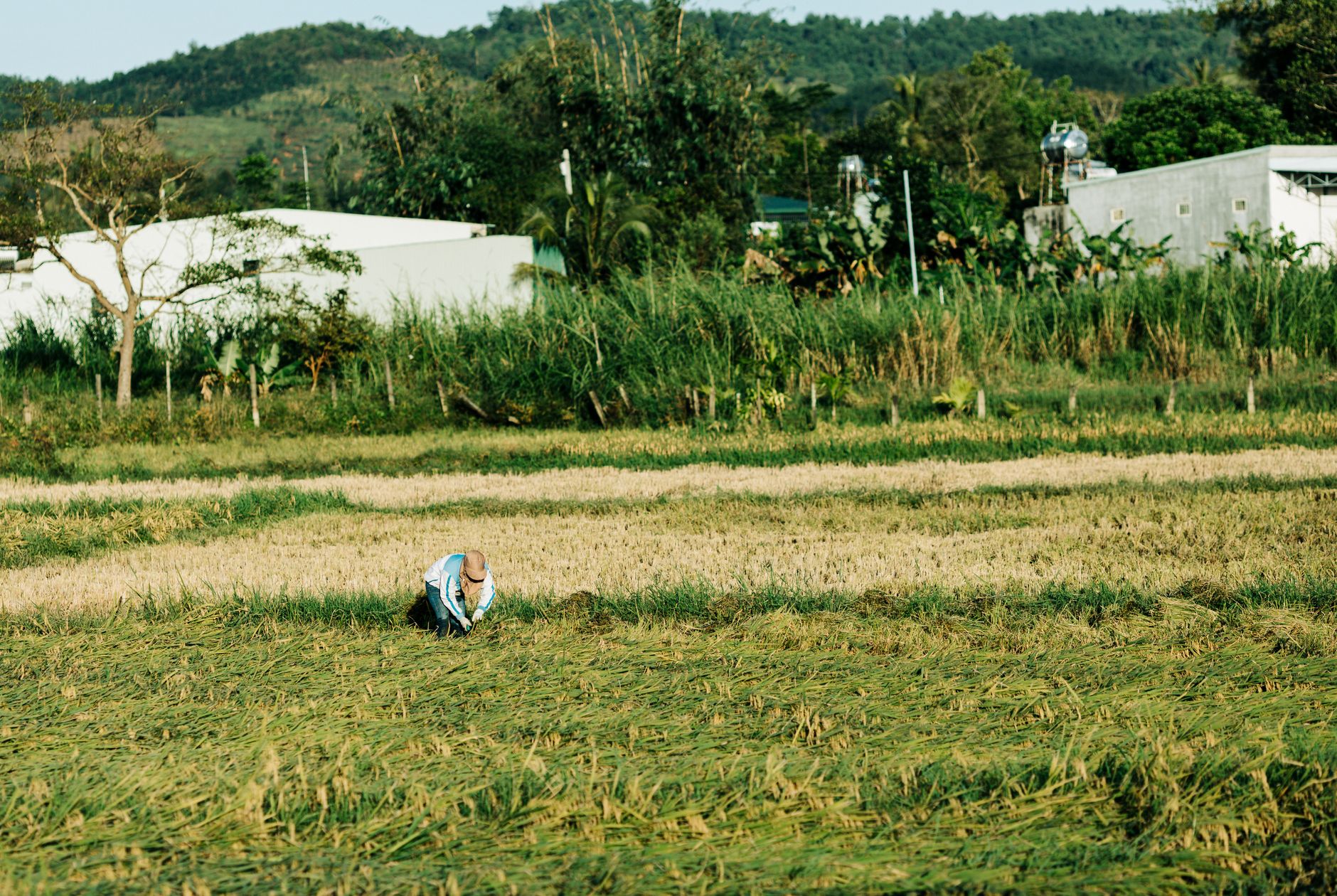
You arrive mid-morning at a family's farm accessed by a narrow lane off a quiet road. A host meets you at a pickup point in town and drives 45–90 minutes out. By 10 a.m., you're introduced to the family—usually grandparents and an adult child who manages the land. They walk you around the fields, explaining what's growing and what the season demands. By 11:30 a.m., you're in the fields: digging, planting, weeding, or harvesting depending on the crop and time of year. Work is steady but not punishing; younger guests move faster, but the pace suits families and seniors equally. Around 1 p.m., you wash up (bucket or outdoor shower) and cook lunch together in the family kitchen—chopping, stirring, tasting. You eat at the family table. Afternoon might be rest time (you're tired), a craft activity (basket weaving, mat making), or a trip to a nearby village or waterway. By 5 p.m., you help prepare dinner, eat again, then sit with the family, play card games, or walk around the property as light fades. Electricity cuts at 9 p.m. or you retire to read by lamplight. This schedule flexes entirely on your energy and the farm's rhythm.
What crops or activities change with the seasons?
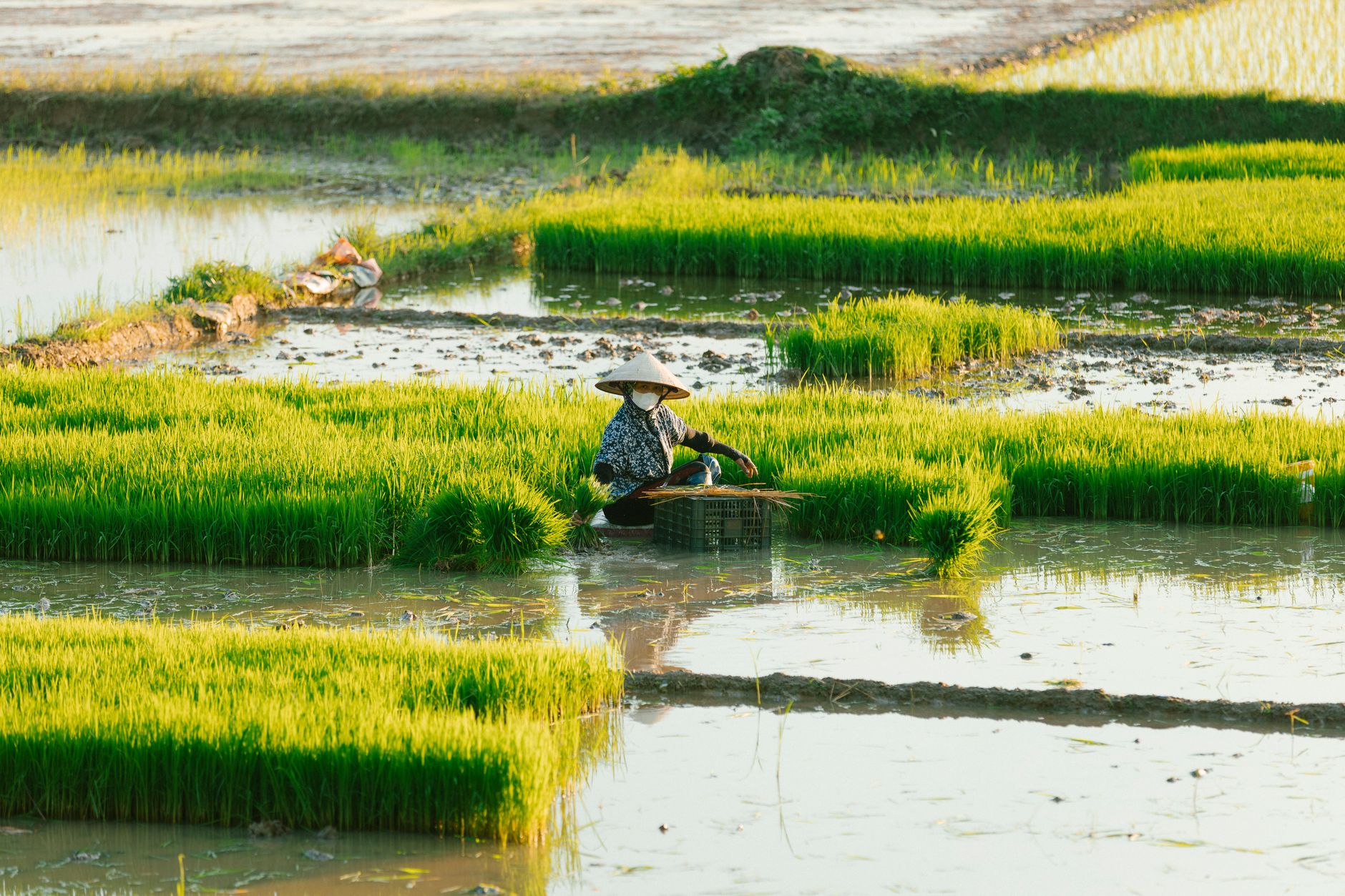
Rice paddies dominate from May to October (wet-season planting and growth) and November to February (harvest). In spring (March–April), you might plant vegetables, tend fruit orchards, or prepare beds. Summer (May–July) brings leafy greens, herbs, and root vegetables in upland farms. Autumn (September–November) is harvest-heavy: rice, pumpkin, turmeric. Winter (December–February) focuses on maintenance, composting, and preparing the next cycle. Farm and countryside experiences are available year-round, but wet-season paddies are visually striking and offer genuine planting work; dry-season farms suit guests who prefer lighter physical activity. Ask us which farm matches your preferred season and fitness level when you WhatsApp dates.
Who is a luxury farm experience actually right for?
Families with kids aged 5–14 thrive because there's no screen time pressure, siblings work together, and farm families are patient teachers. Couples seeking a "real" date away from cities often book overnight stays. Solo travelers over 40 often say it's the first time they've felt purposefully useful in weeks. Groups of friends planning a bonding day find the shared work and meals naturally break down small talk. Seniors (we've hosted guests into their 70s) appreciate the slow pace, the storytelling, and the dignity of contributing to a day's work—no one is being "entertained." Fitness isn't a barrier: we adapt tasks to your ability. Rain doesn't shut us down; farm families work in light rain, and we shift indoors to food prep, weaving, or teaching if it's heavy. Heat is real in summer; we start earlier and rest longer. Food allergies, vegetarianism, and gluten-free diets are managed in advance with the farm family and us.
How do you choose between overnight and day-trip farm experiences?
A day session (6–8 hours) suits travelers on tight schedules, first-timers testing the concept, or families with young children who need familiar beds. You arrive mid-morning, work 2–3 hours, eat two meals, rest, and depart by 5 p.m. You'll understand the rhythms but feel less immersed. Overnight (18–26 hours) includes two nights and two full days, two dinners, three breakfasts, and a second day of lighter work or skill-learning (cooking for a visitor, building a compost bin, repairing a tool shed). The overnight builds trust with the family and often reveals unexpected skills: one guest, a retired carpenter, spent the second afternoon helping rebuild a fence gate. Overnight guests report dreams about farm sounds and wake naturally at first light. Choose overnight if you have 3+ days in one region and want to genuinely rest; choose day-trip if you're moving between cities or have children under 8. Both are bookable privately or in small groups of 4–6.
What should you actually pack and prepare?
Wear long sleeves and trousers in fields (sun, insects, soil); bring a hat and sunscreen. Shoes should be closed, slip-on trainers or light hiking boots (waterproof if it's wet season). A spare pair of flip-flops for after-work washing is essential. Pack any medications, reading, a small torch, and a reusable water bottle—tap water is fine, but we refill for you. Bring cash in Vietnamese dong for any spontaneous market trip; card payments aren't available on farms. Overnight guests should pack light layers (nights are cool upland) and toiletries; the farm provides bedding. Do tell us in advance about your fitness level, dietary needs, fears (spiders, deep water, large animals), and language concerns. Most farms speak only Vietnamese; we translate during work. Pre-trip messaging via WhatsApp is your chance to ask exact questions: is there a shower or bucket wash? Are chickens loose? Will we see water buffalo? Honesty here prevents friction on arrival.
| Guest type | Best session length | Key appeal | Main consideration |
|---|---|---|---|
| Couples / honeymooners | Overnight (2 nights) | Shared work, private room, slow time together | Some farms noisy at dawn (roosters, farm work) |
| Families with kids 5–12 | Day trip or 1 night | Tactile learning, no screens, safe space | Younger kids tire by afternoon; 1 night suits them better |
| Solo travelers | Overnight (2 nights) | Belonging, storytelling, no judgment | Can feel emotional; bring a journal |
| Fitness-focused groups | Day trip (morning shift) | High-intensity work, visible output | Afternoon rest necessary; not a gym |
| Seniors / retirees | Day trip or overnight | Gentle pace, respect, shared meals | Bathroom access important; ask us in advance |
| Corporate / team-building | Day trip (half-day work + meal) | Trust-building, common goal, novelty | Expect modest discomfort; it's the point |
Real concerns guests voice—and how we address them
"Will I be filthy and uncomfortable?" Yes, you'll have dirt under your fingernails and sweat. By 1 p.m., you wash hands and face at an outdoor tap or shower, then eat lunch. Overnight guests shower or bathe in a bucket (warm water, privacy screen). Farm dirt is not urban grime; it washes off easily and feels earned.
"What if I hate it halfway through?" You won't be locked in. Day-trip guests can leave early (we arrange transport); overnight guests have committed to the family's schedule, but we've never had a guest who wanted to flee. Most discomfort peaks in hour three, then flips to engagement.
"Are there animals I'll touch or be afraid of?" Farms have roosters, chickens, sometimes goats or pigs. Water buffalo appear in wet-season rice work; they're calm and trained. Dogs are usually friendly. Tell us your animal fears in advance; we match you with a farm suited to your comfort zone.
"How is this sustainable or ethical?" Farms we partner with have invited tourists because they benefit financially and enjoy teaching. We don't present farming as quaint; family members will mention climate stress, debt, or labor shortages. You're not "saving" them; you're working with them and paying fairly. This is our approach to real countryside experiences, not performative charity.
What to check before you book
- Ask your fitness and health level honestly. If you have joint pain, heart concerns, or mobility issues, tell us. Work is modular; we adapt.
- Confirm the season and crop. Planting is harder than weeding; harvest is longer hours. Spring vegetables suit less intensive work.
- Check distance and transport. 2–4 hours by car from your base city is standard. Can you sit that long? Do you get carsick?
- Verify meal coverage and allergies. We coordinate diets in advance, but the farm family cooks; taste testing is expected. Vegan guests are welcome; we plan meals with the family beforehand.
- Set accommodation expectations. No air-con, no WiFi, no private bathroom on some farms. Is this a dealbreaker or an adventure?
- Decide overnight vs. day. Overnight is immersive but demands 2+ days in one place. Day-trip is flexible but surface-level.
For more immersive countryside time, explore wellness and slow experiences or combine this with Vietnamese cooking classes in your destination city. We also offer group and corporate farm days with team-building framing if you're traveling with colleagues.
FAQ
What's included in a farm experience price?
Transport from your city accommodation, all meals on the farm (breakfast, lunch, dinner), work guidance, English-speaking host coordination, and lodging (day trips exclude lodging). Ask us for a date-specific quote; pricing depends on group size, season, and farm location.
Can I book a farm experience if I'm not fit or have mobility limits?
Yes. We partner with farms offering lighter work: vegetable weeding, herb picking, cooking, and craft activities require no running or heavy lifting. Tell us your limits when you WhatsApp; we match you appropriately.
What happens if it rains heavily?
Light rain is normal; we work in it. Heavy rain shifts activities indoors: food prep, weaving, tool repair, or storytelling in the family home. Farm families know rain; it's not a cancellation.
Are children under 5 okay on a farm experience?
Yes, but day-trips suit them better than overnight. They can help water plants, collect eggs, and eat meals, but won't sustain 8 hours of field work. Overnight with very young kids can be disrupted by unfamiliar sounds.
Do I need farming experience or special skills?
No. The family teaches you everything. Most guests have never planted a seed. You'll make mistakes and laugh about them; mistakes are how you learn farming.
Is the farm experience vegan or vegetarian friendly?
Yes. Tell us in advance, and we coordinate with the farm family. Meals will center vegetables, rice, and legumes from the farm. Some families raise chickens for eggs and tourism income; we respect your diet.
How far are farms from Hanoi, Ho Chi Minh City, or other major cities?
2–4 hours by car, depending on which farm and city. We arrange pickup and drop-off from your accommodation. The drive itself is part of the experience—you'll see villages and countryside gradually replace traffic.
Can I book a private farm experience, or is it group-only?
Both. Couples and families often book privately for one farm overnight or day. Groups of 4–6 can join a shared session or book a farm exclusively. Private booking costs scale with group size; ask us for options.
Ask about dates
Tell us the city, your dates and what you would like to try. We reply on WhatsApp in English with options and availability.
FAQ
What's included in a farm experience price?
Transport from your city accommodation, all meals on the farm (breakfast, lunch, dinner), work guidance, English-speaking host coordination, and lodging (day trips exclude lodging). Ask us for a date-specific quote; pricing depends on group size, season, and farm location.
Can I book a farm experience if I'm not fit or have mobility limits?
Yes. We partner with farms offering lighter work: vegetable weeding, herb picking, cooking, and craft activities require no running or heavy lifting. Tell us your limits when you WhatsApp; we match you appropriately.
What happens if it rains heavily?
Light rain is normal; we work in it. Heavy rain shifts activities indoors: food prep, weaving, tool repair, or storytelling in the family home. Farm families know rain; it's not a cancellation.
Are children under 5 okay on a farm experience?
Yes, but day-trips suit them better than overnight. They can help water plants, collect eggs, and eat meals, but won't sustain 8 hours of field work. Overnight with very young kids can be disrupted by unfamiliar sounds.
Do I need farming experience or special skills?
No. The family teaches you everything. Most guests have never planted a seed. You'll make mistakes and laugh about them; mistakes are how you learn farming.
Is the farm experience vegan or vegetarian friendly?
Yes. Tell us in advance, and we coordinate with the farm family. Meals will center vegetables, rice, and legumes from the farm. Some families raise chickens for eggs and tourism income; we respect your diet.
How far are farms from Hanoi, Ho Chi Minh City, or other major cities?
2–4 hours by car, depending on which farm and city. We arrange pickup and drop-off from your accommodation. The drive itself is part of the experience—you'll see villages and countryside gradually replace traffic.
Can I book a private farm experience, or is it group-only?
Both. Couples and families often book privately for one farm overnight or day. Groups of 4–6 can join a shared session or book a farm exclusively. Private booking costs scale with group size; ask us for options.
More like this
Farm and countryside days
Fishing Experience Vietnam for Japanese Travelers: Where to Go & What to Expect
Vietnam's waterways offer Japanese travelers a chance to learn traditional fishing methods directly from locals. Cáo Experiences runs half- and full-day sessions on rivers, lakes and the Mekong Delta where you cast nets, set traps, and cook your catch.
Farm and countryside days
Fishing Experience Vietnam for Foreigners: Hands-On Guide
Fishing in Vietnam isn't a spectator sport—you'll wade into rivers, cast nets, trap fish in baskets, and cook your catch for lunch. We run small-group and private fishing days in the countryside outside Hanoi, Ha Noi region, and the Mekong Delta.
Farm and countryside days
Fishing Experience in Vietnam: 8 Questions to Ask Before You Go
Fishing in Vietnam means wading through rice paddies, learning trap techniques, or casting in rivers with local guides. Here's what to ask before you book.