
Home › Blog › Farm and countryside days
Rice Planting Experience Hoi An: Step into the Fields
By the Cáo Experiences team · 2026-11-06
Rice planting in Hoi An happens in spring and autumn when farmers flood their paddies and transplant seedlings by hand. We take small groups or private guests to working family farms outside the ancient town, where you'll spend two to four hours learning to identify mature seedlings, wade through knee-deep water, and set each plant in neat rows—the same technique families have used for centuries. No prior skill is needed; we adapt the pace for kids, seniors, and different fitness levels. You'll wear simple clothes, go barefoot or in old shoes, and get completely wet—bring a towel and a change of clothes. The session includes tea and usually a meal with the farming family. Ask us for dates and a quote on WhatsApp, as harvests and planting windows shift each year and group size affects what we can arrange. Ask about dates on WhatsApp
A rice planting experience in Hoi An puts you barefoot in flooded paddies alongside family farmers during the planting season, teaching you the rhythm and skill behind Vietnam's staple crop in a morning or full day. We take small groups or private guests to working family farms outside the ancient town, where you'll spend two to four hours learning to identify mature seedlings, wade through knee-deep water, and set each plant in neat rows—the same technique families have used for centuries. No prior skill is needed; we adapt the pace for kids, seniors, and different fitness levels. You'll wear simple clothes, go barefoot or in old shoes, and get completely wet—bring a towel and a change of clothes. The session includes tea and usually a meal with the farming family. Ask us for dates and a quote on WhatsApp, as harvests and planting windows shift each year and group size affects what we can arrange.
Why Does Rice Planting Matter in Hoi An's Story?
Rice paddies surround Hoi An's ancient town and have fed its people for over 500 years. When you plant rice, you're not performing a tourist act—you're participating in the calendar that has always defined rural life here. Farmers plant in May–June (spring crop) and August–September (autumn crop); the paddies flood, seedlings grow in nursery plots, and then the back-breaking work of transplanting begins. Hoi An's countryside remains largely unmechanized in family farms, so the skill is still learned child to child, generation to generation. Understanding this work—the timing, the water management, the patience—changes how you see a bowl of rice forever. Explore our full farm and countryside experiences to discover other ways to connect with rural Vietnam.

What Actually Happens During a Planting Session?
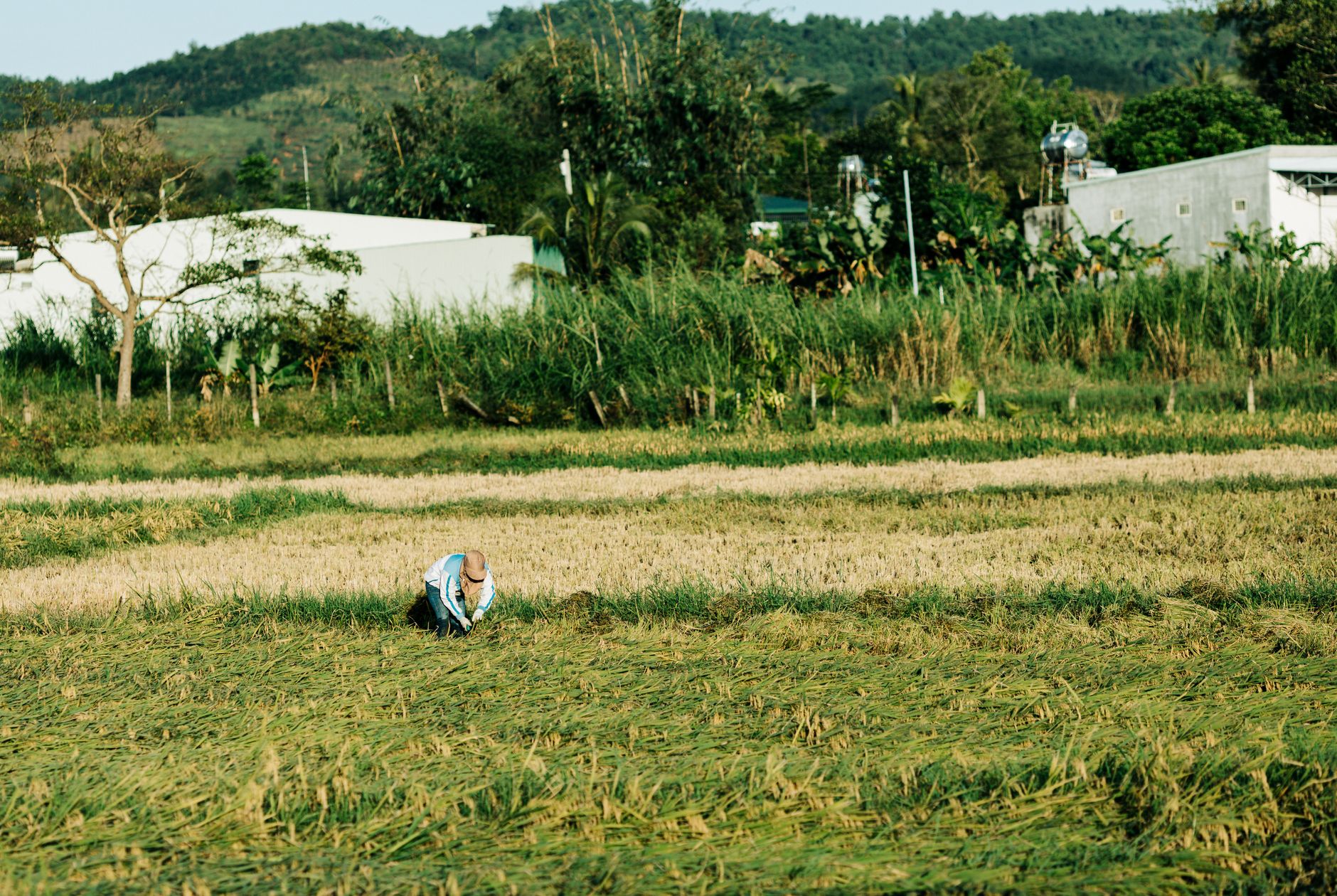
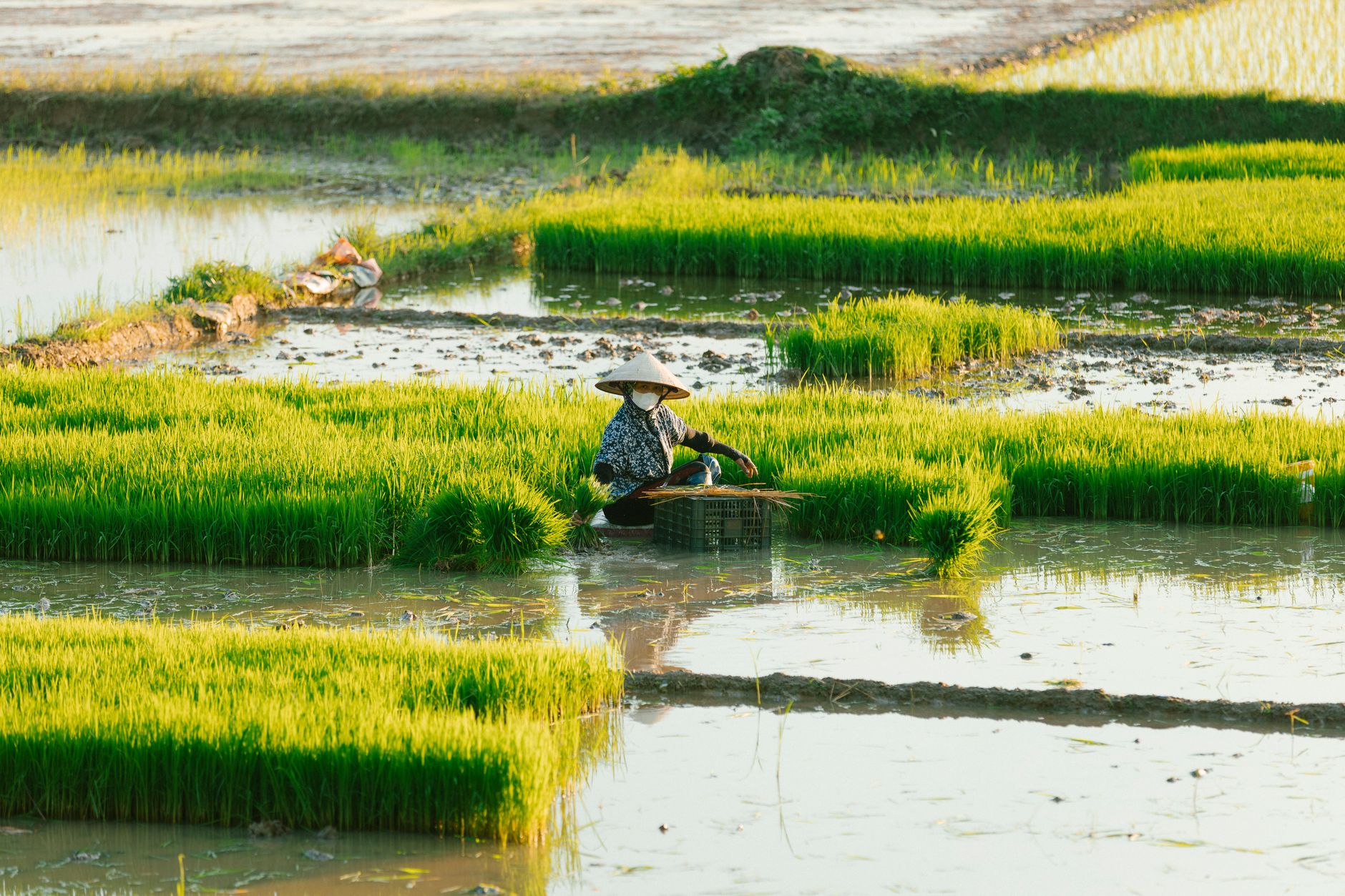
We arrive at a family farm mid-morning and meet the farmers who manage the land. The family shows us the nursery beds where seedlings grow thick and green, explains how they know when the plants are ready (usually 25–30 days old), and walks us to the main paddy, already flooded to ankle or knee depth. You'll wade in, feel the soft mud underfoot, and learn the grip: hold three to five seedlings, separate them gently, push them into the soil in a pattern, then move on. It's repetitive, meditative, and your back will feel it—but farmers do this for hours in the sun. We work alongside the family for two to three hours, usually in a section they're actively planting. Kids often surprise themselves with how far they get; seniors can work at their own pace or sit and observe, chat with the farmer, and take photos. Mid-session, we pause for tea and snacks in the farmhouse. If you book a full day, lunch is a home-cooked meal of local vegetables, fish, and rice—the very crop you've just helped plant. See how our family-friendly experiences adapt for all ages to learn how we manage mixed-age groups.
When Is the Best Season, and Can You Go in Rain?
Rice planting windows in Hoi An are May–June and August–September, aligned with the monsoon rains that flood the paddies naturally. Booking within these windows is essential; outside them, the fields are either dry or already growing, and the experience becomes a farm tour, not a planting session. Rain during a planting day is normal and expected—you're already soaked from waist down. Light rain doesn't stop us; heavy downpours occasionally force us to cut a session short or reschedule, though we work with the farmers to find an alternative date. If you're traveling outside the planting seasons, ask us about farm and countryside alternatives, which include harvesting, vegetable picking, or a visit to see the growing crop and meet the farming family.
| Season | Dates | Water Level | Best For | What to Know |
|---|---|---|---|---|
| Spring | May–June | Flooded, warm | First-time planters | Most tourists come now; book early. |
| Autumn | August–September | Flooded, humid | Return visitors, photography | Fewer crowds; heavier rain possible. |
| Off-season | Oct–Apr | Dry or growing | Farm tours instead | No planting; see fields and harvest prep. |
What Should You Bring and Wear?
Dress in clothes you don't mind staining or losing to mud forever. Old shorts, a t-shirt, and a light long-sleeved shirt (sun and insect protection) are ideal. Go barefoot or wear old shoes that strap on firmly—flip-flops and sandals come off in the mud. Bring a towel, a change of clothes, and a plastic bag for wet items. Sunscreen and a hat help, though the farmers rarely use them. A small camera or phone in a waterproof case is fine; the light at harvest time and in the paddies is stunning. Don't bring valuables or white clothing. Insects are few during planting season, but if you're sensitive to mosquito bites, bring repellent. Let us know about allergies—pollen, specific foods, sun sensitivity—when you book, and we'll flag it with the family.
How Does This Compare to Other Farm Experiences?
Rice planting is tactile and skill-focused; you're learning and doing simultaneously. Street food and market tours show you where ingredients come from and how vendors trade; you're in a social, crowded space, buying and eating. Horse riding experiences in the countryside let you cover ground faster and feel like a traveler passing through. A farm and countryside day might include vegetable picking, fishing, or a tour—shorter activities, less immersion. A full rice planting session demands your full attention and effort; it's a lesson in humility and respect, not a hobby. Couples often find it bonding; solo travelers find it centering; families find their kids suddenly understand where food comes from. If you've already done a planting session and want to extend the connection, our Vietnamese cooking classes often source rice and greens from farms like the one you visited.
What Should You Check Before Booking?
Confirm the planting dates for the season you're traveling; our hosts know the exact windows and can tell you if the paddies are flooded and ready. Ask how many guests will be in your group—more than six people, and some farms split into two shifts or decline. Mention any mobility concerns: hip, knee, or back issues can be managed (slower pace, sitting breaks, shorter duration), but inform us so we can arrange a farm that fits. If you're traveling with kids under eight, check whether the farm is comfortable with young children in the water; some families prefer older kids or adults. Dietary restrictions for the meal are essential—vegetarian, allergies, religious restrictions—so the family can prepare accordingly. Ask whether the farm provides water, shade, and a toilet, and confirm the pickup time and return time. Most importantly, confirm the weather forecast 48 hours before; monsoon rains can change plans, and we'll reschedule you rather than send you into unsafe water.
More Ways to Connect with Rural Vietnam
If rice planting resonates with you, explore our tea experiences at farms in the highlands, where you'll learn to pick and dry leaves alongside tea families. Or venture further afield: experiences in Da Lat include flower farms and cool-season crops. Read stories from our other hosts about farm life, cooking, and slow travel across Vietnam. Ready to book? Contact us with your dates and group size.
See how a session runs
FAQ
Do I need farming experience to plant rice?
No. We teach absolute beginners the grip, the pace, and the spacing. Farmers are patient teachers. Most guests finish their first session with sore backs and a grin.
What if I'm not physically strong or have a bad knee?
Tell us before booking. We find farms that let you work at your pace, take frequent breaks, sit and observe, or help with lighter tasks like sorting seedlings. Seniors and people with mild mobility limits do this regularly.
Can I do this with children?
Yes. Kids aged 6+ usually love mud and water. Under 6, check with the farm first—some prefer older kids. Younger kids can observe, play at the paddy edge, or help with simpler tasks.
What if it rains on my planting day?
Light rain is normal and part of the experience. Heavy downpours occasionally force us to reschedule. We check the forecast 48 hours before and move you to another date if needed.
Do I eat with the farming family?
If you book a half-day session, tea and snacks are included. Full-day sessions include a home-cooked lunch with the family in their house—simple, seasonal, and usually delicious.
When should I book, and how far ahead?
Book at least two weeks before your travel dates. Planting windows are narrow (May–June, August–September), and farms can host only a few groups per season. Ask us for dates and availability on WhatsApp.
Ask about dates
Tell us the city, your dates and what you would like to try. We reply on WhatsApp in English with options and availability.
FAQ
Do I need farming experience to plant rice?
No. We teach absolute beginners the grip, the pace, and the spacing. Farmers are patient teachers. Most guests finish their first session with sore backs and a grin.
What if I'm not physically strong or have a bad knee?
Tell us before booking. We find farms that let you work at your pace, take frequent breaks, sit and observe, or help with lighter tasks like sorting seedlings. Seniors and people with mild mobility limits do this regularly.
Can I do this with children?
Yes. Kids aged 6+ usually love mud and water. Under 6, check with the farm first—some prefer older kids. Younger kids can observe, play at the paddy edge, or help with simpler tasks.
What if it rains on my planting day?
Light rain is normal and part of the experience. Heavy downpours occasionally force us to reschedule. We check the forecast 48 hours before and move you to another date if needed.
Do I eat with the farming family?
If you book a half-day session, tea and snacks are included. Full-day sessions include a home-cooked lunch with the family in their house—simple, seasonal, and usually delicious.
When should I book, and how far ahead?
Book at least two weeks before your travel dates. Planting windows are narrow (May–June, August–September), and farms can host only a few groups per season. Ask us for dates and availability on WhatsApp.
More like this
Farm and countryside days
Fishing Experience Vietnam for Japanese Travelers: Where to Go & What to Expect
Vietnam's waterways offer Japanese travelers a chance to learn traditional fishing methods directly from locals. Cáo Experiences runs half- and full-day sessions on rivers, lakes and the Mekong Delta where you cast nets, set traps, and cook your catch.
Farm and countryside days
Fishing Experience Vietnam for Foreigners: Hands-On Guide
Fishing in Vietnam isn't a spectator sport—you'll wade into rivers, cast nets, trap fish in baskets, and cook your catch for lunch. We run small-group and private fishing days in the countryside outside Hanoi, Ha Noi region, and the Mekong Delta.
Farm and countryside days
Fishing Experience in Vietnam: 8 Questions to Ask Before You Go
Fishing in Vietnam means wading through rice paddies, learning trap techniques, or casting in rivers with local guides. Here's what to ask before you book.